NR | 1 h 47 min | Drama | 1940
Capitalists, whether billionaires or not, get a bad rap from communists and socialists. As the film “Edison, the Man” (1940) suggests, honest, hard-working, generous capitalists, like Thomas Alva Edison, are the surest bet for societies to secure and sustain prosperity. Obviously hagiographic, it’s still an entertaining peep into the life of a prodigious inventor.
Young, penniless, hearing-impaired Edison (Spencer Tracy) reaches 19th-century New York scouting for enough dollars (or cents) to keep experimenting, as he struggles to find scientific solutions to everyday problems.
Prompted by his telegraph operator buddy, Bunt Cavatt (Lynne Overman), he bunks with Cavatt’s genial uncle, Ben Els (Henry Travers). He then befriends and marries the pretty Mary Stilwell (Rita Johnson).
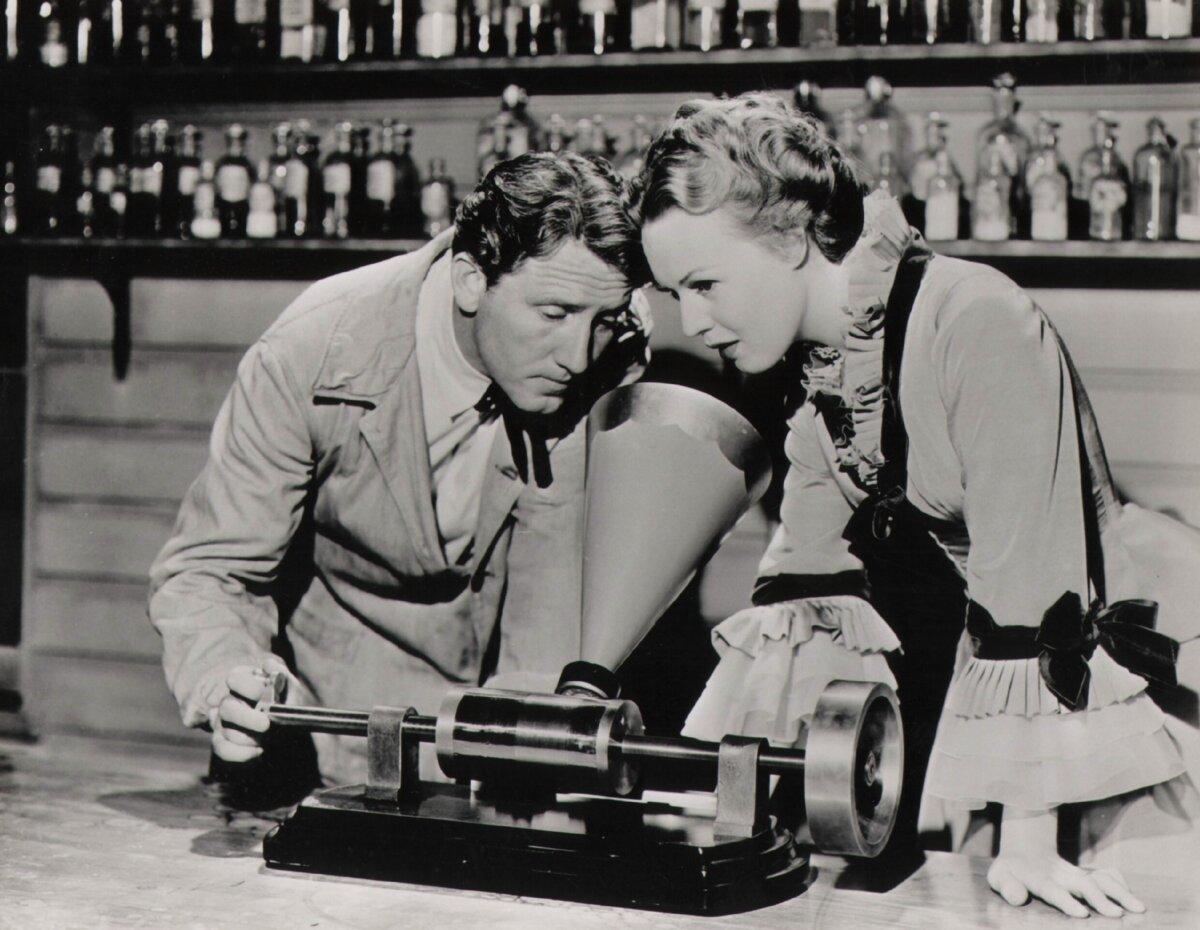
Desperate for money to secure the men and machinery his experiments demand, Edison pitches ideas to financiers Mr. Taggart (Gene Lockhart) and Gen. Powell (Charles Coburn). Both respect his obvious promise, but only Powell supplies him with all three things he needs: money, men, and machinery.
Taggart, too envious to tolerate Edison’s success, tries to scuttle further chances of it. Unfortunately, experiments take time. When debts run high, Edison receives court summons and threats of asset seizures.

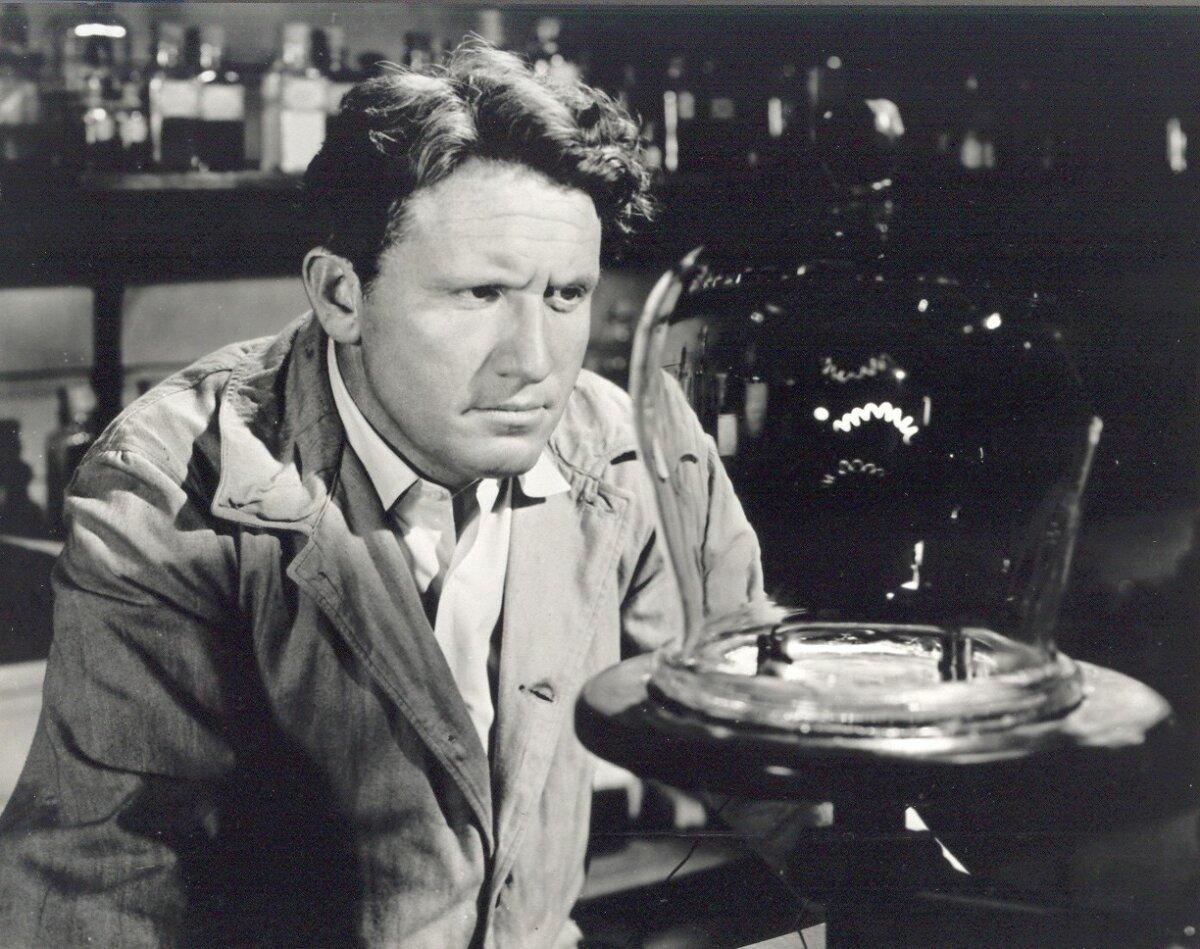
Thanks to technical aides like the doughty Michael Simon (Felix Bressart), Edison invents epoch-transforming devices, like the stock exchange ticker, the phonograph, and the electric lightbulb. However, this isn’t before he and his men sacrifice most of their waking lives to find out what doesn’t work before getting around to what does.
Fittingly, director Clarence Brown opens with a written quote attributed to a thinker who eulogized the power of the individual, Ralph Waldo Emerson: “The true test of civilization is, not the census, nor the size of cities, nor the crops—no, but the kind of man the country turns out.”
Lending Brown’s lab scenes authenticity are technical advisors William A. Simonds from the Edison Institute in Michigan and Norman R. Speiden, director of Historical Research at Thomas A. Edison Inc. in New Jersey.
A Life Long-Lived
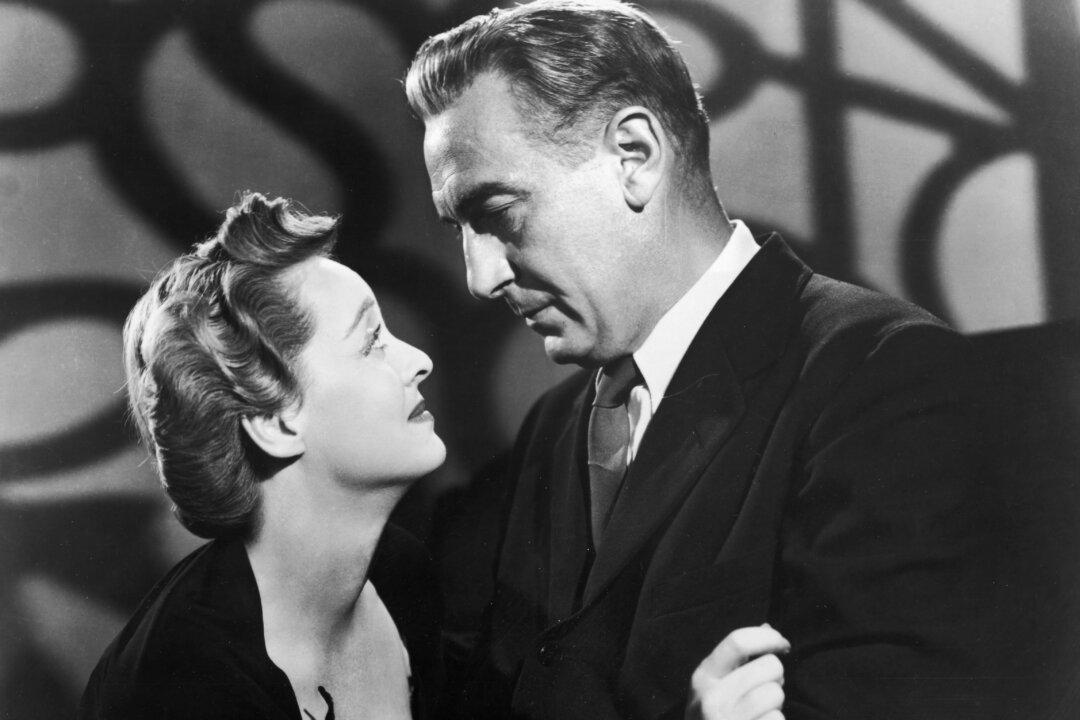
The 40-year-old Tracy brings the required voltage to his role, playing a convincingly youthful Edison. Equally convincingly, he also plays an aged Edison. When anticipating some private victory, he bites his lower lip as he grins. He lends impishness to some moments but doggedness to others.In one scene, Edison chirpily asks Taggart’s secretary for the appointment he’s been seeking for weeks. The secretary, not budging from his seat, snootily refuses. Unsmiling, unblinking, Edison freezes. His clenched teeth cause the veins in his temples to pop out. His voice, now tones lower, commands the secretary to go in and ask. He does.
At the golden jubilee of the discovery of electric light, hosted within a replica of Independence Hall, the toastmaster clarifies that Edison has framed “a new kind of Declaration of Independence. He has declared through his work, and with a force greater than that of any man now living, the freedom of the human mind.”
No matter how free the human mind is or wants to be, it can’t do much without a system that sows, cultivates, and harvests that freedom. This isn’t the kind of crony, oligarchic, or state-manipulated capitalism that give capitalism a bad name. It’s one run with integrity, where entrepreneurship, innovation, and competition thrive.
It’s here that Edison flourishes; he borrows capital to innovate and uses the profits to repay creditors. He then pumps proceeds back into further research. He leverages an expanding asset base as collateral for more borrowing, but also for new industry and investment.
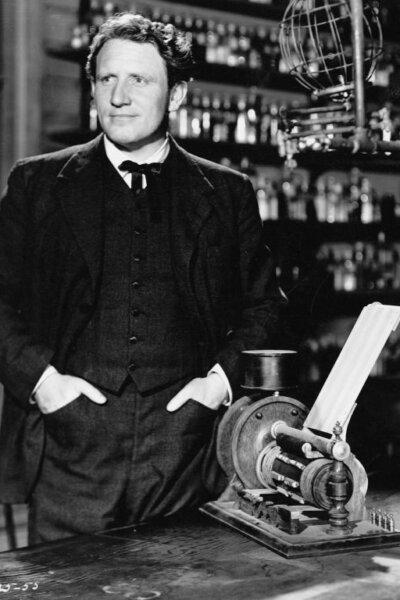
The real-life Edison bagged over 2,000 global patents. This was staggering for his time and a record even until the 21st century, when newer inventors bettered his example. Those innovations spawned industries worldwide that today are worth trillions of dollars. Over decades, they granted billions of global citizens new jobs and created entirely new careers in the bargain.
Responding to the toastmaster’s tribute, Edison sounds a note of caution. Man’s God-given ingenuity, however admirable, must be tempered by the value of balance by respecting man’s equally God-given humanity. Otherwise, technology may eventually become the monster that some suspect will assure man’s destruction.
In the twilight of his career, asked by schoolchildren what the greatest invention is, Edison answers only half-jokingly, “A blade of grass.”
Edison is hinting at a higher power, which man should acknowledge as the source of all creation and all invention. He’s implying that, for all the boasts of human advancement, man still can’t invent grass, something tender and complex. It’s always green, and the leaves are seemingly identical yet every blade’s a different shade of green.
Edison, too, was a man, like any other yet also like no other.