The series aims to enable an enlightened knowledge of American history to, in turn, enable an enlightened commemoration. It’s also to enable respectful remembrance.
Larry P. Arnn, President of Hillsdale College, references the word “again” to underpin the video-series. While introducing the series, Arnn explains that the word is important to President Trump, and it isn’t incidental. Arnn says that George Washington did something for the first time, extremely honorable, which was the defense of the Declaration on battlefields.
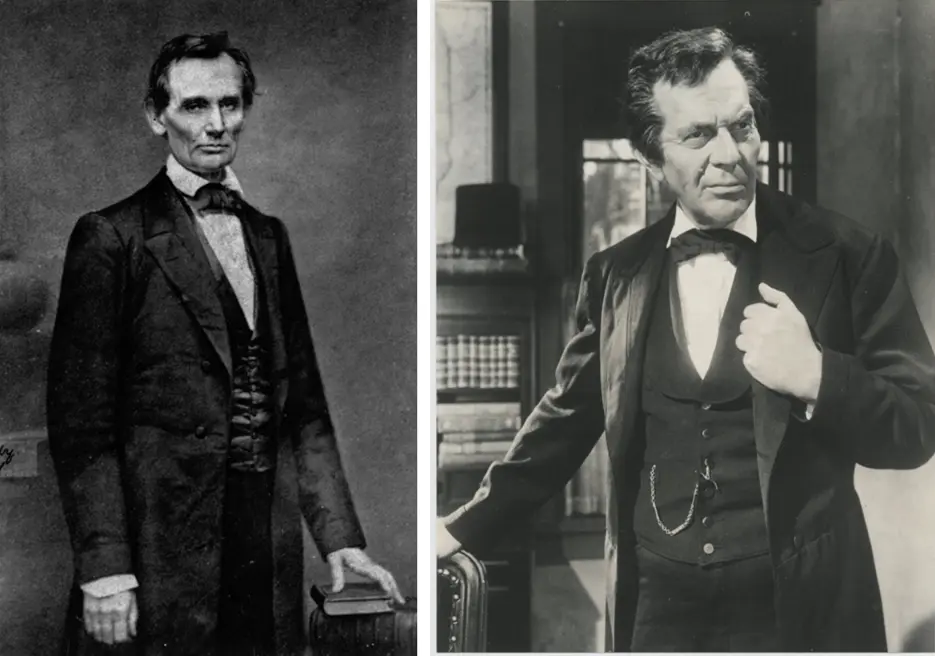
Abraham Lincoln came along later and wanted to restore all of that. He took the view that defense of the Constitution was a very hard thing to do, but it wasn’t a new thing to do, and he commemorated it. Arnn hints that, in this sense, Trump is no less resolute about a return to roots.
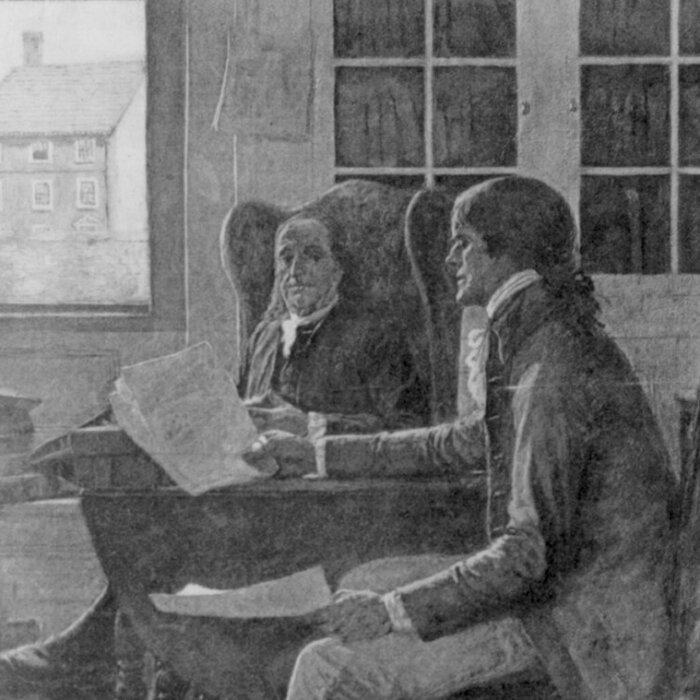
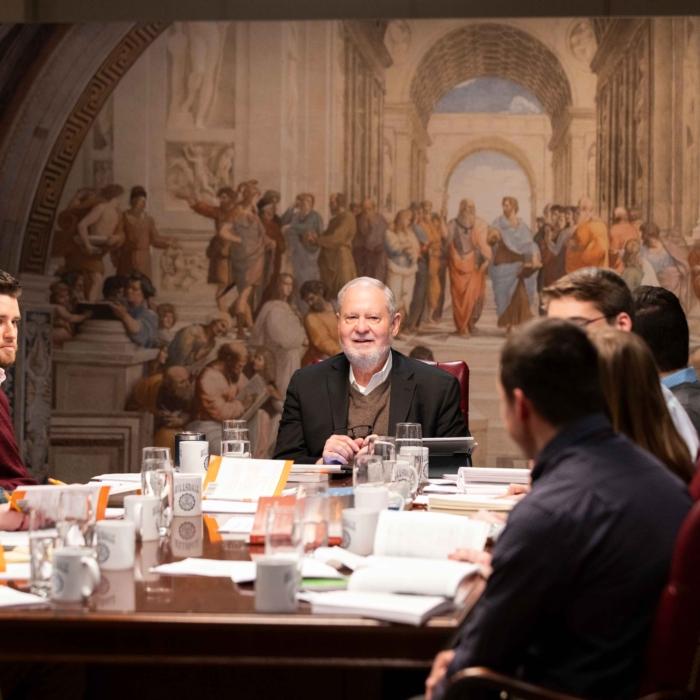
Arnn encourages audiences to read and re-read the Declaration. At just over 1,300 words long, it is “one of the most consequential and beautiful political documents in all of history.” To him, what sets it apart and makes it peculiarly American is that it begins “universally.” The document refers not to one epoch but to all times, not to one nation or one people, but all nations and all peoples.
Arnn implies that modern-day Americans needn’t look for an identity, as if they’ve outgrown the old. They already have it laid down for them by the Founders.
Mystic Chords of Memory
Unapologetically, U.S. Secretary of Defense Peter Hegseth sprinkles his presentation with the invocation “God bless America.” As if echoing that sentiment, Arnn adds that there are at least four crucial references to God in the Declaration, hinting that human rights and freedoms, are derived (not a given).It’s why even the signers appeal to “divine Providence” for protection and to “the Supreme Judge of the world for the rectitude of our intentions.”
Arnn points to the Declaration’s assertion that “all men are created equal” with “unalienable rights” including “life, liberty and the pursuit of happiness.” Profoundly, he adds, “If you recognize this principle of equality … properly, it will give rise to the most amazing diversity and difference among people,” because it sets up a right for everyone to live the best lives they can.
The trouble with new-fangled Diversity, Equity and Inclusion (DEI) propaganda is that it not only sets its face against this principle but seeks to supersede an already egalitarian spirit by insisting that equality of outcome should matter more than equality of opportunity.
DEI seeks to be a supra-judicial, supra-electoral impulse that imposes its will on the people much like a tyrant does, like the British king did to 18th-century America, and which the Declaration eloquently and explicitly denounced.
Sovereign Rights
In sharp contrast, the Declaration makes clear that rights exist only within the constitutional framework already laid down: the Legislative (Congress), Executive (the Presidential system), and Judicial (the justice system, not just the judiciary) branches. Sure, the fights for a myriad of rights may often be messy, prolonged, and frequently frustrating. But they must be fought within the nation’s terms, not outside them.Why did H.W. Longfellow begin his 1860 poem “Paul Revere’s Ride” by addressing children? McClay answers that it wasn’t so much that he had children in mind as an audience. He wanted to convey how precious the memory of freedom fighters ought to be.
That this poem about patriotism in the 1700s was composed as late as the 1800s amid the tumultuous American Civil War reiterates the importance Longfellow placed on right remembrance. He believed it was necessary from time to time to sanctify such memories and their principles in the public mind and imagination.
As if on cue, barely a year after the poem’s publication, Lincoln, in his inaugural address, called upon the “mystic chords of memory” to reunite and revive the Union.
The 19th-century president of Hillsdale College, Edmund Fairfield, once said that freedom and learning go together. McClay here reminds audiences of the patriotic memories that helped reunite and revive America in times of crisis. They acquired their enduring, transformative powers only if successive generations repeatedly and respectfully bear “the willingness to call on those memories, the capacity to respond to darkness with light, to peril with energy and determination, buoyed by the knowledge that others have done these things before us, and in a sense for us. What was done before, can be done again.”