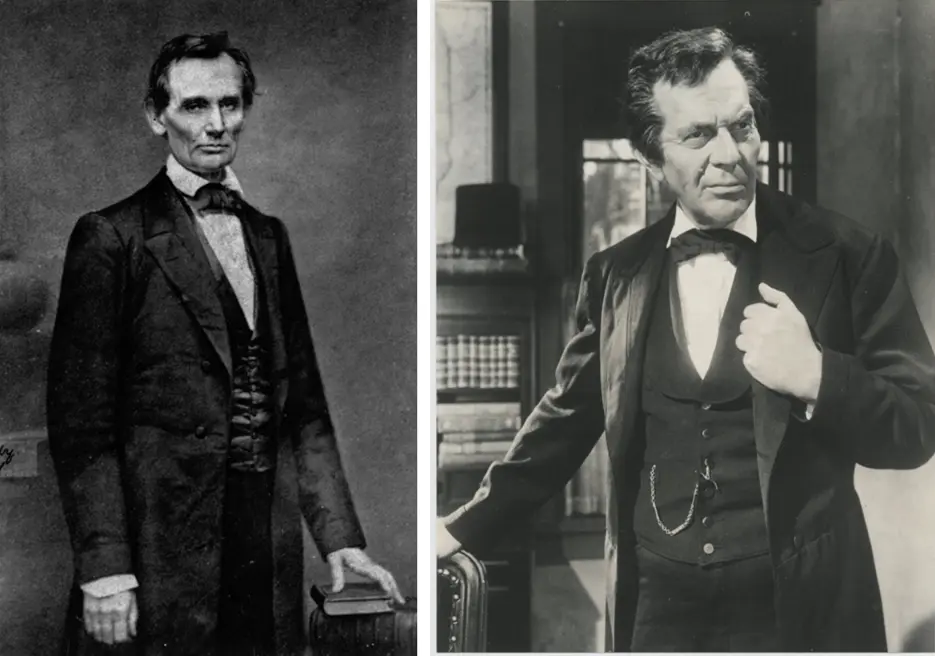
In one video, Thomas Jefferson speaks of “the weight of centuries” on his shoulders, with every word like a step into the unknown, a “torch lit for posterity.” He may have spoken “softly” but had nothing less than “grand plans” for the nation; as president, he nearly doubled its size with the Louisiana Purchase because westward expansion was vital for the nation’s health and prosperity.
Look at the Founding Fathers’ backgrounds. There are more typical profiles for politicians or legislators: lawyer, businessman, physician, surgeon, judge, professor, and diplomat. At another level, there are rather uncommon ones: printer, planter, musician, writer, poet, soldier, clergyman, and shopkeeper. There is even an iron-furnace worker and a sea captain. This made for a staggering range of life experiences that were gathered together in that one room to sign the Declaration.
The Ladies
Martha Washington calls herself “wife, mother, patriot.” While her husband led armies, she traveled great distances and endured great discomfort
Betsy Ross, “the woman who stitched the first American flag,” says she fought not with muskets and powder but with needle and thread.
Repeatedly, the women and men featured shine a spotlight on the price of freedom. Their patriotism cost several of them their wealth, homes, reputations, professions, and businesses; still others suffered displacement or imprisonment. That’s a reminder: Contemporary freedoms don’t come without sacrifices.
Astutely Adapted AI
Mimicking the soft lighting of each painting, each videoclip starts with a close-up of the still, framed portrait. As the historical figure speaks, the moments they mention fade in and out in the background. Finally, the moving image returns to its still form, as if hinting that it’s up to audiences to continue, not just cherish, the legacy of character, courage, and conviction of those who’ve gone before them.Striking a cautionary note, Jefferson warns, “We must guard liberty with learning, for freedom depends not on force, but on the cultivation of an enlightened mind.” Richard Stockton reminds those “who inherit liberty” that it isn’t forged in comfort but in trial, and not kept by ease, but by resolve. John Hancock, the first signer, adds, “Liberty is not given, it is claimed. And kept.” Benjamin Franklin concludes, “My work is done, the future is yours.”
John Adams proudly admits he didn’t mind being “disliked,” as long he told the truth, because “facts do not care about our feelings.” So, during those momentous debates he “dared to speak when others hesitated” and stood on principle even when it cost him popularity.
The exhibit isn’t a White House carte blanche to use AI anywhere, anyhow. Instead, it’s meant to show that, for all the very real dangers of its abuse, there are safe, healthy ways to use AI.
First, these depictions draw on verifiable truth; they don’t mix fact with fiction. Anyone, not just historians, can cross-reference what passes for screenwriting here, with what the Founders said, meant, and did.
Second, while creative license is indispensable when simulating voices, gestures, pauses, emphasis, and intonation, it’s supposed to add to (not detract from) public curiosity about and understanding of freedom.
Here, it does. It’s not too different from honest filmmakers mobilizing actors, makeup, and costumes for a biopic or documentary, as long as they are true to the spirit and the letter of the life story they’re telling.
Humanity at Its Best
At least for now, it’s clear that only humans know that a feeling is more than the sum of its parts, a smile is more than a flash of teeth, an emotion is more than a raised eyebrow, a sparkling eye, or a pursed lip. At their most sincere, facial gestures betray emotions, they don’t cause it. Rather, unseen emotions organically conjure seen gestures. Still, when AI-enabled depictions are powered by integrity, they can be useful starting points to spark interest and trigger deeper learning.McMahon clarified, “Real patriotic education means that just as our Founders loved and honored America, so we should honor them while deeply learning and earnestly debating, still, their ideas.”
PragerU CEO Marissa Streit added, “We’re going to remember our nation’s history. And it’s really going to matter. We’re not going to let anybody have a nation with amnesia.”