Fifteen—that’s how many times your child may likely get a respiratory infection in their first year of daycare. Add two stomach bugs and a rash or two, and you have a picture that feels less like childhood and more like a medical residency.
Why Young Children Are Susceptible
Babies are born with some protection from their mothers—known as maternal antibodies—but that protection fades around 6 to 9 months of age, just as many children begin child care. From that point, they encounter many viruses for the first time, with no immune memory to draw upon.
“This is a trying time in any parent’s life, but it is a short-term thing, and it does get better,” Sarah Caddy, an expert in viral immunity and assistant professor at the Baker Institute for Animal Health, Cornell University, and co-author of the study, told The Epoch Times.
Because their immune systems have never encountered these viruses before, children’s bodies take longer to mount a response, allowing the virus to multiply—meaning children can carry more virus and remain contagious for longer. Their immune systems are also still maturing, with responses slower and less coordinated than in adults.
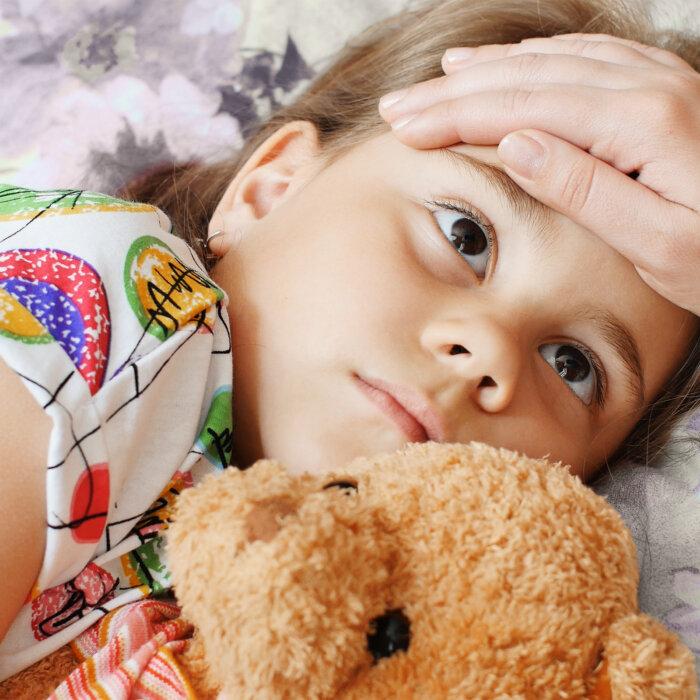

Behavior amplifies the situation. Young children touch everything, put objects in their mouths, rarely cover coughs, and spend a lot of time in close contact with others—making transmission easier. Each exposure, though, does something valuable: immune cells activate, multiply, and form memory, so the next encounter is handled faster and more effectively.
Immune Training and the ‘Hygiene Hypothesis’
The frequent exposure children receive in childcare settings may not only help build immunity against infections, but may also shape how the immune system responds more broadly later in life.
This process is related to the “hygiene hypothesis,” which suggests that early exposure to microbes may help train the immune system, potentially reducing the risk of allergies and autoimmune conditions later in life.
“Of course, it’s incredibly complicated, and there are many factors involved,” she added. “But it’s quite reassuring for parents to realize that even if infants are exposed to lots of things at a young age, there may be some benefit in terms of training the immune system.”
Frequent Infections Are a Reality
The researchers—parents themselves, struck by how often their children became ill after starting daycare—set out to understand how frequently this happens and why.
Dr. Amy Edwards, an assistant professor of pediatrics at Case Western Reserve School of Medicine who wasn’t part of the review, said that for the vast majority of children, the immune system knows what it is doing, and that all will be well as long as children stay hydrated and are breathing comfortably. “It doesn’t seem that way when they only just got over the last virus before they are catching the next one; but I promise, it does get better,” she told The Epoch Times.
Older children are also less likely to test positive for a virus—or even show symptoms.
Younger siblings often get sick more than the first child because of all the germs older siblings bring home from school or daycare, Edwards said. “But they also tend to miss fewer days of school or daycare because they’ve already been exposed and prepared.”
Get Sick Now or Later?
It’s natural for parents to want to limit exposure, sometimes by delaying child care or social contact to reduce the risk of illness. But research suggests this may simply delay, rather than prevent, infections.
Children who start daycare early tend to get sick more often between ages 1 and 5 than those cared for at home. But once school starts, the pattern flips: Children without prior childcare exposure tend to get sick more often than those who attended daycare. Early infections, in other words, are frequently an investment.
However, timing matters. The first two to three months of life are when infections pose the highest risk to babies, so extra caution is most important during that period. “After two to three months, it really is time to let that immune system start to learn how to work,” Edwards said.
However, whether earlier exposure is helpful also depends on the germ in question.
“For some respiratory bugs like coughs and colds, each infection tends to be milder than the last—or less likely to cause symptoms—as children build up immunity,” Charlotte Houldcroft, assistant professor and virologist in the Department of Genetics at the University of Cambridge and corresponding author of the study, told The Epoch Times.
Some infections, such as norovirus, are best avoided because immunity does not last long. Others, such as chickenpox, can be more severe if infection is delayed, while infections such as RSV are more dangerous in very young infants, so delaying infection until children are older can be beneficial.
When Should Parents Be Concerned?
Recommendations may vary somewhat depending on the country and healthcare system, according to Caddy, who encouraged parents to follow local public health guidance.
Looks very ill, unusually drowsy, or very fussy
Has trouble breathing, a severe headache, stiff neck, unexplained rash, or severe ear pain
Has repeated vomiting or diarrhea
Has a fever lasting more than 24 hours in children younger than 2 years, or more than three days in children 2 years and older
Parents should seek urgent medical care if a child shows signs of more serious illness, especially in younger children, who “can go from ‘just sick’ to ‘very sick’ very quickly,” Edwards said.
Warning signs include:
Struggling to stay hydrated, indicated by fewer wet diapers, fewer trips to the potty, or darker urine
Breathing fast or seeming to work hard to breathe
Being unusually sleepy or lethargic, difficult to wake up, not staying awake for long, or seeming confused or unsteady
The AAP also recommends that infants younger than 3 months with a fever of 100.4 degrees Fahrenheit or higher be evaluated promptly.
Perrault also noted that parents often recognize when something feels unusual for their child. “Parents know their child best,” she said, recalling that when her daughter developed RSV at 7 months old, she showed symptoms that weren’t typical for her when ill, prompting Perrault to seek urgent medical care.
What Parents Can Do
For most children, frequent infections are a normal part of immune development, not a sign of an underlying problem.
“Kids who are otherwise thriving—growing, developing normally, and not constantly admitted to the hospital—are almost always fine even if they are having slightly more than the average number of yearly infections,” Edwards said.
Still, while parents can’t eliminate infections entirely, there are ways to reduce risk and severity.
The authors noted that vaccination also helps reduce the impact of infections, including lowering the risk of severe illness, even for viruses that evolve or don’t confer lifelong immunity.
“Many vaccines actually give better protection than natural exposure, while others provide similar protection without the risks of the disease,” Houldcroft said, noting that vaccines like measles can prevent serious complications associated with infection, such as deafness and blindness.
She added that even for viruses that change frequently, vaccination can still help protect children from severe disease and reduce transmission to family and friends. “I fully understand that parents can feel anxious about vaccinating their children, especially when it involves something unfamiliar,” Caddy said. “But the risk of not having the vaccine, and of children catching these diseases themselves, is really quite worrying.”
Houldcroft added that beyond vaccination, simple measures can still make a difference, including spending more time outdoors where transmission is lower, teaching children to wash their hands with soap and water, and ensuring adequate vitamin D, which she noted is recommended in many countries for children under 5 because of its role in immunity and bone health.
Breastfeeding may also offer added protection. “Mothers who are able to breastfeed should be supported to do so for as long as they wish, because breastmilk contains protective antibodies,” Houldcroft added. Breast milk may also help support the development of the child’s own immune responses.
At the daycare level, choosing a setting that follows evidence-based hygiene protocols and policies that keep sick children home until recovery makes a meaningful difference in transmission across the whole group.
Edwards added that children don’t all follow the same timeline. Some build immunity faster, others more slowly. If parents are concerned, she recommends discussing it with their pediatrician—but for most children, frequent infections in the early years are a normal part of growing up.