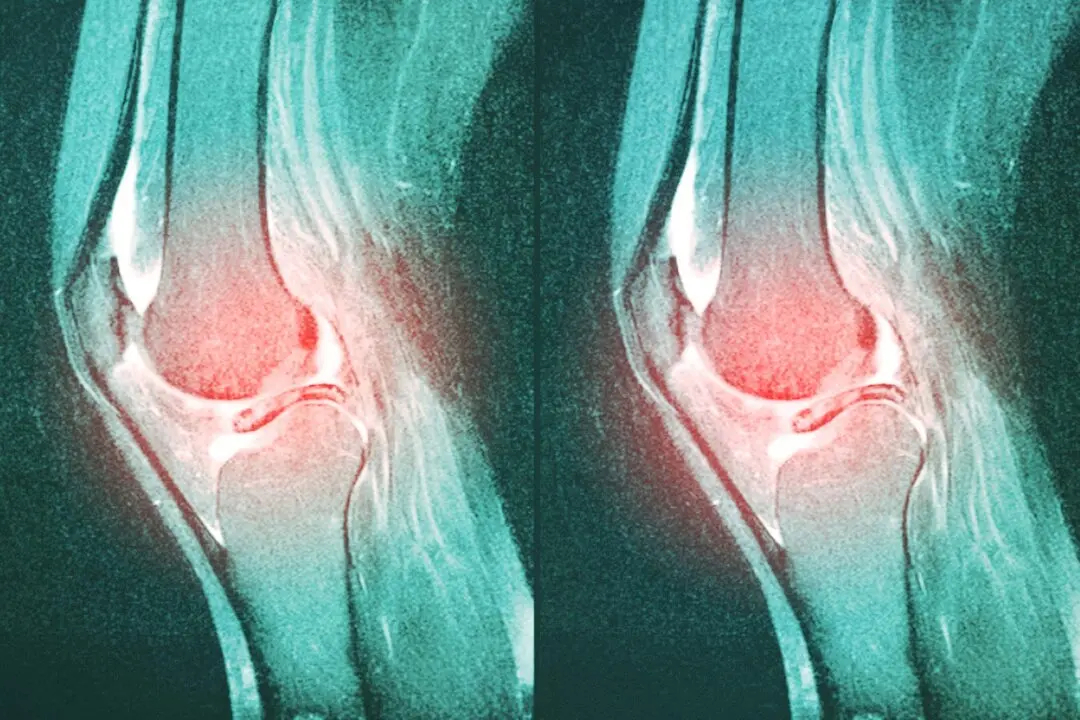
The conventional notion is simple: grow older, grow worse. A recent study involving more than 11,000 Americans suggests that for nearly half of them, that notion wasn’t true.
When researchers examined individual trajectories, a very different pattern emerged.
“In contrast to a predominant age stereotype that later life is a time of inevitable and universal decline, we found that 45 percent of the sample of older individuals showed some improvement in cognitive and/or physical function over the next 12 years,” Becca R. Levy, a professor of social and behavioral sciences at the Yale School of Public Health and lead author of the study, told The Epoch Times.
What Set the Improvers Apart
What separated those who got better wasn’t exceptional lifestyle or genetics. It was how they thought about aging itself.

Participants with more positive views of aging were significantly more likely to improve in both cognition and walking speed—even after adjusting for demographic and health factors, and among those who started with normal function at baseline.
In the study, these beliefs were assessed using validated survey measures to capture how strongly participants agreed with statements about aging—for example, whether growing older is associated with continued growth or inevitable decline.
Clinicians say the findings align with what they observe in practice.
“When people view themselves as aging well, it often translates into action—staying active, engaged, and more willing to adopt habits that support brain and body health,” Dr. Thomas Holland, a clinician-researcher at the Rush Institute for Healthy Aging who was not involved in the study, told The Epoch Times.
These behaviors reinforce processes such as blood flow, muscle strength, and neural connections, helping build resilience to stressors such as illness or injury, while also reducing chronic and oxidative stress linked to aging.
The inverse is also true. Those who view aging as a steady decline may scale back prematurely—even when their bodies are capable of more.
“When people see themselves as limited, they may scale back unnecessarily—even when adjustment, rather than avoidance, would be more appropriate,” Holland said.
A Broader Shift
The findings build on stereotype embodiment theory, which holds that people absorb age stereotypes throughout life—from media, culture, and everyday interactions—and eventually internalize them, shaping expectations, behavior, and health outcomes.Aging doesn’t affect all aspects of health equally, Dr. Aanand Naik, professor and director of the Institute on Aging at the University of Texas Health Science Center at Houston, who was not involved in the study, told The Epoch Times. Emotional and social well-being often improve with age, and some people maintain strong cognitive and physical function well into their 80s. Positive age beliefs, he said, support both mind and body.
“There are many aspects of wisdom that cannot be characterized by superficial tests such as walking speed or cognitive tests,” Dr. Allen Power, a geriatrician and Schlegel Chair in Aging and Dementia Innovation at the Schlegel–University of Waterloo Research Institute for Aging, who was not involved in the study, told The Epoch Times.
“Older people synthesize a lifetime of experiences into a deeper perspective on many issues than younger people do,” he said. “They are generally happier than young adults—and when unhappy, recover their mood more quickly. They also have more complex ways of looking at emotions and experiences, and can better understand complex emotions, like poignancy.”
These effects likely operate through multiple pathways.
“The reality is that positive age beliefs likely function at all three levels—psychological, social, and biological—providing a solid foundation for cognitive and physical function that is maintained with age,” Naik said, noting that such beliefs are commonly observed in so-called blue zones, regions of the world with unusually high numbers of centenarians across cultures and geography.
The link between age beliefs and longevity is “a combination of what people do and how their bodies respond to those behaviors,” Holland said, with beliefs becoming embedded over time through repeated behaviors and physiological responses that reinforce one another.
Your mindset on aging may shape health at the most fundamental level.
“Positive age beliefs may lower markers of inflammation and stress while increasing resilience and recovery at the cellular level,” Naik said.
Why This Matters for Health and Care
The implications extend beyond individuals.Expectations about aging—held by individuals, families, and even clinicians—can influence real-world outcomes.
Assumptions about aging—especially toward those who appear older or more frail—can lower expectations for recovery, influencing decisions around rehabilitation, preventive care, and treatment, Holland said.
How clinicians frame expectations directly affects outcomes, he said. Low expectations can limit care, while appropriately optimistic, individualized expectations can improve engagement and results.
“In that way, attitudes toward aging are not just philosophical—they directly shape real-world health trajectories,” he said.
A Better View of Aging
Because beliefs about aging are shaped by the surrounding environment, shifting societal views of aging may help reshape expectations about growing older.“The age beliefs that we take in from the culture can be very different depending on the dominant messages about aging we encounter in our environment,” she said, noting that some cultures promote more positive views of aging while others reinforce ageist stereotypes.
“At the societal level, we must work to reduce the stigma associated with aging,” Naik said.
What You Can Do
Although broader cultural change takes time, individuals can begin by examining their own assumptions. Research suggests that expectations influence behavior—and behavior, in turn, shapes health.Thus, many limitations attributed to aging may reflect belief rather than biology.
Small shifts in perception may lead to meaningful changes in behavior, resilience, and overall well-being.
Aging is often framed as a period of loss, but this study suggests a more nuanced and more hopeful reality. For many people, aging includes stability, adaptation, and even improvement. In some cases, that difference may begin with something as simple and as powerful as how we think about growing older.
Later life may offer resilience, recovery, and growth—possibilities that become more visible as expectations change.