Summer heat makes people’s body temperatures rise. The body automatically triggers certain functions to keep cool, such as increasing sweating and breathing. However, heat stroke may result when the ambient temperature is too high and physiological self-adjustments fail to control body temperature. So how do we know if heat stroke is imminent? And how can we prevent it?
Symptoms of Heat Stroke
Here are some possible symptoms of heat stroke:- Headache: You may experience severe head pain or dizziness.
- Restlessness and anxiety: You may feel restless, anxious, or irritable.
- Elevated body temperature: This represents an increase in body temperature above the normal range of 37 to 38 C (98.6 to 100.4 F). Extremely severe heat stroke may increase body temperature above 40 C (104 F).
- Skin symptoms: Skin may become hot, red, and sweat profusely.
- Increased heart rate: During heat stroke, the heart rate may increase, giving you a feeling of rapid pulsation.
- Dyspnea: Breathing may become difficult, rapid, or shallow.
- Nausea and vomiting: People may feel sick and vomit during heat stroke.
- Fatigue and frailty: Heat stroke can cause weakness and lack of strength.
- Convulsions and loss of consciousness: Severe heat stroke may cause muscle cramps, coma, and loss of consciousness.
Traditional Chinese Medicine’s Heat Stroke Treatment
Traditional Chinese medicine (TCM) believes that heat stroke is the manifestation of fever caused by the imbalance of yin and yang in the body, disorders of qi and blood circulation, excessive yang qi, or yin deficiency and hyperactivity of internal heat.The theory of yin and yang in the basic theory of TCM posits that all things or phenomena in nature are intertwined between yin and yang characteristics, such as earth and sky, cold and heat. These two energies, yin and yang, are opposite to each other, but they are also interdependent. When these are properly balanced, people will feel healthy and energetic, and everything will become coordinated and stable. Conversely, an imbalance can lead to complications in the body.
In TCM, many diseases can be caused by environmental forces, such as wind, cold, heat, dryness, dampness, and fire.
Methods
Here are some suggestions from TCM for preventing heat stroke:- Regulate qi, blood, yin, and yang: Use TCM practices and medicinals to balance yin and yang, regulate the operation of qi and blood, and improve physical fitness to counter the effects of high temperatures.
- Choose the proper diet: In summer, choose light and easily digestible foods, such as vegetables, fruits, clear soup, etc., and avoid greasy, spicy, fried, and other inflammatory foods.
- Hydrate: Summer temperatures will make you sweat, so it is essential to hydrate to prevent dehydration. Cool drinks like herbal, green, and chrysanthemum tea can help clear heat.
- Balance work and rest: Don’t overwork yourself, and avoid strenuous exercise or outdoor activities during high temperatures, especially prolonged exposure to the sun at noon.
- Avoid prolonged exposure to high temperatures: In hot weather, stay cool in the shade and avoid overexposure to sunlight and high temperatures.
- Wear breathable, loose-fitting clothing: Choose breathable, lightweight clothing that will keep you comfortable.
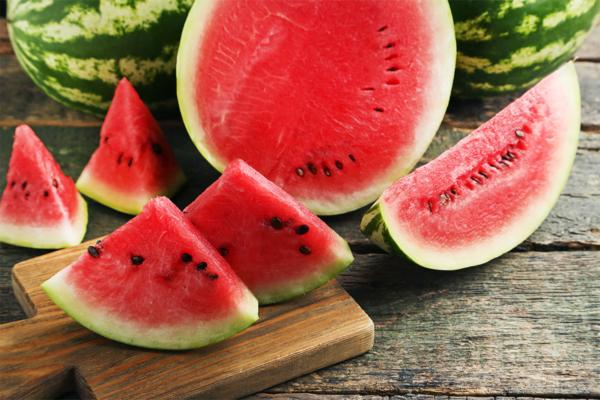
Can Eating More Watermelon Prevent Heat Stroke?
Watermelon is a popular fruit in the summer, and it does help relieve heat and prevent heat stroke to a certain extent.- Replenishes water: Watermelon has a high water content, and moderate consumption can effectively replenish water in the body, which helps prevent dehydration.
- Clears heat: Watermelon has a cooling effect, relieving heat sensation in the body and fever symptoms.
- Contains L-citrulline and L-arginine: These are the precursors of nitric oxide and polyphenols and carotenoids that play a role in cardiometabolic health. Supplementation with watermelon and L-citrulline lowered blood pressure in human trials.