Mammography: The Conventional Approach
For decades, mammograms have been the established method for breast cancer detection, involving X-ray radiation to create detailed images for identifying abnormalities, such as tumors, calcifications, or cysts.Advantages of Mammography
- Proven effectiveness: Mammography has a well-documented history of effectiveness in detecting breast cancer, particularly in its early stages, contributing to more successful treatment outcomes.
- Widespread availability: Mammography facilities are widely accessible, ensuring that most women can avail themselves of this screening option.
- Insurance coverage: Mammograms are typically covered by health insurance plans, alleviating financial burdens for patients.
Limitations of Mammography
- Radiation exposure: Mammograms involve low-dose radiation exposure, which raises concerns among some women, especially when considering the cumulative effect.
- Discomfort: The compression of breasts during mammography can be uncomfortable or painful.
- Potential for false results: Mammograms can yield false positives (indicating cancer when there is none) or false negatives (missing cancerous tissue), leading to unnecessary stress or delayed diagnoses.
Thermography: A Radiation-Free Alternative
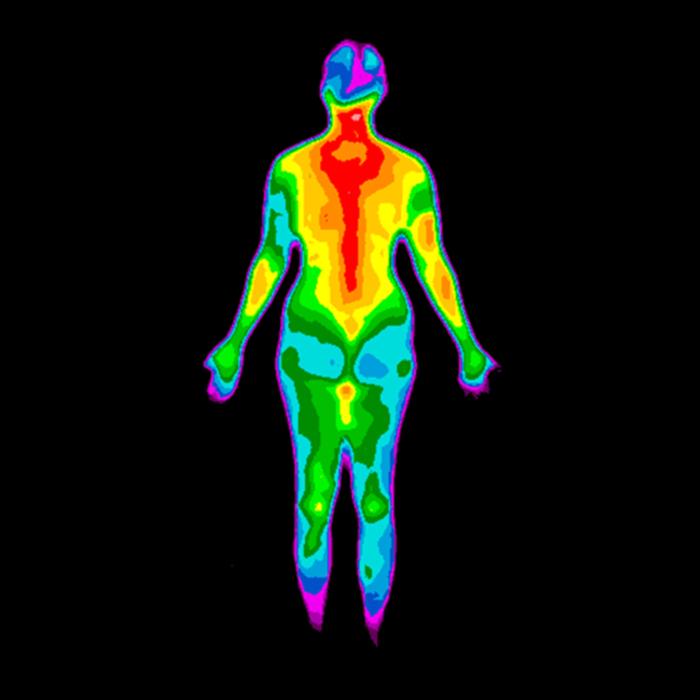
Thermography, or digital infrared thermal imaging (DITI), is a noninvasive technique that measures heat radiation from the body’s surface. It relies on the principle that cancerous tissue generates more heat than healthy tissue, resulting in temperature variations that infrared cameras can detect.Advantages of Thermography
- Radiation-free: Thermography is entirely free from radiation, making it a safe option for women concerned about radiation exposure.
- Potential for early detection: Thermography can detect physiological changes in breast tissue before a tumor forms, potentially enabling earlier intervention.
- Comfortable and repeatable: Unlike mammography, thermography is a painless procedure that does not require breast compression, and it can be used as frequently as needed without concerns about radiation exposure.
Limitations of Thermography
- Nondiagnostic: Thermography cannot definitively diagnose cancer or specify its type; it identifies temperature abnormalities.
- Availability: Thermography facilities are less prevalent than mammography centers, which can limit accessibility for some women.
- Potential for false positives: Similar to mammography, thermography can generate false-positive results, leading to unnecessary anxiety and additional tests.
Insights From Gaea Powell, Breast Cancer Survivor
In a recent interview with Gaea Powell, founder of Central Coast Thermography, we gained valuable insights into the world of thermography and its significance in breast health.Ms. Powell’s journey into thermography was driven by a deeply personal experience. She lost her mother to metastatic breast cancer at a young age, inspiring her to seek alternative strategies for her own breast health. She began to explore thermography, a state-of-the-art infrared imaging technology she believed could provide a safer and radiation-free option for breast health monitoring.
Ms. Powell, along with her husband, Michael, produced a documentary titled “A Breast Expose: The Breast Kept Secret.” This documentary aims to empower women by revealing hidden truths within the multi-trillion-dollar breast cancer industry and highlighting safer alternatives often kept undisclosed.
In the interview, Ms. Powell emphasized that thermography is one of the most accurate ways to access and monitor disease conditions at an early stage. She shared her belief that if a woman is told she has breast cancer, she should hit the “pause button” before going down the “poison path” and take a look at all of the options.

The Bottom Line
In the realm of breast health, women have choices beyond the traditional mammogram. Thermography stands out as a radiation-free, noninvasive alternative that can detect physiological changes in breast tissue. While both thermography and mammography have their advantages and limitations, they can be considered complementary tools in breast health monitoring.Empowering women in their breast health journey involves making informed decisions tailored to individual circumstances. Risk factors, personal preferences, and discussions with health care providers should guide the choice between thermography and mammography. The key is consistent and regular breast health monitoring, regardless of the method chosen, to prioritize early detection and overall well-being.
◇ Resources
Tattersall GJ. Infrared thermography: A non-invasive window into thermal physiology. Comp Biochem Physiol A Mol Integr Physiol. 2016 Dec;202:78-98. doi: 10.1016/j.cbpa.2016.02.022. Epub 2016 Mar 2. PMID: 26945597.Milosevic M, Jankovic D, Milenkovic A, Stojanov D. Early diagnosis and detection of breast cancer. Technol Health Care. 2018;26(4):729-759. doi: 10.3233/THC-181277. PMID: 30124455.
Kennedy DA, Lee T, Seely D. A comparative review of thermography as a breast cancer screening technique. Integr Cancer Ther. 2009 Mar;8(1):9-16. doi: 10.1177/1534735408326171. PMID: 19223370.
Ng EY, Kee EC. Advanced integrated technique in breast cancer thermography. J Med Eng Technol. 2008 Mar-Apr;32(2):103-14. doi: 10.1080/03091900600562040. PMID: 17852648.