Polygonum multiflorum is the botanical name for one of the most prized herbs in Chinese medicine.
This prolific vine has heart-shaped leaves and goes by several names: Chinese knotweed, fo ti, fleeceflower, and jiaotang (twisting vine) to name a few.
One name describes how it works as a medicine: he shou wu (the black haired Mr. He).
Ancient Chinese names can often have a detailed story attached to them, and the tale of he shou wu is a colorful one. It’s about a middle-aged alcoholic bachelor who finds love and redemption in a mysterious root.
As a young man, Mr. He learns he can’t have children. With no family to raise, He considers himself a failure, and depression drives him to drink. His strength fades, his vision and hearing go dull, and his hair greys at an early age.
By his mid-50s, Mr. He stumbles home drunk most nights, but one evening he gets so intoxicated he can’t quite make it to his bed. When he wakes up in a field the next morning, he sees two vines entwined and trailing above his head. Intrigued by the sign (which he interprets as a loving couple), He digs up the root and shows it to everyone in the village, but no one is familiar with it.
A monk (or in some versions, a jester) advises He to eat the root, claiming that it will restore his fertility. With nothing to lose, He gives it a try. After a few weeks of taking the herb each day, He’s health problems vanish and his youthful vigor returns. He marries a local widow and they have 19 children. His hair turns black and stays that way until his death at 160 years old.
Tonic Herbs
It’s hard to say how much of this story is poetic exaggeration. Yet people today still look to the root of Mr. He’s vine to treat infertility, weakness, grey hair, and other symptoms associated with premature aging.
He shou wu is known as a longevity tonic—a class of Chinese herbs that provide energy and strength. This isn’t a short burst followed by the inevitable crash type of energy that comes from stimulants, but something deeper and lasting.
Many longevity tonics—such as he shou wu, dong quai, and ginseng—are roots with a sweet taste. Taken over time, they provide a sense of strength and stability to both the mind and body. Today these herbs are often referred to as adaptogens due to their ability to help the body adapt to stress.
Ginseng is the most famous and expensive example, but Chinese herbalists also place he shou wu in the same class of top-shelf longevity tonics. These herbs captured the attention of ancient Chinese Taoists who considered them vehicles toward enlightenment and immortality.
Stories even more incredible than Mr. He’s are associated with he shou wu. The most recent was from a man who died in 1933. Li Ching Yun reportedly lived 252 years, had 23 wives, and fathered 180 children. He credited his longevity to daily consumption of lycium berries, ginseng, and he shou wu, as well as Tai Chi practice.

Selecting a Root
Typically, the older the root, the stronger the medicine. Ancient claims of really old roots are unbelievable. According to Ming Dynasty herbalist Li Shizhen, consuming a 150-year-old he shou wu root for a year will make one’s mouth sprout a fresh set of teeth. A root of 200 years will provide a gait as quick as a horse. A 300-year-old root will grant earthly immortality.
Most he shou wu roots grown for medicine today are only about 3 to 4 years old. They may not possess the power of immortality, but they still have medicinal value.
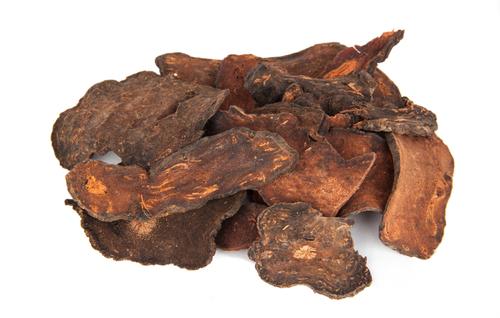
He shou wu roots are rich in iron, zinc, and antioxidants. Some are sold raw, but most are prepared in a black bean sauce, which is said to make a more potent medicine. He shou wu is sold in dry slices, powder, pills, or tincture.
How to Use
People take he shou wu— both alone and in herbal formulas— for a variety of ailments. A Chinese herbalist will often prescribe it for signs of deficient kidney yang and qi, which can manifest as a weak back and knees, dizziness, and poor memory. It is used to boost immunity and adrenal function, and relieve menopause symptoms, insomnia, and fatigue. He shou wu is anti-bacterial and anti-fungal, and is used topically to treat a variety of skin issues, such as acne, eczema, and athletes’ foot.
He shou wu has also demonstrated some ability to lower cholesterol, and prevent cancer and Alzheimer’s disease, but most health claims still center on fertility and the hair. Since the days of Mr. He, this herb has maintained its reputation for banishing grey hair, reversing hair loss, and improving sexual potency in both men and women.
Like other tonic herbs, he shou wu has to be taken in moderate doses regularly over months and years to see significant anti-aging results. Mr. He was said to have eaten the root for a total of 700 days before fathering his first child. Some use he shou wu as a gentle laxative, so slamming a large dose every once in a while for the sake of convenience is a poor strategy.
He shou wu is non-toxic and generally well tolerated, but a small minority have reported side effects, such as itching and loose stool. Because of reports of liver problems associated he shou wu, those with liver disorders are cautioned against the herb.
A typical daily dose is 3 grams, three times a day. He shou wu has a slightly sedative effect so it’s good to take before bed. For best results consult a qualified herbalist.