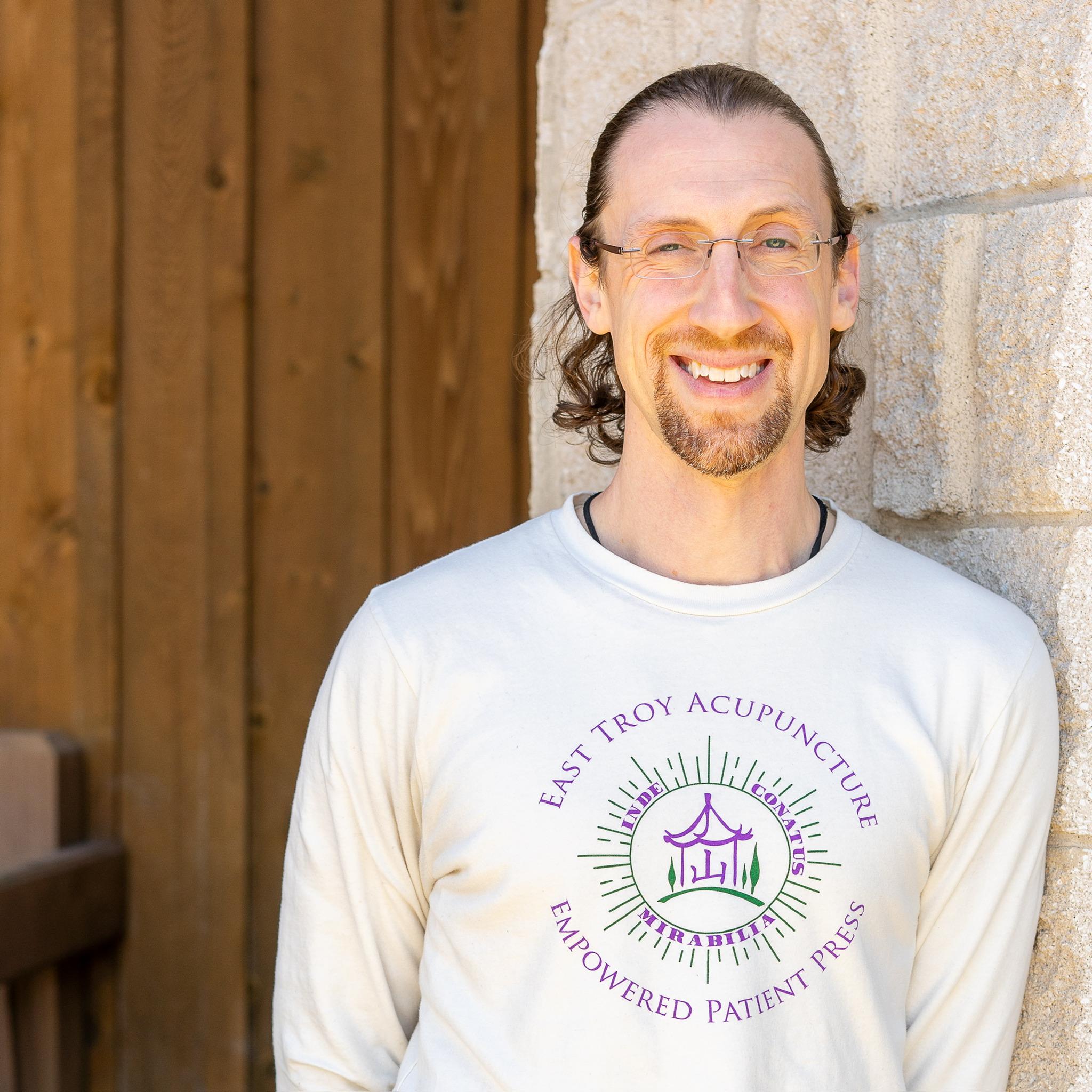
Brandon LaGreca had been healing people in his private acupuncture practice for 10 years when he received a devastating diagnosis: Stage 4 non-Hodgkin’s lymphoma. More than a third of people with the diagnosis die within five years. LaGreca didn’t.
Within eight months of following an integrative oncology protocol, he achieved remission. The experience led him to a powerful insight about the nature of cancer—that the disease isn’t just physical, and facing it requires emotional and psychological introspection.
“We have to recognize that our thoughts matter, that our emotions matter, that they are expressions of our biology,” LaGreca told The Epoch Times.
“Emotions have biochemical correlates.”
We’ve long known that disease and painful experiences are linked.
Emotional Wounds
When it comes to emotions, many people are struggling. Examine the root of a person’s depression or anxiety disorder, and you might find that it started with a single traumatic experience.

Trauma is an experience that shakes you to your core. It ignites a primal fight-or-flight mechanism that can be triggered for decades to follow. Such experiences can include a car crash, sexual assault, or natural disaster. The psychological aftershocks continue long after the episode has passed.
Traumas can be so significant that we forget or disassociate from them. Another scenario is one in which our brains force us to relive the event repeatedly. Some psychologists believe this is a self-defense mechanism meant to guard us against another bad experience, but it can also prevent us from living a healthy life in the present.
Trauma, Personality, and Cancer
In the 1980s, psychologist Lydia Temoshok began to see a pattern where cancer seemed to target people with a certain temperament—people pleasers. Those who fit the Type C personality exhibited a denial of negative emotions, an inability to express feelings, and high social conformity and compliance. Type C people often struggle to draw boundaries. By the 1990s, there was already strong support for the theory.In other words, people with less ability to deal with their negative experiences were more likely to get cancer, but psychological therapy could reduce the risk of death.
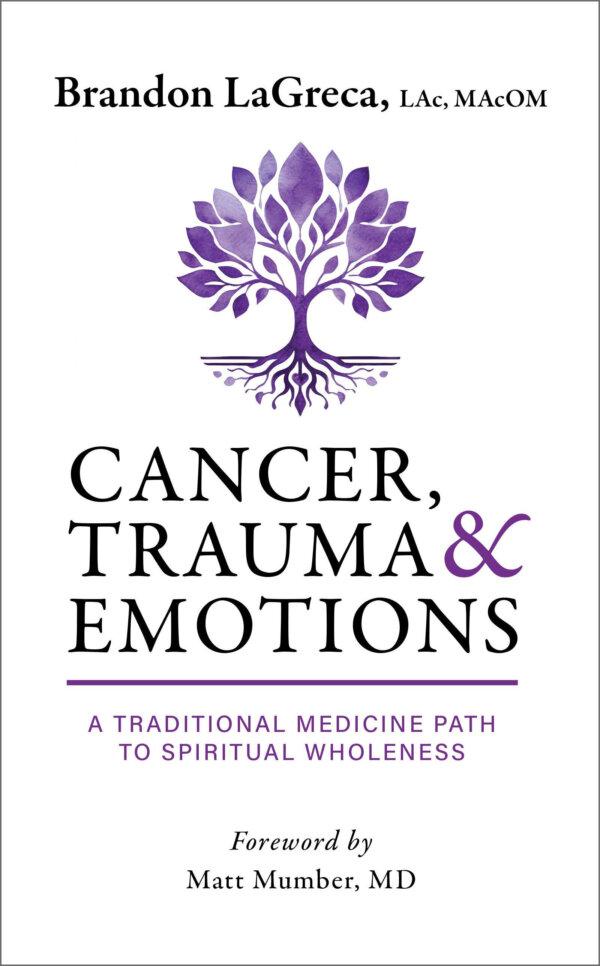
LaGreca said his cancer journey led him to examine the link between trauma and cancer in detail, a topic he went on to write about in his book “Cancer, Trauma, & Emotions.”
“When I was diagnosed, I was told, ‘Bad luck, bad genes.’ But that answer was completely unsatisfactory to me, because it took my autonomy completely out of the equation,” LaGreca said.
Cancer’s Many Roots
Cancers are often traced to the exposure of a carcinogen—mutagenic agents such as asbestos, tobacco, or alcohol—known to initiate the cancer formation process.Genetic differences also decide who gets sick. People can inherit certain oncogenes, often leading to out-of-control cell growth, given the right conditions.
The idea that unresolved trauma may also contribute to cancer has considerably less support. While broad population-based research shows there is a link, that doesn’t prove causation. It’s also hard to measure the influence of trauma against a placebo control, LaGreca said.
However, he said he believes the link still deserves a closer look.
Beyond Behaviors
Beyond indulgence in toxic coping mechanisms, trauma on its own has been demonstrated to be a physically destructive force. One study published in a 2022 edition of Translational Psychiatry found that people with PTSD not only experienced psychological and behavioral symptoms, but some also exhibited elevated concentrations of inflammatory markers, including C-reactive protein, interleukin-6, and tumor necrosis factor.As the number of these types of studies grows, the influence that our mental states have on our physical bodies becomes more clear. In his book “The Myth of Normal: Trauma, Illness and Healing in a Toxic Culture,” trauma, addiction, and childhood development expert Dr. Gabor Maté wrote, “We know that chronic stress, whatever its source, puts the nervous system on edge, distorts the hormonal apparatus, impairs immunity, promotes inflammation, and undermines physical and mental well-being.”
An Ancient Perspective
Modern medicine discusses the body’s constant effort to attain homeostasis—a type of balance—through functions with dual triggers, like on-and-off switches. These can include hormones that tell us when we are hungry or full, or cytokines that tell us when to turn inflammation up or down.Chinese medicine discusses this duality in terms of yin and yang.
When it comes to understanding the formation of disease, the yang can represent external causes—forces that come from outside of us—recognized by conventional medicine as pathogens, injury, or toxins, such as carcinogens.
The yin aspect is also said to play a significant role in a person’s well-being. The yin is represented by internal causes, which, according to ancient Chinese medical texts, stem from an imbalance of the seven emotions. Fear can harm the kidneys, for example, while anger is said to injure the liver.
According to LaGreca, internal yin elements such as stress and trauma can weaken the body’s defenses, allowing the seed for disease to develop.
“That’s the essential difference between the holistic Eastern way of thinking and the Western reductionist paradigm,” LaGreca said. “We look at those internal factors that frame out a person’s terrain and constitution. This gives us clues as to why some people manifest certain diseases.”
Those internal factors can have deep impacts, according to research.
She says mental and emotional symptoms need to be taken just as seriously as physical ones.
Focus on Healing
LaGreca and Davis acknowledge that most cancers are the result of many factors, including diet, environmental exposures, and genetics, and that trauma may only be a relevant element in some cases. However, if there is reason to believe that unresolved trauma might be contributing to an illness, it can be a very delicate subject to discuss with patients. It may cause them to believe that they caused their cancer simply by the thoughts they held.“We have to be so careful with our words,” Davis said.
LaGreca agrees that it’s a difficult conversation to have, but it’s one that, if handled carefully, can benefit patients significantly.
How do we address the emotional aspects?
LaGreca said we start by building resilience. One has to be ready to address traumas in life. Basic techniques include sleep, body work, acupuncture, and massage—activities that support the body and mind.
Once you get stronger, you can better address traumas, he said. From there, it splits off into two distinct categories.
One category is somatic therapies—body-oriented therapies that focus on the psychophysiological aspects of a traumatic event.
The other strategy includes cognitive therapies, such as neurofeedback and EMDR (eye movement desensitization and reprocessing).
“No oncologist wants their patient to walk away saying, ‘This was my fault,”’ LaGreca said. “I understand the psychology of that, but at the same time, you are closing the door on the person’s ability to make changes in their life, which can improve the outcome for whatever treatment they decide to get.”
For integrative oncologist Dr. Matt Mumber, such a conversation has to have a different tone than the rest of the treatment—one focused on healing rather than fixing.
“We tend to take the fix-it mentality. Curing and fixing are wonderful. They’re absolutely necessary. But it’s also absolutely necessary to focus on healing,” Mumber told The Epoch Times. “We can’t give people a pill that’s going to take care of their emotional needs and help them overcome trauma. It’s much more of a slow process.”
“The more we can engage the whole person in trying to heal, I think the better chance we have of also fixing them,” he added.
For Davis, the process of healing emotional wounds often involves inviting patients to explore and examine the traumatic experiences they have experienced. She says the benefits of this exercise extend far beyond a patient’s disease and suffering.
“I think that as we are more curious and compassionate with ourselves, we are also able to be more curious and compassionate with all the living beings around us,” she said.
LaGreca said he hopes that we will all give more consideration to the idea that our thoughts and emotions can affect our physical health. While psychological symptoms may not be as concrete as physical symptoms, he says these mental processes are really expressions of our biology.
When it comes to treating mental and emotional wounds, LaGreca says that introspection can be medicine.
“Introspection is being able to identify what has happened to you and see that things have been different ever since. When we can see these patterns, we can try to work through them as best we can. You can’t do that if you don’t take a moment for self-reflection.”