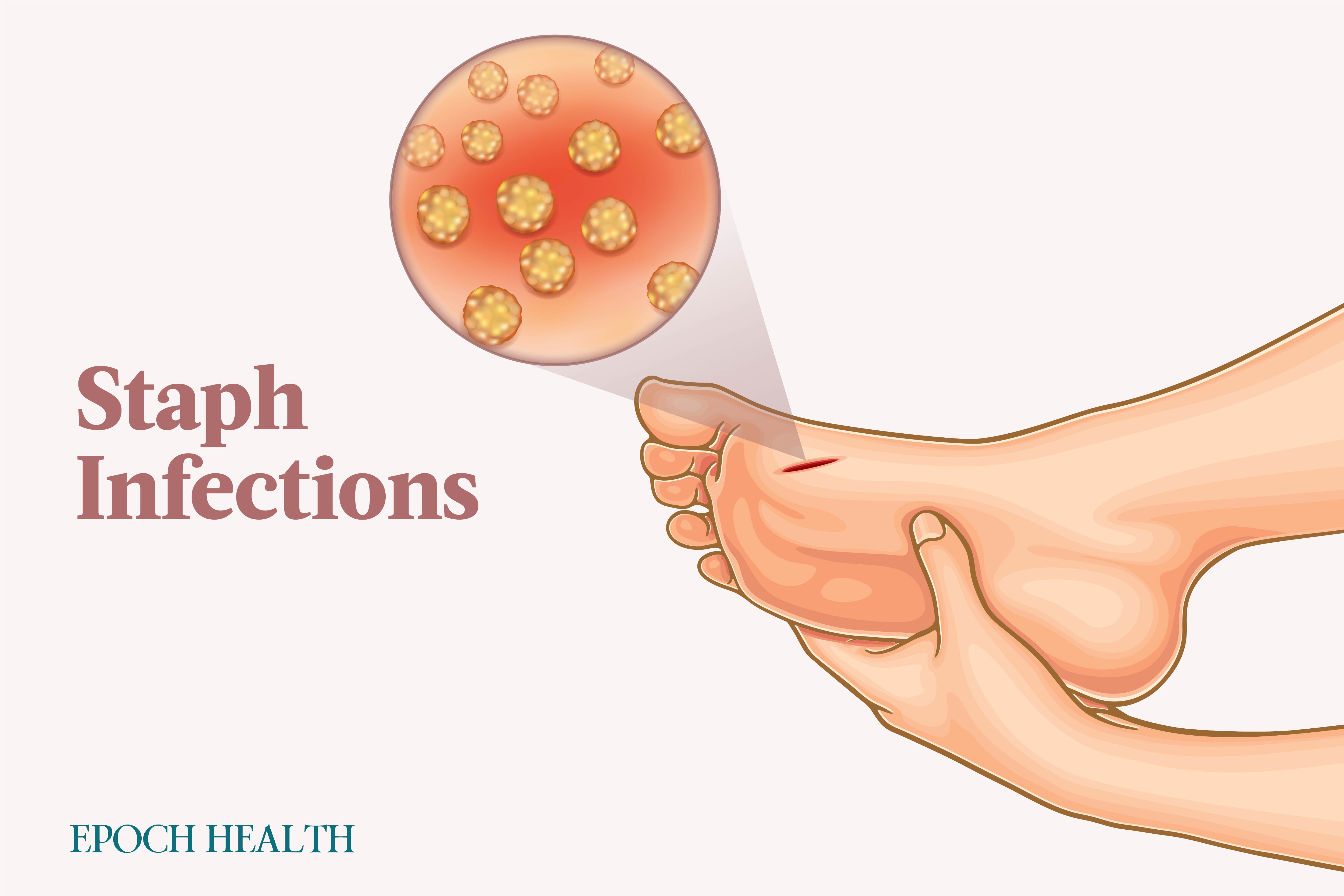

What Are the Types of Staph Infections?
Coagulase-negative species, which do not clot blood, are usually less virulent than S. aureus.
- Soft tissue infections, including skin abscesses and wound infections.
- Respiratory infections, including staphylococcal pneumonia and other types of lung infection.
- Food poisoning, often caused by consuming food contaminated with toxins produced by S. aureus.
- Bone and joint infections, including osteomyelitis and septic arthritis.
- Bloodstream infections, like bacteremia and septicemia.
- Infective endocarditis, a rare yet serious inflammation of the inner lining of the heart’s chambers and valves.
- Toxic shock syndrome (TSS), due to bacteria releasing toxins, severely affecting various bodily systems.
- Vascular infections, which can involve inflammation and the formation of pus within the vein wall.
- Meningitis, or the inflammation and infection of the meninges, which are the protective membranes enveloping the brain and spinal cord. S. aureus is a rare cause, usually associated with post-neurosurgical complications.
- Staphylococcal neonatal infection, which typically manifests within the first four weeks after birth and can range from limited skin infection to life-threatening sepsis.
What Are the Symptoms and Early Signs of Staph Infections?
Soft Tissue Infections
Soft tissue staph infections include:- Abscesses: A skin abscess caused by staph infection is a painful and warm lump, often with round shape, containing pus. It may lead to pus leakage and an increased temperature. Abscesses look like boils, but also involve deeper tissues such as fat and sometimes muscle.
- Wounds: A wound secondarily infected with staph is prone to tenderness and swelling, often accompanied by the presence of pus.
- Boils: Boils are often caused by S. aureus. They affect groups of hair follicles and nearby skin tissue. A boil starts as a tender, pinkish-red swelling on the skin, eventually becoming a water-filled cyst. Pain increases as it fills with pus, and relief comes when it drains, either naturally or by opening.
- Impetigo: Impetigo is a highly contagious infection that typically affects children aged 2 to 5. It manifests as red, itchy sores on exposed skin such as around the nose and mouth or on the arms and legs. These sores break open, leaking fluid or pus for a few days, then form a crusty yellow scab and heal without scarring.
- Cellulitis: Cellulitis is a deep skin infection typically occurring on the arms and legs but can develop in various areas, including around the eyes, mouth, anus, or abdomen. Its symptoms include redness, swelling, tenderness, warm skin, pain, bruising, and blisters.
- Stye: A stye is a red and occasionally painful bump on the eyelid resulting from a blocked oil gland at the edge of the eyelid. The blockage often occurs from dead skin cells, or other debris such as cosmetics. Once the gland is blocked, bacteria can begin to grow.
- Staphylococcal scalded skin syndrome (SSSS): SSSS is a severe skin infection in children requiring medical intervention, with symptoms such as fussiness, tiredness, fever, redness of the skin, and fluid-filled blisters resembling scalding or burning. It is more prevalent in the summer and fall, and children under the age of 5 are at the highest risk.
Respiratory Infections
Symptoms and signs of staphylococcal pneumonia, a respiratory infection, include changes in overall condition, pallor, high fever, or hypothermia (abnormally low body temperature), often with signs of shock, such as dangerously low blood pressure. Skin lesions may or may not be present. Other symptoms include nausea, vomiting, diarrhea, painful abdominal bloating, a dry cough, rapid breathing, and difficulty breathing.Staphylococcal Food Poisoning
Staph food poisoning manifests with rapid onset of nausea, vomiting, stomach cramps, and diarrhea, typically within 30 minutes to 8 hours after consuming food containing staph toxins. If a patient loses too much fluid, dehydration may also take place. The symptoms last no more than a day, and severe illness is uncommon. Importantly, the illness is not transmissible from person to person.Bone and Joint Infections
Bone and joint infections typically cause fever, pain, and swelling.

Bloodstream Infections
Staphylococcus aureus bacteremia is a severe bloodstream infection linked to serious complications, such as infective endocarditis and recurrent infection. Common symptoms include bone pain, joint pain, a long-lasting fever, and sweating.Infective Endocarditis
Symptoms and signs of endocarditis may include:- Fever.
- Chills.
- Chest pain.
- Cough.
- Muscle, joint, and back pain.
- Night sweats.
- Shortness of breath.
- Painful red or purple bumps.
- Painless, flat red spots on the palms or soles.
Toxic Shock Syndrome (TSS)
The typical symptoms and signs of staphylococcal TSS include fever higher than 102 F, chills, headache, fatigue, a red and flat rash covering most of the body, shedding of skin (especially on palms and soles), low blood pressure, vomiting, diarrhea, muscle pain, decreased urine output, bruising, and disorientation.Vascular Infections
Septic phlebitis, an infection of any vein, may present with fever, chills, and local symptoms such as redness, pain, tenderness, and occasionally pus drainage from the affected vessel.Meningitis
Meningitis can emerge abruptly with symptoms and signs such as a high fever, vomiting, headache, a non-fading rash when a glass is pressed against it, neck stiffness, sensitivity to bright lights, drowsiness or unresponsiveness, and seizures.What Causes Staph Infections?
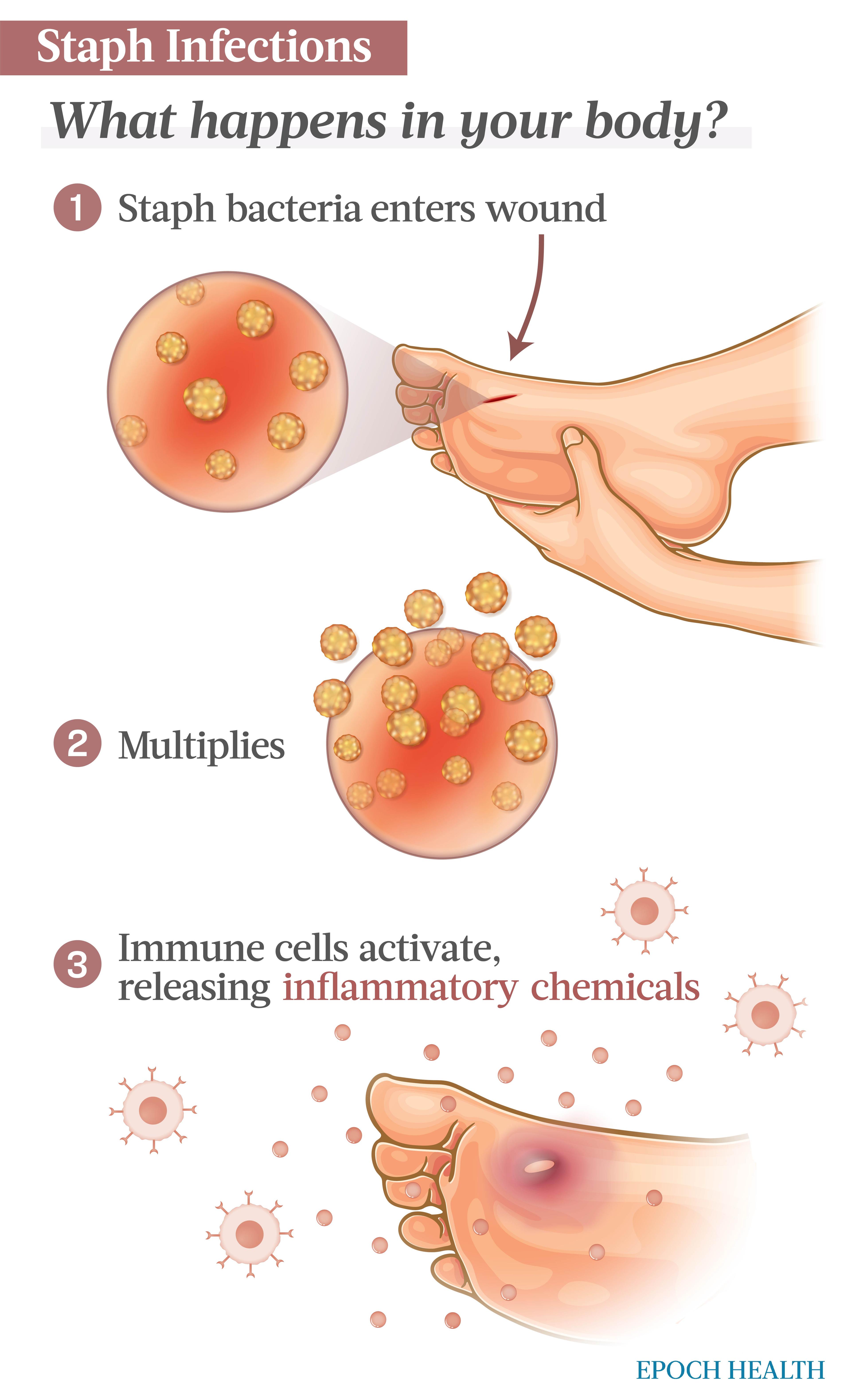
It is very common for people to carry staph bacteria on their skin or in their nasal passages without developing an infection. This is referred to as staph colonization.
Pathogenic staphylococci are widespread and can be temporarily present in the front part of the nose in and on the skin. From these locations, staph bacteria have the potential to cause infection in the host and others.
Staph bacteria can spread through various means, including contact with contaminated surfaces, person-to-person transmission in group living situations, and from one area of the body to another.
In addition, staph bacteria can be transmitted through various objects such as clothing, door handles, athletic equipment, and medical devices. Improper food handling by people with staph infections can also lead to the staph food poisoning of others.
Warm and humid environments, as well as excessive sweating, may also contribute to staph infections.
Who Is at Risk of Staph Infections?
- People with skin issues: People with skin issues such as eczema, significant burns, or a wound may be more susceptible to staph skin infections.
- People with chronic conditions: Such chronic conditions include diabetes, cancer, and lung disease.
- Those with weakened immune systems: People may experience weakened immunity due to factors such as HIV, medications taken to prevent organ rejection, medications to control rheumatoid arthritis, or chemotherapy.
- People in crowded environments: Staph outbreaks have been observed in specific populations, including prisoners, military recruits, daycare attendees, and other groups residing in crowded settings.
- Health care providers and hospitalized patients: Medical professionals working in hospitals and clinics, visitors to medical facilities, and patients who are currently hospitalized are prone to staph infection.
- People with invasive or implanted medical devices: Using medical equipment, such as kidney dialysis, catheters, feeding tubes, and breathing tubes, can increase the risk of staph exposure. People with implanted medical equipment, including pacemakers, artificial joints, and heart valves, can also be more susceptible to staph infections.
- Athletes in contact sports: Engaging in contact sports exposes athletes to potential skin-to-skin contact with others or shared equipment.
- Injection drug users: Injection drug users who share items or have inadequate hygiene practices can facilitate the spread of bacteria.
- Infants and children: Children and infants are susceptible to impetigo, especially if they attend daycare or school.
- Those who do not follow food safety procedures: People who do not store and prepare foods according to general food safety standards are subjecting themselves and people who eat their foods to a higher staph infection risk.
- Gay men: Men engaging in same-sex relationships face an increased risk of methicillin-resistant Staphylococcus aureus (MRSA) infections. MRSA is resistant to the antibiotic treatments often used to treat staph infections, making it challenging to treat.
How Are Staph Infections Diagnosed?
Your doctor will ask about the signs and symptoms you are experiencing, inquire about your medical history and recent environments, and perform a physical examination.
- Gram stain: Tissue or bodily fluid is viewed under a microscope to identify the presence of bacteria in suspected infection sites, including the throat, lungs, skin wounds, and bodily fluids.
- Cultures: To perform a culture, a cotton swab is usually used to obtain a sample from an open sore, or from blood, urine, or sputum. The sample undergoes laboratory testing to identify the presence of staph bacteria.
- Skin biopsy: When a staph skin infection is present or suspected, the doctor takes a sample of skin cells for detailed examination under a microscope, typically performed by a specialized pathologist.
- Drug sensitivity test: This assesses the sensitivity of the specific staph bacteria to antibiotics by exposing standardized concentrations of the bacteria to specific concentrations of the drugs.
- Bone biopsy: Performing a bone biopsy, whether through an open surgical procedure or through the skin, is essential for identifying the bacteria strain causing the bone infection and conducting sensitivity testing.
- Imaging tests: Imaging tests, including X-ray, MRI, and CT scans, may be conducted to search for indications of infection.
- Polymerase chain reaction (PCR) test: The PCR test is a rapid DNA amplification technique used for studying specific DNA segments of the bacteria. The results can be much faster than standard cultures.
What Are the Complications of Staph Infections?
- Sepsis: Sepsis, which can occur with or without shock, is a very serious type of blood poisoning that requires immediate medical attention.
- Septic shock: Septic shock occurs when a severe drop in blood pressure, triggered by an infection, poses a life-threatening risk. Its mortality rate is 20 to 30 percent.
- Pneumonia: Staphylococcal pneumonia can result in complications like severe necrotizing pneumonia, bacteremia, sepsis, and respiratory failure leading to invasive mechanical ventilation.
- Heart issues: Prosthetic valve endocarditis and native valve endocarditis can lead to heart issues, including blocked blood vessels, dilated arterial walls, and abscesses around heart valves. It can also lead to heart failure.
- Recurrent staph infections: Recurring staph infections, including those caused by resistance to antibiotics, can be a serious complication.
What Are the Treatments for Staph Infections?
Antibiotics
If antibiotics are required, the duration, method of treatment, and dosage will depend on factors such as the site of infection, the severity of the illness, and the likelihood of resistant strains. Before the culture and sensitivity results, the doctor will typically prescribe a broad-spectrum antibiotic for the most likely types of bacteria infection. This may be altered after the sensitivity results return.When taking antibiotics, it’s crucial to complete the entire course of prescribed antibiotics, even if the patient feels better before finishing the last dose. Incomplete treatment may contribute to the emergence of drug-resistant staph bacteria.
As a general rule, semi-synthetic penicillins or cephalosporin are the preferred treatment for strains sensitive to antibiotics, while vancomycin is used for the MRSA strains.
- The use of an antibacterial chlorhexidine soap for skin cleansing.
- Applying mupirocin antibiotic ointment inside the nostrils.
Abscess Drainage
For MRSA infections causing pimples or abscesses, antibiotics may not be used. The primary treatment involves promoting drainage through warm compresses or having a health care provider drain the pus with a needle or scalpel. Self-draining is not recommended to avoid spreading the infection.Surgery
Surgery may be necessary for:- Bone infections.
- Medical device infections.
- Dead tissue.
Self-Care
For mild staph skin infections, a doctor may recommend home treatment, including:- Soaking the infected area in warm water.
- Applying warm, moist washcloths to the infected areas, and washing with chlorhexidine soap immediately afterward and rinsing.
- Applying a heating pad for around 20 minutes, several times a day.
- Using antibiotic ointment, if advised by the doctor.
- Taking pain relievers, such as acetaminophen and ibuprofen.
- Covering the affected skin with a clean dressing.
- Avoiding shaving the infected area; if necessary, trimming is preferable until healed.
How Does Mindset Affect Staph Infections?
- Stress and immune function: Chronic stress may weaken the immune system, making it harder for the body to fend off infections, including those caused by staph bacteria. Stress can lead to the release of stress hormones such as cortisol, which, when prolonged, may suppress immune responses. Having a positive mindset can relieve stress by cultivating a hopeful outlook.
- Healthy lifestyle choices: A positive mindset can be associated with healthier lifestyle choices, including a balanced diet, regular exercise, and sufficient sleep. These factors contribute to overall health and immune function, indirectly affecting the body’s ability to resist and recover from infections like staph.
What Are the Natural Approaches to Staph Infections?
1. Medicinal Herbs and Plant-Based Remedies
Around the world, many cultures have produced various herbal remedies against different types of infections, with some of them dating back over a thousand years.Garlic-Based Stye Remedy
Bald’s Leechbook, an English medical manuscript possibly from the 10th century, contains an eye salve remedy for styes, most of which are presently caused by S. aureus. Lab culture and animal research showed that the treatment with this remedy in a simulated soft tissue infection consistently eliminated existing S. aureus biofilms, which are known for causing persistent infections due to their ability to attach to living tissues and medical devices and their inherent resistance to antibiotics.- Allium species, such as garlic: They contain ajoene and allicin, which have the potential to prevent biofilm formation by S. aureus and other bacteria.
- Bile (oxgall) and wine: These may possess antibacterial properties, such as restricting excessive bacterial growth.
- Copper salts: The remedy is prepared in a brass vessel. The copper salts from the container can further enhance the combination’s antimicrobial effect, while brass surfaces can prevent bacterial growth.
Cameroonian Medicinal Plants
In one lab culture study, the extracts of 12 selected Cameroonian medicinal plants were prepared through maceration in methanol at laboratory temperature, and their activities against 11 clinical isolates of S. aureus were evaluated.Traditional Chinese Medicinal Plants
In one lab study, ethanol extracts of 21 Chinese medicinal plants displayed anti-S. aureus effects, aligning well with their traditional Chinese medicine indications for skin infections. These plants include Mallotus yunnanensis, a type of kamala tree, and Skimmia arborescens, a species of shrub, both of which demonstrated the most significant potency against staph bacteria.2. Tea Tree Essential Oil
Melaleuca alternifolia oil, commonly known as tea tree oil, has shown promising effectiveness in treating S. aureus-caused skin and wound infections. Tea tree oil, known for its antimicrobial and anti-inflammatory properties, has a history of medicinal use. Also, when applied topically in low concentrations, it has demonstrated few side effects, with contact dermatitis being the most common.3. Honey
Honey has been used for medicinal purposes for over 4,000 years, as it demonstrates antimicrobial properties against various bacteria.4. Blue Light Therapy
Blue light therapy is a non-invasive treatment that uses blue light to treat certain skin conditions. When subjected to blue light, bacteria release significant energy within the cells, generating free radical species that move within the cells, causing damage to bacterial proteins and DNA.5. Probiotics
According to one study, Bacillus bacteria, which are commonly found in probiotic digestive supplements, could help eliminate S. aureus infections, including the ones related to MRSA.How Can I Prevent Staph Infections?
- Wash your hands after using the bathroom, blowing your nose, playing with pets, and before and after visiting a health care facility.
- Follow food safety guidelines when preparing food, including washing hands, wearing gloves, and keeping food at safe temperatures.
- Use alcohol-based gels with at least 60 percent alcohol.
- Refrain from sharing items with people who have a staph infection.
- Keep all wounds and cuts covered until fully healed, and properly dispose of any contaminated bandages.
- Regularly use a disinfectant to wipe frequently touched surfaces such as countertops, doorknobs, and light switches.
- Use tissues to cover your mouth during coughing or sneezing.
- Take daily showers with antibacterial soaps.
- Maintain strong immunity by having a healthy lifestyle, eating a nutritious diet, engaging in regular exercise, and avoiding alcohol, smoking, and illicit drugs.
- Before a planned surgery, inform the doctor about frequent staph infections or previous MRSA infections, if any.
- Women should change tampons and other hygiene products at least every 4 to 8 hours and opt for the lowest absorbency tampon available.
- If breastfeeding, ensure complete breast emptying at each feeding and allow nipples to air dry if possible.
- Those who play contact sports should maintain personal hygiene, and clean shared sports equipment and facilities regularly.