Somewhere, lurking in your yard, is a plant that can soothe a stomach ulcer, heal a cut or scrape, draw out toxins, and bring a splinter to the surface of the skin. You’ve likely seen it many times, perhaps never knowing that it was a formidable healer.
That plant is plantain—not the banana-like fruit, but Plantago major, the flat-leafed rosette that pushes up through sidewalk cracks, lawn edges, and garden borders. Although some see it as a bothersome weed, plantain has a long history of healing. Ancient Persian physicians prescribed it, the philosopher Avicenna wrote at length about it, and for centuries, grandmothers taught their grandchildren to chew it and place it onto a bee sting before the swelling began.
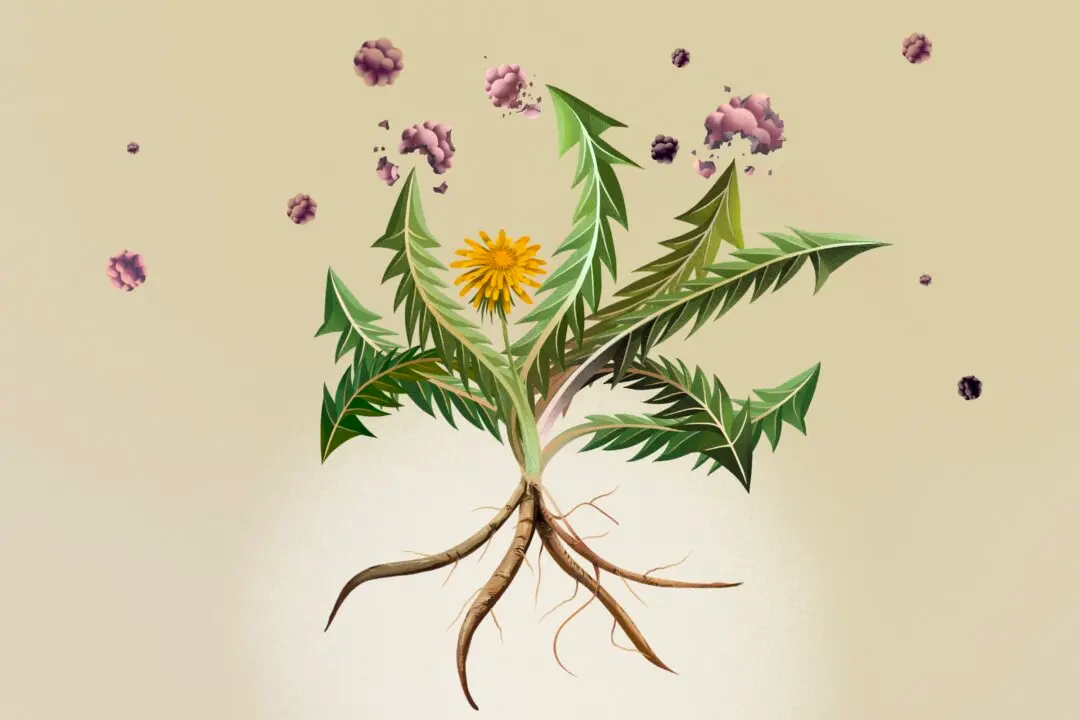
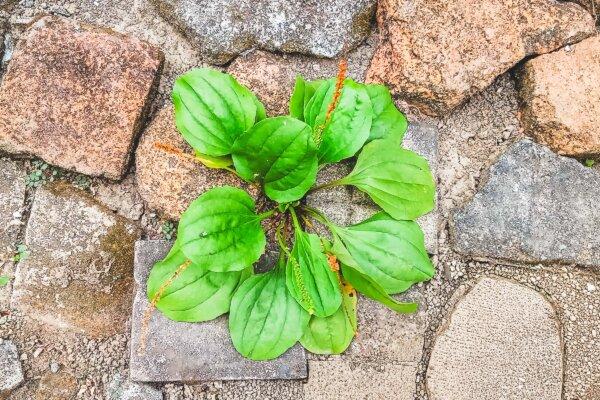
Plantain is easy to identify once you know what to look for. Its leaves are egg-shaped with a distinctly crinkled texture and five to nine prominent veins that run their length. When the leaf is pulled apart, the veins stretch out like strings. From the center of the rosette rise erect, flowering stems bearing small, inconspicuous, greenish-brown flowers with stamens ranging from white to purple.
A Long History With Humans
Plantain thrives in places where people live. Because it spread along pathways and roadsides and flourished in many regions with European settlers, it took on common names such as white man’s foot, Englishman’s foot, cart track plant, and road weed. It is known for its tenacity—surviving repeated mowing, trampling, and compacted soil that defeats most plants.
Plantain’s Best-Known Superpower: Wound Healing
Plantain’s most celebrated use is as a first-aid remedy for the skin—cuts, scrapes, insect bites, and splinters.“Plantain is one of those plants that heals inside and outside,” Kerry Adams, a clinical herbalist with nearly 50 years of practice, told The Epoch Times.
“Every grandmother teaches their grandchildren about using it—making it, chewing it, and putting it on for a bee sting.”
Plantain is classified as a vulnerary—an herb applied externally to heal minor wounds and promote tissue repair, in the same category as aloe, comfrey, and marigold. It is also anti-inflammatory, antimicrobial, and analgesic, which makes it well-suited for basic first aid.
Forgotten Healer of the Gut
Plantain has many gifts, and one of its lesser-known uses is as a remedy for gut conditions such as indigestion, gastritis, colitis, and stomach ulcers, as well as general inflammation of the digestive tract.The main reason plantain is so valuable for the digestive system is that it belongs to a category of herbs called demulcents. These herbs are rich in mucilage–a gel-like soluble fiber that becomes slippery when mixed with water. When taken internally, such as in plantain leaf tea, the mucilage coats and soothes irritated and inflamed mucosal lining and tissue, creates a protective barrier, and allows the body to begin healing.
The leaves and seeds work in slightly different ways. Plantain contains tannins, which act as astringents that gently tighten and tone. Plantain leaves have strong anti-inflammatory action and are soothing to mucus membranes, making them especially good for mild diarrhea, as they bind together fluids and repair and calm the mucosa.
Plantain seeds contain more mucilage than the leaves do, making them an effective remedy for constipation. When mixed with water, they swell, adding bulk and moisture to the stool, helping it move through the system, and regulating motility.
Plantain and, indeed, many herbs do not treat symptoms; they interact with living systems and affect the environment, helping the body rebalance so it can heal itself. Plantain protects, soothes, and heals inflamed, irritated tissues, allowing the body to recalibrate and return to equilibrium.
“So for ulcers, colitis, and hot cough, you can make a syrup out of it,“ Adams said. ”Urinary tract infections, tooth infections, just chew it and put it in your mouth. It’s just an amazing plant, and it’s everywhere.”
She said that in addition to Plantago major, there is another common plantain called Plantago lanceolata, or ribwort plantain.
“I find it’s better for respiratory issues, more astringent for conditions of excess mucus production, and making cough syrups—though either can be used,” she said.
Traditional Uses Meet Modern Research
Modern research is validating many of plantain’s traditional uses.Modern studies have also validated plantain’s benefits for the gastrointestinal system, finding it effective for upper and lower gastrointestinal bleeding, hemorrhoids, intestinal ulcers, and constipation.
How to Prepare and Use Plantain
For internal use, Adams recommends tea as one of the most accessible preparations. To make plantain leaf tea, pour 1 cup of boiling water over 2 teaspoons of dried herb, and steep for 10 minutes.Depending on the individual and his or her needs, Adams often mixes it with other herbs that heal mucus membranes such as calendula, chamomile, or marshmallow.
Other preparation methods include infusing it into honey, creating a tincture, or preparing a salve for external use.
“The small leaves can be used as food, and they’re really rich in minerals and vitamins,” she said.
Plantain is considered very safe, but, as with any herb, always consult a trusted health care practitioner before taking it if you are on medications, have a health condition, are pregnant, or nursing.
Final Thoughts
Plantain has long thrived alongside humans, who have trusted it to address issues we encounter every day, from occasional scrapes and toothaches to indigestion and diarrhea. Its abundance and persistence have made it a staple herb in home medicine cabinets for centuries.Ultimately, plantain shows us that the most useful medicine in your neighborhood doesn’t have to come from a bottle; it may be right under your feet.