I often fail to handle certain stressful situations well. I get curt, self-centered, and easily frustrated.
But sometimes I stay perfectly calm and considerate.
The reason I go one way or the other relates to the key truth about stress that we rarely talk about: that it’s often a choice.
That’s because we don’t really know how to handle psychological stress.
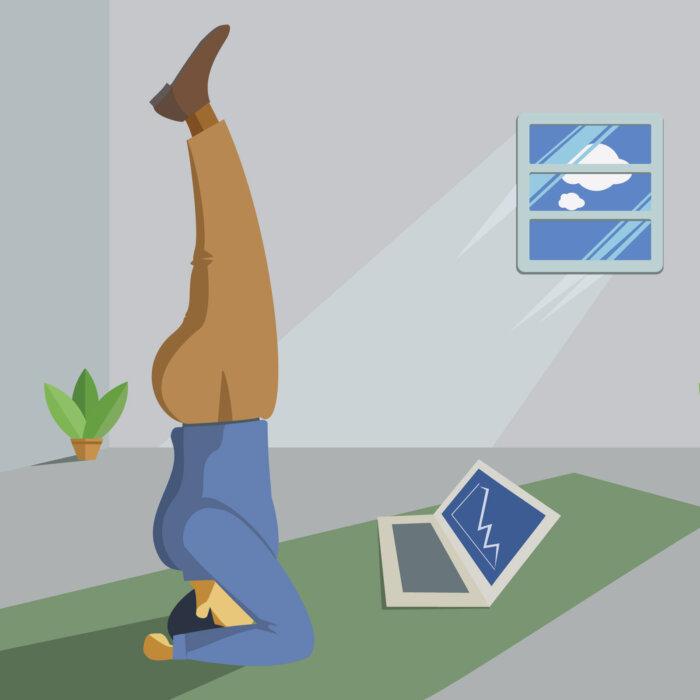

In some situations, this stress is a critical boost to our survival. Though, typically it’s not.
If stress doesn’t subside, it becomes long-term or chronic stress. This is the stress that comes with too much debt and not enough time to unwind.
Beyond well-studied health effects, stress has other consequences, like triggering compulsive and escapist behaviors, such as eating poorly or watching too much TV. Any addict will tell you that few things can trigger a relapse as easily as stress.
That’s because stress is our warning and action system. It demands resolution. Instead of resolving it, people use coping mechanisms like shopping or drinking to temporarily quiet it and that only compounds the problem.
After Viktor Frankl survived 18 months in the Auschwitz concentration camp in 1944, he came to an understanding that made him one of the most influential neurologists and psychiatrists of the 20th century, best known for his 1946 book, “Man’s Search for Meaning.”
The power to control our own thoughts and attitudes is one of the most powerful abilities a human can gain. In some ways, it is the defining quality of a dignified human life. The more we exercise this power, the stronger our minds become.
It lets us escape the endless triggers of stress and find a better way to resolve difficult challenges—with the full benefit of our best mental capabilities.