This copy is for your personal, non-commercial use only. Distribution and use of this material are governed by our Subscriber Agreement and by copyright law. For non-personal use or to order multiple copies, please contact The Epoch Times Reprints.
People with sleep apnea who have low oxygen levels while sleeping are at an increased risk of developing epilepsy after age 60, according to a new study funded by the National Institutes of Health (NIH). The findings of the study, published in the journal Sleep, could help researchers better understand the relationship between late-onset epilepsy and sleep disorders while also opening the door for potential treatment options.
“There’s increasing evidence that late-onset epilepsy may be indicative of underlying vascular disease, or neurodegenerative disease, even potentially as a preclinical marker of neurodegenerative disease,” Dr. Rebecca Gottesman, an author of the study, said in a news release. “Compared to other age groups, older adults have the highest incidence of new cases of epilepsy—up to half of which have no clear cause.”
Low Oxygen Levels While Sleeping Triples Risk
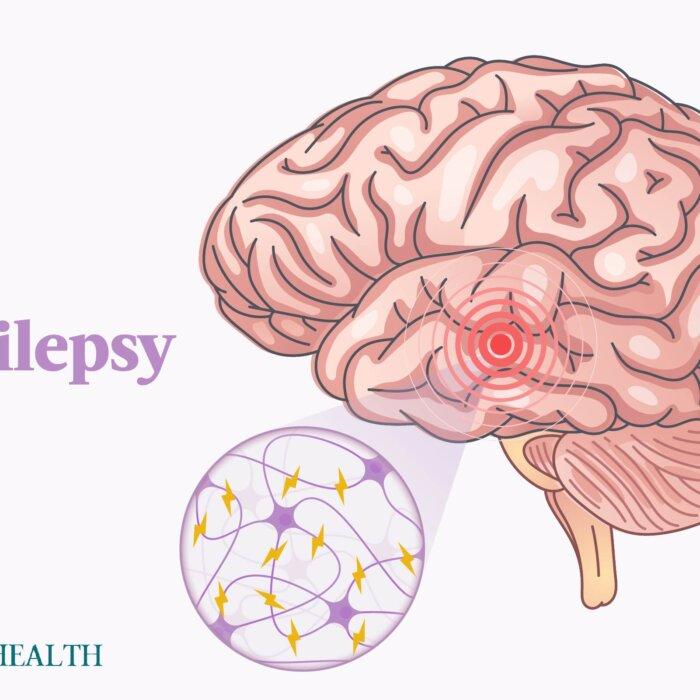
Epilepsy is a neurological condition that can cause randomly recurring seizures. According to the Epilepsy Foundation, epilepsy is the fourth most common condition affecting the brain, affecting roughly 3 million Americans and 50 million people worldwide. The Epilepsy Foundation also reports that 10 percent of people will have seizures at least once. Most people are diagnosed with epilepsy if they have two unprovoked seizures or one unprovoked seizure but are at a high risk of more.
Sleep disorders are even more common than epilepsy. According to a research brief published by the U.S. Centers for Disease Control and Prevention (CDC), three in four adults have symptoms of a sleep disorder. One sleep disorder, sleep apnea, is when a person’s breathing stops and starts again many times during sleep. According to the National Council on Aging, roughly 39 million American adults suffer from obstructive sleep apnea, and 936 million adults globally have mild to severe obstructive sleep apnea. Snoring is the most common symptom, affecting up to 94 percent of patients.
In the NIH study, researchers identified individuals with late-onset epilepsy by reviewing data from more than 1,300 participants who had sleep-disordered breathing and cardiovascular disease. The research team found that people who experienced nocturnal hypoxia, which occurs when oxygen saturation falls below 80 percent, were three times more likely to develop late-onset epilepsy than those who did not. Additionally, study participants who reported themselves as having sleep apnea later in life were twice as likely to develop late-onset epilepsy as those without the sleep disorder.
How Does This Affect Prevention Strategies?
Though sleep apnea has been linked to other detrimental effects, the connection to epilepsy has not been noted until now. Sleep apnea’s link to nocturnal hypoxia could mean that chronic low oxygen levels during sleep could change the brain enough to trigger seizures. The research team noted that the study could not determine whether treating or preventing sleep apnea could reduce the risk of epilepsy. Still, it does suggest it could be a target for reducing the risk of late-onset epilepsy.
Currently, there is no cure for late-onset epilepsy, but there are treatments available to help manage the condition. According to the American Association of Neurological Surgeons, about seven in 10 people with epilepsy can control their seizures with medications or surgery. Such medications work by reducing how often brain cells send excessive or confusing electrical signals that can provoke seizures. Many individuals can also manage their condition with diet therapy, with many utilizing the keto or modified Atkins diet.
“Discovering a reversible cause for the development of any type of idiopathic epilepsy is an aspirational goal for epilepsy researchers or clinician,” Dr. Christopher Carosella, the study’s lead researcher and assistant professor of neurology at Johns Hopkins University, said in the press release. “We hope this study might be a small first step in that direction and also an encouragement to evaluate and treat sleep disorders in patients with epilepsy.”
A.C. Dahnke is a freelance writer and editor residing in California. She has covered community journalism and health care news for nearly a decade, winning a California Newspaper Publishers Award for her work.