Story At-a-Glance
- Wearing a weighted vest while walking can lead to significant gains in physical performance and health.
- It engages more muscles, helping to build strength and endurance and may help boost metabolism, maintain strong bones, and make everyday tasks easier.
- In a study of women between the ages of 65 and 74 who took part in an exercise program while wearing a weight vest, lower limb muscle power improved by 10 percent to 11 percent.
- Wearing a weighted vest can pose a risk of injury, particularly if the weight is too heavy, it’s not balanced properly or you have a pre-existing condition like arthritis.
- To minimize risks, start with a light weight and gradually increase the load as your body adapts; also be sure the vest fits properly and the weight is distributed evenly.
Benefits of Wearing a Weighted Vest on Your Next Walk
The extra effort required to carry a weighted vest will have your heart pounding much faster than an ordinary walk and can lead to significant gains in physical performance and health. Adding extra weight requires more energy expenditure, leading to a higher calorie burn and improved cardiovascular health compared to walking without additional weight.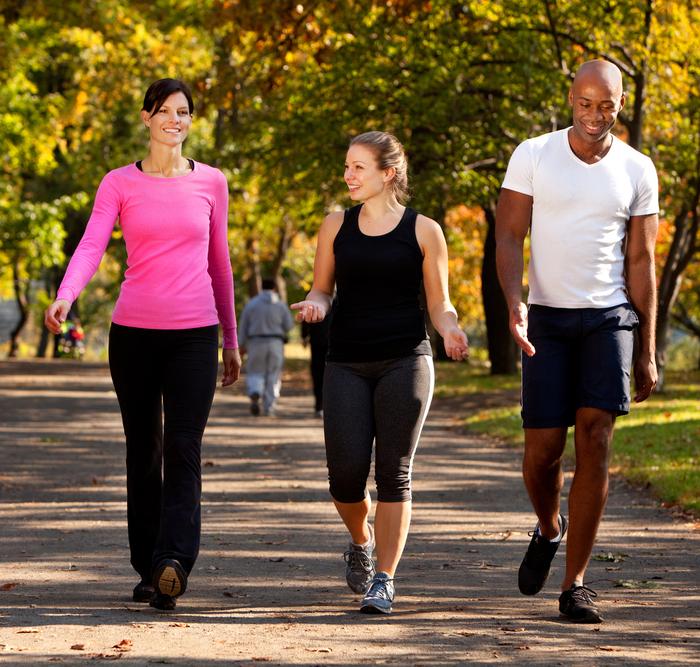

It turned out that wearing a weighted vest increased oxygen use and exercise intensity, especially at higher speeds. The force on the participants’ legs and the rate of impact were also higher when wearing heavier vests. The researchers concluded that wearing a weighted vest while walking increases the energy required, makes the exercise more intense, and puts more load on your bones and muscles.
Are Humans Made to Carry a Load?
While many people turn to running for exercise, Michael Easter, professor at the University of Nevada, Las Vegas, argues that we’re not born to run, we’re born to carry.“New technology killed our need to run or carry. We went from mules and oxen carrying our stuff to, now, shopping carts, wheeled suitcases, and Amazon Prime dropping anything and everything off at our doors. But unlike running, most of us never reengineered carrying back into our days—except for ruckers.”The term rucking comes from rucksack marches, or rucks, which are strenuous exercises commonly used during military boot camp training. However, rucking, which involves walking or hiking with a weighted backpack, has also gained traction as a fitness activity for civilians looking to improve their endurance and build muscle.

What Are the Risks of Walking With a Weighted Vest?
Wearing a weighted vest can pose a risk of injury, particularly if the weight is too heavy or you have a pre-existing condition like arthritis. The added weight can increase the load on your joints, particularly in your knees, hips and ankles, which could lead to joint pain or make existing joint issues worse.To minimize these risks, it’s important to start with a light weight and gradually increase the load as your body adapts. Additionally, ensuring proper fit and distribution of the weight, maintaining good posture, and allowing for adequate recovery time can help you avoid any potential issues. The vest should feel comfortable, be evenly weighted, and should not restrict your movement or breathing.
Why Walking Is Good for You
If you’re new to exercise or haven’t been active for a while, it may be best to start walking without a weighted vest until you build a solid fitness base. Even simple walking can lead to impressive fitness gains, without the risk of overdoing it.However, in the case of moderate exercise—loosely defined as exercising to the point where you’re slightly winded but can still carry on a conversation—there’s clear evidence that more is better and cannot be overdone.
Walking Offers Mind-Body Benefits
There are psychological, mind-body benefits of walking too, whether you walk alone or with a group—particularly when you walk in a natural environment. Researcher Marta Anna Zurawik explains in the journal Human Movement:19“For many people, a solitary walk in the natural environment is preferable as it allows for a closer communion with nature. In the solitude, individuals seek to withdraw from complex social environments, which they have little control over.
“Thus, lone walking provides an enjoyable antidote to stress and mental fatigue through engagement with the physical environment—aesthetical awareness, fascination with the countryside, the experience of being away from daily routines, and distancing oneself from daily stresses and problems.”That being said, walking with others provides social benefits that may relieve loneliness and isolation:20
“Group walking is a form of togetherness, even when one is alone among strangers, because it allows walkers to establish and maintain an intimacy and familiarity with the community and create a sense of belonging to a special group, which with time may become a center of one’s social life.
“Group walks in natural environments can have an effect on well-being greater than solitary walking as they provide social settings for interactions, developing and strengthening friendships, expressing and sharing interests. This form of supportive sociality and emotional closeness combats feelings of loneliness and isolation, which can have significant benefits for social well-being.”
How Much Walking Is Ideal?
As for how much walking is ideal, it depends on your age, health goals, and fitness level. Whether or not you’re wearing a weighted vest should also be considered. The average American walks about 3,800 steps a day, which is just short of two miles. It’s about 2,000 steps per mile, and every 1,000 steps you get on average per day reduces your mortality by 10 percent to 15 percent, O’Keefe notes. In our interview, he explained:“There’s been more and more studies on this all the time, using activity trackers. We’re getting big data, like the UK biobank, which is a half a million people, and there’s a sizable subgroup of them who have been wearing activity trackers and been followed for 10 years now.
“Clearly, more is better. You get the big gains going from sedentary lifestyles—2,000 to 3,000 steps a day—up to 7,000 or 8,000. [Here] you have this very steep reduction in mortality, improvement in survival. It continues to about 12,000 steps a day. Most of the studies show that it plateaus at 12,000.”To ensure you’re engaging in the right amount of walking for you, I recommend tracking your steps using a fitness tracker like the Oura ring. Most cellphones also have free activity trackers, so in a pinch you could carry your phone with you. It’s not ideal due to the electromagnetic fields emitted, but you could put it in airplane mode or, better yet, in a Faraday bag to reduce those risks.
Sources and References
- 1, 19, 20 Human Movement 2020; 21(2):1-8
- 2 J Clin Med. 2019 Jan; 8(1): 41., Abstract
- 3, 11 Yahoo May 28, 2024
- 4 Med Sci Sports Exerc. 2006 Apr;38(4):746-52. doi: 10.1249/01.mss.0000210198.79705.19
- 5 Ergonomics. 2022 Jan;65(1):147-158. doi: 10.1080/00140139.2021.1961876. Epub 2021 Aug 6
- 6, 7 GoRuck October 2021, Why Humans Were Born to Ruck
- 8 CNN September 16, 2023
- 9 Well + Good October 28, 2023
- 10 J Strength Cond Res. 2019 Sep;33(9):2338-2343. doi: 10.1519/JSC.0000000000003243
- 12 Women’s Health September 15, 2023
- 13 Missouri Medicine March-April 2023; 120(2): 155–162
- 14, 15, 16 GeroScience. 2023 Dec; 45(6): 3211–3239
- 17, 18 Diabetes Care. 2015 Jun;38(6):1154-60. doi: 10.2337/dc14-2606. Epub 2015 Mar 20