This copy is for your personal, non-commercial use only. Distribution and use of this material are governed by our Subscriber Agreement and by copyright law. For non-personal use or to order multiple copies, please contact The Epoch Times Reprints.
Most Western home cooks treat herbs as an afterthought—a sprinkle of parsley for color, a few basil leaves for aroma—but what if herbs are more than a garnish? In Persian cuisine, herbs aren’t just a seasoning. Dried herb blends called “sabzi” anchor entire dishes as the main ingredient for both flavor and nutrition.
The star of this Persian herb stew is a full cup of dried sabzi ghormeh herbs—the equivalent of three cups fresh. The mix is available online and at many Middle Eastern grocery stores, making herb-rich cooking practical year-round. Combined with protein-rich black-eyed peas, which are traditionally used in parts of northern Iran, and eggs, this one-pot meal delivers meaningful nutrition alongside bold, complex flavor.
Why Herb Volume Matters
Using larger amounts of herbs contributes substantially more polyphenols and antioxidants than a teaspoon here and there. Each herb in sabzi ghormeh blends contributes something specific:
Parsley: An excellent source of vitamins A, C, and K, as well as folate and iron, and provides flavonoids known for their anti-inflammatory properties.
Leeks: Supply prebiotic inulin, which feeds beneficial gut bacteria and supports digestive health.
Fenugreek: One of the most researched culinary herbs, with studies confirming its role in supporting blood sugar regulation and improved cholesterol, triglycerides, and digestion.
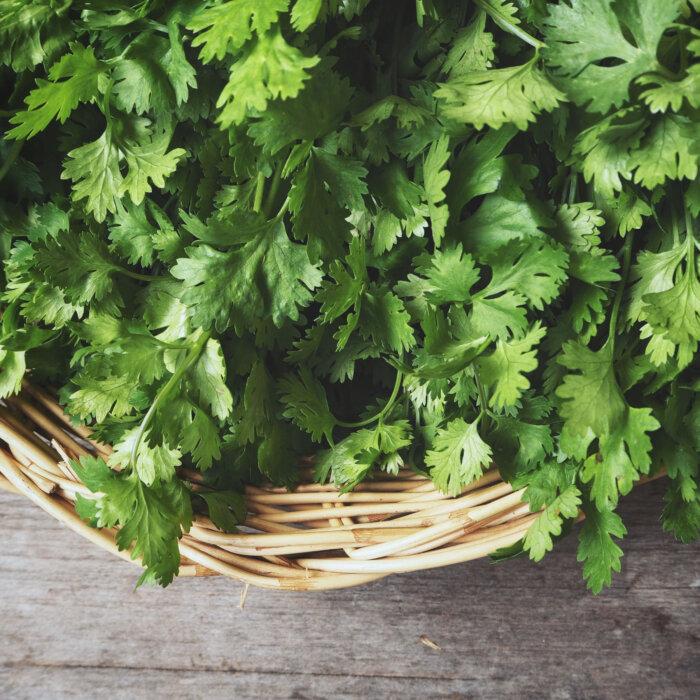
Cilantro: Contains phytochemicals that research associates with antioxidant, anti-inflammatory, and antimicrobial properties.
While cilantro is often included in traditional blends, it is not in all sabzi ghormeh mixes. The stew is plenty flavorful with or without it.
Other Ways to Use Herbs as Ingredients
Persian cuisine includes several herb blends, each designed for different dishes. Sabzi ghormeh is commonly used in the herb stew ghormeh sabzi and in rice dishes. Sabzi aash anchors a thick noodle-and-bean soup known as aash reshteh. Sabzi dolmeh is used in stuffed vegetables and grape leaves, sabzi kookoo in herb frittatas, and sabzi polo in herb rice.
While each blend has its own character, many can be adapted to grain bowls, egg dishes, yogurt sauces, dips, roasted vegetables, herb butters, and pasta sauces. Once you begin thinking of herbs as ingredients instead of seasonings, it becomes easier to incorporate larger amounts into everyday meals.
How to Make Persian Herb Stew With Black-Eyed Peas and Eggs
Fragrant herbs, tangy lime, tender black-eyed peas, and soft-cooked eggs transform this shortcut twist on ghormeh sabzi into a comforting one-pan meal with a deeply herbal, earthy flavor brightened by fresh lime.
1 1/2 cups low-sodium vegetable broth (more or less as needed)
1/2 teaspoon sea salt
1/4 teaspoon ground black pepper
1 or 2 limes, juiced, plus 1 thin strip peel
4 large eggs
1/2 cup plain goat or Greek yogurt
Instructions
Step 1: Rinse the black-eyed peas and place them in a bowl. Cover with three cups of filtered water and soak for at least four hours or overnight. Drain and rinse. Cook using one of the following methods, then drain and set aside:
Stovetop: Place peas in a Dutch oven or stockpot and cover with filtered water 1 inch above the peas. Bring to a boil, reduce the heat, and simmer for 20 to 25 minutes until tender.
Instant Pot (Pressure Cooker): Place soaked peas in the Instant Pot with two cups of filtered water. Cook on high pressure for four minutes, then natural release for 10 minutes before quick-releasing remaining pressure.
Step 2: In a medium bowl, cover the dried herb mix with warm water. Let stand five to 10 minutes to soften. Drain in a fine‑mesh strainer and squeeze out as much excess moisture as possible. Return the herbs to the bowl.
Step 3: In a large deep skillet or wide saucepan, heat the olive oil over medium heat until hot but not smoking. Add the onion and cook, stirring often, for eight minutes until soft and a few pieces start to brown.
Step 4: Add the squeezed herb mix to the pan. Cook, stirring frequently, for 10 minutes until the herbs are darker and fragrant.
Step 5: Stir in one cup of vegetable broth, the black-eyed peas, salt, and pepper. Using a vegetable peeler or small knife, cut one thin 2‑ to 3‑inch strip of lime peel and add it to the pan. Bring to a gentle simmer.
Step 6: Reduce the heat to medium-low and simmer, uncovered, for 10 to 15 minutes, stirring occasionally, until the flavors blend and the stew thickens slightly. Stir in two tablespoons lime juice, then taste and add more lime or salt if needed. If the stew becomes too thick, add a splash of broth, but keep it thick enough for the eggs to nestle on top rather than sink.
Step 7: Using the back of a ladle, make wells in the stew as you crack an egg into each one. Cover the pan and cook over medium-low heat about five to eight minutes until the whites are set and the yolks are cooked to your liking.
Step 8: Remove the lime peel strip. Serve right away in bowls with rice or warm flatbread or plated on top of tahdig (crispy Persian rice) with a dollop of yogurt.
Terri Ward/The Epoch Times
Notes
Look for the herb mix at Middle Eastern grocery stores or order online from retailers such as Amazon, Persian Basket, or specialty spice shops. Many brands offer shelf-stable dried blends that last for months.
Soaking and cooking dried beans reduces antinutrients, improves digestibility, and costs significantly less than canned. For more information on the health benefits of soaking and cooking legumes, read this article. If pressed for time, substitute two 15-ounce cans of black-eyed peas, drained and thoroughly rinsed.
Frequently Asked Questions
Q: Can I use fresh herbs instead of dried?
A: Yes. Fresh herbs work well, although fresh fenugreek leaves are generally unavailable, so you’ll need to use two tablespoons of dried fenugreek plus about four cups of finely chopped fresh herbs. Dried fenugreek can be found at the same Middle Eastern markets or online retailers listed in the note above.
For a flavor profile similar to the dried herb mix, use about 3 cups chopped parsley and 1 cup chopped leeks or scallions. If you'd like to include cilantro, use about 2 1/2 cups parsley, 1 cup cilantro, and 1/2 cup leeks or scallions. Skip the rehydrating and squeezing steps. Simply finely chop the fresh herbs and sauté them as directed.
Q: How long does the dried herb mix last?
A: Stored in an airtight container in a cool, dark place, dried herb mixes typically last up to 12 months. The flavor will be most potent in the first few months.
Q: Can I freeze leftovers?
A: Yes. This stew freezes well for up to three months. Let it cool completely, then store in airtight containers. Reheat gently on the stovetop, adding a splash of water or broth if needed.
Terri Ward
Author
Terri Ward, MS, FNTP, CGP, is a functional nutritionist, speaker, and educator with a master’s degree in human nutrition and functional medicine. She specializes in helping people with food sensitivities, inflammation, autoimmunity, and other gut-related issues and is the author of "God’s Prescription: A Faith-Based Plan to Shift Your Mindset and Reclaim Your Natural Health" and two cookbooks.