A patient developed a rare and fatal form of blood cancer just one month after receiving chimeric antigen receptor (CAR) T-cell therapy, according to a recent case study published in the New England Journal of Medicine.
The authors wrote that CAR T-cell therapy, which treats cancer by modifying the genes of a patient’s immune cells, did not cause the T-cell lymphoma.
CAR T-cell therapy has improved the prognosis for several blood-related cancers by utilizing patients’ own immune cells to fight cancer more effectively. However, as the treatment becomes more widespread, concerns are growing over rare but serious adverse effects, including the development of secondary cancers.
The patient had clonal hematopoiesis, a condition in which some blood stem cells acquire changes to their DNA and multiply more than usual.
The condition tends to occur alongside aging and, though it is not cancerous, it can increase cancer risk. These abnormal cells were present before the patient received treatment, which led some of his cancer-fighting CAR T-cells to contain such mutations.
Kobbe said that cells used in CAR T-cell production are now being more frequently screened for clonal hematopoiesis.
Rare Secondary Cancer
CAR T-cell therapy is often used as a last-resort treatment for patients who have not responded well to other therapies.“This was one of our patients whom we had been treating for many years. ... We were pleased to have successfully treated him with CAR T-cells,” Kobbe wrote in an email.

Kobbe’s team was surprised when, two months after the CAR T-cell infusion, the patient’s condition suddenly worsened, and he died from massive blood loss caused by intestinal bleeding. “We discovered these atypically altered T-cells in his blood, and in unusually high numbers,” Kobbe wrote.
The patient, who was being treated for blood cancer affecting his nervous system, received CAR T-cell therapy after his cancer relapsed. The treatment showed initial success: The CAR T-cells—the patient’s immune cells modified to fight cancer cells better—peaked and effectively targeted the patient’s B-cell lymphoma, resulting in “complete remission” 32 days after the transfusion, according to the study.
Six weeks later, however, while the patient’s cancer remained in remission, the medical team observed a second peak, significantly higher than the first, in the patient’s circulating T-cells. Unlike the initial peak, which was expected to stabilize after the cells began fighting the cancer, this second surge did not.
The patient had developed secondary T-cell cancer. He died 71 days after the infusion.
Tracing the Cause
Researchers analyzed the patient’s cancerous T-cells and found several DNA mutations, including one in the DNMT3A gene and two in the TET2 gene.These mutations are known to turn T-cells cancerous and are frequently seen in patients with clonal hematopoiesis, Kobbe said.
To determine whether the CAR-T therapy caused the mutations, the researchers analyzed the patient’s stem cells, which give rise to all blood cells. They analyzed samples collected at various stages, including long before the start of the CAR T-cell therapy.
They found that the mutations were already present before the therapy took place. CAR T-cells are designed to multiply once infused into the body. But if those cells have mutations, particularly in genes that protect a person from cancer by regulating cell growth, they may evolve into cancerous cells.
Risks So Far Unclear
Although there are recent reports of a few people developing secondary cancers after CAR T-cell therapy, current research suggests only an associative relationship, not causative.“The basic idea of CAR-T is that instead of using chemotherapy to attack cancer, we ’reprogram' our immune cells to recognize cancer cells,” Dr. Daniel Landau, an oncologist, hematologist, and expert contributor for The Mesothelioma Center, told The Epoch Times via email.
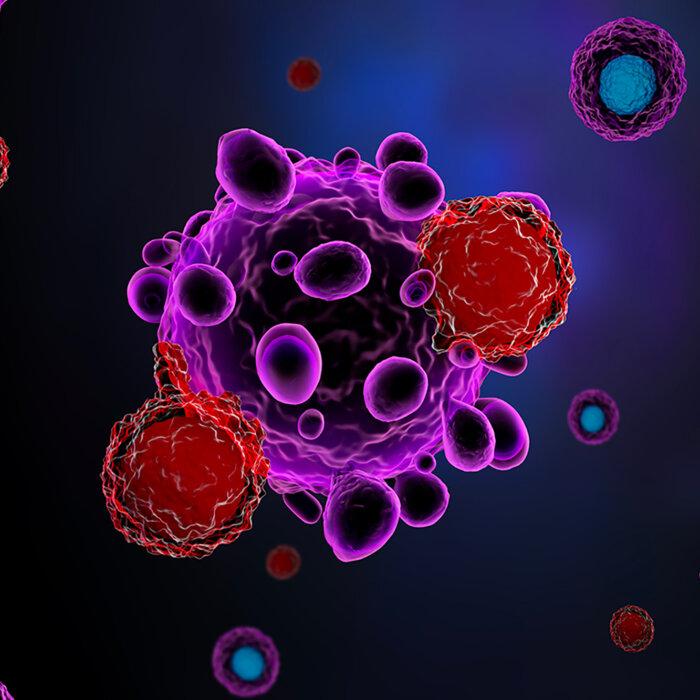
Creating CAR T-cells involves collecting a patient’s T-cells and sending them to a lab. There, they are exposed to viruses that insert cancer-fighting genes into the T-cells. After these modified cells are cultured and grown to a sufficient number, they’re reintroduced to the patient to fight the cancer.
However, concerns have arisen that this process might itself potentially cause cancer. The insertion of the CAR gene may accidentally disrupt other genes, potentially leading to uncontrolled growth and making the T-cells cancerous.
“The theoretical possibility of this technique being a cause for malignant transformation has not been entirely ruled out, but remains purely theoretical for now,” Kobbe stated.
So far, no case has shown introducing genes into cells via a virus to be responsible for the development of CAR T-cell lymphoma, he wrote, noting that while further investigation is needed, this doesn’t diminish the significant benefits of approved CAR T-cell products.
Implications and Future Directions
Patients with clonal hematopoiesis likely face a higher risk of developing secondary cancers, such as T-cell lymphomas, especially if critical cancerous mutations are already present in their T-cells at high levels, Kobbe said.Both age and prior treatments increase the likelihood of developing clonal hematopoiesis. Hence, patients who have undergone multiple rounds of cancer treatments over time are more likely to develop the condition, he said.
However, more research is needed to confirm this connection.
Landau offered another hypothesis for why CAR T-cell therapy might lead to other cancers.
“Many people with advanced cancers, especially those who have already been exposed to several lines from other therapies, are already at risk of developing other cancers,” he wrote in an email. “Most chemotherapy works by damaging DNA, and damaged DNA can lead to future cancers. ... Therefore, these patients are already at risk of developing secondary cancers. It’s not clear how much the CAR-T itself contributes.”
Despite these concerns, Kobbe stated: “Right now, the benefits of CAR T-cell therapy far outweigh the potential risks. The only way to completely avoid this side effect would be to exclude patients with clonal hematopoiesis from CAR T-cell therapy.” However, given the rarity of secondary cancers and the significant benefits for patients with malignant disease, excluding these patients is not currently considered an option, he said.
“Right now, we do warn patients about the risk,” Landau wrote, “but it’s not a reason we would withhold treatment.”