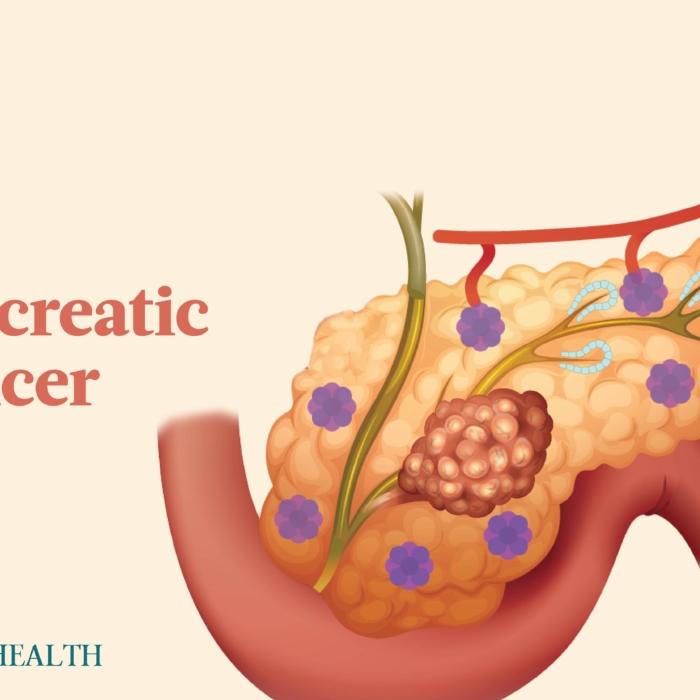
Pancreatic cancer is often referred to as the deadliest of all carcinomas because many patients are diagnosed at an advanced stage, making it difficult to treat.
Screening for Pancreatic Cancer
The pancreas lies deep in the abdomen, hidden behind the stomach, so pancreatic lesions are not easily detected. Guo introduced the five standard diagnostic methods currently employed in detecting pancreatic cancer:- Abdominal Ultrasound: This is the simplest screening method available. It offers a higher tumor detection rate in the anterior part of the pancreas but is less successful in the main body and the posterior portion.
- Serum Tumor Marker Examination: People who do not have regular physical examinations can first take a blood test. If it shows any abnormal signs, further examinations should be performed immediately.
- Endoscopic Ultrasound: With the endoscope advancing to the abdominal duodenum, any lesions on the anterior portion of the pancreas can be seen. A biopsy can also be done if any abnormalities are discovered.
- Endoscopic Retrograde Cholangiopancreatography (ERCP): In combination with an endoscope, a contrast agent is injected into the bile and pancreatic ducts to perform an X-ray, helping locate any tumors.
- Computed Tomography (CT) Scan: This is one of the most common and accurate tests. A CT image may show a dark shadow on the head of the pancreas, which could indicate a tumor requiring further examination and diagnosis. Since the pancreatic head is close to the exit of the liver and gallbladder ducts, a tumor in this area could block the bile duct, potentially causing jaundice.
Benign Pancreatic Tumors
Guo said that even if a pancreatic tumor is found, there is no need to panic because it may be benign, belonging to one of the following four categories:- Pancreatic Degenerative Blisters: Blisters could form due to pancreatic degeneration, and the vacuoles formed by the blisters look like tumors.
- Pseudocysts Formed After Pancreatitis: This is pancreatic inflammation caused by excessive triglycerides and alcohol abuse. Cell necrosis could follow pancreatic inflammation and the formation of pseudocyst cysts, which appear like a tumor.
- Insulin-Secreting Adenoma: When the insulin-secreting glands of the pancreas protrude and become enlarged, they form insulin-producing endocrine tumors, which are generally benign. Due to excessive insulin secretion, patients often experience sudden hypoglycemia, dizziness, or even syncope. However, because this type of endocrine tumor can potentially develop in multiple areas throughout the body, there is a slight chance it could be malignant if it appears in several endocrine organs.
- IgG4 Type 1 Pancreatic Masses: This condition occurs when the immune system mistakenly attacks the pancreatic gland, causing it to swell and resemble a tumor. Since it’s an autoimmune disease, it can be treated with steroids.
Integrated TCM and Western Medicine Approach
The overall five-year survival rate for pancreatic cancer is relatively low, at around 12 percent. It, therefore, makes the treatment and prognosis of pancreatic cancer extremely critical. If pancreatic cancer is diagnosed, Guo recommends treatment employing a combination of traditional Chinese and Western medicine.Guo said that pancreatic cancer is difficult to detect in its early stages, and the tumor might already be a certain size when it is diagnosed, or the cancer cells may have invaded the blood vessels and lymph nodes. Western medicine will start with pre-chemotherapy, after which the tumor will shrink to a size more viable for surgery. Postoperative chemotherapy may be added after surgery, depending on the patient’s condition.
From a traditional Chinese medicine (TCM) perspective, Guo said there are different approaches at various stages of treatment. Still, the most important is to consolidate the patient’s spleen and stomach function because pancreatic cancer can seriously affect the digestive system. TCM posits that the spleen and pancreas are energetically connected. The spleen has both an immune function and also controls digestion.
Patients with pancreatic cancer will suffer a severe loss of physical energy and spirit during the disease and its long-term treatment. TCM holds that long-term illness will lead to frailty, so the lungs, spleen, and kidneys must be regulated together to improve all related symptoms.

Clinical Records
Guo also shared the following two cases he treated in his clinical practice.Case 1: Pancreatic Cyst
Mr. Huang, 56, has a long history of alcohol consumption and pancreatitis. He had abdominal pain five years ago, and a CT scan revealed a 3.5-centimeter cystic tumor on the anterior portion of his pancreas. The doctor believed that if the tumor was larger than 3 centimeters and was mucinous, it could become malignant and suggested that he undergo surgery.Case 2: Pancreatic Head Adenocarcinoma
Ms. Huang, 66, has a history of diabetes and was diagnosed with pancreatic head adenocarcinoma in 2020. When first diagnosed, the patient suffered from qi and yin deficiency, mild jaundice, diarrhea, numbness in hands and feet, anxiety, insomnia, and dry mouth. She was treated by Western medicine, which started with preemptive chemotherapy, and at the same time received TCM treatment. For her symptoms, TCM consisted of Shenling Atractylodes powder, dendrobium, malt, chicken gizzard skin, medicated leaven, psoralen, and other medicinal herbs integrated with Western medicine treatment.Preventing Recurrence of Pancreatic Cancer
Guo said that while undergoing treatment, patients must consume one-third more protein than people of the same age and weight. Otherwise, they will lack the physical strength to undergo the treatment. Except for high-sugar foods, there are no dietary restrictions; one can even eat at fast-food restaurants, although it’s advised to choose whole foods over ultra-processed foods.However, during the follow-up period, the diet should be more regulated so as not to make the pancreas work too hard. Be careful not to eat a high-fat diet, choose nutritious foods, eat regularly, and avoid high-sugar foods, as pancreatic cancer is inherently linked to sugar.
Tips for Staying Positive
Guo said that his clinical approach is to accurately portray a patient’s condition and not overstate or understate it. He aims to inform patients about the treatments they should undergo and the benefits they can expect, fostering a positive emotional response.He noted that some patients may develop what TCM calls “liver qi stagnation” or “liver qi counterflow” during cancer treatment. Symptoms include chest distension and tightness, poor sleep, distension and pain in the rib area, acid reflux, irritability, etc. From the TCM perspective, the liver is closely related to emotions. TCM, therefore, often aims to regulate emotions by employing commonly used medicinal herbs such as bergamot, chrysanthemum, turmeric, lily, lavender, etc., so that the liver qi can be singled out and regulated. This process will help calm emotions, and the patient will be more confident to face the various stages of treatment.
- Abdominal Breathing and Deep Breathing: First, exhale to flatten your belly, then inhale to expand your belly.
- Meditation, Mindfulness Practice, and Yoga.
- Alpha-Wave Music: This includes sound baths, white noise, or forest music. Research shows that alpha-wave neurofeedback can improve the mental state of the patient.