




Broccoli contains certain molecules that help to protect the lining of the small intestine of test animals, thereby preventing the development of disease, according to a recent study by researchers at Pennsylvania State University.
Broccoli is full of vitamins C, A, and K and is rich in fiber and potassium. This green vegetable can also help lower high blood pressure and is known to decrease the risk of cancer.
“We all know that broccoli is good for us, but why? What happens in the body when we eat broccoli?” Gary Perdew, one of the authors of the study, said in a Penn State article.
“Our research is helping to uncover the mechanisms for how broccoli and other foods benefit health in mice and likely humans, as well. It provides strong evidence that cruciferous vegetables, such as broccoli, cabbage, and Brussels sprouts should be part of a normal healthy diet.”
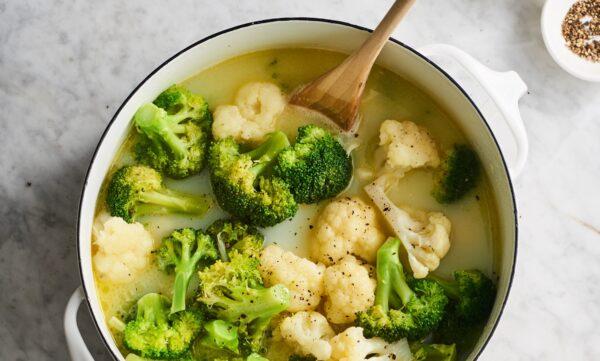
They fed a group of mice a diet containing 15 percent broccoli—equal to around 3 1/2 cups per day for humans—and fed a control group a diet that didn’t contain broccoli.
They then analyzed their tissues to determine binding activity, quantities of various cell types, and mucus concentrations, among other factors, in the two groups.
The team found that mice that weren’t fed broccoli had decreased amounts of protective mucus, decreased Paneth cells and lysosome production, and decreased number of enterocyte cells. These cells line the intestinal wall and prevent food and bacteria from entering the body while allowing beneficial water nutrients to pass through.
“The gut health of the mice that were not fed broccoli was compromised in a variety of ways that are known to be associated with disease,” Perdew said.
“Our research suggests that broccoli and likely other foods can be used as natural sources of ligands and that diets rich in these ligands contribute to the resilience of the small intestine.”
Clot-Busters
Earlier research by Australians found that broccoli may even help reduce the risk or even reverse the effects of stroke.The Sydney-based Heart Research Institute found that isothiocyanates, a group of chemicals found in cruciferous vegetables such as broccoli, Brussels sprouts, cauliflower, bok choy, and cabbage could reduce blood clotting, the most common cause of stroke.
Out of the 50 states, 36—plus Washington, D.C.—chose broccoli as their favorite vegetable.


