This copy is for your personal, non-commercial use only. Distribution and use of this material are governed by our Subscriber Agreement and by copyright law. For non-personal use or to order multiple copies, please contact The Epoch Times Reprints.
Your eyes work hard every day and need plant pigments. Here’s where a colorful poke bowl comes in.
This millet, zucchini, and kale bowl with a lemon tahini dressing doesn’t just use up extra zucchini—it’s built to feed your eyes.
The Pigments Your Eyes Need
Carotenoids, which include xanthophylls and carotenes, give foods yellow, orange, and red tones. In the eyes, they help filter blue light and protect tissues from oxidative stress.
Xanthophylls, such as lutein and zeaxanthin, concentrate in the macula, the central region of the retina responsible for sharp, detailed vision.
Carotenes, including β‑carotene, may be converted to vitamin A in the body, which is essential for normal vision. They also act as antioxidants in eye tissues.
Eating more foods rich in lutein, zeaxanthin, and carotenes has been associated with a lower risk of advanced age-related macular degeneration, a leading cause of blindness in older adults.
Because our bodies can’t make these carotenoids, we rely on food sources to maintain healthy levels within the eyes.
A Recipe That Supports Eye Health
The ingredients in this bowl were chosen for more than taste and color. They also provide eye-supportive carotenoids, vitamin C, and fats that help with carotenoid absorption.
Kale: Dark leafy greens are among the richest food sources of lutein and zeaxanthin, and kale is one of the highest sources.
Eggs: Egg yolks supply lutein and zeaxanthin in a highly bioavailable form because they’re carried with fat. Some clinical trials show that eating eggs daily can increase macular pigment optical density (MPOD), a measure of protective pigment in the macula. Egg yolks also provide vitamin A.
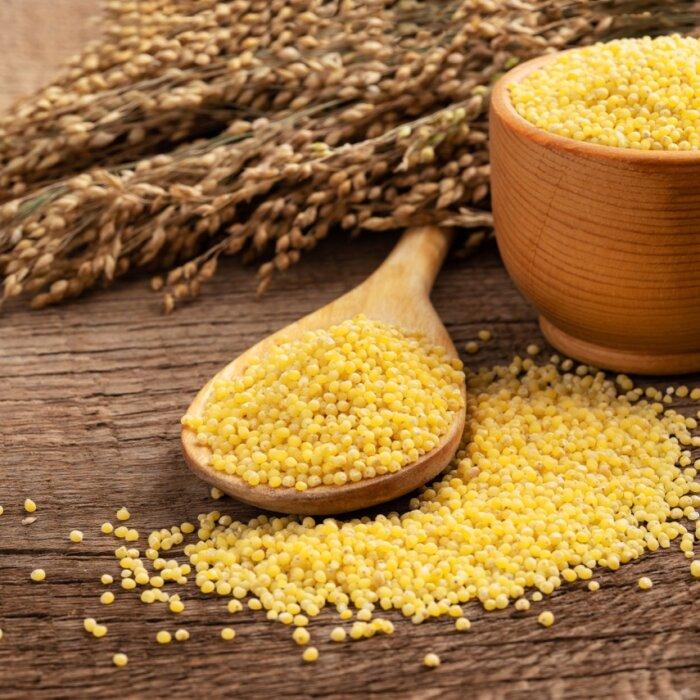
Yellow Millet and Corn:Millet and corn get their color from carotenoids. Though they contribute less than kale and eggs, they add to the bowl’s overall carotenoid mix.
Zucchini:Zucchini contributes lutein, zeaxanthin, and beta-carotene to the bowl.
Red Bell Pepper:Red bell pepper adds vibrant color, lutein, zeaxanthin, and beta-carotene. It also provides vitamin C, an antioxidant that helps protect eye tissues from oxidative stress.
Olive Oil and Sesame Seeds: These ingredients in the lemon tahini sauce provide extra fat, which helps your body absorb the fat‑soluble carotenoids and transport them to tissues such as the macula.
Pistachios:Pistachios provide crunch, bioavailable lutein, and the antioxidant vitamin E. Their fat helps with carotenoid absorption, and research shows they effectively increase MPOD.
Together, these ingredients make this bowl as functional as it is colorful and flavorful.
Note: If you have diabetes, consult a qualified healthcare practitioner about how many eggs fit your needs.
How to Make Millet, Zucchini, and Kale Bowls
A colorful millet grain bowl with carotenoid‑rich vegetables, jammy eggs, lemon tahini sauce, and pistachios to support eye health.
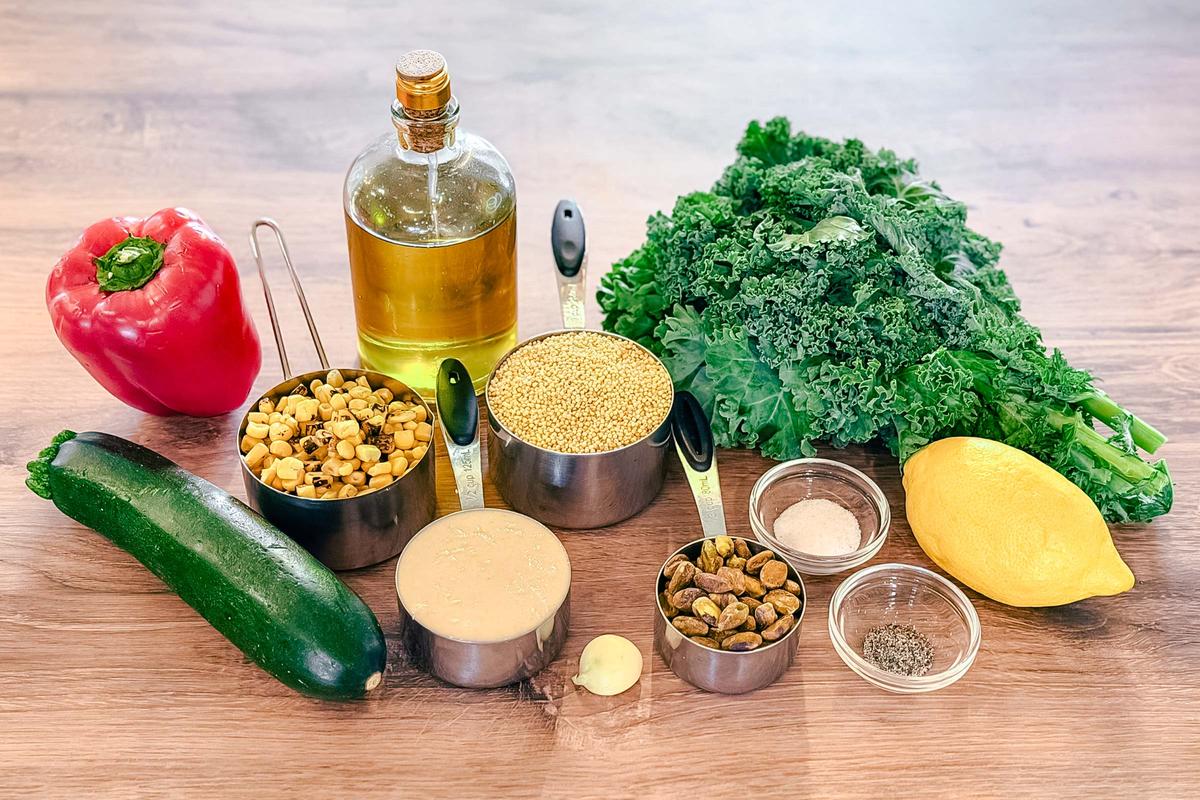
1 bunch curly or lacinato kale, stemmed and finely chopped (about 4 cups packed)
1 medium zucchini, halved lengthwise and thinly sliced into half‑moons
1 cup organic corn kernels (fresh or fire-roasted frozen, thawed)
1 red bell pepper, cut in thin strips
1/3 cup shelled pistachios, roughly chopped
For the sauce:
1/2 cup tahini
1 large lemon, juiced (at least 1/4 cup juice)
1/4 to 1/2 cup warm water
2 tablespoons extra-virgin olive oil
1 clove garlic (finely minced or grated if not using a blender)
1/2 teaspoon sea salt
1/4 teaspoon ground black pepper
Instructions
Step 1. Cook the eggs: Bring a medium saucepan of water to a rolling boil over high heat. Gently lower the eggs into the water with a spoon, then reduce the heat as needed to maintain a gentle boil and cook for 6 1/2 minutes. If your altitude is above 3,000 feet, add 15 to 30 seconds. Transfer the eggs immediately to a bowl of ice water and let sit for at least five minutes to stop the cooking and make them easier to peel. Peel once cool and set aside.
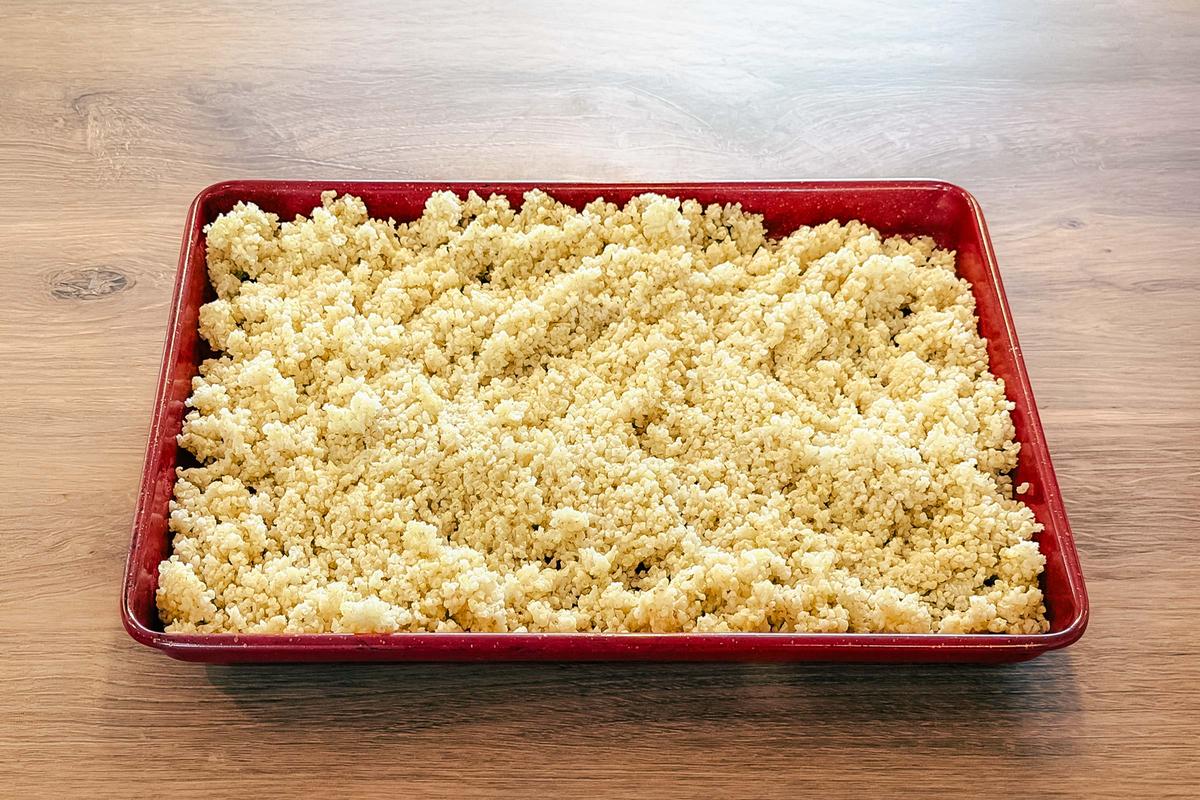
Step 2. Cook the millet: While the eggs cook, warm two teaspoons of the oil in a saucepan over medium heat. Add the millet and toast, stirring, for two to three minutes, until it smells nutty. Add two cups of water and 1/4 teaspoon salt. Bring to a boil, then reduce to a gentle simmer. Cover and cook for 15 to 20 minutes, until the liquid is absorbed and the grains are tender but still separate. Remove from the heat, let stand (covered) for five to 10 minutes, then uncover and fluff with a fork. Spread the millet out on a tray to let extra steam escape so the grains stay loose for the bowl.
Terri Ward/The Epoch Times
Step 3. Make the sauce: In a bowl or blender, combine the tahini, lemon juice, 1/4 cup warm water, olive oil, garlic, salt, and pepper. Whisk or blend until smooth. Add more water a tablespoon at a time until pourable but still creamy. Taste and adjust lemon and salt to your preference.
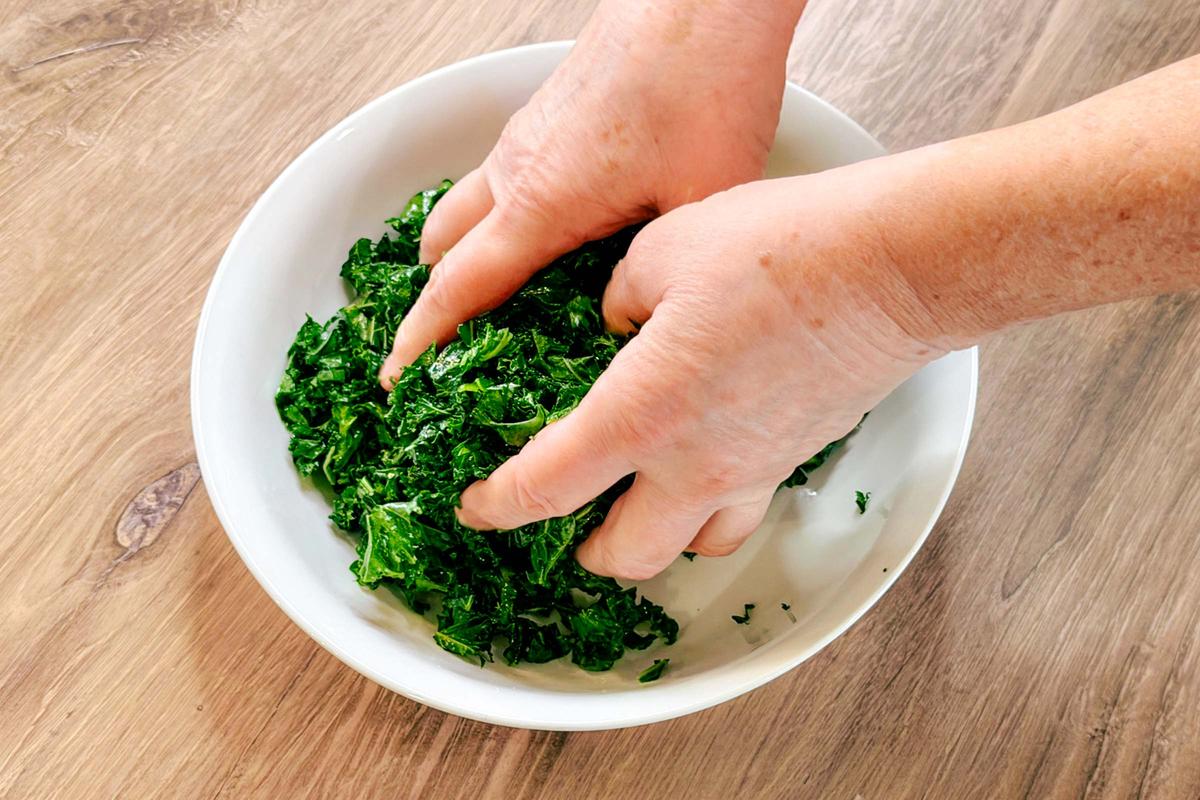
Step 4. Massage the kale: In a large bowl, toss the kale with 1/4 teaspoon salt and 1 tablespoon olive oil. Massage the kale for one to two minutes until it darkens and softens slightly.
Terri Ward/The Epoch Times
Step 5.Assemble the bowls: Spoon the millet into four shallow bowls, making a bed of grains in each. Arrange the zucchini half‑moons, corn kernels, red bell pepper strips, and kale over the millet. Halve the eggs and place them on top or alongside the vegetables. Drizzle with sauce and sprinkle with chopped pistachios.
Frequently Asked Questions
Q: What is yellow millet, and do I have to use that type?
A: Any hulled millet will work as a gluten‑free base. This recipe calls for yellow millet because its golden color comes from carotenoids, including xanthophylls. Very pale millets may contain less of these pigments. Color varies by species, variety, and growing conditions, so as a rule of thumb, choose the yellowest grain available if you want to optimize carotenoids.
Q: Can I use another green besides kale?
A: Yes. While kale is one of the richest sources of lutein and zeaxanthin, other leafy greens such as spinach are also good sources. However, kale provides more than three times the amount of lutein and zeaxanthin per cup as spinach.
Q: Can I meal prep this or make parts of it in advance?
A: Yes. Just store the sauce and nuts separately and don’t add them until you’re ready to eat. The assembled bowl can be stored in the fridge for up to three days, but count any time the millet was stored before assembly so the millet isn’t stored for more than five days. Massaged kale often improves if it’s stored for a day or two because it continues to soften. You may need to let the sauce come to room temperature to drizzle it.
Terri Ward
Author
Terri Ward, MS, FNTP, CGP, is a functional nutritionist, speaker, and educator with a master’s degree in human nutrition and functional medicine. She specializes in helping people with food sensitivities, inflammation, autoimmunity, and other gut-related issues and is the author of "God’s Prescription: A Faith-Based Plan to Shift Your Mindset and Reclaim Your Natural Health" and two cookbooks.