We usually start New Year’s resolutions with confidence—move more, sleep better, eat smarter.
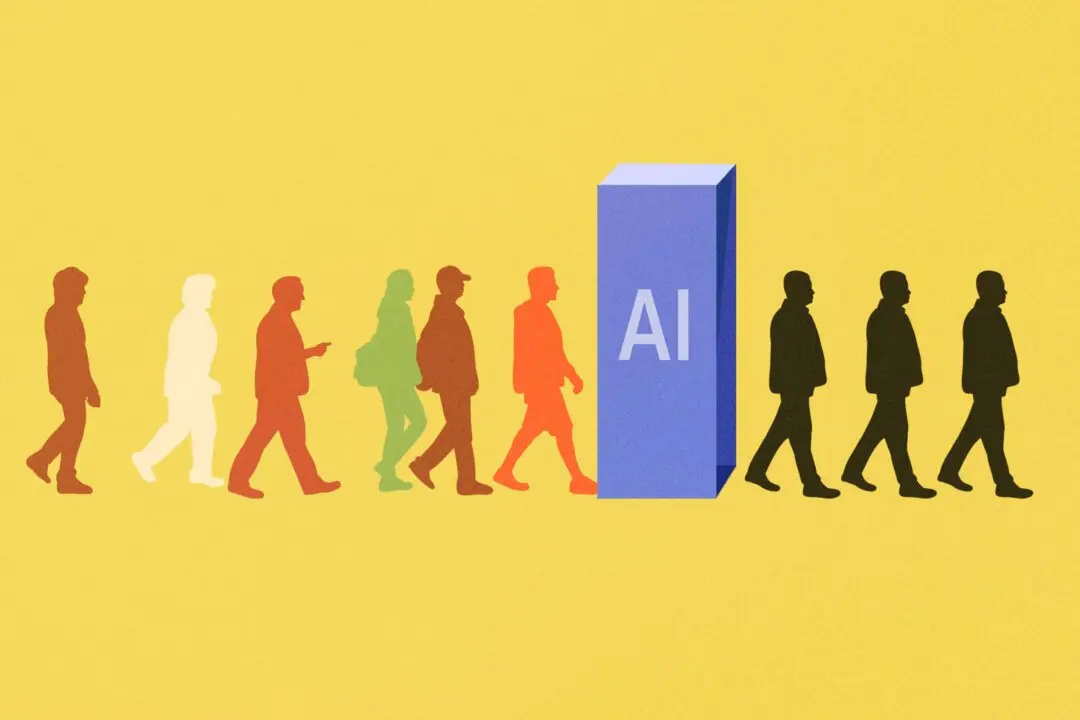
But quietly, apps, influencers, and algorithms are nudging you in other directions.
Your phone pings—you tap. Before you know it, you’ve ordered delivery on a tempting deal and skipped the dinner you’d planned—and the workout too.
Subtle as they seem, these nudges shape your day, your choices, your intentions.
That’s influence at work.
Here’s the twist: the same psychology that allows others to influence us can be turned inward—to guide our own behavior for good.


Identity—Become the Person Who Does It
A runner laces up before sunrise for a run. She isn’t focused on calories—it’s just what she does. Her identity drives her habits more than any motivational poster ever could.Identity drives behavior. Marketers know this well—they don’t just sell sneakers; they sell the you who crosses the finish line in them. We follow the identities we believe we belong to.
First, reframe your identity.
Goals like “lose 10 pounds” are fleeting, but values like “being healthy” or “continuously growing” keep guiding behavior long after motivation fades.
Second, believe it and model it.
Try this:
Shift from thinking “I need to exercise three times a week,” to “I’m becoming someone who cares for my body and health.”Or switch from “I need to stop doom-scrolling,” to “I’m becoming someone who gives my mind more room to rest,” when telling yourself to put down the phone.
Use natural reset moments to start a new identity.
You don’t need to wait for Jan. 1, said Hengchen Dai, co-director of the UCLA Nudge Unit. Her research has shown that Mondays, birthdays, or new semesters create psychological “fresh starts” that push you to pursue new goals.
“These moments help people mentally separate from past imperfections and see themselves as someone who is now more capable of change,” Dai, a behavioral scientist, told The Epoch Times in an email.
Reinforce it in your environment.
Language—Talk to Yourself Like a Life Coach
Imagine a coach who never says “You must do this” but instead asks, “What matters most today—energy, sleep, stress?” Suddenly, clarity replaces pressure, and the first small step feels possible. That’s the power of questions—and self-talk works the same way.Questions get us to act more than commands do.
Campaigns and coaches rely on them because questions don’t just collect information; they nudge you toward a choice.
First, use curiosity instead of pressure.
Second, choose language that reinforces agency.
The words you use also shape how new habits feel.
Bacow advises avoiding “should” and “must,” which trigger resistance, and instead using agency-based phrasing like “I choose to,” “I want to,” or “I’m learning to.” Change sticks better when it feels more like a decision, not an obligation.
Third, be honest and flexible.
For self-talk to work, it has to be honest, O’Flaherty said. That means being honest about why you want the change and why part of you resists it.
Try This
Start with these three quick questions before your next action:- How important is this change to me?
- How confident am I that I can make it?
- How ready am I to start?
You might also try speaking to yourself the way a kind but no-nonsense grandparent would—firm, encouraging, and on your side.
Let other people echo your language.
Emotion—Feel Before You Fix
Before starting a new habit, your emotions have likely already taken the wheel. Anxiety, restlessness, fatigue—they can make a simple step feel like you’re climbing a steep cliff. But small, deliberate nudges to your emotional state can tip the scales, priming your body and mind to move.Marketers have long understood this, that emotions drive behavior: scarcity, FOMO (fear of missing out), and the subtle tug of belonging is what that sells their products. In daily, life feeling comes first, logic follows.
First, treat emotion as information.
Noticing and naming emotions—what researchers call emotional attunement—makes behavior easier to shape and predicts more lasting change across goals
O’Flaherty suggests thinking of emotions as data. “You are feeling a certain emotion because your brain and body are trying to tell you something about a situation—listen while recognizing feelings are information, but not always factual,” she said.
Stress might mean overload. Boredom might signal a need for novelty. Anxiety might mean your first step is too big—not that change is impossible.
Second, shift your state before you act.
Rather than pushing through emotional or mental discomfort, adjust your emotional footing first. Bacow suggests simple tools like supportive self-talk, grounding, breathing, or talking with someone encouraging. “If you can’t encourage yourself,” she says, “ask someone else to do it for you.”
Try This
Before starting a new habit, prime your emotional state.- Play music that boosts energy or focus.
- Do a quick stretch to shift your body and mood.
- Use a calming visual cue like lighting a candle.
- Or imagine a hero moment—helping someone, finishing a project—and let that feeling carry you.
Expect setbacks—and reset quickly.
Setbacks are part of the process. Dai advised treating them as resets, not failures. Recommit at the start of a day or week to detach from the lapse and refocus forward.
Pair emotion with reward.
Putting It All Together
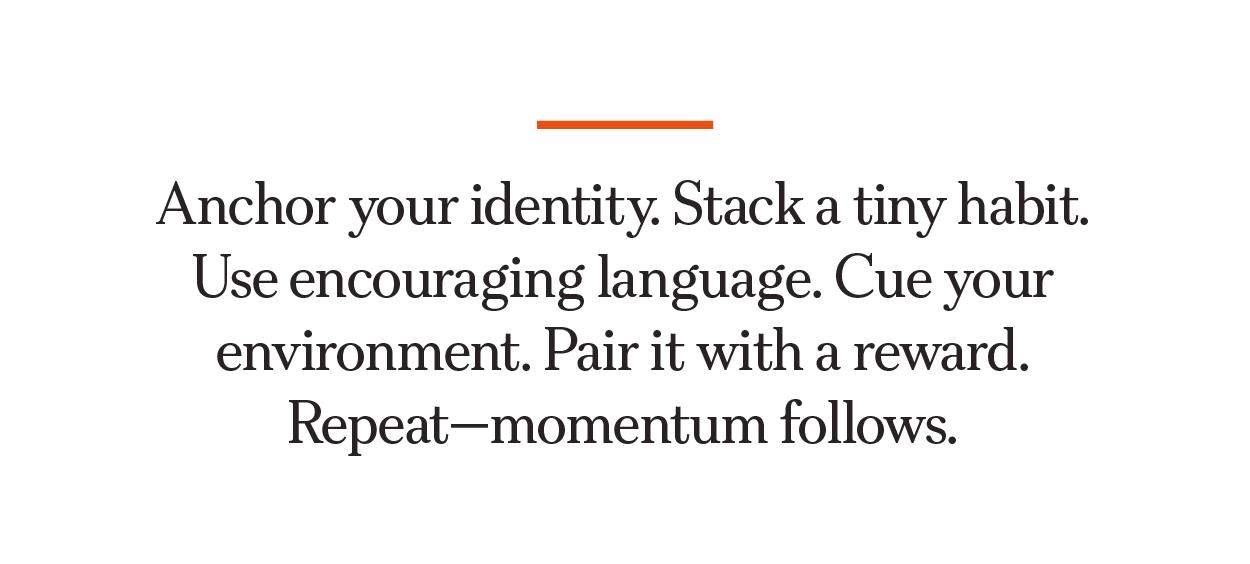
Influence is everywhere—ads, feeds, and friends. But you can borrow the same mechanics for your own growth.- Anchor Identity: Who are you becoming? Pick one small action.
- Stack the Habit: Tie it to an existing routine.
- Frame Language: Ask questions that prompt action; use encouraging words.
- Set Environment: Add helpful cues.
- Engage Emotion: Pair action with reward or positive feeling.
- Loop It Again: Repeat consistently; adjust as needed.
Once you’ve learned to influence yourself, it’s easier to see when something else is trying to do it for you.
“Humans have a force of forward motion that is difficult to escape,” Bacow said. “You may not have to try too hard to make habits stack—especially if you start with small steps—because from there, momentum often builds.”