With the growing presence of chemicals in our kitchens, exploring options to keep our food safe is vital. Washing fruits and vegetables is one of the simplest ways to reduce pesticide exposure—but not all methods work equally well. Recent research shows how adopting a simple, two-step homemade produce wash is a wonderful, scientifically backed solution to help us enjoy cleaner, healthier produce!
Newly Developed Nano-Food Wash
Researchers at the University of British Columbia developed a new produce wash, Dual-Function Metal–Phenolic Network-Capped Starch Nanoparticles (FTN@SNPs), that uses natural preservatives such as tannins and ferric ions. The FTN@SNPs wash removes pesticides and applies a postharvest coating to keep produce fresher during storage.The recent study, published in ACS Nano, compared this new product to washes made with baking soda and native starches—corn or tapioca. It tested the reduction of the systemic fungicide thiabendazole, finding that FTN@SNPs removed about 86 percent, native starches removed about 61 percent, and baking soda removed about 65 percent.
In short, this study suggests that FTN@SNPs is more effective than traditional methods at removing chemical residues.
Home Products as Food Wash
A 2025 study published in Foods compared commercial and homemade produce washes and identified a more effective method for removing the fungicide thiabendazole from apples using a simple two-step process.2-Step Solution
The results improved when researchers used a two-step soaking method.- Soaking in a 2 percent corn starch solution
- Soaking in a 5 percent baking soda solution
Overall, the two-step method removed more fungicide than the nano-based wash—94 percent versus 86 percent.
How to Make the Homemade 2-Step Wash
Preparing these natural solutions will go fast and smoothly if you have just a few tools and ingredients set aside: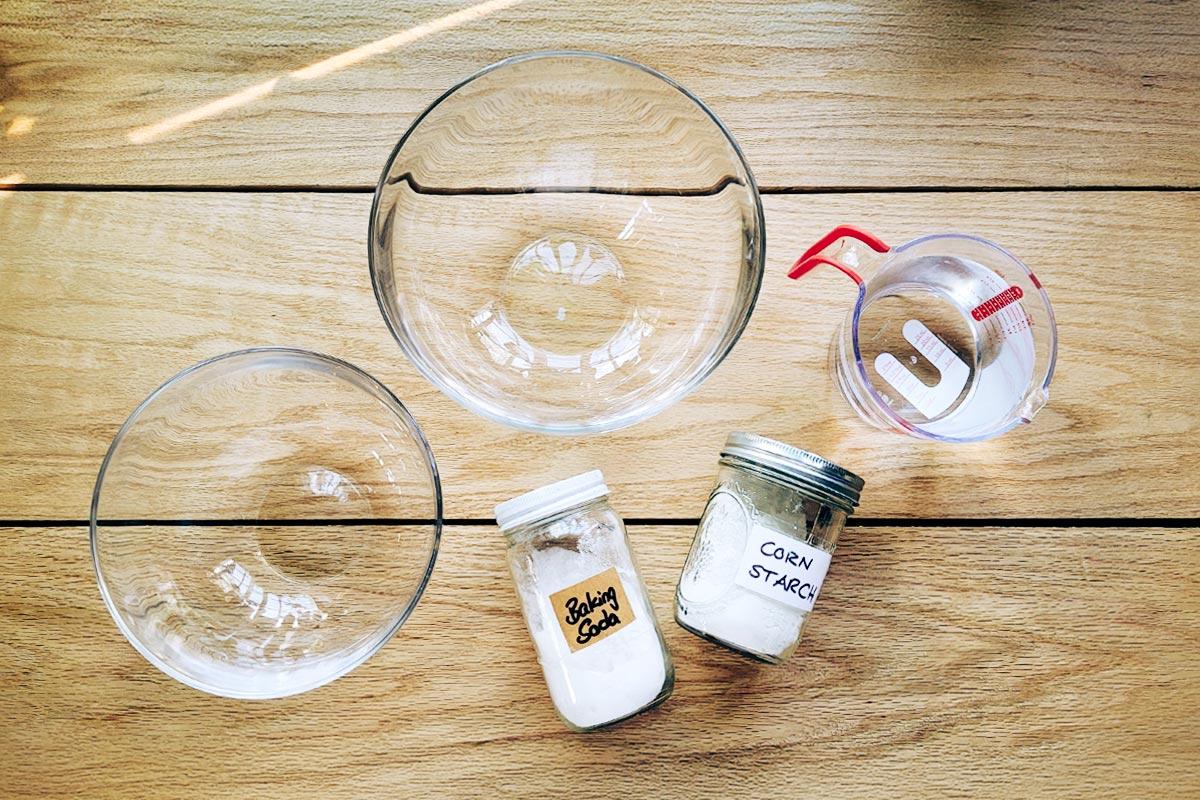
Alexandra Roach/The Epoch Times
Tools
- 2 bowls
- Wooden or plastic spatula
- Kitchen towel or paper towels for drying
- Cornstarch
- Baking soda
- Filtered or distilled Water
Step 1: Soaking in Corn Starch Solution
Alexandra Roach/The Epoch Times
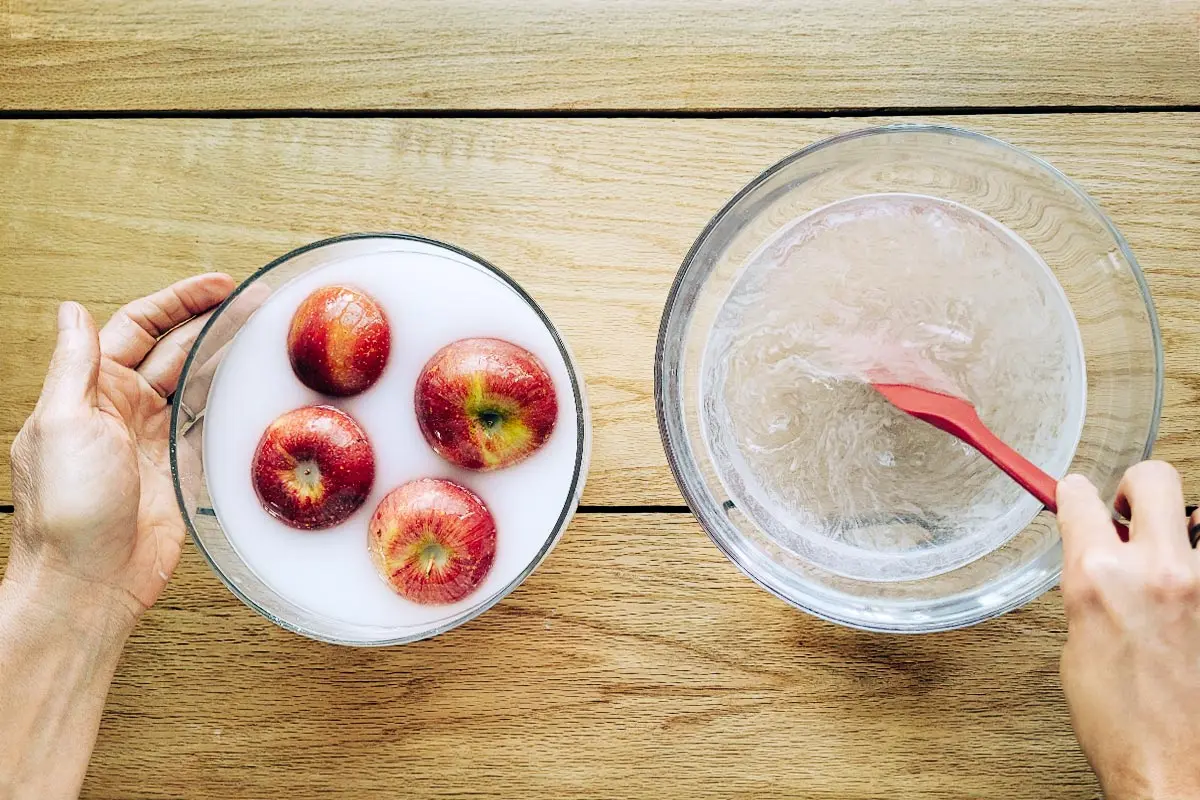
- Fill one of the bowls with enough water to cover your produce completely. The suggested ratio is approximately 4 1/2 cups of water per 1 1/2 tablespoons of cornstarch.
- Let the fruits or vegetables soak in the water for five minutes.
- While waiting, prepare for Step 2.
Alexandra Roach/The Epoch Times
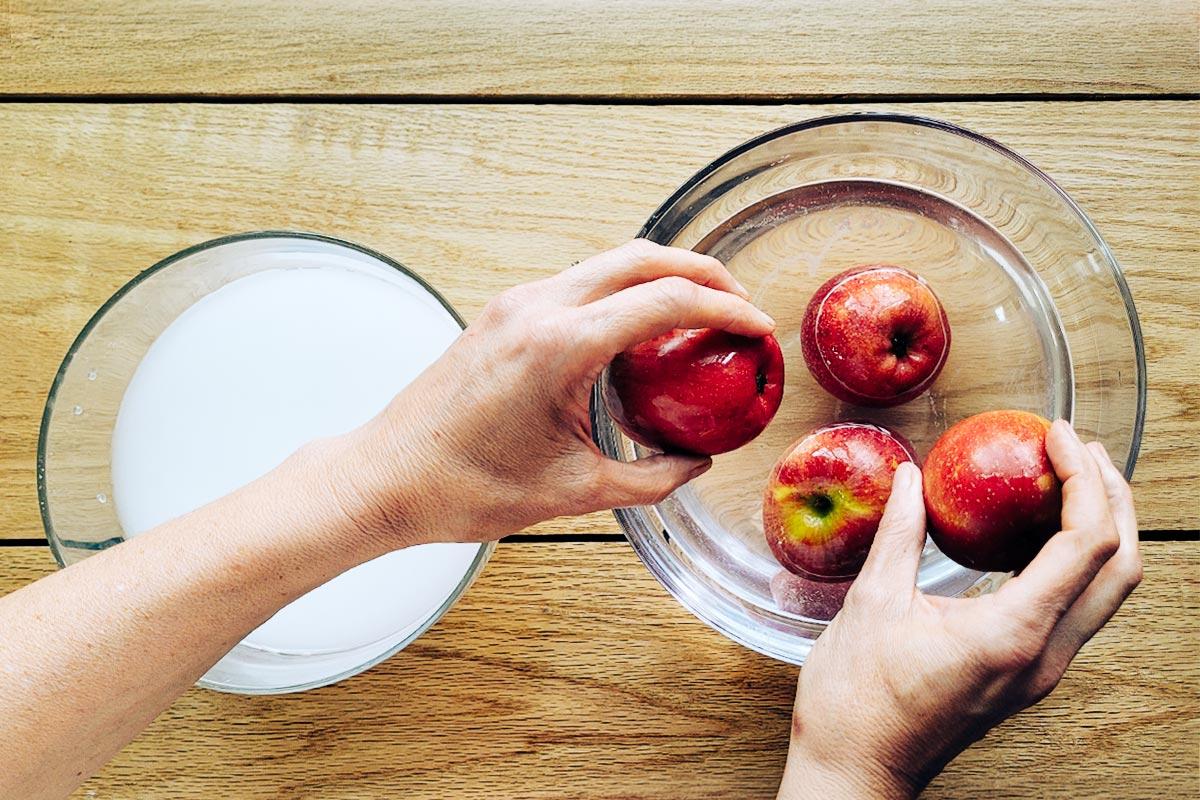
- Fill the second bowl with approximately the same amount of water as in the first bowl, and add 3 3/4 tablespoons baking soda.
- Transfer produce into the second solution and soak for five minutes.
- Rinse the produce with plain water, gently pat it dry with a kitchen towel or paper towel, or let it air-dry.
Baking soda works by breaking down certain pesticides at high pH (alkaline hydrolysis), turning them into compounds that dissolve in water. You can easily rinse these compounds off after using baking soda.
Combined, the two soaks make a safe and effective produce wash.
Best Produce for Food Washes
Food washes, whether homemade or commercial, work best on waxy fruits and vegetables with crevices, as well as delicate berries and leafy greens that cannot be scrubbed with a brush. The washes help gently remove dirt, residues, and pesticides.Leafy greens and delicate fruits should be washed right before eating. Strawberries are a prime example of a fruit that spoils quickly after washing, as does leafy lettuce.
Root vegetables or apples can be stored for longer after washing.
Safety Note: Always make sure that the produce is washed fresh, and don’t reuse the wash.
Using a produce wash is an easy, affordable, and effective way to reduce pesticide exposure for those without consistent access to organic produce. However, food washes do not remove all chemicals, and choosing organic, pesticide-free produce remains the safest option.
You can also minimize pesticide exposure by making informed choices. The Environmental Working Group’s “Dirty Dozen” list highlights which vegetables and fruits are most heavily treated, and is updated annually.