This copy is for your personal, non-commercial use only. Distribution and use of this material are governed by our Subscriber Agreement and by copyright law. For non-personal use or to order multiple copies, please contact The Epoch Times Reprints.
Almond flour pancakes are tender, lightly nutty, and gluten-free—delicious with butter, fresh berries, or a drizzle of pure maple syrup. Many gluten-free pancake mixes and recipes rely on refined starches that leave you hungry an hour later and can spike blood sugar as much as, or even more than, refined wheat flour. Instead, these pancakes are made with almond flour, eggs, whey protein, and Greek yogurt for a satisfying, protein-rich breakfast.
The Secret to a High-Protein Pancake
Almond flour provides heart-healthy fats, fiber, and a naturally tender crumb. Because it contains no gluten, the batter relies on a balance of other ingredients to create pancakes that hold together beautifully while remaining tender.
Eggs provide much of the structure.
Whey protein reinforces the structure and boosts the protein content.
Greek yogurt adds moisture and acidity, which helps activate the baking powder for a lighter texture.
Collagen contributes a little extra protein without changing the flavor.
Gluten-free baking offers far more choices than it once did, but all flours aren’t interchangeable. While some are primarily refined starches, others provide more meaningful amounts of protein, fiber, and healthy fats, which affect both their texture and how satisfying they are. The table below compares the fiber, protein, and carbohydrate content of some common gluten-free flours.
Each flour has its own strengths and limitations in baking. Coconut flour is exceptionally high in fiber and absorbs so much liquid that recipes require substantial adjustments. Chickpea flour provides more protein and fiber but has a distinct beany flavor not ideal for some sweet recipes. Cassava flour behaves much like wheat flour because it’s primarily starch. Almond flour stands apart for its relatively high protein, fiber, and healthy fats and a much lower carbohydrate content than many gluten-free alternatives.
Studies have found that eating whole almonds with white bread reduces the post-meal rise in blood sugar, with one finding that the benefit extended to the next meal several hours later. Although almond flour hasn’t been studied the same way as whole almonds, it retains the same combination of protein, healthy fats, and fiber thought to contribute to almonds’ lower glycemic impact.
High Protein Almond Flour Pancake Recipe
Almond flour pancakes come together in about 25 minutes and cook up light, tender, and surprisingly filling thanks to their balance of protein, healthy fat, and fiber. The full batch provides about 88 grams of protein, or about 11 grams per small pancake if the recipe makes eight pancakes.
Prep Time: 5 minutes
Total Time: 25 minutes
Servings: 2 to 3 (about 8 small pancakes)
Terri Ward/The Epoch Times
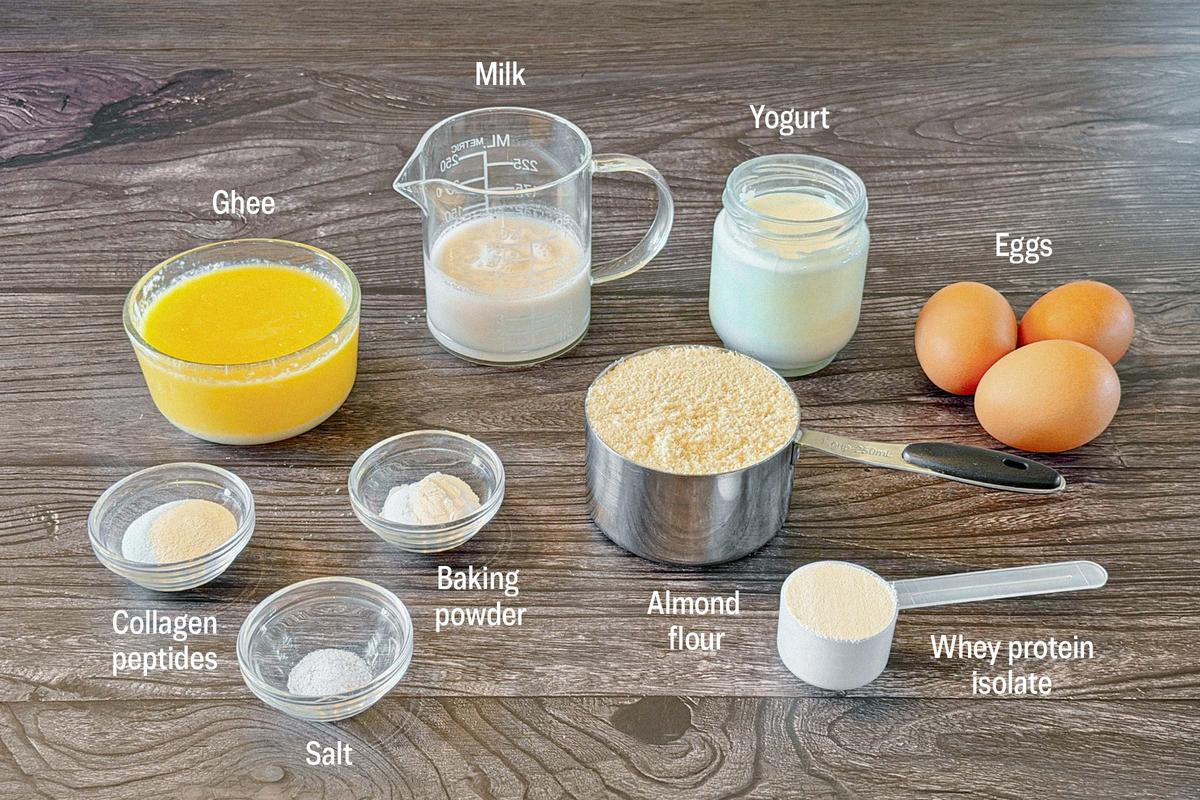
Ingredients
1 cup super-fine, blanched almond flour
30 grams whey protein isolate
3 large chicken eggs (or 2 duck eggs)
1/2 cup Greek yogurt or goat milk yogurt
2 teaspoons baking powder
1 tablespoon collagen
Pinch of salt
1/4 cup milk (or nut milk), only if needed to thin
2 tablespoons ghee or avocado oil
Instructions
Step 1: Whisk together the almond flour, protein isolate, eggs, yogurt, baking powder, collagen, and salt in a medium bowl until smooth. Add milk 1 tablespoon at a time, if needed, until the batter is still thick but pourable—similar to a traditional pancake batter. Let the batter rest for five to 10 minutes before baking to allow the protein to hydrate and the batter to thicken slightly.
Step 2: Heat the ghee or oil in a skillet or on a griddle over medium-low heat. Ladle 1/4 cup of batter per pancake onto the skillet or griddle.
Step 3: Cook until bubbles form and edges begin to set and turn lightly golden. Flip and cook until done.
Step 4: Repeat with remaining batter and serve warm with your favorite toppings.
Serving Suggestions: Fresh berries, sliced bananas, chopped nuts, almond butter, a dollop of plain Greek yogurt, or a drizzle of pure maple syrup all pair well with these pancakes.
Frequently Asked Questions
Q: What can I substitute for eggs?
A: For the best texture, I recommend making the recipe with eggs whenever possible. With so much almond flour in this recipe, egg substitutes are challenging. While flax eggs, applesauce, or unflavored gelatin may help hold the batter together, they won’t provide the same lift or tenderness, so your pancakes may be denser and more delicate. If you want to experiment, flax eggs are likely your best option. Because the flax thickens as it sits, you may also need to adjust the milk to achieve a thick, pourable batter.
Q: Can I substitute another flour for the almond flour?
A: I don’t recommend it. This recipe was developed specifically for super-fine, blanched almond flour. Other flours, including wheat flour, absorb liquid differently, have unique baking properties, and often require a different combination of ingredients to produce good results. As a result, substituting them would require significant recipe adjustments.
Q: Must the almond flour be blanched?
A: You can use natural almond flour or almond meal, which contains the skins, but it is more coarsely ground and makes the pancakes denser and a bit gritty. Blanched, super-fine almond flour produces the lightest texture.
Q: Can I make these almond flour pancakes dairy-free?
A: Not as written. Whey protein isolate is a dairy product, and it’s necessary for building structure and binding, which other protein powders may not provide. Greek yogurt also contributes moisture and acidity that a nondairy yogurt may not have. Because both play essential roles, this recipe can’t be made dairy-free without a substantial rework and additional testing.
Q: How long do these pancakes keep in the refrigerator?
A: The pancakes will keep in an airtight container in the refrigerator for up to four days. Reheat them in a toaster, toaster oven, microwave, or warm skillet for a quick breakfast throughout the week.
Q: Can I freeze these almond flour pancakes?
A: Yes. Let the pancakes cool completely, then stack them with parchment paper between each pancake, and freeze them in an airtight zip seal bag or freezer container. Because gluten-free pancakes are more delicate, they may crumble a bit after thawing, but they’re still great for a quick breakfast. Reheat gently in a toaster, toaster oven, or microwave.
Terri Ward
Author
Terri Ward, MS, FNTP, CGP, is a functional nutritionist, speaker, and educator with a master’s degree in human nutrition and functional medicine. She specializes in helping people with food sensitivities, inflammation, autoimmunity, and other gut-related issues and is the author of "God’s Prescription: A Faith-Based Plan to Shift Your Mindset and Reclaim Your Natural Health" and two cookbooks.