Poke bowls are Hawaii’s gift to the mainland, and once you make them at home, restaurant versions start to feel like a compromise. Too often, poke bowls are loaded with hidden seed oils, gluten, monosodium glutamate, excess added sugars, and genetically modified ingredients (GMOs) that don’t belong in a dish built around quality fish, fresh vegetables, and heart-healthy fats.
Making poke bowls at home puts you in control of every ingredient. You can choose wild-caught fish and skip the drive to a poke bar altogether. If you don’t have a poke restaurant nearby, making your own bowls is surprisingly easy—and once you start buying quality ingredients, you’ll also understand why good poke isn’t cheap.
Fortunately, many of the ingredients work across several batches and recipes, so they quickly earn a place in your pantry or refrigerator. Buying high-quality frozen sushi-grade salmon or tuna in bulk makes these bowls a repeatable indulgence worth every penny.
The unagi-style sauce also gives these bowls a healthier twist. Coconut aminos replace traditional soy sauce, offering a soy-free, gluten-free base with enough natural sweetness to reduce the need for added sugar. Coconut sugar adds a caramel-like note similar to brown sugar and behaves like regular sugar when cooked, but with a lower glycemic index.
How This Healthy Poke Bowl Supports Heart Health and Healthy Aging
This bowl is more than a pretty meal. The various colors represent different protective compounds working together for your heart, brain, and healthy aging.- Blue: The rice gets its blue hue from butterfly pea flower with anthocyanins similar to those found in dark berries and other blue-purple plants. These phytonutrients support healthy blood vessels and help counter age-related oxidative stress.
- Orange: Wild-caught salmon provides omega-3 fats that help lower triglycerides, support a steady heart rhythm, and calm the low-grade inflammation that drives cardiovascular disease and age-related conditions. The spicy aioli made with avocado oil mayonnaise adds a peach accent, creamy richness, and more heart-healthy fat.
- Green: Cucumber, scallions, organic edamame (non-GMO), and avocado provide fiber, healthy fats, and additional phytonutrients. These support heart and vascular health, feed beneficial gut bacteria, and help reduce oxidative stress and inflammation.
- White and Black: Sesame seeds and sesame oil add more than nutty richness. Rich in unsaturated fats, sesame seeds may help reduce oxidative stress and improve cholesterol balance, blood pressure, and weight management.
How to Make Healthy Hawaiian-Style Poke Bowls
This bowl delivers a rainbow of anti-inflammatory ingredients and omega-3-rich foods in one stunning meal, with two easy sauces and optional blue rice made with butterfly pea flower powder.
Prep Time: 10 minutes
Cook Time: 20 minutes
Total Time: 30 minutes
Serves 4
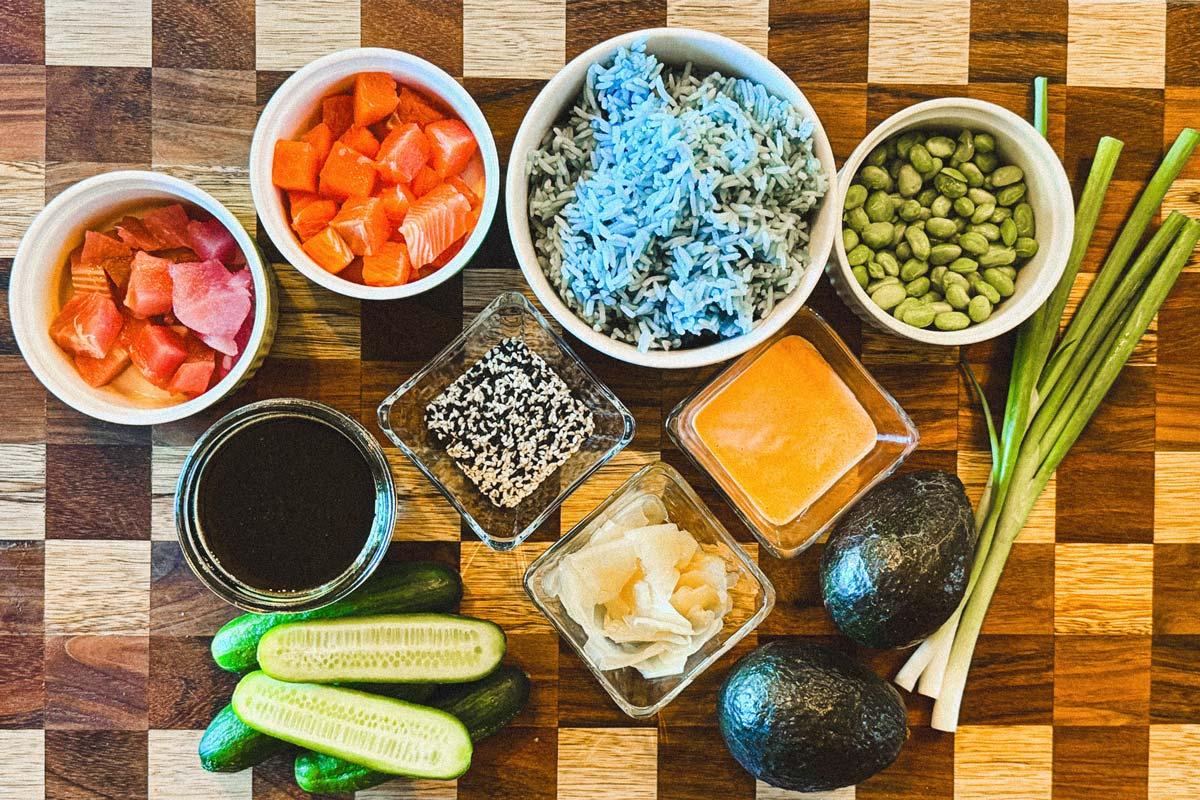
Ingredients
Unagi Sauce

- 1/2 cup coconut aminos
- 1/2 cup coconut sugar
- 1/4 cup rice vinegar
Spicy Aioli
- 2 tablespoons avocado oil, mayonnaise, or homemade mayonnaise
- 2 tablespoons sriracha, or more to taste
Blue Rice
- 1 1/2 cups jasmine rice (or sushi rice), rinsed well
- 1 1/2 cups filtered water
- 1 teaspoon butterfly pea flower powder (optional)
Bowls
- 1 pound partially thawed frozen sushi-grade wild-caught salmon or ahi tuna, cut into 3/4-inch cubes
- 2 avocados, chopped
- 4 mini cucumbers, chopped (or 1 English cucumber)
- 3 scallions, thinly sliced
- 1/3 cup pickled ginger
- 1 cup organic shelled edamame
- 1/4 cup sesame seeds (white and/or black; toasted, if desired)
Instructions
Make the Unagi Sauce: In a medium saucepan over medium-high heat, whisk together the coconut aminos, coconut sugar, and rice vinegar. Bring to a rapid boil, then reduce the heat to medium-low and simmer for one to two minutes, whisking constantly. Do not cook too long or the sugars may burn. Cool, transfer to a squeeze bottle or small jar, and refrigerate.
Make the Rice: Cook the rice according to the package directions. If using butterfly pea flower powder, stir it into the water, adjusting the amount of water if the package directions differ.
Make the Spicy Aioli: In a small bowl, stir together the mayonnaise and sriracha until smooth. Taste and adjust the sriracha to your preferred heat level. Set aside.
Assemble the Bowls: Divide the cooked rice among four bowls. Top with the fish, avocado, cucumber, scallions, pickled ginger, and edamame. Drizzle with unagi sauce and spicy aioli. Sprinkle with sesame seeds. Serve immediately.
Notes
Coconut Aminos: Coconut aminos provide a soy-free, gluten-free alternative to traditional soy sauce, but have a sweeter, milder flavor with less umami depth. If soy is not a concern, tamari or soy sauce can be substituted, though both have a saltier, more savory flavor.Frequently Asked Questions
Q: Can I use other fish, and does it have to be raw?
A: You can use any sushi-grade fish or cooked crab or shrimp, and the fish can also be seared, grilled, or gently poached instead of served raw. For frequent bowls, wild-caught salmon is a strong choice because it’s one of the lower‑mercury fish and is high in omega-3 fats. Note that nearly all Atlantic salmon sold in stores is farmed rather than wild-caught.
Q: What can I use instead of rice?
A: Try white quinoa or cauliflower rice for a base that offers more fiber than white rice and can still be colored blue. Alternatively, serve the poke over mixed greens for a lighter, salad-style bowl.
Q: Can I make these healthy poke bowls ahead of time?
A: It’s best to assemble just before serving, but you can cook the rice, chop the vegetables, and mix the sauces up a day or two in advance and store them in the refrigerator. Chilling the rice creates resistant starch—a prebiotic fiber that feeds beneficial gut bacteria and may improve blood sugar control.