Many of us use hair care products, but how many of us really know what’s in them?
The United States, however, is not restricted in its use of D5 in personal care products. This prompted the researchers from Purdue University and Indiana University to determine what, if any, amount of D5 is safe, especially in indoor settings. The results showed that everyday leave-in hair care products expose people to a potentially toxic amount of D5 and that the exposure increases when using appliances like hair straighteners.
The study was conducted in a specially controlled environment at Purdue University called the zero Energy Design Guidance for Engineers (zEDGE). zEDGE is a tiny house that enabled the researchers to control air temperature, humidity, and ventilation in multiple rooms, including the bathroom.
Conducting 46 experiments, researchers had study participants between the ages of 18 and 65 undergo their typical hair care routine within the zEDGE under different air environments. Sometimes, the exhaust fan was on high, sometimes windows were open, and sometimes air was vented to the outside. Initial measurements showed study participants could inhale up to 20 milligrams of D5 per 20-minute hair session in a room without ventilation.
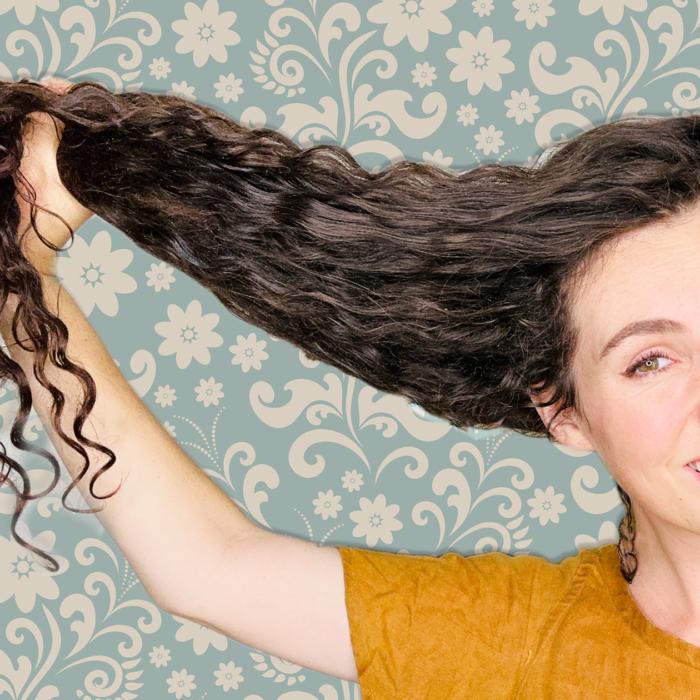

The research team found that individuals with longer hair were exposed to 2.5 to 5.4 more emissions than individuals with short hair. Additionally, if individuals used appliances to heat their hair, exposure increased. The worst offender was hair straighteners, which raised an individual’s exposure to volatile organic compounds (VOCs) by 145 percent, versus a curling iron, which increased exposure by 65 percent.
To avoid exposure, researchers suggest avoiding the products altogether. If impossible or undesirable, the next best solution would be to run an exhaust fan; researchers noted that turning on a fan could reduce peak exposure by about 70 percent, and the concentration is reduced by up to 95 percent after 20 minutes. However, even using a fan comes with pitfalls.