The lower abdomen is the hardest part of the body to remove fat. It is the first place fat accumulates and the last place that loses it. It took me three months to lose 4 kilograms (nearly 9 pounds), most of which was fat. How did I lose my belly healthily?
According to the American Council on Athletic Exercise, losing 0.9 kilogram (about 2 pounds) per week is the normal weight loss standard. Losing 4 kilograms in three months is actually a minimal loss, but if most of it is fat and the body gets toned in the process, it is a good result. Why is it so difficult to lose fat in the lower abdomen? To determine this, we have to look at the structure of the human body.
3 Factors Lead to Fat in the Lower Abdomen
The following three factors contribute to the development of fat in the lower abdomen:- Body structure: If not caused by a problem with your natural bone structure, it may be a problem caused by improper use of acquired muscles. The most common is the anterior pelvic tilt caused by sitting for a long time, which makes the lumbar spine and the stomach protrude. Pay attention to your posture or correct the wrong muscle and fascia memory through exercise.
- Subcutaneous fat: Subcutaneous fat will also cause the lower abdomen to bulge. The way to reduce subcutaneous fat is through exercise, but usually, the body does not have a lot of subcutaneous fat. The main culprit beyond lower abdominal fat is visceral fat.
- Visceral fat: There are three types of sugar: glucose, fructose, and sucrose. Glucose will be directly absorbed and utilized by the body. Fructose cannot be absorbed at all; it will be converted into fat. Sucrose is half fructose and half glucose. No matter what kind of sugar it is, when the body consumes more energy than it can use, it will become fat. At first, it is stored in the liver, which can lead to fatty liver. As fat flows through the blood to the rest of the body, it gets stored in places that don’t move much, such as the lower abdomen, thighs, or upper arms. Internal organs can hoard a lot of fat; a large amount of visceral fat causes a beer belly.
Flatten the Lower Abdomen With 1 Trick
One of the most effective ways to reduce lower abdominal fat is through diet. The main reason modern people accumulate fat is added sugar; it is ubiquitous, hiding in soft drinks, processed foods, and sauces. Therefore, quitting sugar is the primary trick for slimming down.If you don’t have a sweet tooth, controlling the calories for every meal will be something to consider. I recommend that people who want to lose fat in their lower abdomen make half of what they eat vegetables. Also, protein is essential; at least 0.8 gram of protein per kilogram of body weight. People who exercise require even more—about 1.6 grams per kilogram of body weight, followed by the reduction of non-refined starch.
Lower Abdominal Muscles Are Hard to Train
Exercising will not slim the lower abdomen but instead build muscles, which are easy to train. Because the abdominal muscles are only a thin layer, there is not a lot of muscle there to train. Most people can’t see the abdominal muscles because they’re covered in fat; therefore, reducing foods that will accumulate fat from the diet is the most important thing.The abdomen muscles are divided into the upper and lower abdomen. The abdomen that everyone cares about belongs to the lower abdomen; this muscle is not very easy to train because the upper abdomen is so strong that it often takes over when exercising. Therefore, as you exercise, you must focus on the muscles you want to train.
6 Belly-Flattening Exercises
The following exercises will target your lower abs.1. Crunches
- 20 repetitions in a set; do three sets.
Step 2: Stretch your arms straight in front of your body.
Step 3: Slowly lift your upper body, stopping before your lumbar spine leaves the floor. Keep your abdominal muscles tight and pause for two seconds, then slowly return to the starting position. Repeat the lifting motion, making sure to avoid rapid movements. Exhale as you curl and inhale as you lie back.

Advanced: Place hands on shoulders, hands behind the neck, or legs lifted with weights to increase the difficulty
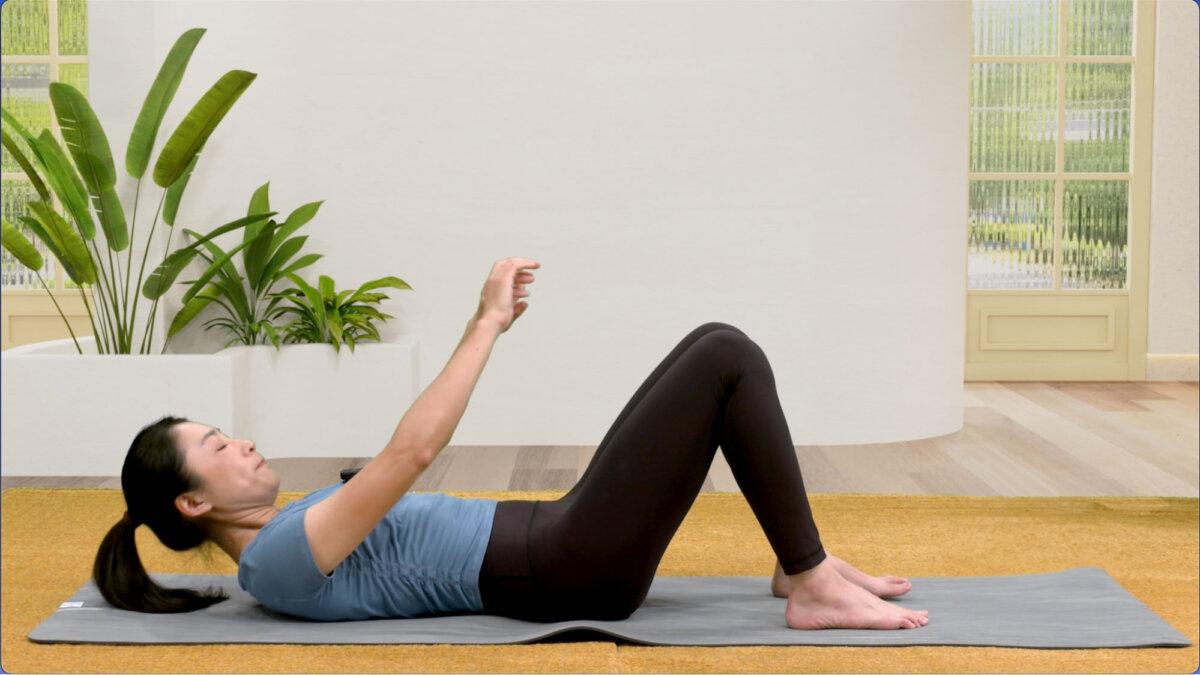
Crunches. Health Journey/The Epoch Times
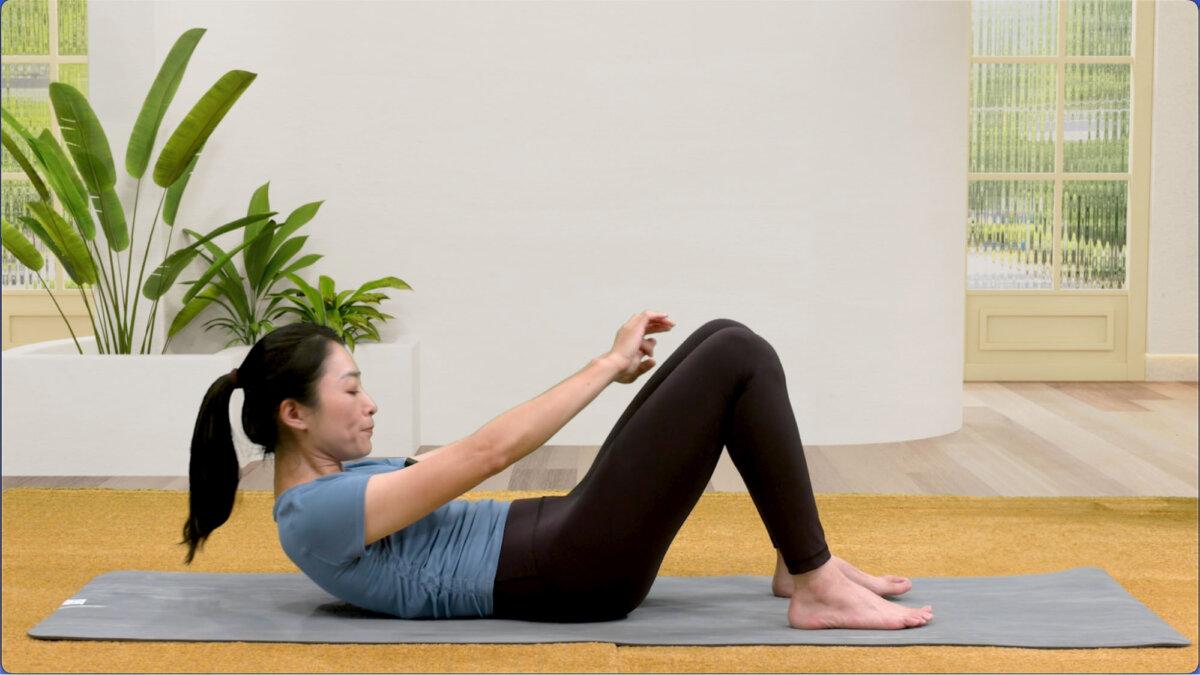
Crunches. Health Journey/The Epoch Times
2. Leg Raises
- 20 repetitions in a set; do three sets.
Step 2: Lift your hips and lower back in reverse motion with your abdomen curled. The lower back roll must be slow and stop before the upper back leaves the floor. Try bringing your lower abs to your chest; the aim is not to actually touch your chest but to just imagine this.
Step 3: Hold the abdominal muscles tight here and pause for two seconds, then slowly return to the starting position, stopping to maintain abdominal tension before the hips touch the floor. Place your hands flat on the floor without moving your neck.
Advanced: Raise the buttocks to strengthen the abdominal muscles.
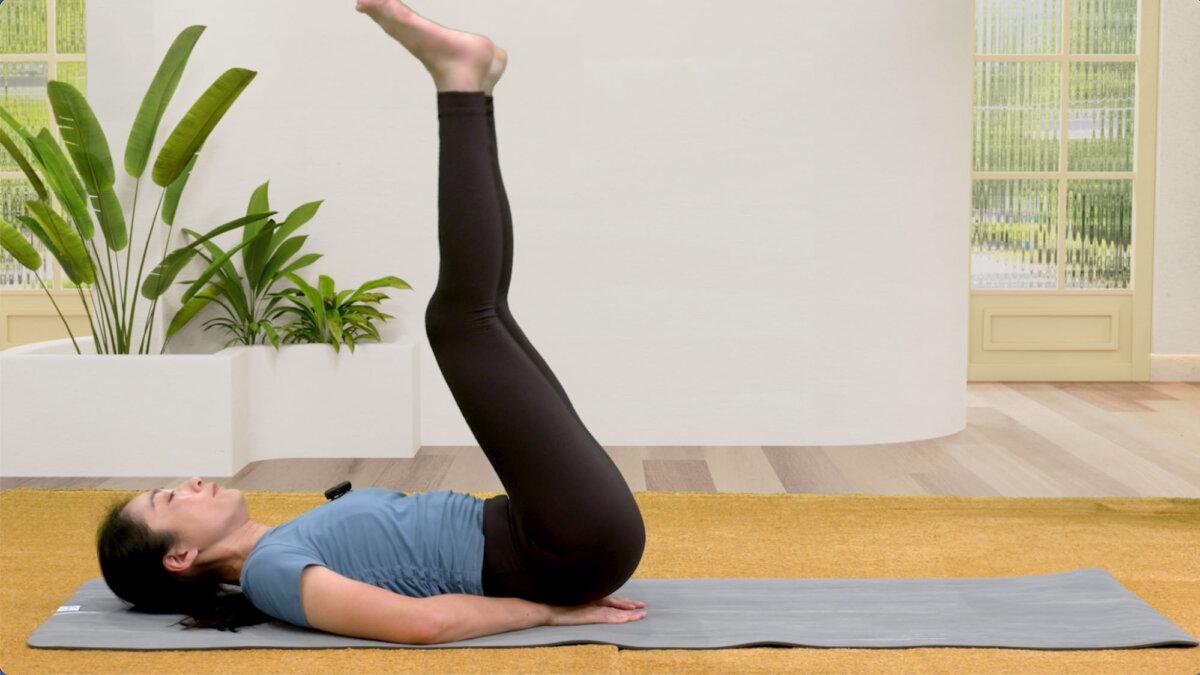
Leg raises. Health Journey/The Epoch Times
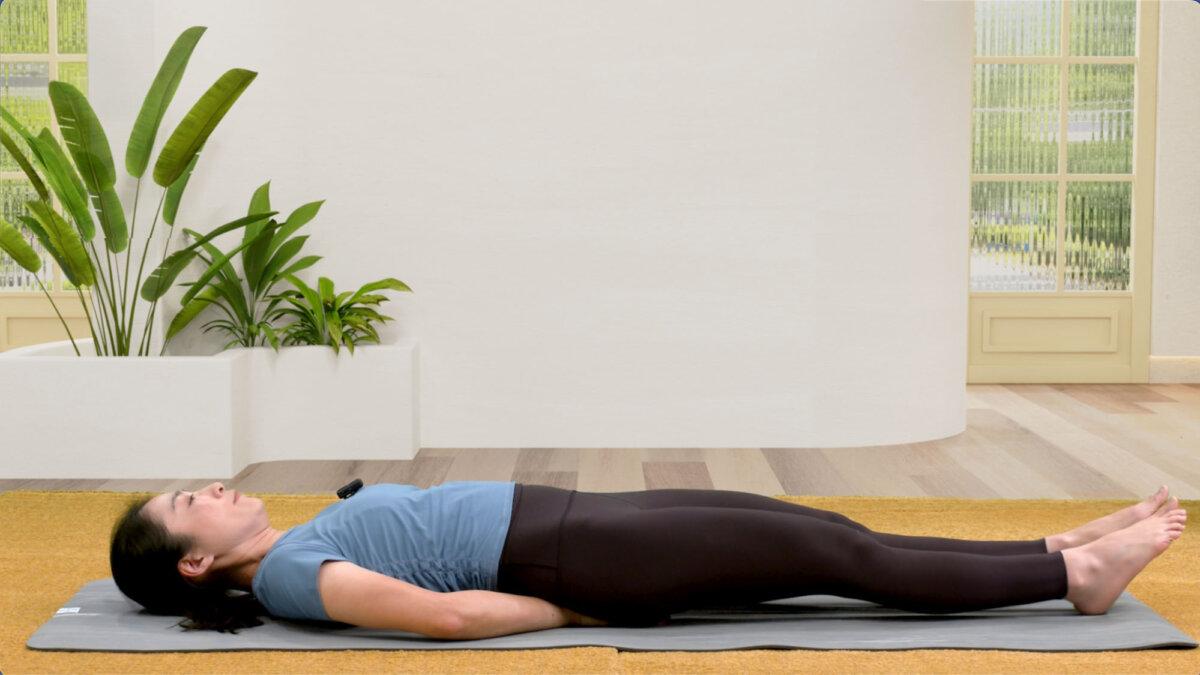
Leg raises. Health Journey/The Epoch Times
3. Bicycle Crunches
- 20 repetitions in a set; do three sets.
Step 2: Rotate your upper body to the right with your shoulders, bend your right leg to your left elbow, and keep your left leg straight without touching the floor.
Step 3: Rotate your upper body to the left with your shoulders, bend your left leg to your right elbow, and keep your right leg straight without touching the floor. Keep the lower ribs and pelvis touching the floor without shaking. Alternate between left and right.
Advanced: Elbows touch beyond the knees, and add a waist twist to use more abs.
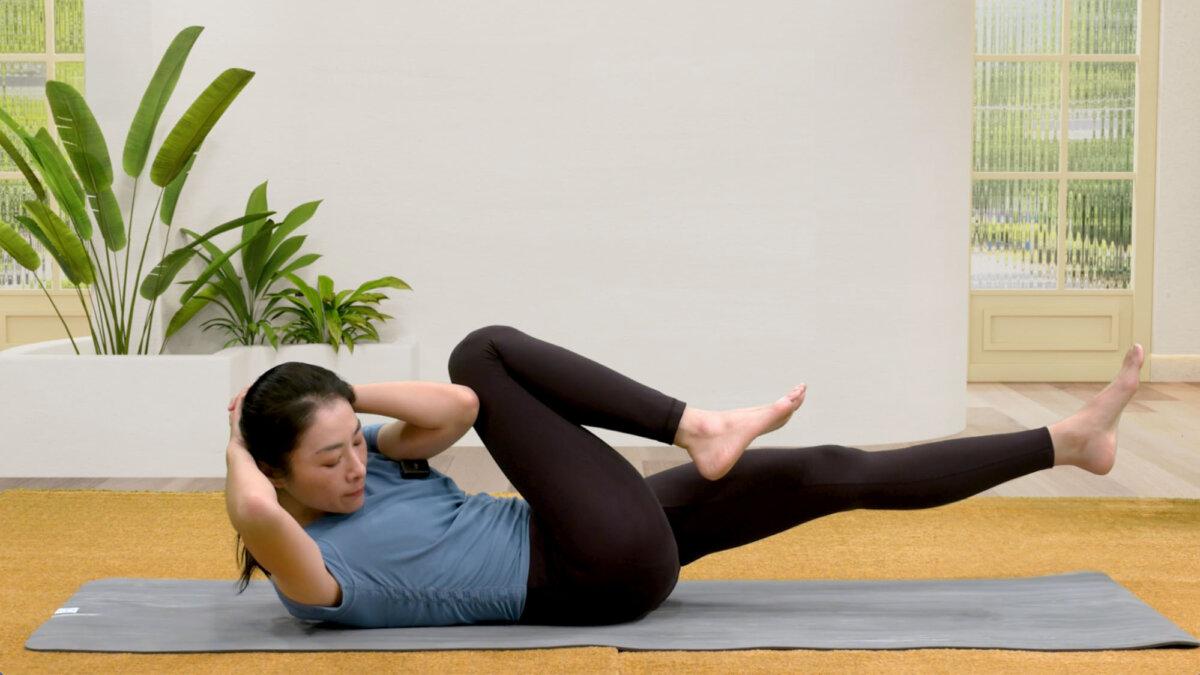
Bicycle crunches. Health Journey/The Epoch Times
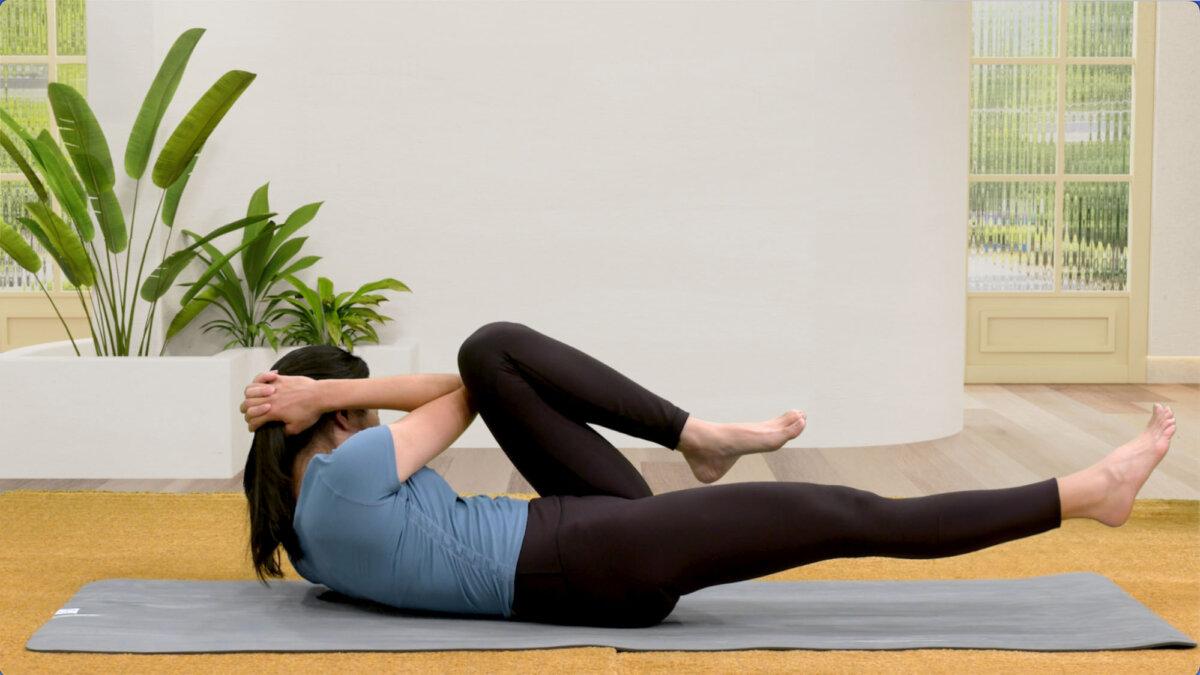
Bicycle crunches. Health Journey/The Epoch Times
4. Supine Twist
- 20 repetitions in a set; do three sets.
Step 2: Turn your bent legs left and right.
Advanced: Straighten your legs rather than bend them.
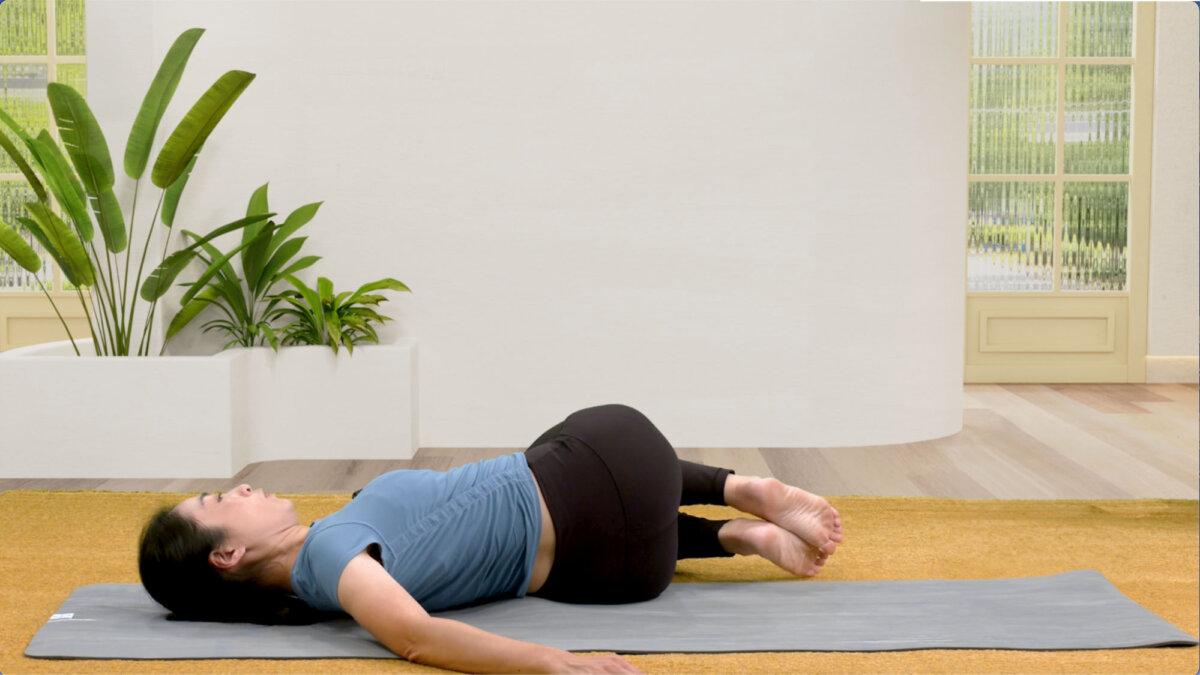
Supine twist. Health Journey/The Epoch Times
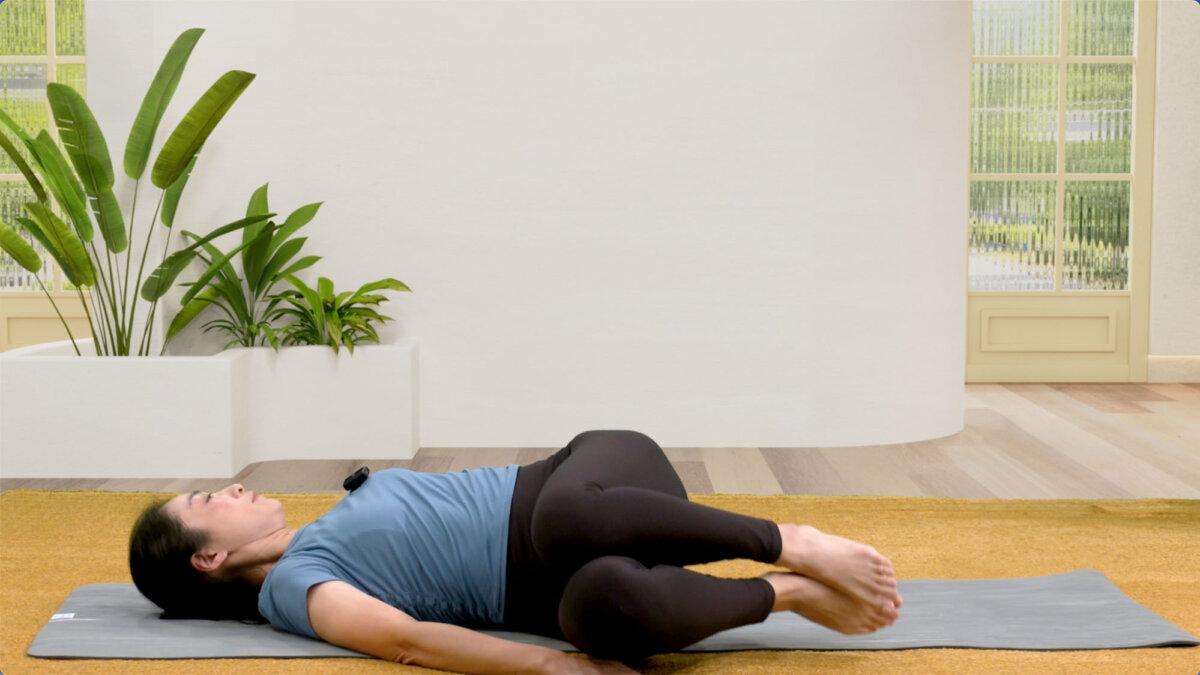
Supine twist. Health Journey/The Epoch Times
5. Slow Mountain Climbers
- Perform for 30 seconds.
Step 2: Bend your left leg to touch your left elbow (or move closer to your chest), then quickly retreat into a high plank position.
Step 3: Bend your right leg to touch your right elbow (or move closer to your chest) and quickly retreat into a high plank position.
Advanced: Speed up your climb.
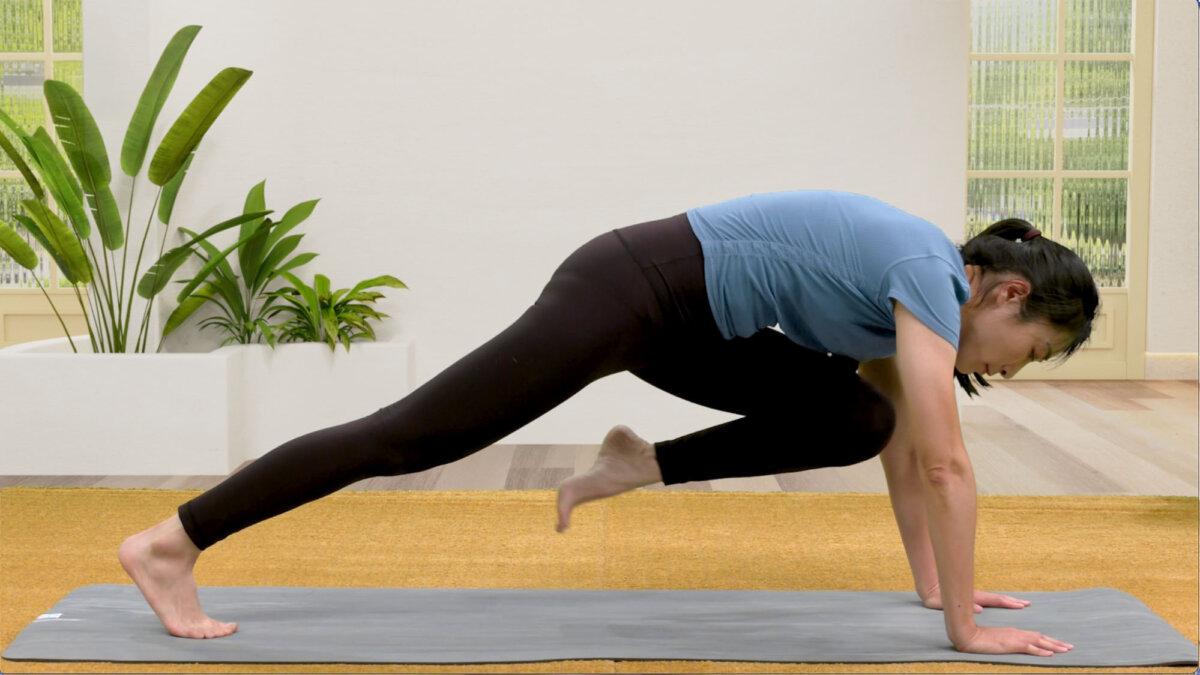
Slow mountain climbers. Health Journey/The Epoch Times
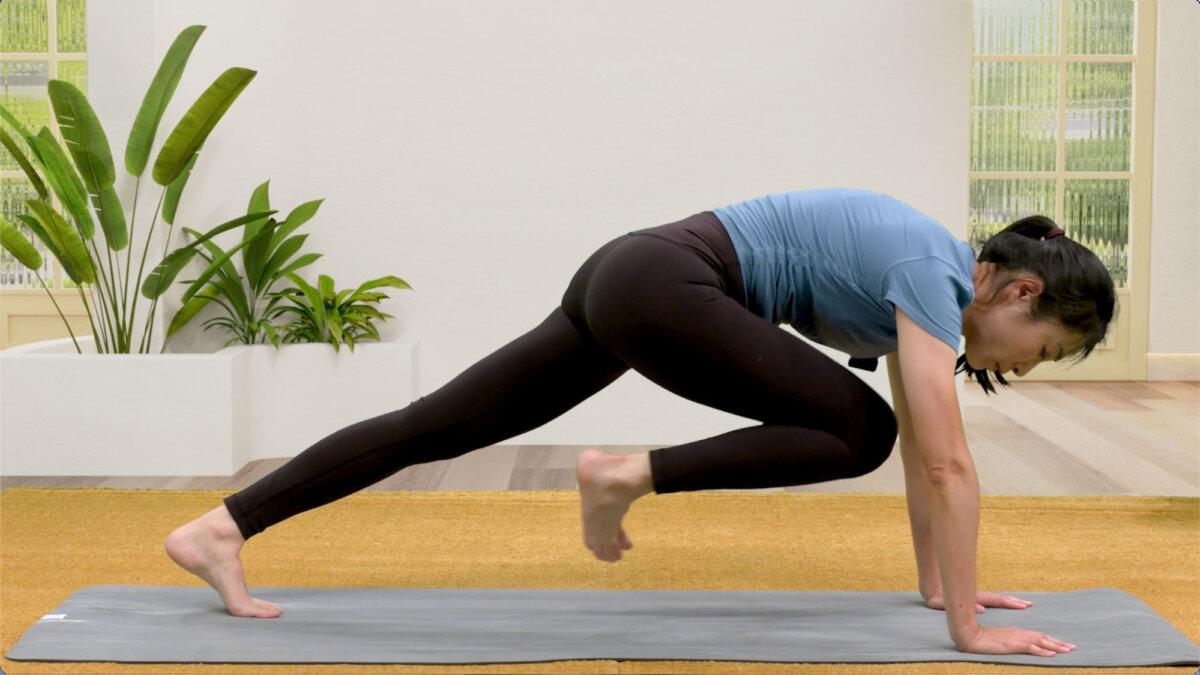
Slow mountain climbers. Health Journey/The Epoch Times
6. Plank
- Perform for 30 seconds.
Step 2: Use the muscles of your stomach and legs to prop your body off the floor. Use your forearms and toes to support your body weight, and keep breathing.
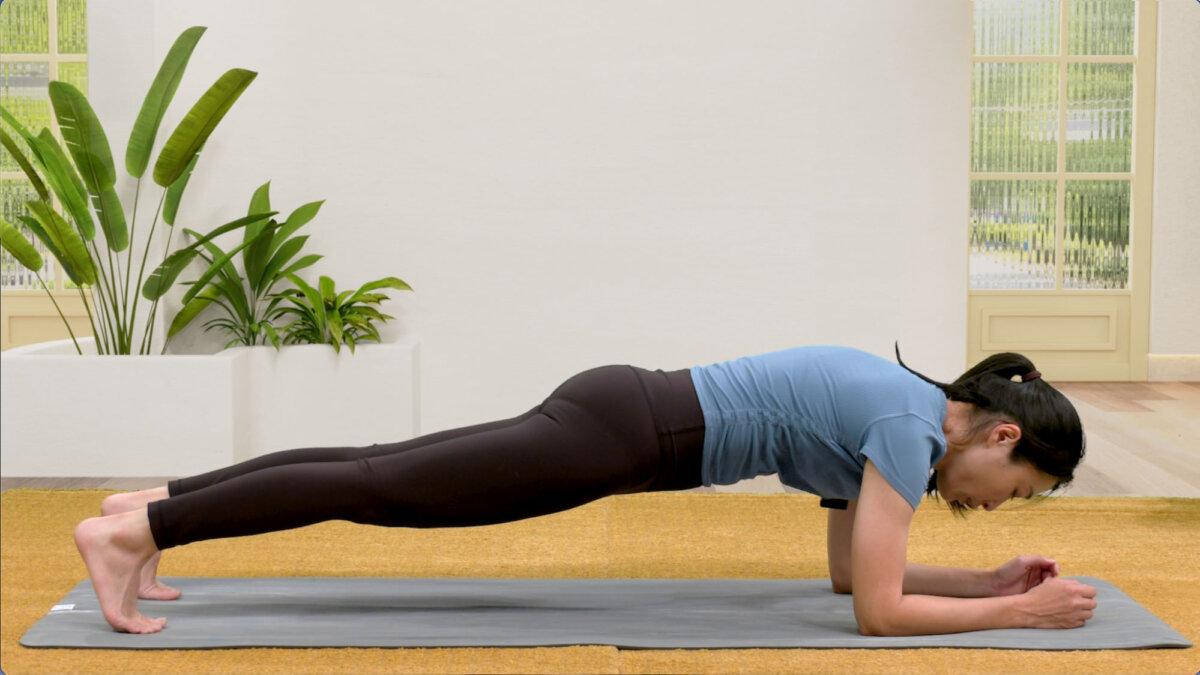
Plank. Health Journey/The Epoch Times