Meridian theory is one of the basic theories of traditional Chinese medicine (TCM), and the basis of acupuncture too.
Since thousands of years ago, in ancient China, acupuncture has been used to treat disease. Medical works unearthed from the Mawangdui Tombs, of the Han Dynasty 2,100 years ago, recorded methods related to these meridians.
Yet, these meridians and acupuncture points cannot be seen with the naked eye, prompting many to ask if they really exist.
Meridian Paths
TCM theory believes that the meridians are the paths through which life energy in the human body flows. There are 12 main meridians corresponding to the 12 internal organs, from which they circulate further towards the hands, feet, head, and face. When things go wrong with one of the internal organs, discomfort will also occur at various points along the corresponding meridian paths.Conversely, using TCM treatments like acupuncture at points on a meridian path can then treat the corresponding internal organs. These identified spots are also known as acupuncture points, or “acupoints.”
In addition to the 12 main meridians linking the internal organs to the hands and feet, there are another eight auxiliary meridians that are not directly connected to the 12 internal organs. Together they make up the 20 commonly known meridians. In addition, there are also branches of the meridians, called collaterals, found in various parts of the body, which are so numerous that make them almost uncountable.
Fluorescent Lines Confirm Meridian Path
Scientists are also working on ways to make meridians visible to the naked eye.The team recruited 15 volunteers in good health, and two TCM practitioners marked on their hands the route and acupoints of the pericardial meridian.
Then, at the Neiguan acupoint (near the wrist), they injected fluorescent dye into the skin, taking precautions to make sure the dye was not injected under the skin. A total of 23 injections were performed (some on the left arm, some on the right, and some both).
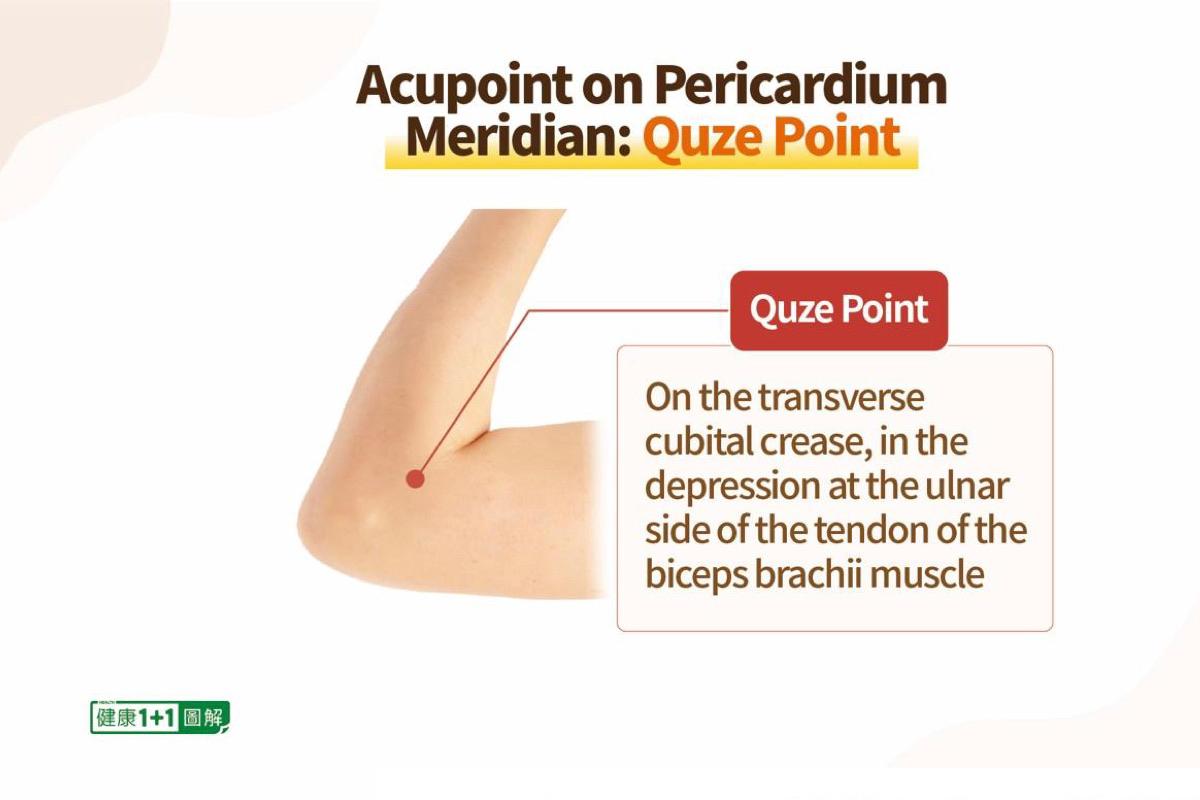
With 18 of these injections, the dye traveled in a line up the arm, tracing out a path from the Neiguan acupoint up the pericardial meridian to the Quze acupoint near the inner elbow. In the five other injections, the Quze acupoint lit up, but there was no fluorescent line path connecting the points. In some cases, bright spots appeared at the Quze acupoints before the fluorescent line path formed or finished forming.
These lines did not follow lymphatic or blood vessels.

The Quze acupoint is one of the “he-sea” points in meridian theory, which means it is a point that gathers energy, or qi. These are points of confluence. Like tributaries from all directions meeting eventually as they converge into the sea, meridians flow and converge as well. The experiment results seem to confirm not only the existence of the points and paths, but the directional flow of energy as well.
In order to confirm whether a similar linear trajectory would appear when the fluorescent dye was injected at any other point on the hand, the researchers designed a control experiment.
Fluorescent dye was injected at a non-acupoint location about one centimeter from the Neiguan. This experiment was done seven times, and no similar lines appeared in any of them, further demonstrating that acupuncture points have special energy characteristics.
Acupuncture Points and Meridians Have Special Physiological Characteristics
Earlier studies have found that the hydraulic resistance at meridians and acupuncture points is lower than at other locations.A 2008 study published in the journal “Acupuncture and Meridian Research” found that when a radioisotope dye was injected into the acupoints of a miniature pig, the dye did move along the meridian.
An Anti-Inflammatory Point
Scientists are also exploring the mechanism by which acupuncture can treat diseases.Research has confirmed the anti-inflammatory effects of acupuncture, attributing this mechanism to specific neurons.
Zusanli is one of the most important health-preserving acupoints. Regular massage of Zusanli has the effect of enhancing immunity and a healthy stomach.
Meridians Remain a Mystery to Modern Science
However, the nervous and circulatory systems are not enough to fully explain the meridians.Liu Xinsheng, a professor of Chinese medicine at a Canadian public university, described one clinical case he came across: A patient had suffered an acute sciatica attack, and he performed acupuncture on the Fengchi point on the patient’s neck, twisting while acupuncturing. The pain disappeared quickly, and the patient got off the bed and started moving around.
Liu pointed out that the sciatic nerve is a branch from the spinal nerve of the lumbar spine, and is distributed in the lower limbs of the human body, while the Fengchi acupoint has no direct physical connection with the sciatic nerve. This phenomenon can only be explained by meridian theory, while it is difficult to explain via the neural network.
Although many clinical studies have confirmed the effect of acupuncture in treating diseases, scientists still have not completely solved the mysteries of the meridians. So how did the ancient Chinese discover the meridians several thousand years ago?
One theory lies within the culture of these ancients.
Li Shizhen, the famous physician and writer of the Ming Dynasty who authored the 16th-century encyclopedia “Compendium of Materia Medica,” once said, “only those introspect can observe the tunnels of the internal organs.”
The tunnels the great physician referred to can be understood to be the energy meridians. Introspection was tied to the concept of self-cultivation in traditional Chinese culture, a practice of refining one’s character and morality, one that was spiritual in nature. Only those who studied the interior of the human being with this mindset could understand the flow of energy within the body.
Liu Xinsheng said that the ancients did not experiment with physics, chemistry, or imaging, but through meditation, they became aware of the energy flow in the body. Their study has been documented in records of these meridians, which, although they do not exist in the anatomical structure, can be detected and reflected materially and observed as clinical phenomenon even today.