
“Chicken is valuable because it delivers all of these micronutrients in a single source,” Gretchen Zimmermann, a registered dietitian and spokesperson for the Academy of Nutrition and Dietetics, told The Epoch Times in an email.
Whether you fill your plate with a skinless breast, juicy dark meat thigh, or crispy wing, this humble bird delivers.
Key Nutrients
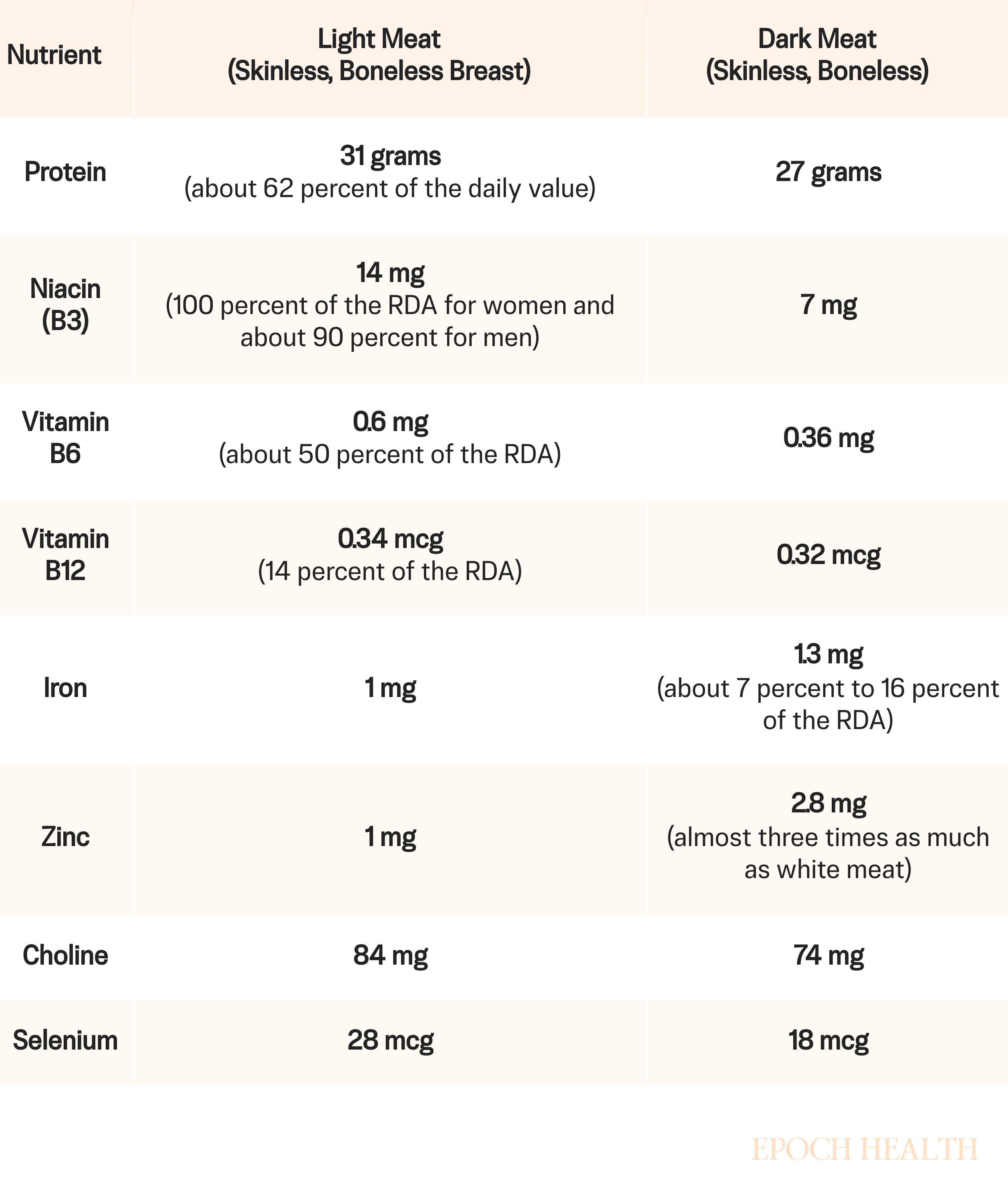
Here’s how a standard 3.5-ounce serving—about the size of a deck of cards—of both light and dark meat cooked chicken stack up:
Health Benefits
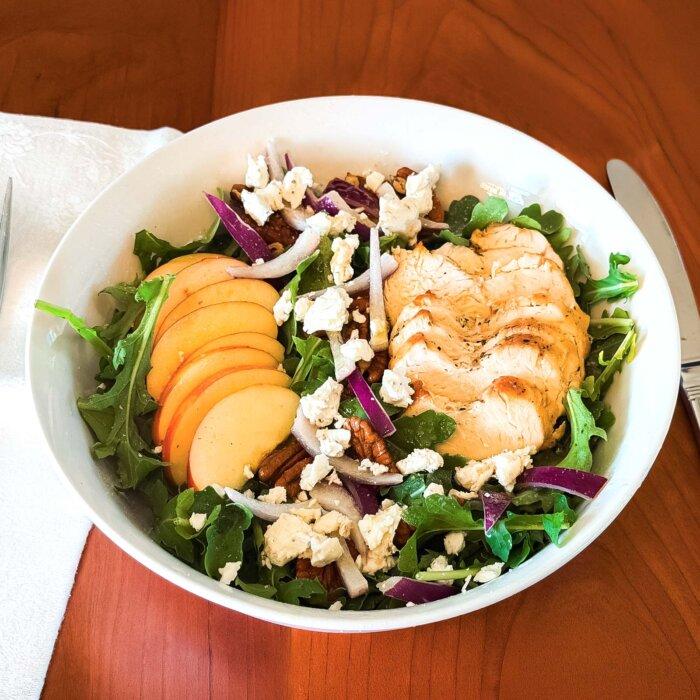

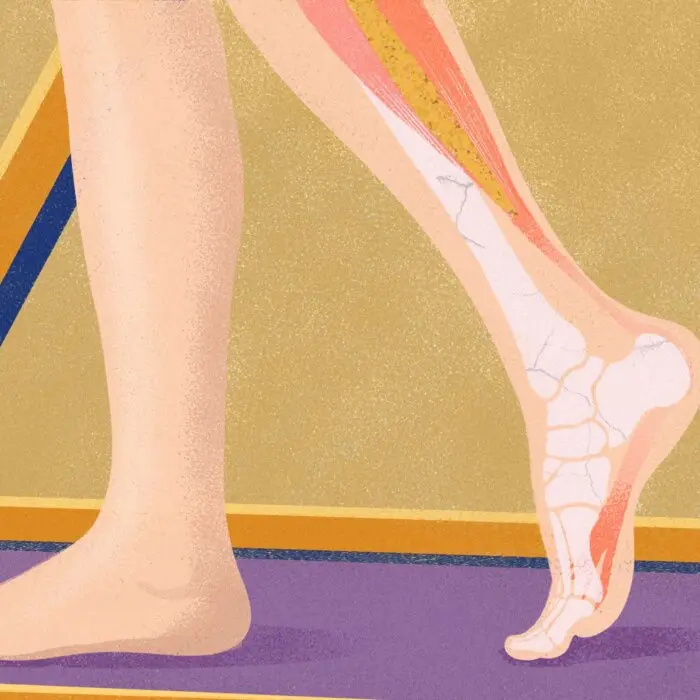
Chicken offers a range of benefits that support muscle health, satiety, and overall long-term health.
Supports Muscle Mass
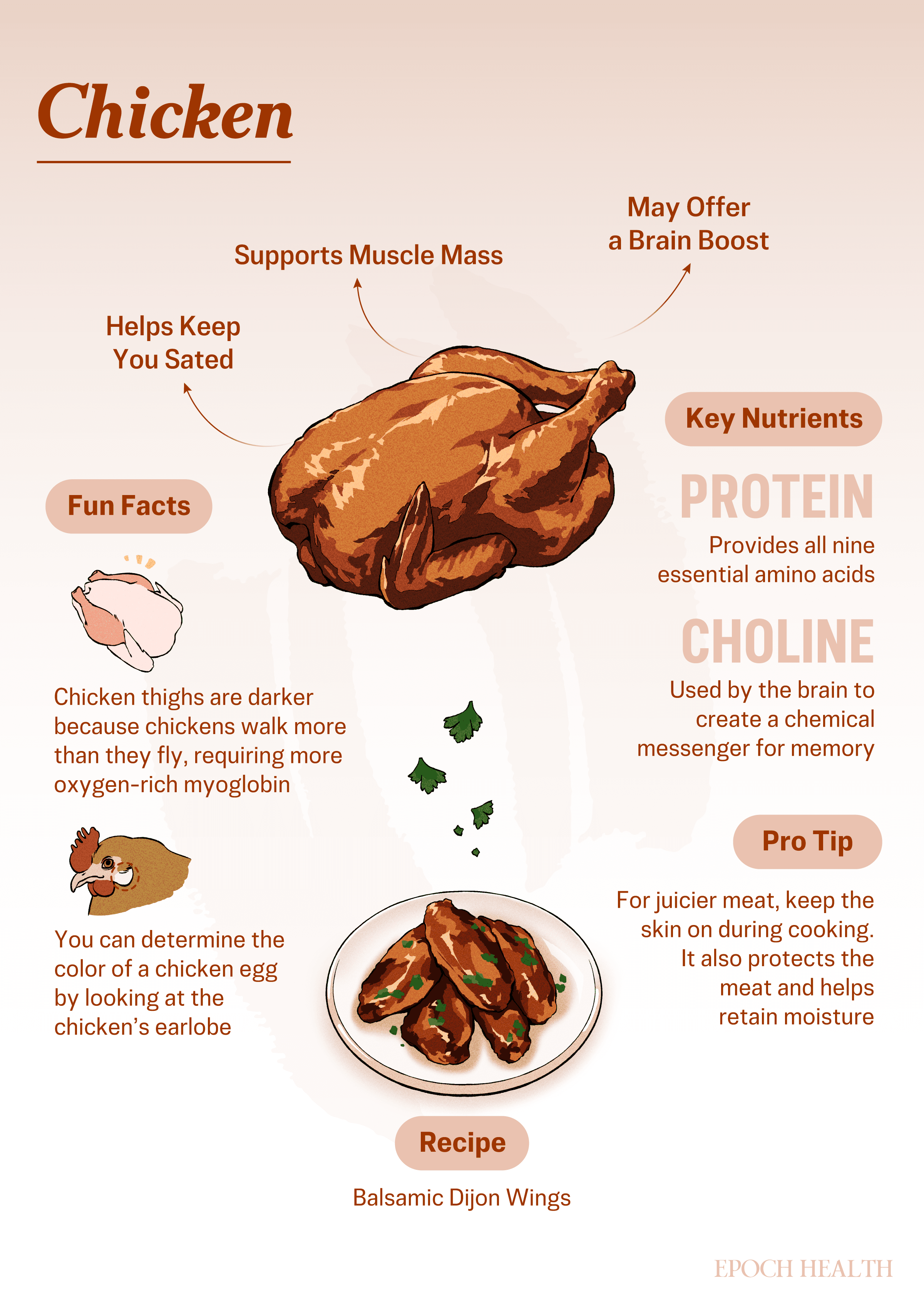
Chicken protein supports muscle maintenance and growth in older adults, especially when combined with resistance exercise. A randomized trial published in Physiology Reports studied senior women and found that combining resistance training and eating about 22.5 grams of protein from chicken three times a week led to greater increases in muscle strength and lean body mass than either intervention alone. Eating chicken alone also modestly increased lean mass.“For muscle maintenance and healthy aging, this complete profile is essential,” Zimmermann said.
As we age, we naturally lose muscle mass and function, she said. Eating high-quality protein, such as chicken, helps counteract decline by providing the building blocks needed to repair and retain lean tissue.
“In terms of body composition, this supports a higher metabolic rate, since muscle burns more calories at rest than fat tissue, making it easier to maintain a healthy weight and functional strength over time,” Zimmermann added.
Helps Keep You Sated
Both white and dark meat chicken can help promote fullness and support appetite control by lowering ghrelin, the primary hunger hormone, and increasing GLP-1 and other satiety-related hormones.May Offer a Brain Boost
Chicken may also support aspects of cognitive function. A 2021 meta-analysis published in Nutritional Neuroscience found that daily consumption of “essence of chicken,” a concentrated chicken extract, was associated with modest improvements in cognitive function, particularly working memory.“Chicken is an excellent source of choline, a nutrient the brain uses to create acetylcholine. This chemical messenger is essential for memory, mood, and learning,” Zimmermann said.
Additional Benefits
Chicken can help your body turn food into energy. White meat, especially, is an excellent source of niacin and vitamin B6, two B vitamins that help convert carbohydrates, fats, and protein into usable energy.Meanwhile, dark meat can be especially useful nutritionally for athletes, women with heavy menstrual cycles, and those at risk of iron deficiency because it contains nutrients involved in red blood cell production and oxygen delivery. “It contains more iron,” Clancy-Strawn said.
How to Increase Absorption
- Don’t Overcook It: One of the most common culinary mistakes, according to Isaac Bernal, executive chef of the representation of Spain to the United Nations, is overcooking chicken. Excessive heat can reduce some B vitamins, particularly niacin and vitamin B6. Cook to the proper internal temperature of 165 F and avoid prolonged high-heat cooking when possible. “Allowing the meat to rest for a few minutes after cooking also helps keep those natural juices where they belong,” Bernal told The Epoch Times in an email.
- Eat the Dark Meat Too: Chicken thighs and drumsticks generally provide more iron and zinc than breast meat.
- Eat Protein Throughout the Day: For muscle growth and support, research suggests it’s generally more effective to eat adequate protein at multiple meals rather than getting most of it at once.
Optimal Storage
Raw Chicken
- Store raw chicken in the refrigerator in its original packaging or place it in a leak-proof container.
- Place it on the bottom shelf to reduce the risk of drips contaminating other foods.
- Cook within one to two days.
Leftover Cooked Chicken
- Refrigerate leftovers within two hours of cooking and store in an airtight container.
- Eat within three to four days.
To Freeze Raw or Leftover Cooked Chicken
- Wrap tightly in freezer-safe packaging or airtight containers to prevent freezer burn.
- Raw chicken can typically be frozen for up to nine months, while a whole chicken can be frozen for up to a year.
- Cooked chicken can be frozen for two to six months for maintaining the best texture.
- For the best quality, thaw frozen chicken in the refrigerator rather than at room temperature.
Pro Tips
For juicier meat, keep the skin on while cooking—it can be removed afterward if you prefer a leaner result. “I often cook with the skin on because it protects the meat, helps retain moisture, and develops fantastic flavor,” Bernal said.
While skin does add fat, the impact is moderate. “The calorie difference between skinless and skin-on is relatively small,” Zimmermann said.
“Keeping [the skin] on for flavor and moisture is a perfectly reasonable choice within a balanced diet,” Zimmermann said.
Marinades made with yogurt, citrus, olive oil, herbs, or mild spices work by helping improve both flavor and texture, Bernal said.
Keep a bag in the freezer for leftover bones and carcasses, then use them to make homemade broth. In addition to reducing food waste, bone broth creates a nutrient-rich, cold-fighting base for soups, stews, and sauces.
For maximum benefits, limit highly processed chicken products and frequent use of high-risk cooking methods such as deep frying, which can add excess sodium, unhealthy fats, and harmful compounds formed during high-heat cooking.
For better texture and flavor, try searing chicken on the stovetop first, then finishing it in the oven. This two-step method creates a crispy, golden exterior while keeping the inside juicy, and it also reduces the risk of smoking out your kitchen from high-heat pan cooking alone.
Recipe: Balsamic Dijon Wings
Balsamic Dijon Wings
Total Time: 1 hour, 15 minutes- 2 teaspoons Dijon mustard
- 3 tablespoons balsamic vinegar
- 1 tablespoon avocado oil
- 1 teaspoon salt
- 1/2 teaspoon pepper
- 1 teaspoon garlic powder
- 1 to 2 pounds (about 12 to 18 bone-in split wing pieces)
- Chopped cilantro for garnish, optional
- Combine Dijon mustard, balsamic vinegar, avocado oil, salt, pepper, and garlic powder in a small bowl and mix well. Set aside 2 tablespoons of the mixture to use as a glaze later. Pour the remaining marinade over the chicken wings in a large container or a zip-top bag, then toss to coat. Marinate in the refrigerator for 30 minutes.
- Preheat oven to 425 F and line a baking sheet with parchment paper. Remove wings from the marinade and arrange in a single layer on the baking sheet.
- Bake wings for 20 minutes, then flip, brush with the reserved glaze, and bake for an additional 20 minutes, or until cooked through with an internal temperature of 165 F. Sprinkle with chopped cilantro, if using.
Precautions
- Cook chicken thoroughly to reduce the risk of foodborne illness, such as Salmonella.
- Preventing cross-contamination is equally important during prep. “Use separate cutting boards, wash knives and utensils thoroughly, and never place cooked chicken back onto a plate that previously held raw chicken,” Bernal said.
- Don’t rely on color alone to judge doneness—always use a food thermometer. “Chicken should always reach an internal temperature of 165 F,” Bernal said.
- “Individuals with reduced kidney function should consult a nephrologist or registered dietitian to determine safe protein intake,” Clancy-Strawn said.
Fun Facts
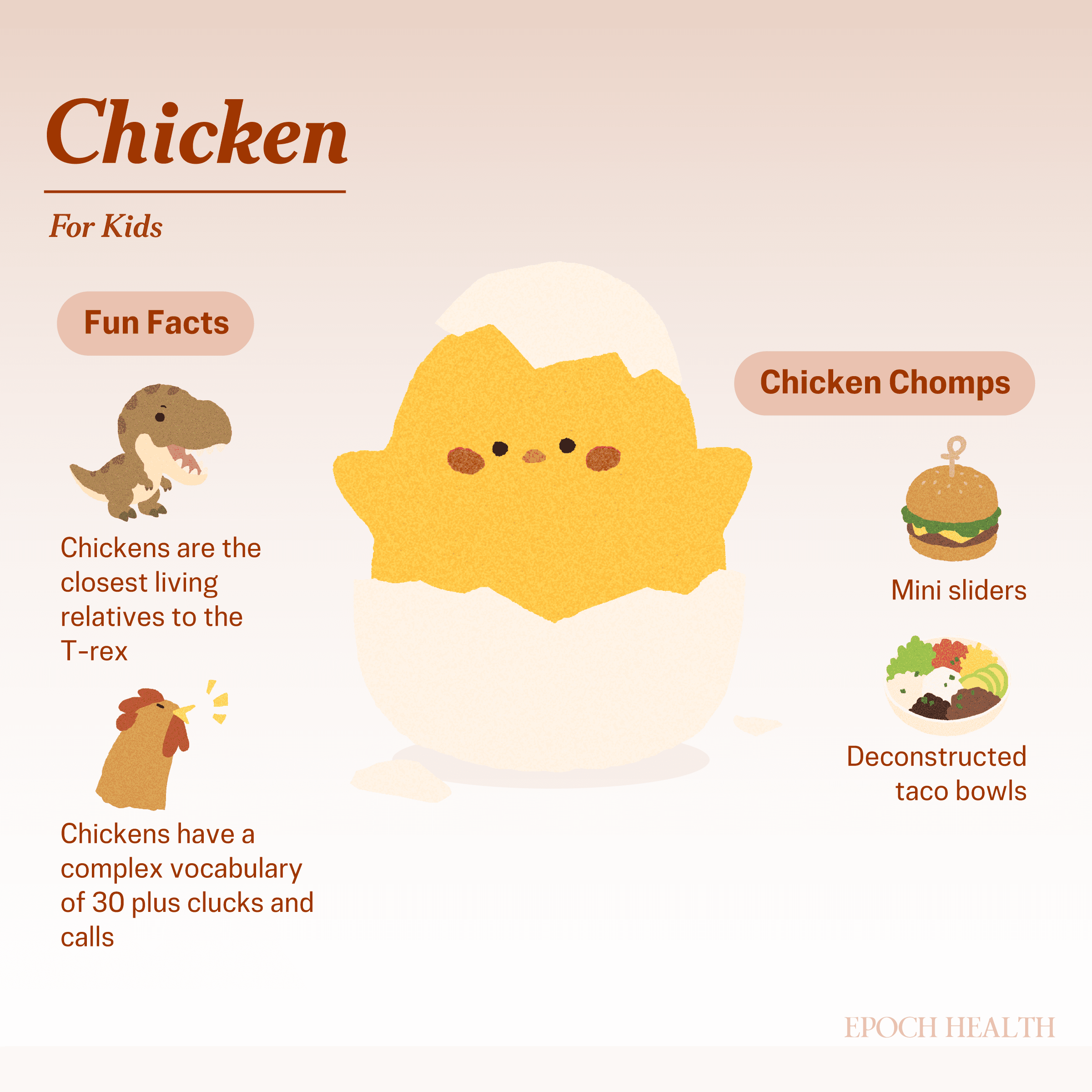
- Chickens are the closest living relatives to the T-rex.
- Chickens have a complex vocabulary of 30-plus clucks and calls.
- White meat versus dark meat is about the chicken’s level of exercise—their thighs are darker than their breasts because chickens walk more than they fly. The leg muscles need more oxygen, so they contain more myoglobin, which gives dark meat its color.
- You can determine the color a chicken egg will be by looking at the chicken’s earlobe.
Tips for Kids
Instead of relying on fast-food-style nuggets, homemade versions can be a simple alternative.
“You can slice chicken tenders, coat them lightly in whole wheat breadcrumbs, and air fry them at home,” Zimmermann said.
For younger kids and toddlers, large chunks of meat can pose a choking risk, so shredded chicken is often a safer and more versatile option.
Clancy-Strawn also added that the naturally higher fat content in dark meat adds moisture and tenderness, making it easier for them to chew, swallow, and digest it.
Another kid-friendly option is to make meals interactive. “Deconstructed taco bowls are a fun way to serve chicken,” Zimmermann said. “Set out small bowls of shredded chicken, black beans, corn, diced avocado, and a little cheese, and let kids build their own taco bowl or fill whole wheat tortillas. It makes mealtime more engaging and less intimidating for picky eaters.”