Clostridioides difficile (C. diff) can either be a dangerous adversary or coexist peacefully in the human gut—depending on the circumstances.
C. diff is usually present in small amounts in the gut and doesn’t cause harm because the balance of gut microbiota prevents its overgrowth. However, antibiotics can disrupt normal gut bacteria, lead to C. diff overgrowth, and release toxins that result in severe gut inflammation. This leads to symptoms such as diarrhea, abdominal pain, and sometimes life-threatening colitis or inflammation of the colon.
Researchers such as Jordan Bisanz are looking to adopt a new strategy that diverts from the destruction of C. diff with antibiotics to the restoration of its neutral role within the overall microbiome. That is, the community of bacteria, viruses, and fungi in the human gut.
Could 1 Microbe Treat C. diff?
Antibiotics have been the frontline treatment for C. diff since the 1970s, creating a vicious cycle of perpetual infections for many people. However, research is honing in on gentler treatment approaches, including those that leverage microbes to bring the gut microbial community back into balance.
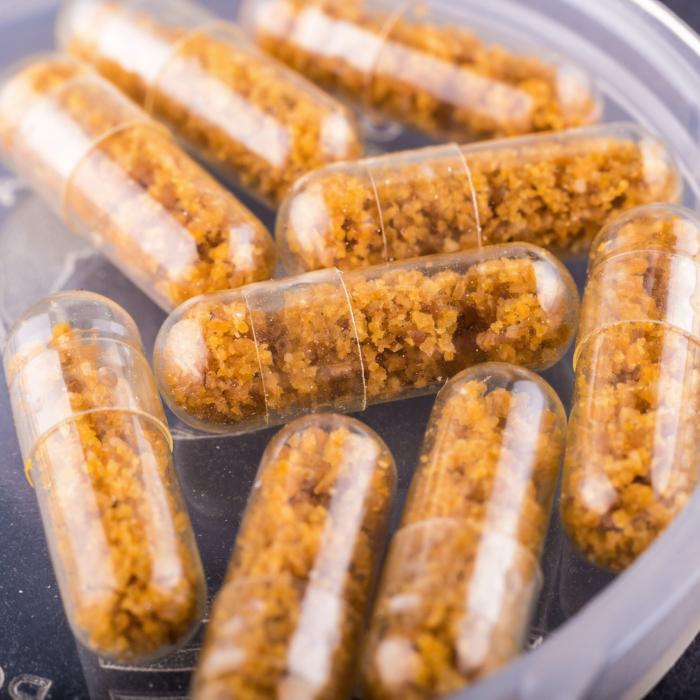
FMT involves the transfer of donor stool into the colon, often during a colonoscopy, though there is a pill form, too. The U.S. Food and Drug Administration has approved two FMT products to be used only in cases of recurrent C. diff infections when antibiotics fail to clear up symptoms.
FMT works by restoring good bacteria to the recipient’s depleted microbial community, so beneficial microbes outnumber C. diff and tamp down symptoms. It’s unclear how fecal transplants are effective, though the study offered insight.
- They compiled data from 12 human studies and used machine learning to determine which microbes were negatively associated with C. diff. In other words, microbes that were present before infection.
- They created a synthetic microbiome using only the 37 strains of bacteria that appeared to repress C. diff infections, including P. anaerobic.
- The concoction was lab tested on human samples and then in mice with C. diff and was found to work just as well as a traditional FMT.
- Further testing into the mechanism of C. diff suppression revealed that proline, a type of amino acid C. diff uses to proliferate, is also a favored food for P. anaerobius.
“It teaches us a lot about the mechanism, and that’s really the big question. It’s difficult to fix something if you don’t know why it’s broken,” Bisanz said. “Now that we’ve identified that Achilles heel of C.diff—this competition for the amino acid proline—it really opens up a realm of possibilities to go after.”
FMT Shortcomings
The authors point to the promise of FMT to help with the physical symptoms of C. diff infections as well as with mental and emotional well-being.Though FMT has been a breakthrough for C. diff infections, there have been concerns about the treatment.
The Penn State study noted that in addition to containing beneficial organisms, FMTs may also contain organisms that are not beneficial to the patient. The complexity of using human feces, the authors said, is both the greatest strength and weakness of FMT therapy.
Paths Forward
This line of reasoning could be further explored with research that aims to limit the availability of proline in the human gut. Bisanz said it could also include eating diets lower in proline-containing foods, new probiotics among bacteria that could lower proline, or new synthetic microbiome therapy such as that of the study.Researchers are studying all three approaches, according to Bisanz. The team involved in the study filed a provisional application to patent the technology they used to create their synthetic microbiome.
“Various classes of antidepressants and antipsychotics show antimicrobial activity, potentially leading to shifts in the gut microbiome and contributing to the development of dysbiosis,” the authors wrote. “Dysbiosis, in turn, can predispose individuals to opportunistic infections like C. difficile.”