Picture two people getting the same advice: “Cut back on butter and cheese.”
One has already had a heart attack, and the other is in his 40s, walks daily, and has normal blood pressure and cholesterol. New research suggests that those two people won’t get the same return on that dietary effort.
For decades, Americans have been told to limit butter, cheese, and red meat to protect their hearts from the effects of saturated fat.
Among every 1,000 high-risk patients who cut back over five years, about six fewer deaths, 12 fewer heart attacks, and eight fewer strokes occurred.
Among healthy adults, the results showed about one fewer death or heart attack—a difference researchers consider too small to be clinically meaningful.

“The results of our review are relevant mostly to medical guidelines and for clinicians to prioritize interventions to reduce cardiovascular risk in patients,” corresponding author Bradley Johnston, associate professor of nutrition and epidemiology at Texas A&M University and director of EvidenceBasedNutrition.org, told The Epoch Times in an email.
What You Replace Saturated Fat With Matters
The study also found that what you replace saturated fat with may matter as much as how much you cut. Swapping saturated fats for pasta or bread is very different from swapping them for another type of fat.Replacing saturated fat with polyunsaturated fats—the type found in many vegetable oils, nuts, and seeds—led to reductions in low-density lipoprotein cholesterol, the “bad” kind that contributes to clogged arteries, by about 17 milligrams per deciliter overall.
However, when saturated fat was replaced with carbohydrates, low-density lipoprotein cholesterol fell by only about 4 milligrams per deciliter, and major heart problems barely budged.
High-risk patients saw the greatest benefit in replacing saturated fats with polyunsaturated fats, with roughly a 25 percent reduction in nonfatal heart attacks, translating to about 21 fewer heart attacks per 1,000 people over five years.
The benefits of replacing saturated fats with polyunsaturated fats were negligible in low-risk patients.
Tom Brenna, professor of pediatrics and human nutrition at The University of Texas at Austin who was not involved in the study, told The Epoch Times that the findings warrant further investigation.
What the Findings Mean for Dietary Guidelines
The heart benefits seen in high-risk people who reduced their saturated fat intake are suggestive but not definitive, according to Brenna.“It is smoke, not fire,” he said.
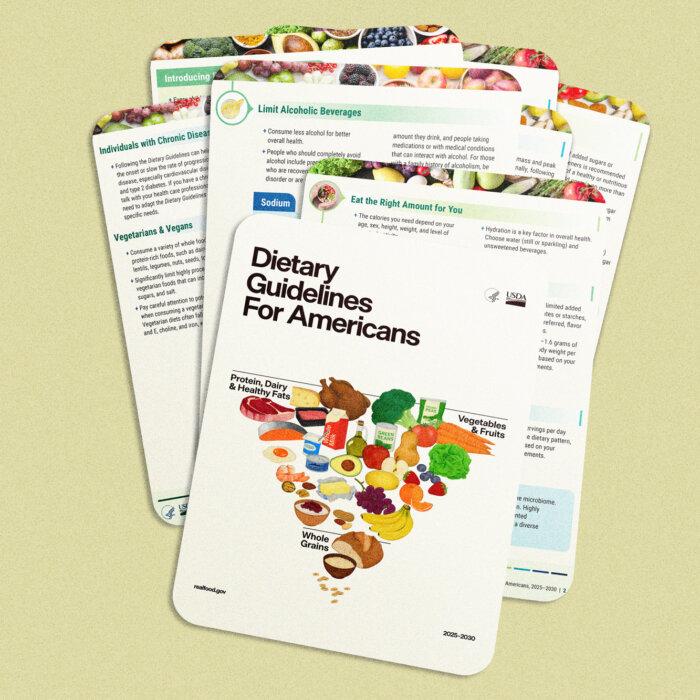
The findings arrive as the Dietary Guidelines for Americans—the federal recommendations that help shape school meals, clinical advice, and nutrition policy—are being updated in early 2026.
“Our results are thus a small piece of the evidence used in informing the Dietary Guidelines for Americans,” Johnston said. The current recommendation to limit saturated fat to less than 10 percent of daily calories is based largely on food-pattern modeling designed to ensure overall nutritional balance, not only on short-term trials of heart events.
Your starting heart risk—and what you choose to replace saturated fat with, if anything—matters more than a one-size-fits-all dietary rule.