In traditional Chinese medicine (TCM), plantar fasciitis (PF) is regarded as a type of pain or numbness of the heel caused by “cold” or “dampness” and is generally found to be related to bone spurs on the bottom of the foot.
According to TCM theory, many diseases are believed to be caused by forces in our environment. These forces are referred to as the six external pathogenic influences, categorized as wind, cold, heat, dryness, dampness, and summer heat.
4 Types of People Prone to Plantar Fasciitis
Dr. Chen named four groups of people most likely to suffer from plantar fasciitis:- As people get old, the fat on the soles of the feet becomes thinner, the flexibility of the plantar fascia is reduced, and the muscle strength of the soles is lost, which are all causes of plantar fasciitis.
- People who are overweight: excessive body weight on the soles.
- People who stand for a long time: bearing body weight for a long time will lead to increased pressure on the plantar fascia.
- People who walk a lot: excessive walking increases the burden on the plantar fascia.
Avoid Cold Food and Sugar; Nourish the Kidneys
The treatment of plantar fasciitis should start with tonifying the kidney. The main herbal remedies are Liuwei Dihuang, Bawei Dihuang, Zhibai Dihuangs, Zuogui, Yougui Pills, Duhuo Jishen Decoction, and so on, which invigorate the blood and remove stagnation. Suitable foods such as black beans and Polygonum multiflorum (Chinese knotweed) are the best.A Useful Sitting Pose
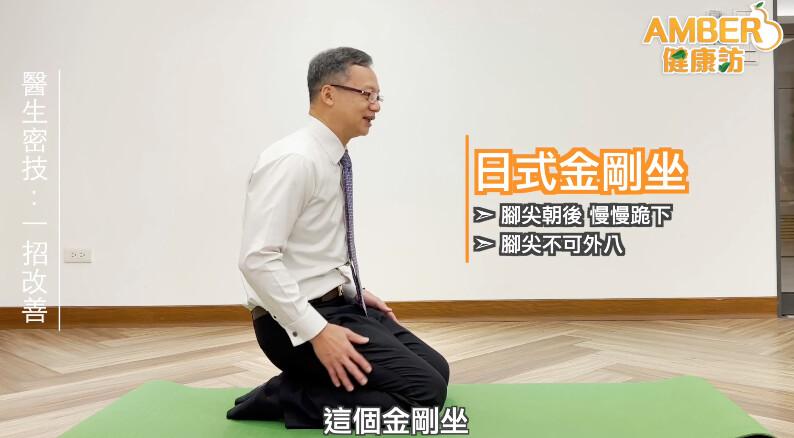
For patients with plantar fasciitis who feel pain when getting out of bed in the morning, Dr. Chen recommends an effective “Japanese-style Vajrasana” kneeling sitting pose.
He explained; “the plantar fascia is inflamed once it is stretched for a long time; the tibialis anterior muscle tightens this plantar fascia. The reverse sitting posture of pressing the instep can stretch and relax the tibial anterior muscle that is too tight.”
The best practice is to sit for three to five minutes every hour. If you do not have time, sit at least two to three times a day.
9 Stretching Movements
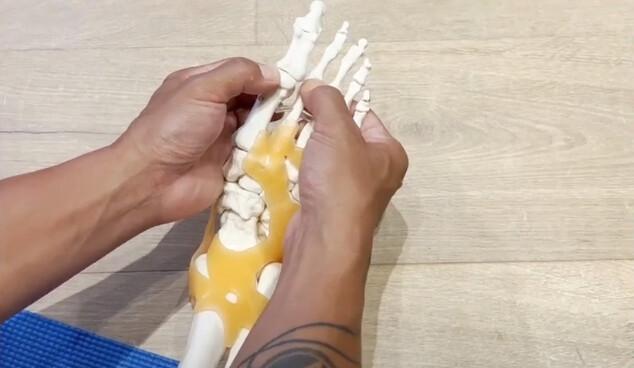
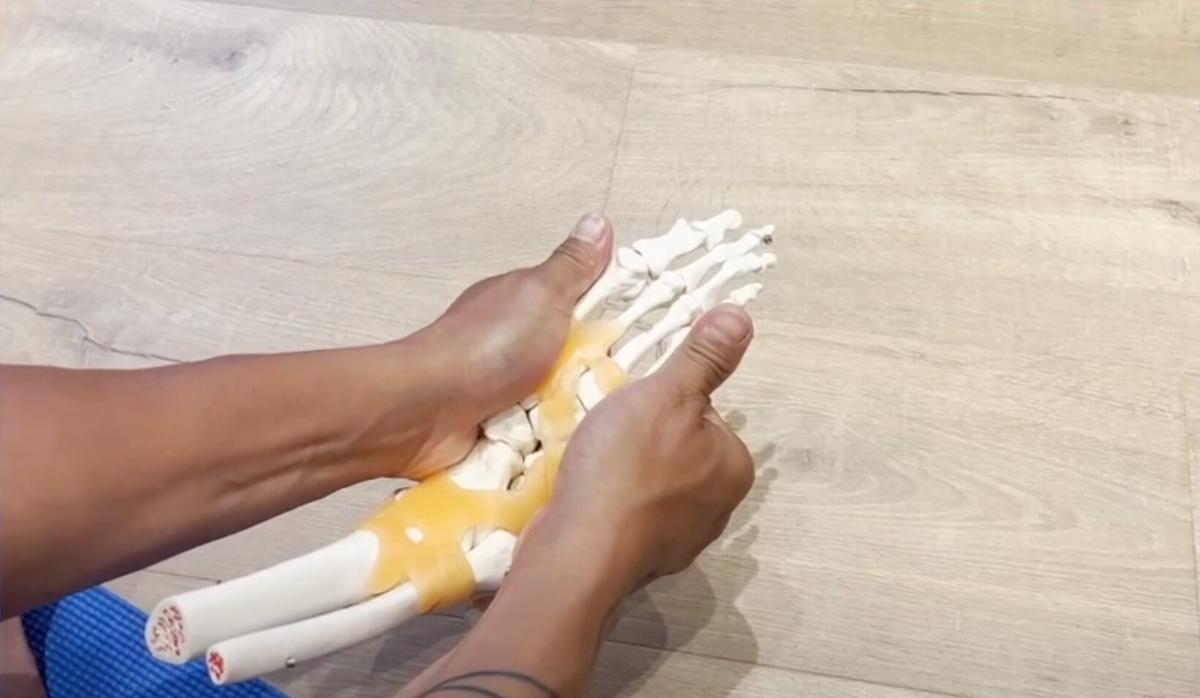
Sports coach Tong Wai-hung has designed a set of daily plantar fascia health care exercises for people with flat feet and weak plantar fascia. The exercises include four stages: increasing range of motion, training range of control, enhancing muscle strength, and stretching and relaxing muscles.To increase the range of motion and relax the adhesive fascia and tight muscles, each movement should last for five seconds and be completed twice on each foot.
Training Range of Control
In order to use your strength properly, you need to have a degree of control. Hold each movement for five seconds, and repeat twice with each foot.1. Bend all the toes upwards 2. Bend big toe downwards, four toes upwards 3. Bend four toes downwards, big toe upwards
1. Bend toes downwards, instep downwards 2. Bend toes upwards, instep upwards 3. Bend toes upwards, instep downwards 4. Bend toes downwards, instep upwards
Enhancing muscle strength
In isometric training, such as static and dynamic isometric training, each movement lasts 20 seconds, twice for each foot.1. Step your feet on the towel, knees, and toes in the same direction. 2. Bend the toes down with strength and pull the towel outwards with your hands.
Tip: The aim is to strengthen the muscles on the sole, as well as the muscles on the back of the calf.
1. Step on the towel with the soles of your feet 2. Press the toes on the ground first, then bend them inwards; repeat 12 times.
Stretching and Relaxing Muscle Stretch
Stretch and relax the soles and the tibialis anterior muscles: each movement lasts for 30 seconds, twice for each foot.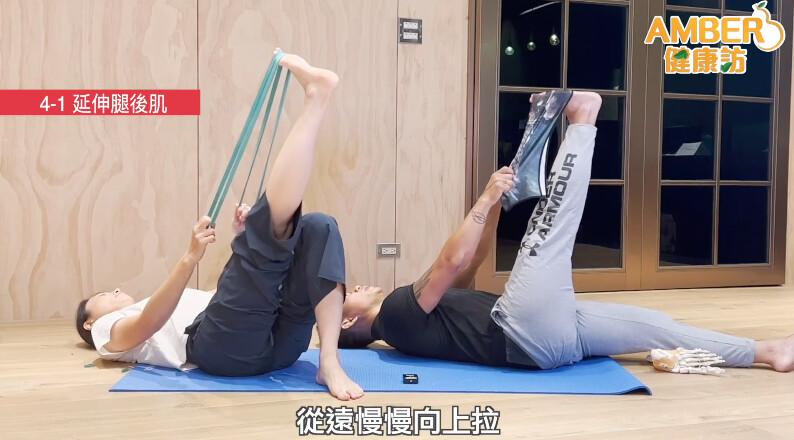
1. Place the towel underneath the forefoot and hold the towel with both hands. 2. Bend your legs, lie down, and then straighten your legs slowly. 3. Pull the towel and move the leg toward the head, stop at the position where you feel hamstring the hamstring is tight and hold for 30 seconds.
1. Kneel on both knees. 2. Hold both heels and calves in a horizontal line, and sit down slowly.
Tip: Pay attention not to be pigeon-toed.