This copy is for your personal, non-commercial use only. Distribution and use of this material are governed by our Subscriber Agreement and by copyright law. For non-personal use or to order multiple copies, please contact The Epoch Times Reprints.
My mother complained of increased hip and pelvic pain and had been experiencing a notable decrease in both her mobility and quality of life. She rued the fact that this might be her new normal, but I had a hunch. After performing a series of tests on her, I deduced that she didn’t have advancing arthritis and that she didn’t demonstrate overt muscular weakness. She was, in fact, quite robust in her strength, balance, and endurance. She just had to contend with elevated levels of pain during movement.
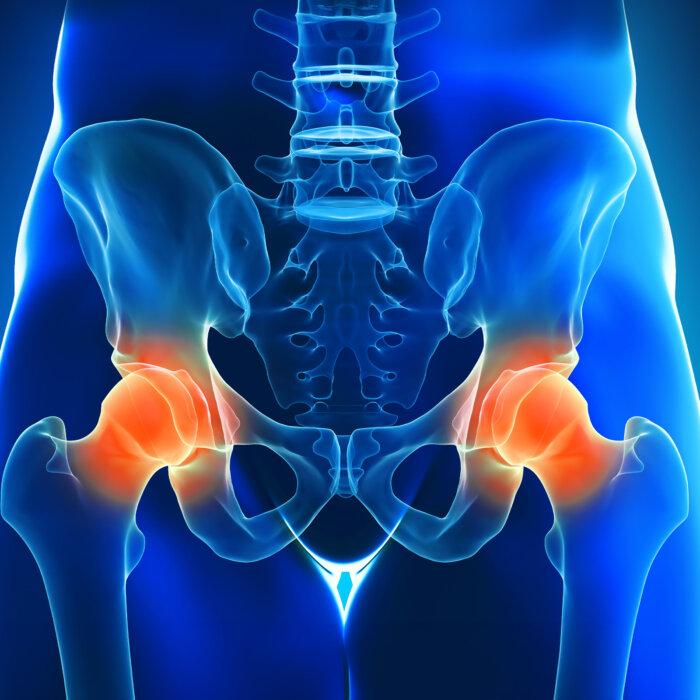
Her pain was in her piriformis muscles. The bad news is that tight, painful piriformis muscles can wreak havoc on your quality of life. However, the great news is that there are many exercises that focus directly on the piriformis muscles and help rehabilitate them.
5 Effective Exercises for Tight Piriformis Muscles
The following routine can help your piriformis muscles go from being tight and painful to having healthy function.
These exercises work well for my patients; however, I suggest that you consult with your medical provider to ensure that they are right for you.
1. Bridge
Lift and squeeze, lift and squeeze, and strengthen your muscles without moving your knees—much. This exercise helps strengthen the muscles around your pelvic girdle and beyond, increasing muscular stability and support across the entire pelvic region.
Step 1: Lie on a flat surface with your arms by your sides, your knees bent, and your feet hip-width apart and flat on the floor.
Step 2: Slowly lift your hips off the floor until your body is in a straight line from your knees to your shoulders. Hold for 30 seconds, then lower back down.
Step 3: Raising and lowering back down counts as one repetition. Perform three sets of 3 repetitions.
Modifications: If you can’t rise very high, just come up as far as you can. You’ll still get a muscular benefit, and you should get stronger over time.
Why I Like It: Safe, controllable, and effective at providing relief to your piriformis, this exercise is a winner.
2. Seated Piriformis Stretch
Oh, that stretch! The sitting piriformis exercise, also known as a figure-four stretch, is performed in a seated position, making it highly controllable. It also focuses on an exquisite stretch right where your piriformis needs it.
Step 1: Sit in a chair with your right ankle crossed over your left knee. Allow your right knee to relax down as far as it comfortably can.
Step 2: Intensify the stretch by bending forward at the hips as far as you comfortably can while keeping your back straight. Hold for one minute or as long as you can tolerate it.
Modifications: If you can’t relax far into the stretch—join the club—just stretch as far as you can at first. This exercise is highly effective even in short durations. Keep at it, and you'll experience less intense sensations over time.
Why I Like It: There’s nothing extraneous about this exercise. All you do is assume a position and then relax into a deep piriformis stretch.
3. Knee-to-Knee Stretch
Most people can appreciate this exercise from sea to shining sea, stretching knee-to-knee. OK, that was corny, but the exercise is solid gold. Although it’s easy to perform, the knee-to-knee exercise packs powerful goodness that your aching piriformis muscles will love.
Step 1: Sit on a firm, supportive surface with both legs straight out and approximately 1 foot apart.
Step 2: Slide your right leg away from your left leg until your right leg is at an approximately 45-degree angle to the left leg, then bend your right knee until your foot is flat on the floor.
Step 3: Keeping your feet in position, move your right knee down toward your left knee as far as you comfortably can. Hold for approximately 20 seconds before returning to the starting position.
Step 4: Moving one knee toward the other and then back counts as one repetition. Try to perform three stretches per side.
Modifications: Can’t stretch far? Do what you can and increase the hold time to 30 seconds. You may feel a release as you do, which may eventually allow you to do more. Also, feel free to hold the stretches for as long as you may want to. Some people benefit more from stretching for longer durations.
Why I Like It: For some people, this exercise has a knack for targeting the piriformis muscle in a way that other stretches and exercises can’t.
I enjoy doing the standing hip-hinge, and I think you will, too. Tight piriformis muscles can place strain on your back and introduce pain into everything you do that requires mobility. This easy exercise helps ease piriformis-induced tightness and pain.
Step 1: With a soft ball, pillow, or yoga block placed between your thighs, stand touching a wall—or, if a wall isn’t available, another form of support, such as a broomstick—approximately an arm’s length away.
Step 2: Slowly walk your hands down whatever support you’ve chosen while bending at the hips, until you feel a stretch in your gluteal muscles.
Step 3: Hold this position while placing a gentle squeeze on the ball or block with your thighs. Hold both the stretch and the squeeze for 30 seconds per set. Try to perform three sets.
Modifications: Hip-hinges can also be performed on your knees. Kneel far enough away from a wall that you can lean into it with a straight back and arms, and slowly walk your hands down the wall until you feel the stretch—then squeeze.
Why I Like It: The standing hip-hinge is a tidy, well-stabilized exercise that packs a punch and can help make your tight piriformis muscles happy. The best part? The “work” is largely static, helping you avoid pain.
5. Pigeon Drops
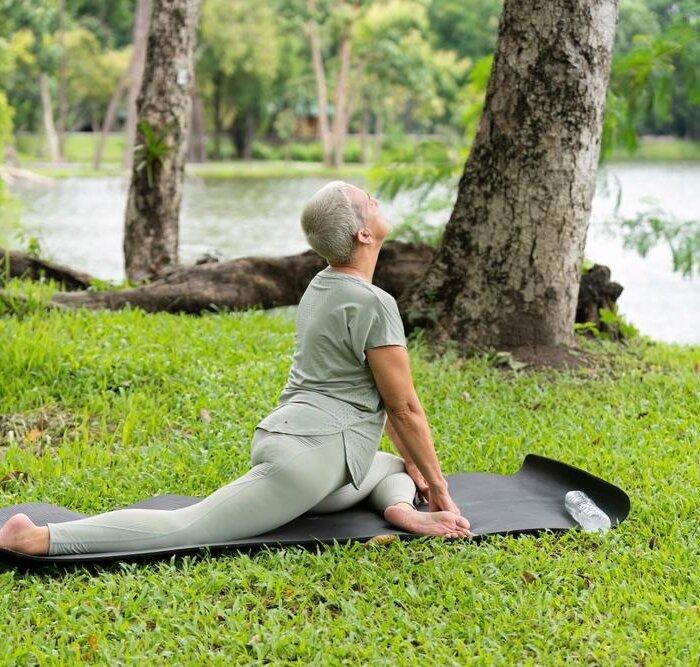
Pigeon droppings are unsightly; however, the “pigeon drops” exercise is all good. Seriously, this exercise is great for focusing on your piriformis muscles along with other hip muscles such as the psoas and glutes.
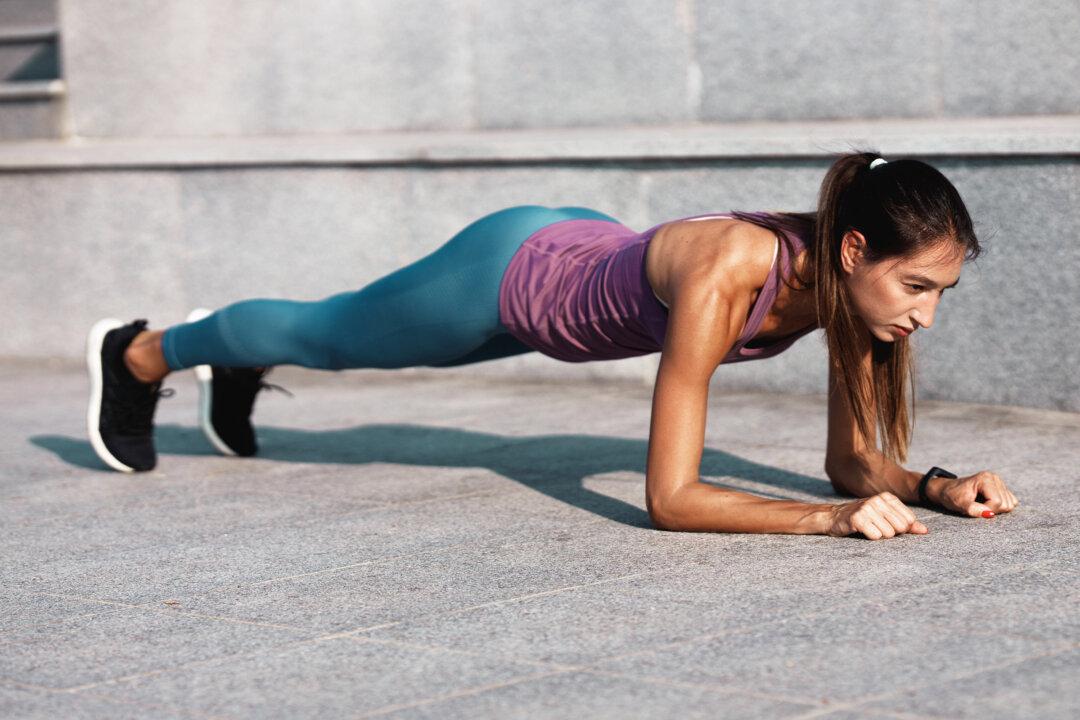
Step 1: Start in a push-up position with your knees on the ground.
Step 2: Slide your right knee up as close as you can toward your hands while keeping it on the floor. Bring your right foot underneath your body and move it as far to the left as you can.
Step 3: Next, move your hips to the right, as if you were going to move into a side-sitting position. You may not make it all the way down; just move as far as you comfortably can.
Step 4: Once you’ve moved as far as you can, return to the starting position. Moving down and then back up counts as one repetition. Try to perform three sets of 12 repetitions per side.
Modifications: Pigeon drops provide an intense stretch that is highly effective, and you only need to move as far as you comfortably can. Once you warm up, you may be able to move further into the stretch, but depth isn’t the goal; go by feel with this exercise.
Why I Like It: I like the repetitive pumping motion of this exercise. It not only provides an excellent stretch, but also warms the muscles and joints of your pelvic girdle.
Tight, painful piriformis muscles can cut deeply into your quality of life. Combined, these exercises can help provide much-needed respite to your beleaguered piriformis muscles, allowing you to return to maximal functional independence and a better quality of life. I hope that they serve you well.
About the Fitness Model: Aerowenn Hunter is a health editor and fitness model for The Epoch Times. Vibrant in her 60s, she’s an accredited yoga therapist who has dedicated three decades to teaching yoga.
Views expressed in this article are the opinions of the author and do not necessarily reflect the views of The Epoch Times. Epoch Health welcomes professional discussion and friendly debate. To submit an opinion piece, please follow these guidelines and submit through our form here.
Kevin Shelley
Kevin Shelley is a licensed occupational therapist with over 30 years of experience in major healthcare settings. He is a health columnist for The Epoch Times.