It’s important to be informed long before an ominous whirlwind is on the horizon, sirens start sounding, or family or coworkers start rushing around. There are plenty of weather alert apps to choose from, but back that up with an old-school NOAA weather radio with an emergency alert feature, emergency battery backup, and plenty of fresh batteries. Also, a high-beam flashlight, as tornadoes don’t only happen in daylight.
Mother Nature’s Clues
A red sky at night is historically referred to as a “sailors’ delight” since it normally signals coming good weather, and a red sky in the morning has the caveat “sailors take warning” because of a potential coming storm. In the same way, an eerie greenish tint to the sky can signal a tornado. Teal, turquoise, and murky yellow skies are other potential visual cues. Keep in mind that not every storm comes with this color change.Strategic Sheltering
In the absence of a dedicated tornado shelter or safe room, or in a situation in which it is not reachable, it is important to move to an interior room on the lowest level of the building (a basement or storm cellar is ideal), away from windows and flying glass. Close all windows and doors, including interior doors, to put as many barriers as possible between the storm and people and pets.Avoid sheltering where there are heavy objects that could fly around the room or fall from overhead, such as bookcases that could fall over. In fact, secure all top-heavy furniture, appliances, and water heaters well ahead of time with earthquake straps, and learn the location of utility cut-off switches. Turn them off if there’s time before an incoming storm.
Protect your head and neck with arms, a pillow, folded towels or blankets, or a large book. Got a bicycle helmet? Put it on. Sheltering under a sturdy table or workbench is another option.
Work the Plan
Whether you have a small family or a large business, practice tornado drills so that everyone knows how to reach the designated shelter area quickly. This is doubly important if there are young children involved. Assign tasks (to be completed only if there is time) such as turning off water/gas/electric connections, closing windows and doors, and grabbing the emergency kit, baby’s diaper bag, or other essentials. Include pets in the drills. Don’t forget to set up a plan for communicating with family, friends, and coworkers. For example, texts often go through when phone calls don’t.The Essentials
The basics of a tornado emergency kit are water, non-perishable food, spare prescription and OTC medications, a first aid kit, an NOAA weather radio, a flashlight, extra batteries, a portable phone charger, a multi-tool, a whistle for signaling, and cash.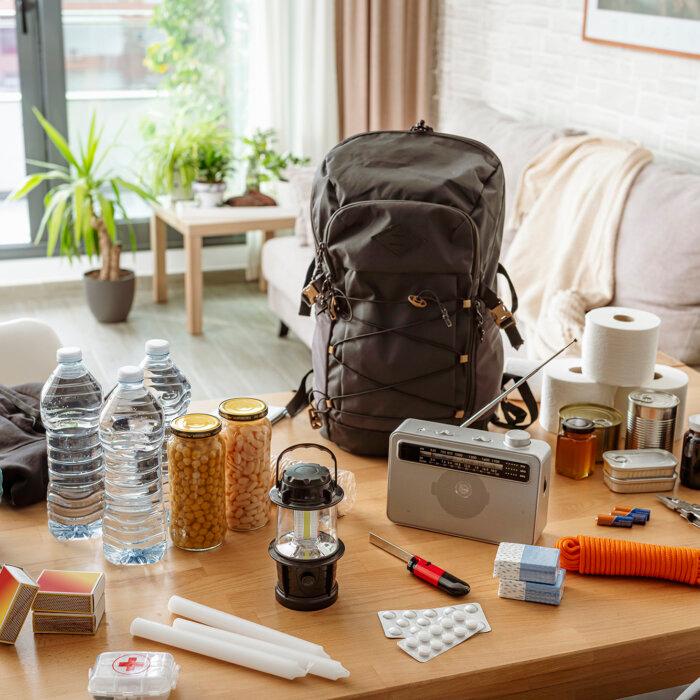
Wind Guard
Trim back any trees that will become a threat in high winds, and take in patio furniture during the height of tornado season. It’s cheap insurance.Next, take a page out of the Miami builder’s playbook and add some hurricane straps, clips, and truss reinforcements. They’re tedious but DIY-friendly. At the next re-roof, go with high-velocity, impact-resistant shingles or a metal roof.
Windows and doors are another weak spot. Opt for shatter-resistant impact glass or storm shutters (roll-up or accordion styles can be closed in minutes). Garage doors should also be impact-resistant, or you can purchase and install a reinforcement kit.