What do British fantasy epics, Russian family dramas, ancient philosophy, and Christian apologetics have in common? This might sound like the setup of a joke or riddle, but it’s the premise of the latest book from philosophy professor and prolific author Peter Kreeft.
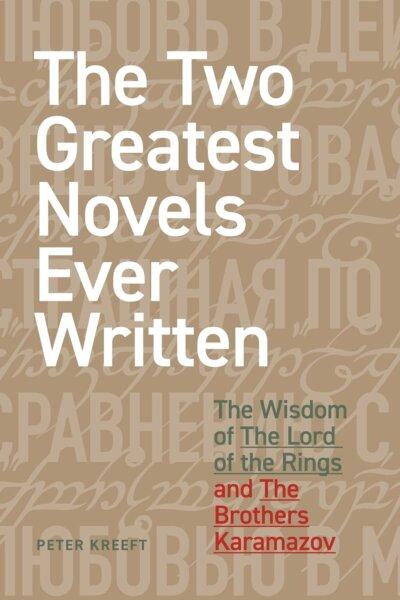
Last year his latest book was published: “The Two Greatest Novels Ever Written: The Wisdom of ‘The Lord of the Rings’ and ‘The Brothers Karamazov.’” In this simple yet profound book, Kreeft uses two renowned fictional classics to pierce the mysteries of philosophical truths and theological concepts.
While it may seem illogical to use two complex novels to delve into the even more complex fields of philosophy and religion, this brilliant scholar manages to simplify the books and the concepts in 15 short chapters.
Good and Evil
Kreeft begins his book with an introduction longer and more complex than any of the following chapters. Although he offers the reader permission to skip ahead to the main text, this introduction is vital to understand the text’s sophisticated concepts.The introduction discusses the definition of a novel, what makes one great, and what makes these novels particularly great. It delves into the meaning of life, the three kinds of wonder, stories as moral agents, and the beauty of stories.

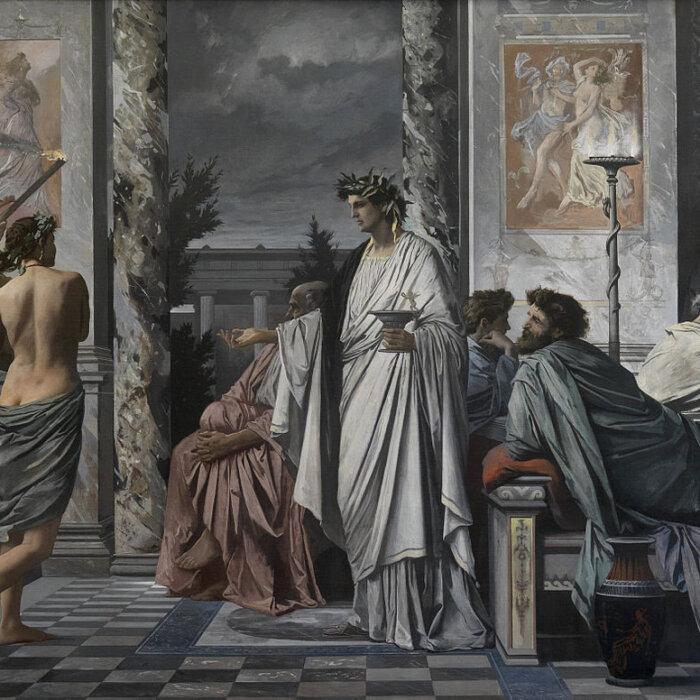
The main body of the text is divided into two parts. Part I, which contains an introduction and eight chapters, is entitled Evil. Kreeft begins the section by stating: “All stories are about some kind of evil.” He asserts that there “were no stories in the Garden of Eden before evil snaked in.”
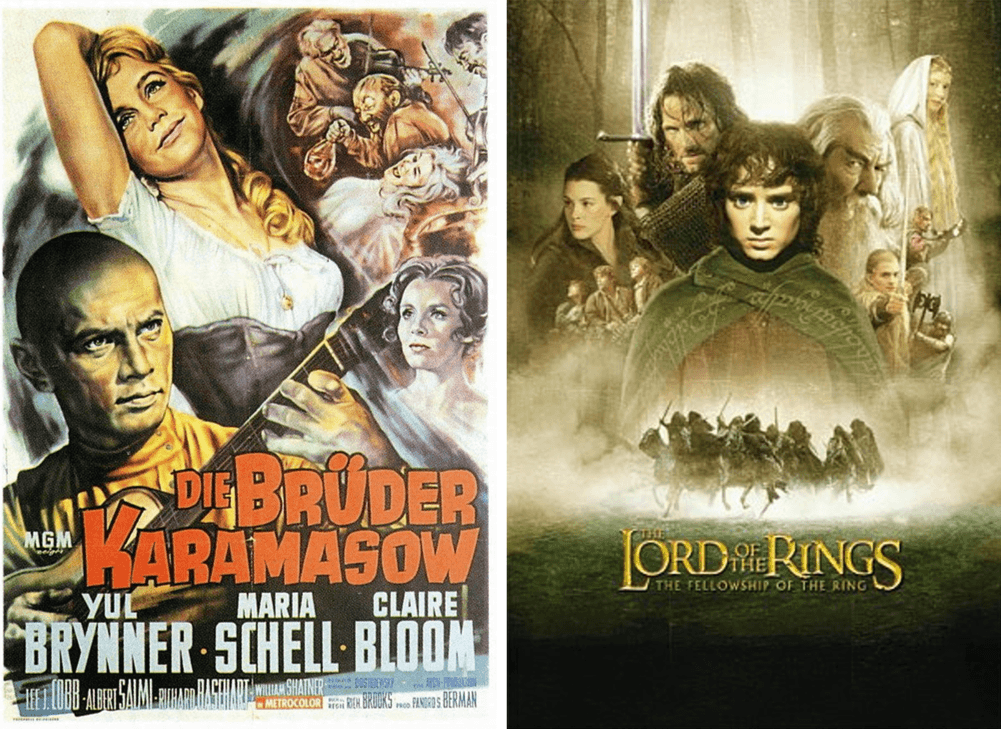
Kreeft doubles down with the assertion that all stories can be reduced to one literary plot: “the tension, or war, or struggle, between some kind of good and evil.” Chapter 1 is entitled “The Good That Evil Does,” which Kreeft demonstrates through rich examples. From the Bible, he notes the royal line of Israel resulting from King David’s adultery. He includes why gargoyles are in beautiful Gothic architecture and, of course, he discusses the eventual good which results from the characters’ wicked actions in “The Lord of the Rings” (“LOTR”) and “The Brothers Karamazov” (“Karamazov”).
In the next few chapters, he dives deeper into the role evil plays in both stories, analyzing their central themes and their main characters. He then expands those themes to apply them to the real world as he talks about evil’s relationship to life, the truth, and the past.
In Part II, good is one chapter shorter than the section on evil. Nevertheless, Kreeft has plenty to say about goodness. There, he dedicates one chapter to each of the seven cardinal virtues of courage and heroism, wisdom, justice, moderation and humility, faith, hope, and charity.
A Surprisingly Easy Read
At 164 pages printed in a large font, the book is short and surprisingly easy to read. The sentences are simple and conversational, and the paragraphs are only a few lines each. Rather than giving a lecture, Kreeft kept the tone very light. Reading this book feels like having a deep, intelligent, but highly enjoyable conversation with your old friend Peter over a meal.Kreeft’s book is an excellent introduction to complex philosophical concepts. It’s presented in bite-sized doses through the entertaining format of comparing two stories.
As an added enticement, there’s no need to read “LOTR” or “Karamazov” beforehand. The references are always presented with enough context that you’ll understand the example with no prior knowledge of either story. But it might be helpful to at least read the synopses to familiarize yourself with the basic plots and characters.
And, although Kreeft is a devout Catholic Christian, you don’t have to be a Catholic to appreciate this book. You don’t even have to be a professing Christian. Anyone earnestly seeking the truth will likely be enriched by reading this thoughtful analysis. Wrapping such inspiring philosophy in an analysis of two fictional novels isn’t a gimmick. The very point of the book is that art is the most powerful vehicle for truth. In the Introduction, Kreeft writes:
“Beauty is the point of the arrow that first pierces the heart, which is also the first door we open to God, however anonymously. … The arrows of beauty enter the heart in order to break it. … The heartbreak is art’s holy task. It’s like digging: It creates a space for truth and goodness to fill.”