This copy is for your personal, non-commercial use only. Distribution and use of this material are governed by our Subscriber Agreement and by copyright law. For non-personal use or to order multiple copies, please contact The Epoch Times Reprints.
In this installment of ‘Larger Than Life: Architecture Through the Ages,’ we look at the eclectic grandeur of a historic, Caribbean, plantation-style villa.
Located on a coastal barrier island, Bonnet House is surrounded by water. The Intracoastal Waterway can be viewed on the west side of the property with access to view the Atlantic Ocean on the east. Palm trees rise above its two levels of covered walkways and sitting areas. In view of the house is a lagoon abounding in tropical vegetation, including the property’s signature bonnet lily, which is similar in hue to the house’s paint color. Jillian Cain Photography/Shutterstock
Tucked among towering palms and lush tropical gardens is a home and property named for a vibrant yellow water flower referred to as the bonnet lily. The 1920s home is the artistic expression—through architecture, interior design, and art—of Chicago-born artist Frederic Clay Bartlett.
Bartlett and other artists’ works are displayed against a backdrop of varying architectural and design styles, including plantation, Spanish, Caribbean, art deco, and classic Roman and Greek. Thus, the 7,220-square-foot, villa-style house with porches, patios, and colonnades is a virtual feast for the eyes.
Built primarily of cypress and cinder blocks, the house, outbuildings, and wrought-iron porch railings are painted mostly bright yellow—while supporting columns are a contrasting white. Rich colors, myriad materials, and contrasting textures inside the main house marry to achieve a highly unique presentation. And a mélange of furnishing styles—from Victorian to Queen Anne to modern and French provincial—are on display at the open-to-the-public house museum.
Although Bonnet House was built as a retreat from harsh Chicago winters, its showcase of countless novel decorative elements is available to peruse year-round. The distinctively embellished Bonnet House in Fort Lauderdale, Florida, does not disappoint—whether you are visiting for its history or its architecture and design.
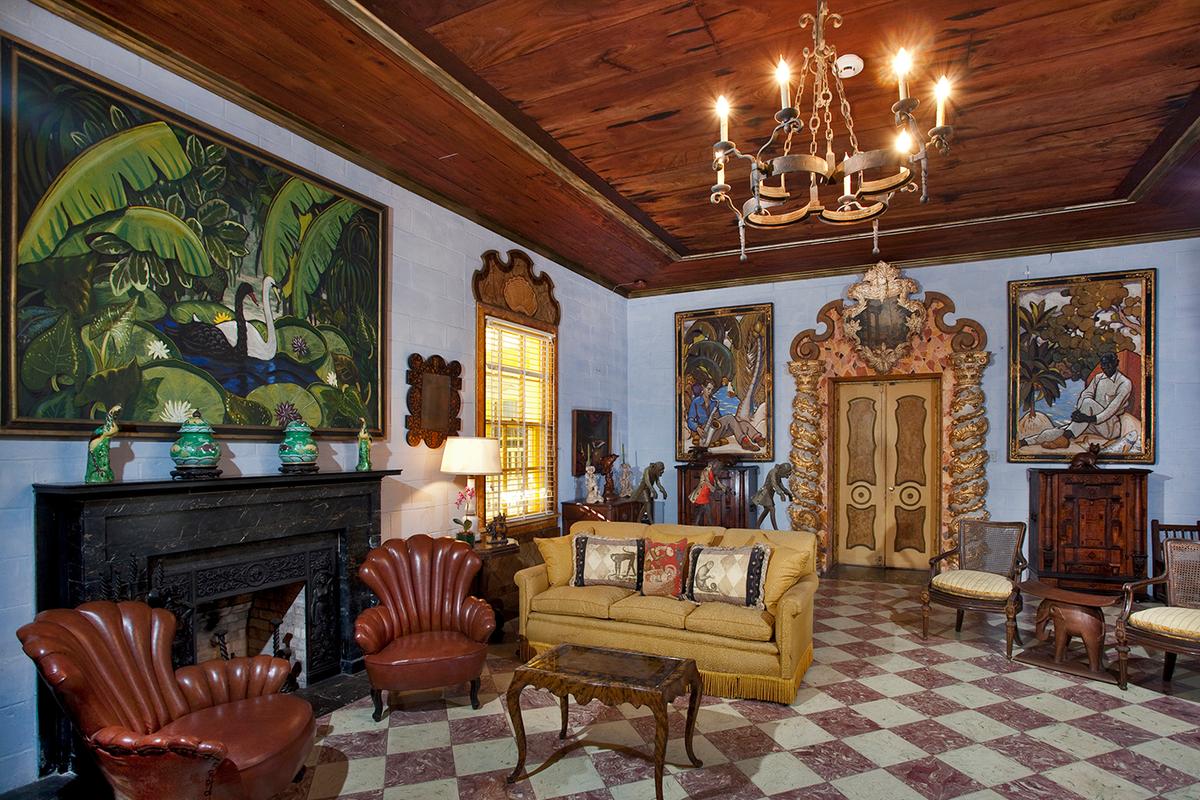
The house’s drawing room is replete with eclecticism. Italian baroque-style Solomonic columns, with their distinctive spiral shape, flank the door; gilded and gray-painted carvings of acanthus leaves wind around the columns, which are topped with decorative Corinthian capitals. The door and decorative window plaques were painted by Bartlett to resemble terrazzo and marble. The tray ceiling includes a mahogany center that is surrounded by local Dade County Pine. The red and white stone, which makes up the tiled checkerboard floor, was quarried in Florida. Queen Anne leather fan back chairs and a tasseled-fringe gold sofa are the focal point furnishings situated at the solid black marble fireplace. The eight-light, wrought-iron chandelier is Spanish baroque in style. Courtesy of Bonnet House
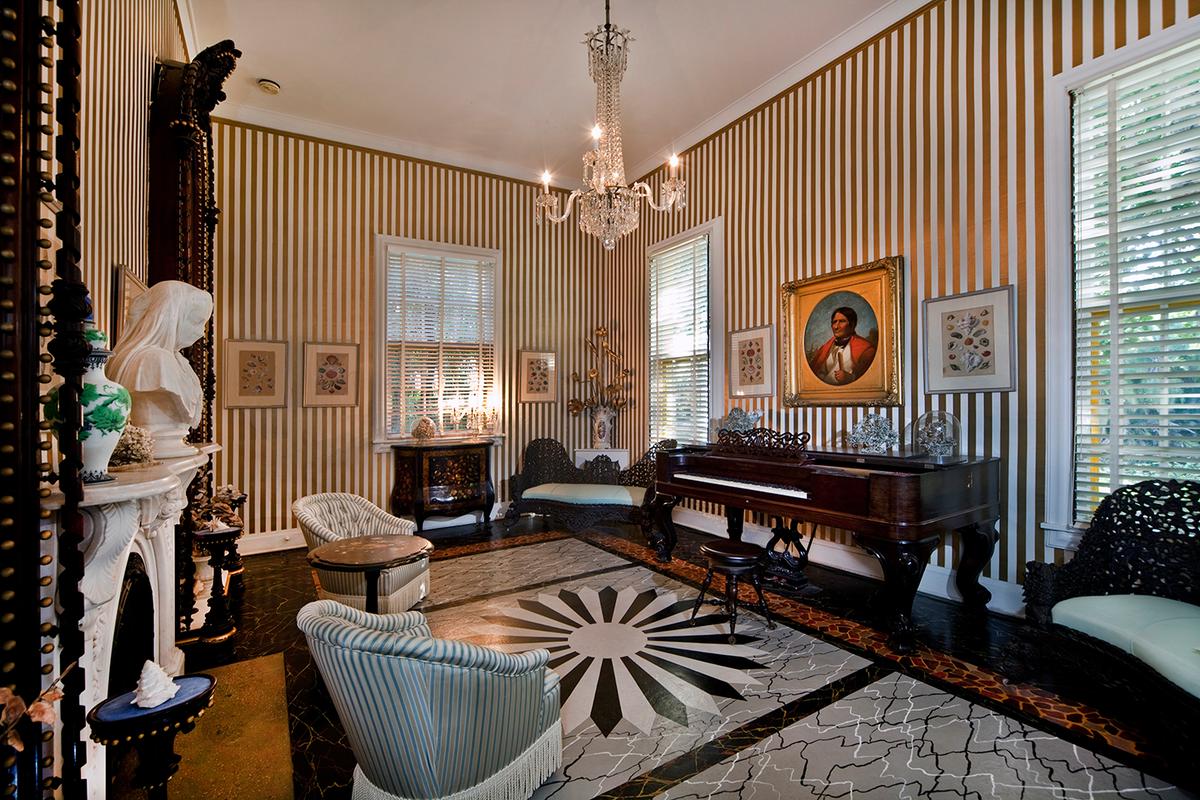
In the music room is an 1872 Steinway piano made of rosewood, with ivory keys. Bartlett painted the floor to resemble marble and terrazzo, with a large black-and-white flower design as the centerpiece. The rest of this glamorous space, with gold-and-white wallpaper, button-tufted and fringed upholstery, and a crystal chandelier, is conveyed in the decor's blend of art deco and Victorian styles. Prominent in the room is a replica of the bust "Veiled Woman" by Italian sculptor Giovanni Battista Lombardi (1823–1880). Courtesy of Bonnet House
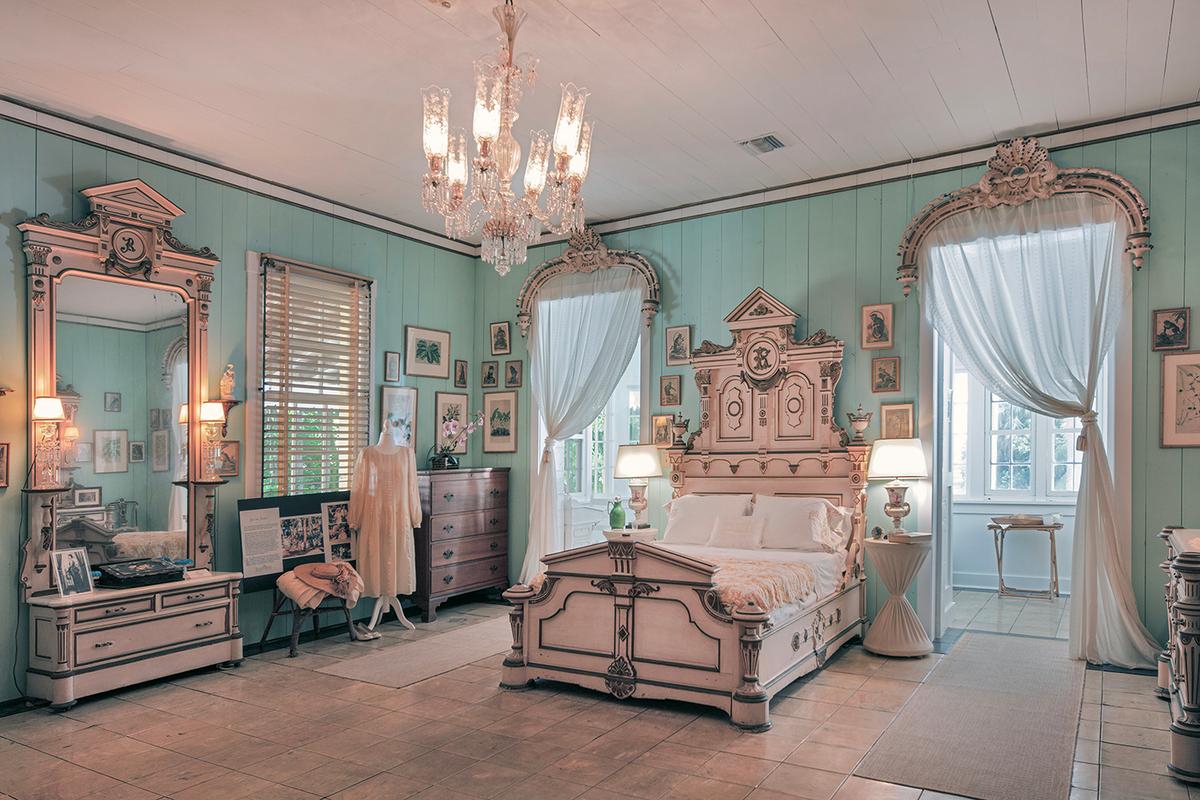
This room’s decor centers on Bartlett’s suite of American Renaissance Revival furnishings, crafted in the mid-1800s. Each piece is carved with classic elements, such as acanthus leaves and urns, as well as the initial “B.” Coordinating with the furnishings are the carved arched door toppers, from which sheer curtains hang; these ornate elements sport a shell design and finials. Behind the bed is an enclosed sunporch that was added in about 1936. J. Christopher Gernert/Courtesy of Bonnet House
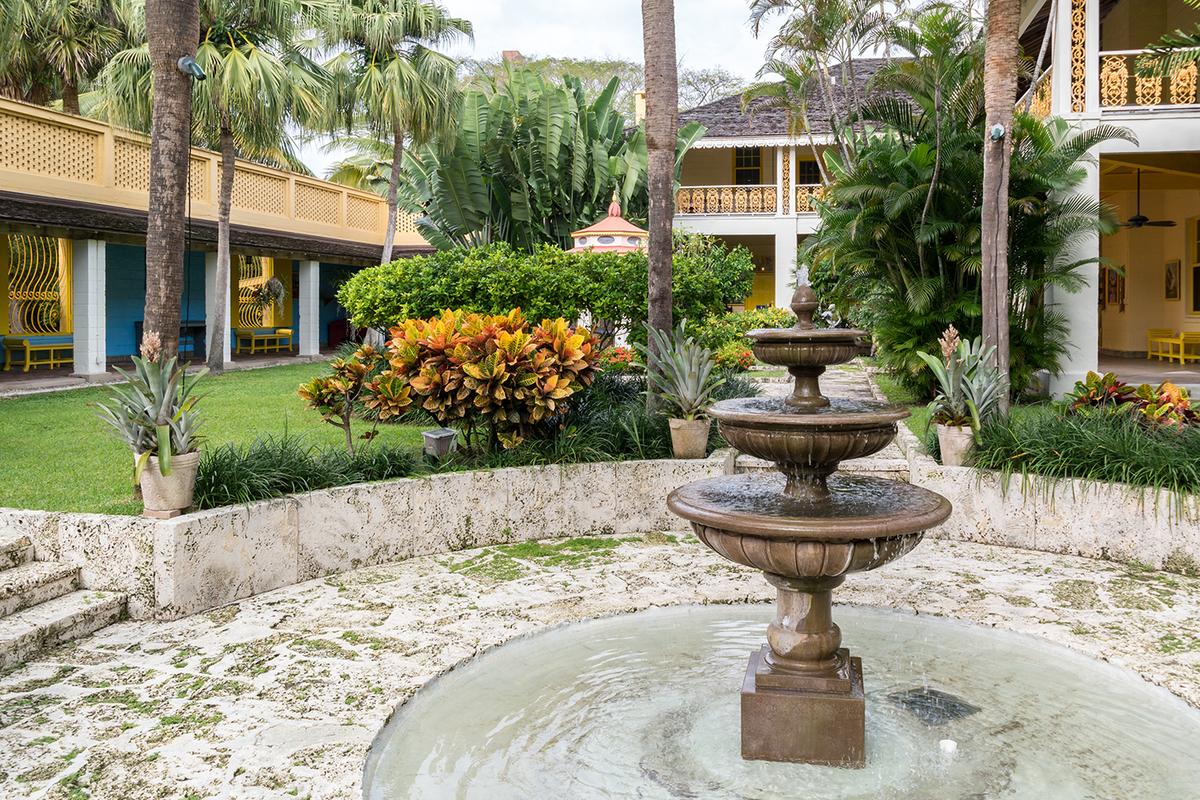
Situated on 35 acres, Bonnet House is surrounded by manicured inner courtyard gardens, with a tiered fountain as a focal point. Coral rock is used in the construction of the walkways through the gardens. Although white and yellow are the dominant colors of the house, cerulean blue brightens the walls of some of the covered porches. TasfotoNL/Shutterstock
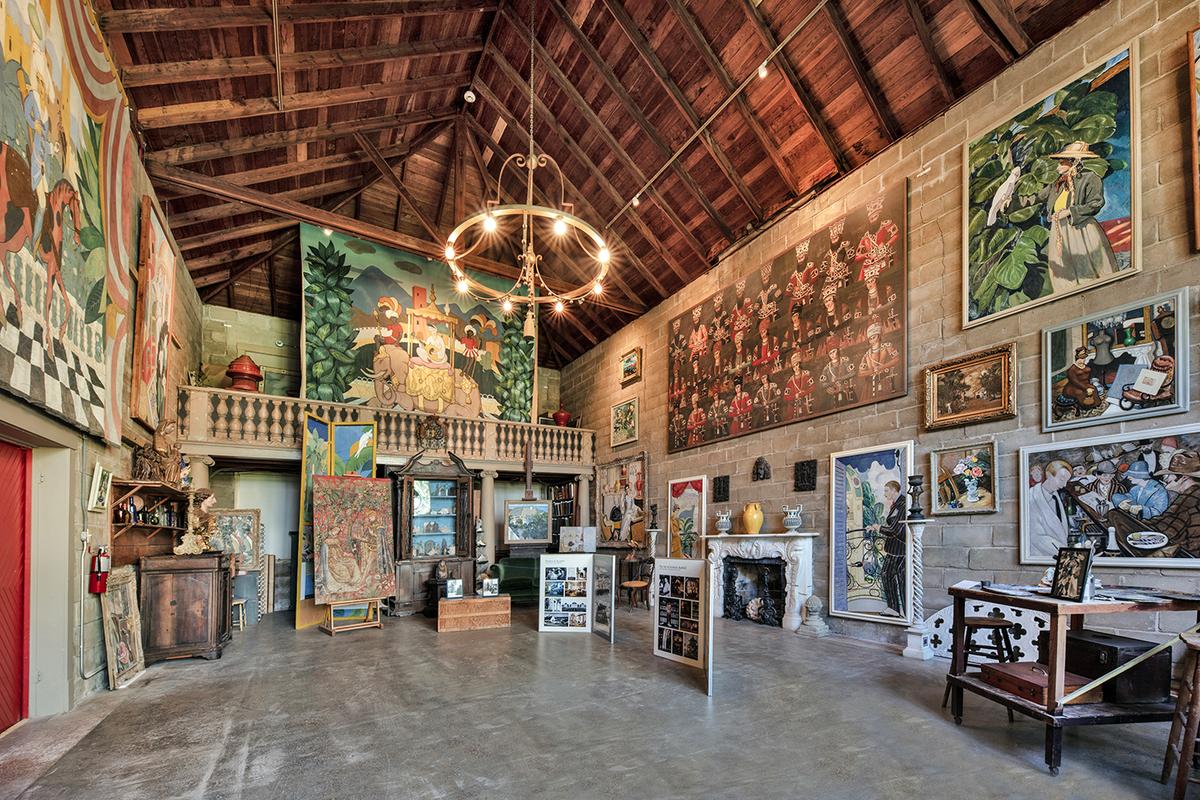
The art studio has a vaulted cypress wood ceiling, gray terrazzo floor, and a simplistic metal chandelier. It is a multicolored palette of assorted large landscapes and portraits in saturated hues, painted primarily by Bonnet House’s founder. They are hung against unpainted cinder block walls. Additionally, Bartlett painted the trompe-l’oeil balustrade at the back of the room. J Christopher Gernert/Courtesy of Bonnet House
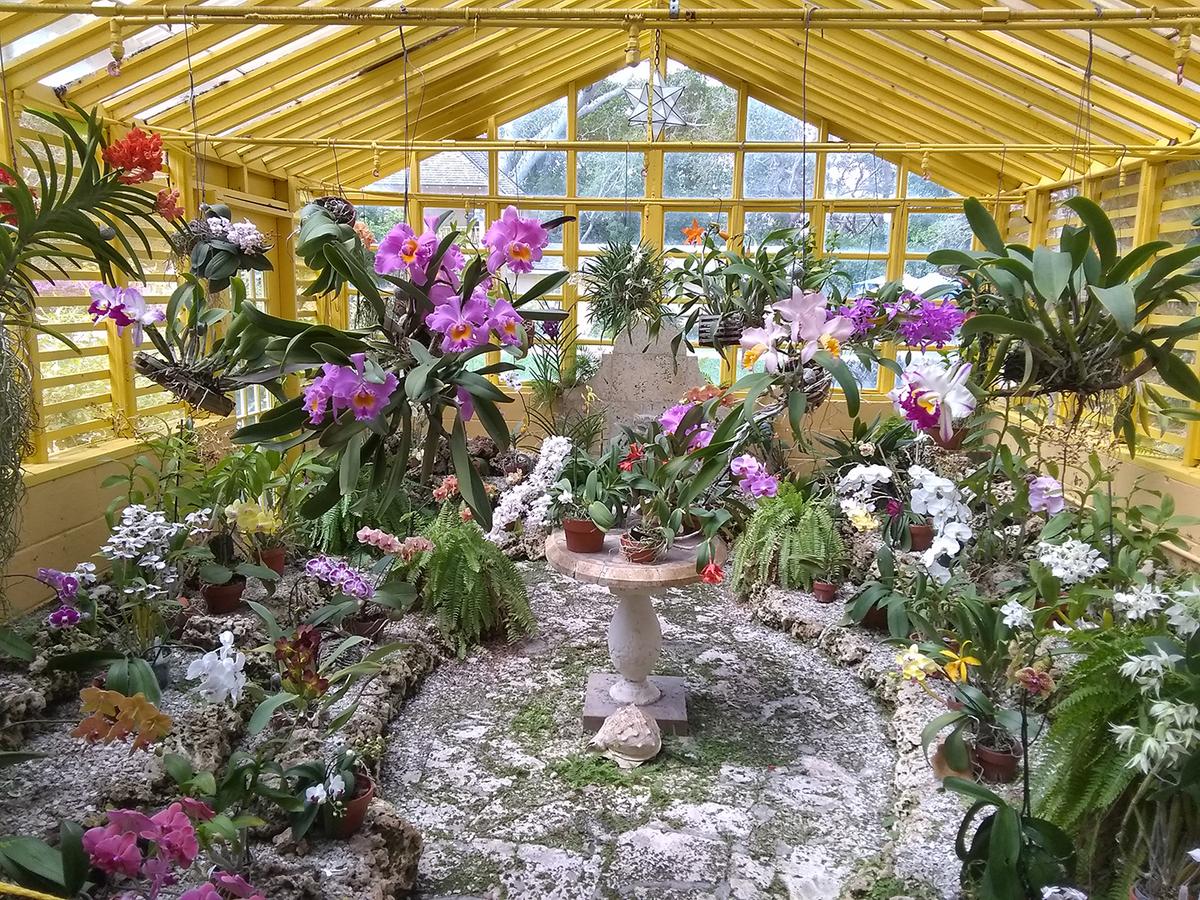
Built in 1938, the orchid greenhouse displays not only live orchids, but also a collection of shells. Many of the species of orchids inside the structure, which complements the main house, were grown and managed by the Bartletts when they lived in the home. Courtesy of Bonnet House
What arts and culture topics would you like us to cover? Please email ideas or feedback to [email protected].
A 30-plus-year writer-journalist, Deena C. Bouknight works from her Western North Carolina mountain cottage and has contributed articles on food culture, travel, people, and more to local, regional, national, and international publications. She has written three novels, including the only historical fiction about the East Coast’s worst earthquake. Her website is DeenaBouknightWriting.com