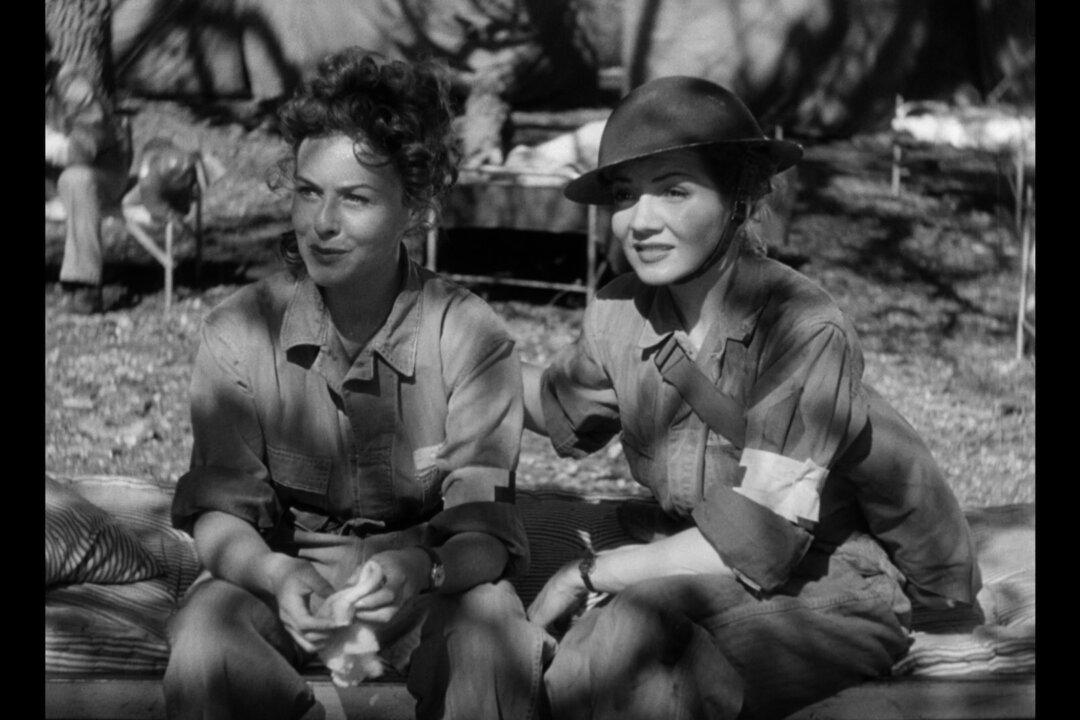
NR | 1 h 53 min | Drama | 1951
Coping with the death of her newborn, young World War I widow Louise Mason (Jane Wyman) starts what she figures will be a temporary job, caring for Freddie, the baby of widower Fred K. Begley (Charles Laughton). Begley interviews ladies for the permanent job but hires none.
They demand several days off, won’t cook, clean, or wash, and believe that picking up Freddie just because he cries, spoils him. Struck by the contrast with Louise’s selflessness, Begley proposes marriage, but she’d rather devote herself to the baby. So Begley marries another woman. Louise moves on to care for other babies, children, and teenagers in a series of households, now as a career.
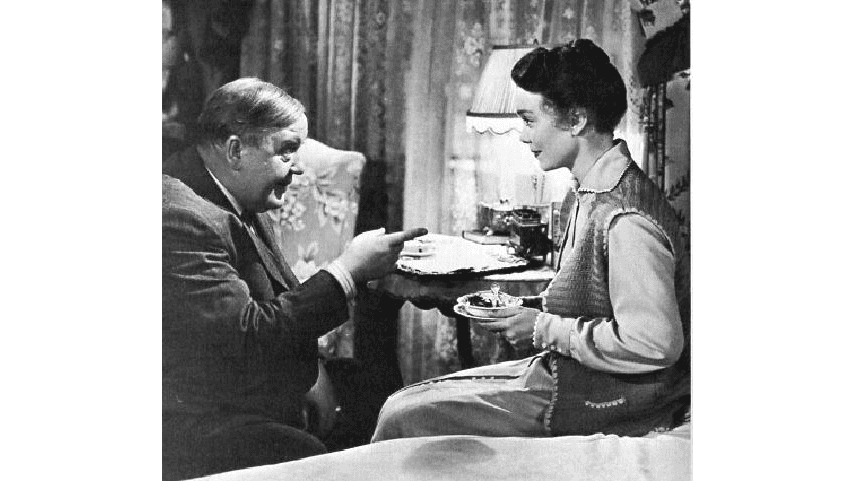
In each overly busy household, Louise endears herself to neglected children and their preoccupied parents. However, having lost the loves of her life—her beloved husband and child—she unconsciously holds herself back from falling in love.
Louise gently declines suitors and prospective suitors through the years, including kindly toy-store owner Frank Hutchins (Cyril Cusack). Aging, Louise wonders if those who playfully teased her were right; in devoting herself to other people’s children instead of remarrying and having her own, hasn’t she missed out?
Wyman, 34 in this film, bears a quiet grace that sets Louise apart from, and above, every other character. If there’s one quibble with the otherwise sensible and sensitive screenwriting and direction, it’s that Louise doesn’t allow joy to bubble over, in the way she asks it of others. Watch for a 13-year-old Natalie Wood.
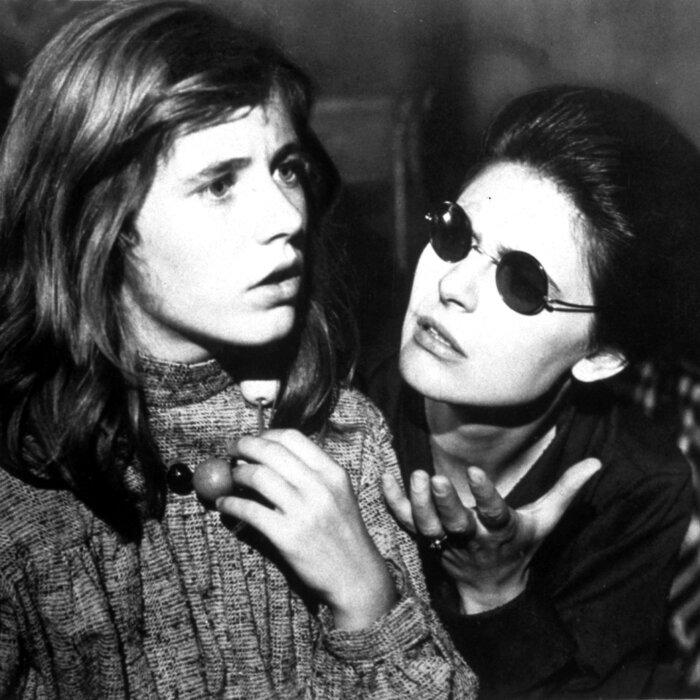

Director Curtis Bernhardt paints two portraits of a mother. Preoccupied mothers have all the apparent qualifications, especially the biological link to show for it. But most barely have the time, attention, or effort that children need. Louise has no link to the children in her care, but patiently meets the demands of the most demanding children.
The film’s title refers to the traditional blue headdress worn by a governess just after World War I, as opposed to the white of a nurse or black of a nun. Bernhardt’s introductory text reads, “Who raises a child of his own flesh, lives with nature. Who raises a child of another’s, lives with God.”
He isn’t arguing that childless women like Louise are better than the mothers she proxies for. He’s saying biology alone doesn’t define motherhood; biology is nothing more than a useful starting point. Only love completes a mother.
Motherhood Not Enough
The opening sequence, showing a stricken Louise confronting the loss of her newborn, isn’t incidental. It signals the momentousness of a birth. Grateful for how Louise dotes on his motherless child, Begley says, “For 10 years my wife and I prayed and hoped to have the joy of a child. When she died to give him life, the joy became a great sorrow.” Louise softly says, “Think only of your joy.”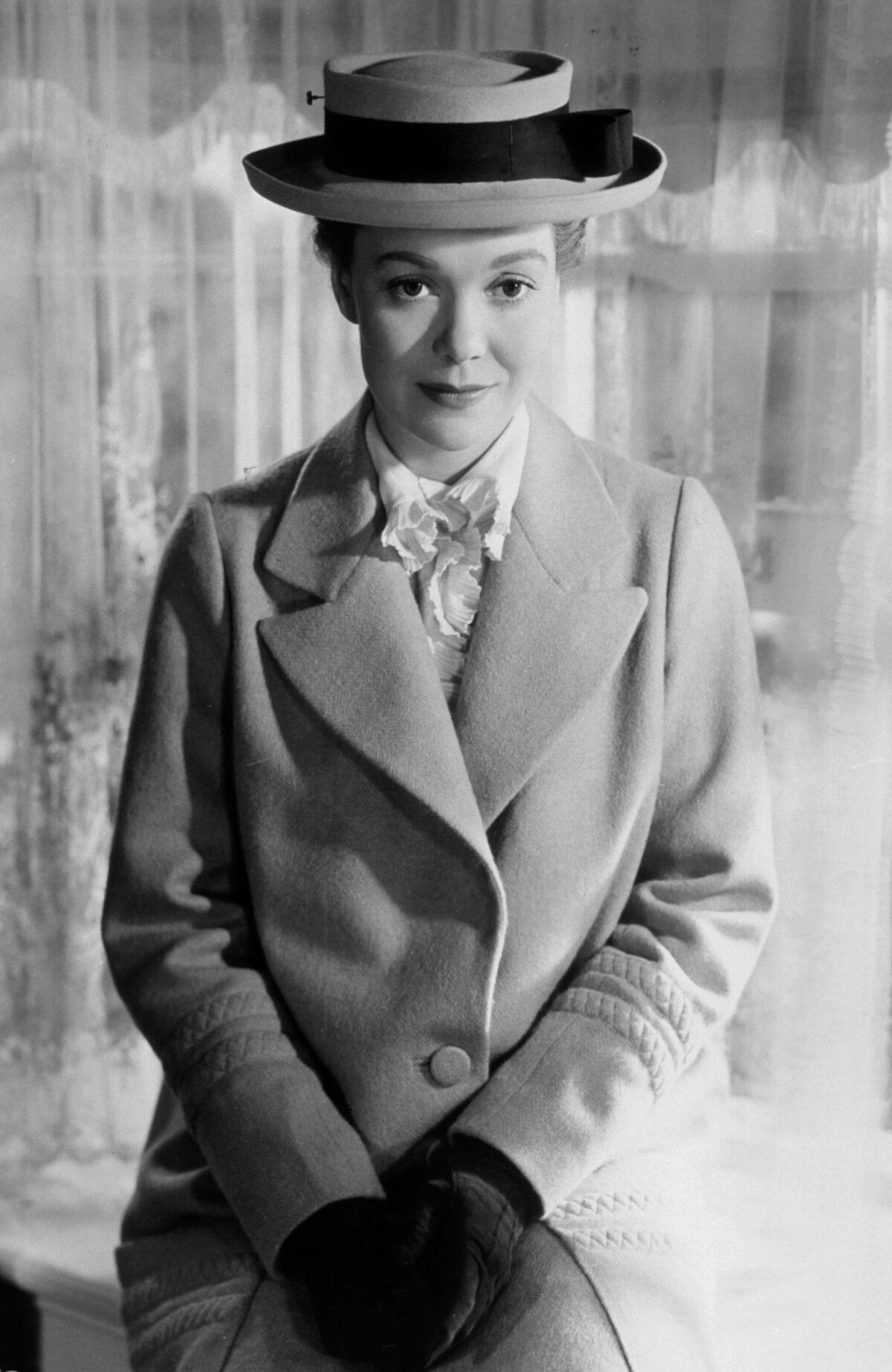
Presciently, the film indicts a culture of raising children the way one has a hobby or acquires an asset as opposed to one of loving children. Through her attentiveness, Louise eloquently shows that children shouldn’t be afterthoughts to fathers and mothers, any more than husbands and wives should be afterthoughts to each other. She’s telling parents that their passions, professions, and social life should serve their family, not the other way around. It is love in the home that gives everything else purpose and power.
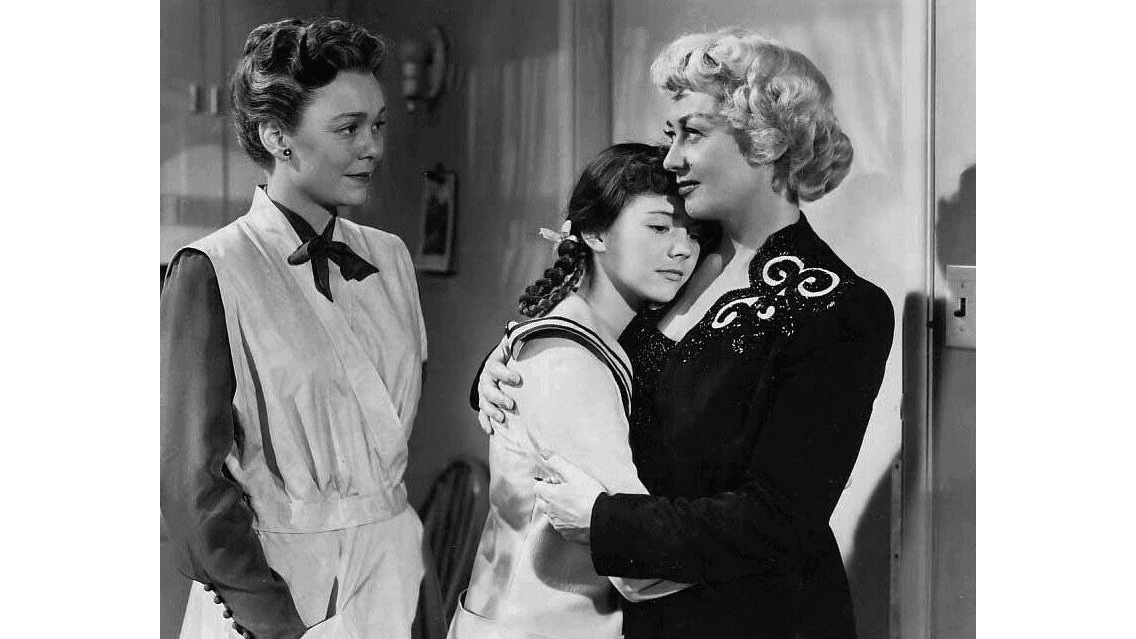
Busybody actress-singer Annie Rawlins (Joan Blondell) smarts at Louise’s warning that, thanks to Annie’s work and social life, her growing daughter Stephanie is emotionally closer to Louise than to her.
Annie defends her busyness as indispensable: “No one can take the place of a mother in a child’s life!” Louise clarifies that motherhood isn’t just a right accruing by default to those who give birth. It’s also a sacred responsibility. Echoing Louise and punning on her headdress (as part of a governess’s habit), Hutchins teasingly implies that motherhood isn’t a hobby but a habit.
Implicit in Louise’s soft rebuke is a message: Being a mother isn’t enough; one must also become one. That doesn’t happen just because a woman gives birth. It’s tested day after day for years. Women who see it as no more than a test, fail it. Women who can’t conceive of it as a test because they’re too busy loving, pass it with flying colors.