According to ancient Christian tradition, some sacraments are considered earthly steps in a spiritual journey. They are outward signs of inward grace.
What are spiritual enemies but habits that prevent one from living life and facing death gracefully? Grace, too, is not unlike Chi, or energy. It’s infinite, divine power hidden within a finite, relatively powerless human being.
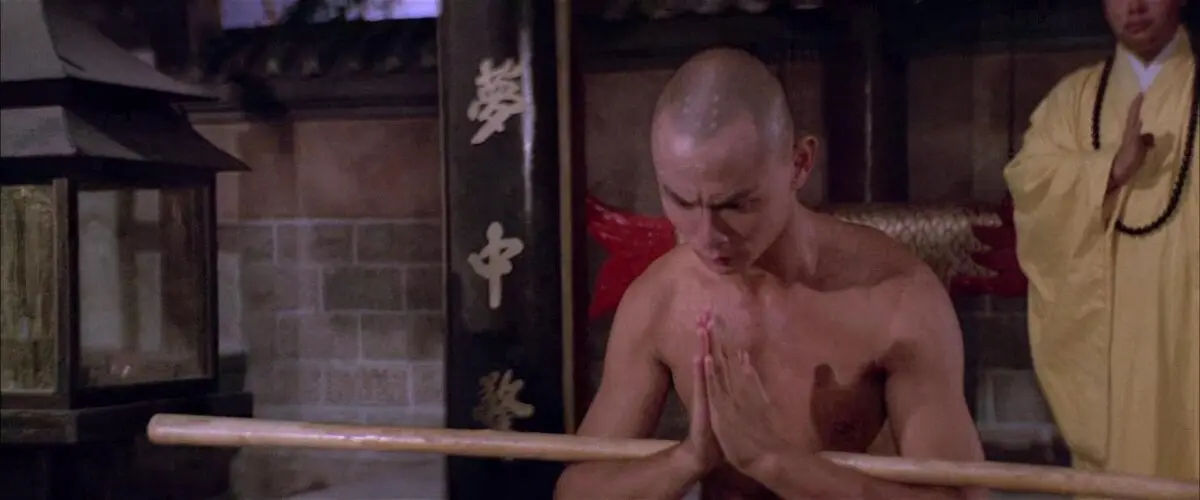
Director Liu Chia-Liang’s groundbreaking film “The 36th Chamber of Shaolin” is about unlocking Chi, not to protect one person or clan but to protect anyone who’s vulnerable.
Young Liu Yu-de (Gordon Liu Chia-Hui) figures that sharing a mastery of kung-fu can help unite the Hans clan. This hapless majority under China’s Qing dynasty wants to overthrow a cruel minority clan, the Manchus.
Manchus slaughter Yu-de’s family as traitor-rebels. Yu-de, though, calls them martyrs, vowing vengeance once he’s learned kung-fu from the best: Shaolin Temple’s Buddhist monks.

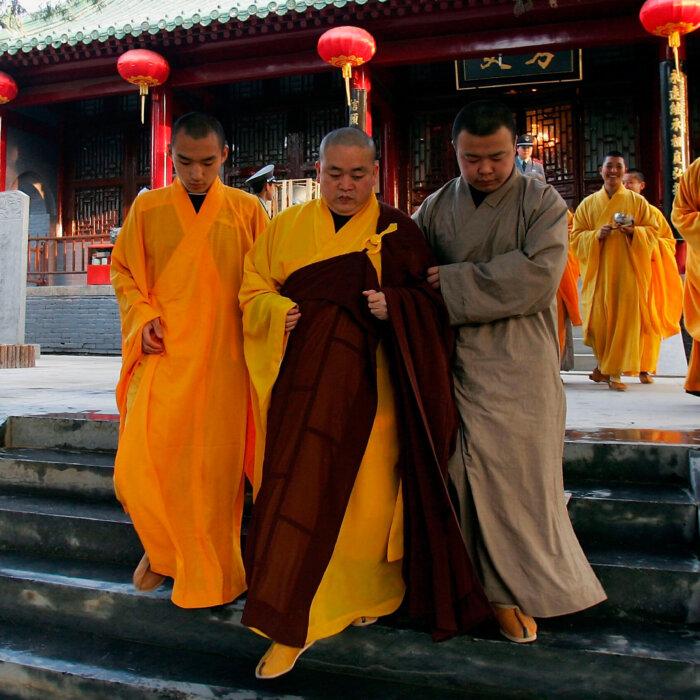
It’s a long hard slog for Yu-de. He wades through Shaolin’s 35 foreboding, and progressively demanding, learning-teaching chambers.
Renamed San Te, he fails more often than he succeeds but succeed he does. He believes his newfound kung-fu prowess will help free his people. San Te finds its meditative sessions free him from pride, sloth, ignorance, selfishness, and fear.
Armed with power beyond what he’d hoped for, he ponders transcending Shaolin’s exclusivity via the new 36th chamber. He wants to share that treasured tradition with commoners.
Training the Mind
Shaolin’s abbots seem obsessed with training the body, but what they’re really after is training the mind. Prioritizing command over the five senses, one abbot says.“The Buddha tells us that in the great infinity beyond all nothings is the emptiness of the eternal five.” The five flavors numb the tongue, the five tones deafen the ear, the five colors blind the eye.
The abbot isn’t advocating toneless, tasteless, odorless, colorless lives. He’s saying that minds distracted by a surfeit of stimuli are weak and ineffectual. Swayed by every passing taste, tone, fragrance, and color, minds are likely to be hostage to every greed, lust, and impetuousness.
It is by directing, not diffusing, one’s body and senses that one directs the mind toward right thoughts, words, and actions.
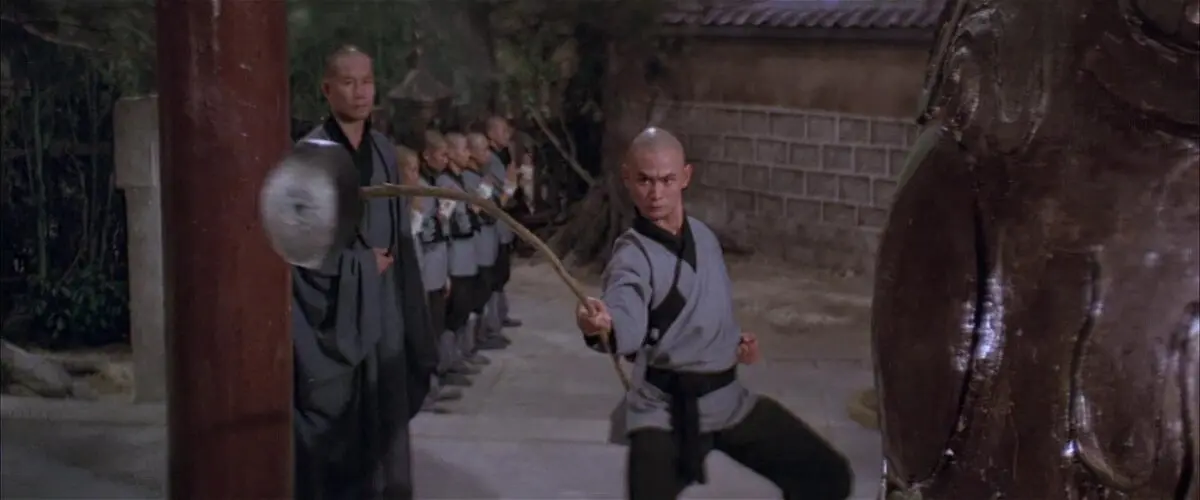
Riveted, San Te watches a saucer flung skillfully by a monk, skipping over, rather than sinking into, water. Soon he grasps the art of balance. Stepping swiftly, lightly, rather than jumping slowly, clumsily, onto floating logs, he learns to walk on water, as it were.
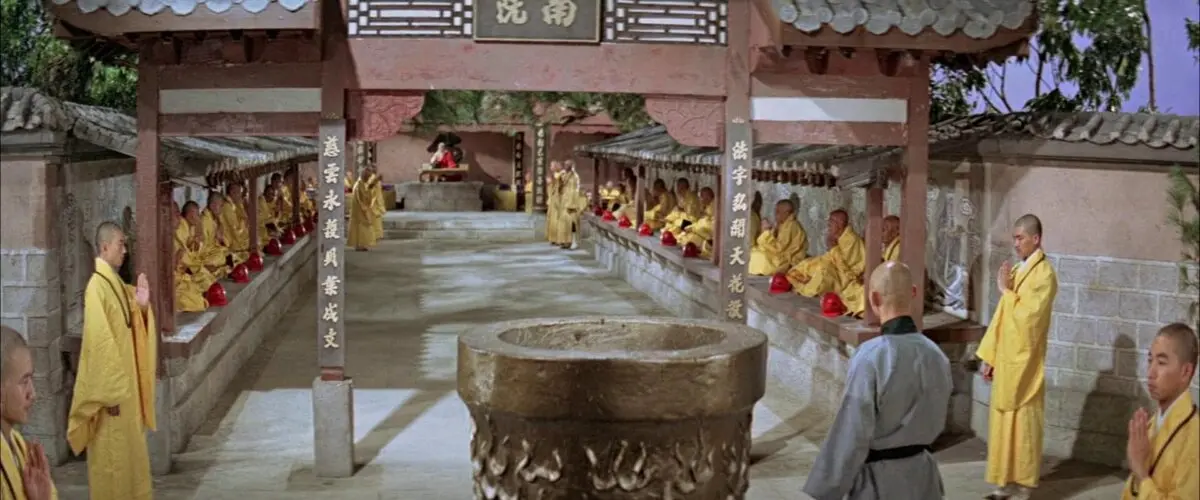
After years of practice, it doesn’t matter whether he’s using his fists, feet, or fingers, or wielding swords, sticks, or spears, his sense of balance sees him through.
Training in Solitude
Curiously for a film about fighting, the character San Te often rehearses in solitude with nothing but his shadow and his shout for company. The battle, he seems to say, is within.Instead of glorying in Shaolin’s exclusivity, San Te wonders: Why limit kung-fu to Shaolin’s secret chambers? If it’s so liberating, why behave as if it isn’t?
After all, it’s by teaching that he can keep learning, something both Ip Man and Bruce Lee embodied. Failure isn’t disastrous, but failing to learn from it is. San Te loses so often in duels to a senior monk that he improvises, developing a new weapon all his own.
There are parallels in Western culture. Those who exalt themselves will be humbled, those who humble themselves will be exalted. Monks here echo that, unprecedentedly promoting relative newbie San Te to the rank of senior monk after he humbly masters in a few years what takes others a lifetime.
Yu-de dies to his old self like a grain of wheat falls to the ground. He then rises as a new self, San Te, who bears much fruit.
San Te’s grueling first steps hint at certain death. His final, equally grueling steps, lead almost miraculously to new life.