They stretched their beloved lord in his boat, laid out by the mast, amidships, the great ring-giver. Far-fetched treasures were piled upon him, and precious gear.
Historians long considered descriptions such as in this poem to be merely legend. The term “Dark Ages” was commonly used for the post-Roman period in Britain, as it was considered to be an era of civilizational decline. During this time, Germanic tribes migrated to Britain and eventually created seven Anglo-Saxon kingdoms in the region. They developed Old English, the earliest recorded form of the English language, but modern-day scholars knew little about their culture.The Ship’s Burial Mound
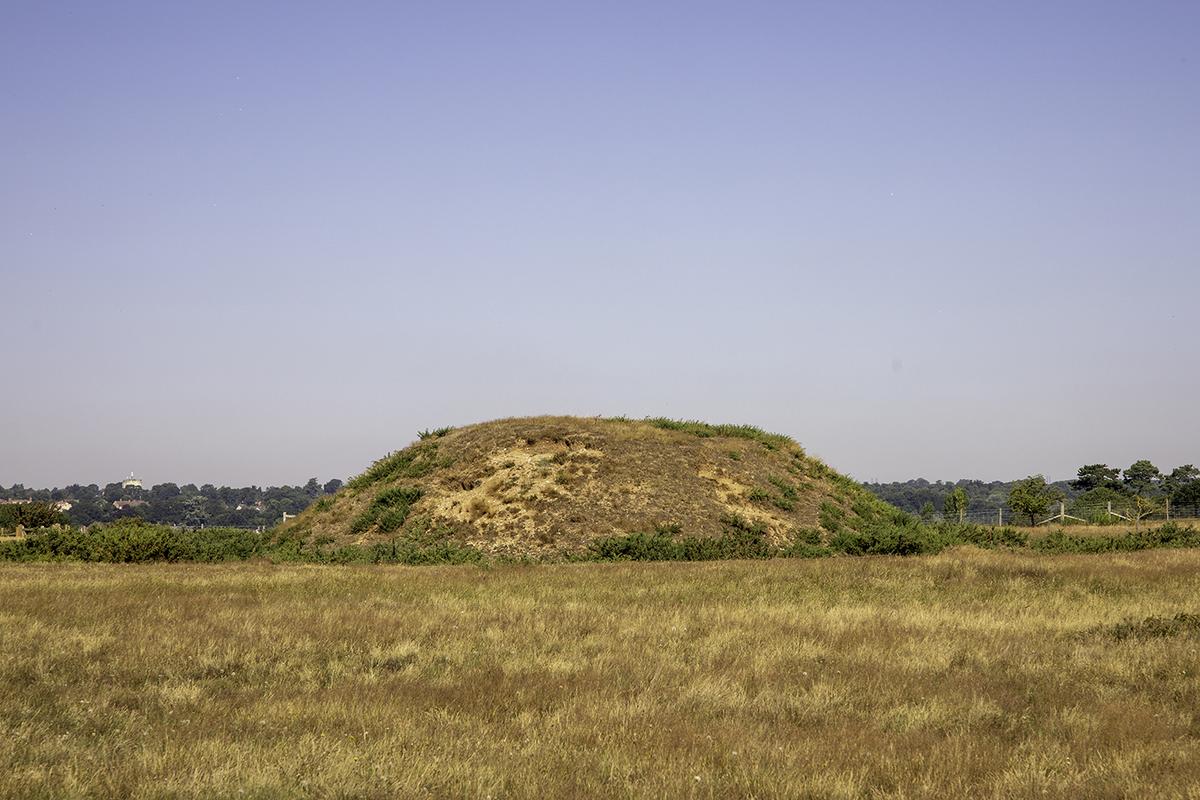
The Sutton Hoo ship burial, resplendent with treasure revealing Anglo-Saxon craftsmanship and international trade, was uncovered in a mound on the estate of Edith Pretty. Pretty (1883–1942), a widow living with her young son, had long been fascinated by the earthen mounds a mere 500 yards from her house. There are around 18 low earth mounds; an exact number cannot be calculated due to erosion over the centuries.
In her youth, Pretty traveled the world and witnessed excavations, fostering a love of history. After consulting with a curator of a local museum, she appointed Suffolk amateur archaeologist Basil Brown (1888–1977), an expert in the area’s soil and geology, to investigate her property.
Brown and his team excavated Mounds 2, 3, and 4 during the summer of 1938, finding small items. They resumed activity a year later and turned their attention to the largest burial, Mound 1. Just three days in, an iron ship rivet was found. It was determined that it was part of a large ship burial. The ghostly imprint of the ship remained, despite its wood dissolving in the acidic soil. The body that was buried had since decomposed as well.
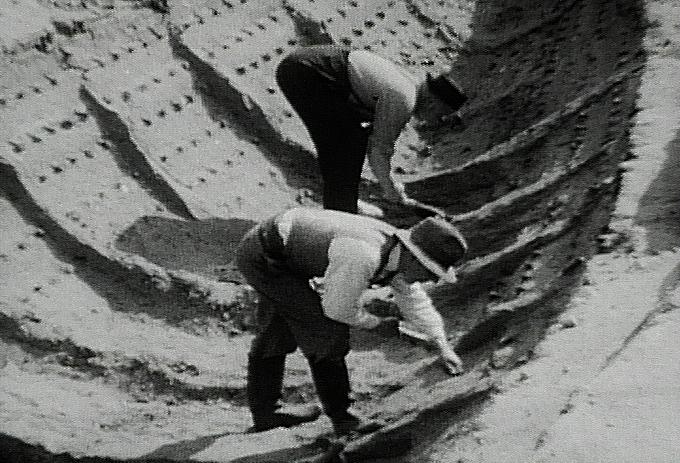
The significance of this led to professional archeologist Charles Phillips (1901–1985) of Cambridge University taking over leadership of the dig and bringing his own handpicked team. Brown continued to assist the endeavor. As England was on the brink of war with Germany, there was no time to source professional equipment, so the archeologists repurposed pastry brushes, bellows, and a coal shovel for their use.
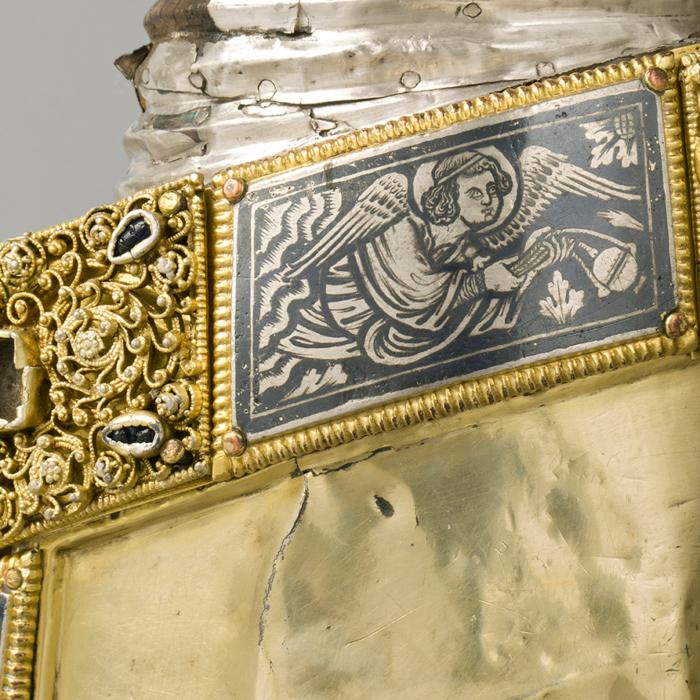
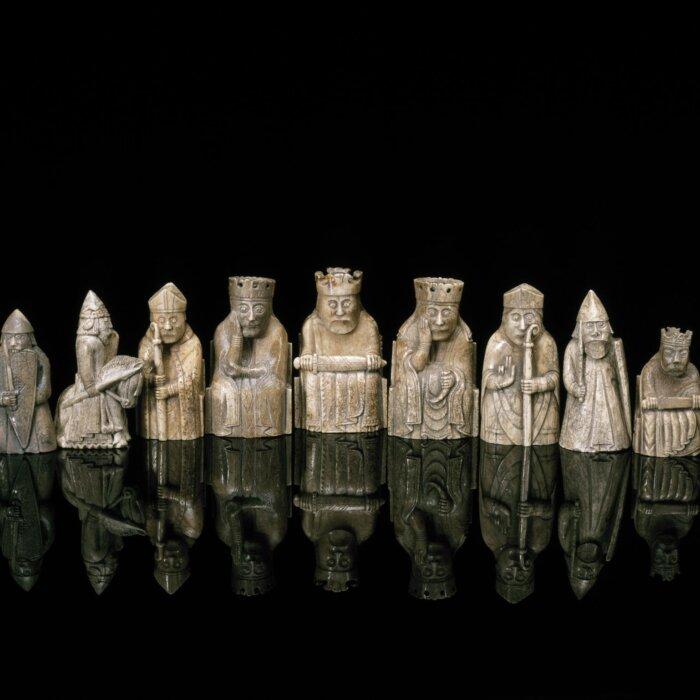
“In total, there were 263 finds of gold, garnet, silver, bronze, enamel, iron, wood, bone, textile, feathers and fur. Amongst the finds included … the iconic Sutton Hoo helmet – although, when this was excavated, archaeologists found only a series of its shattered fragments.”
Riches Revealed
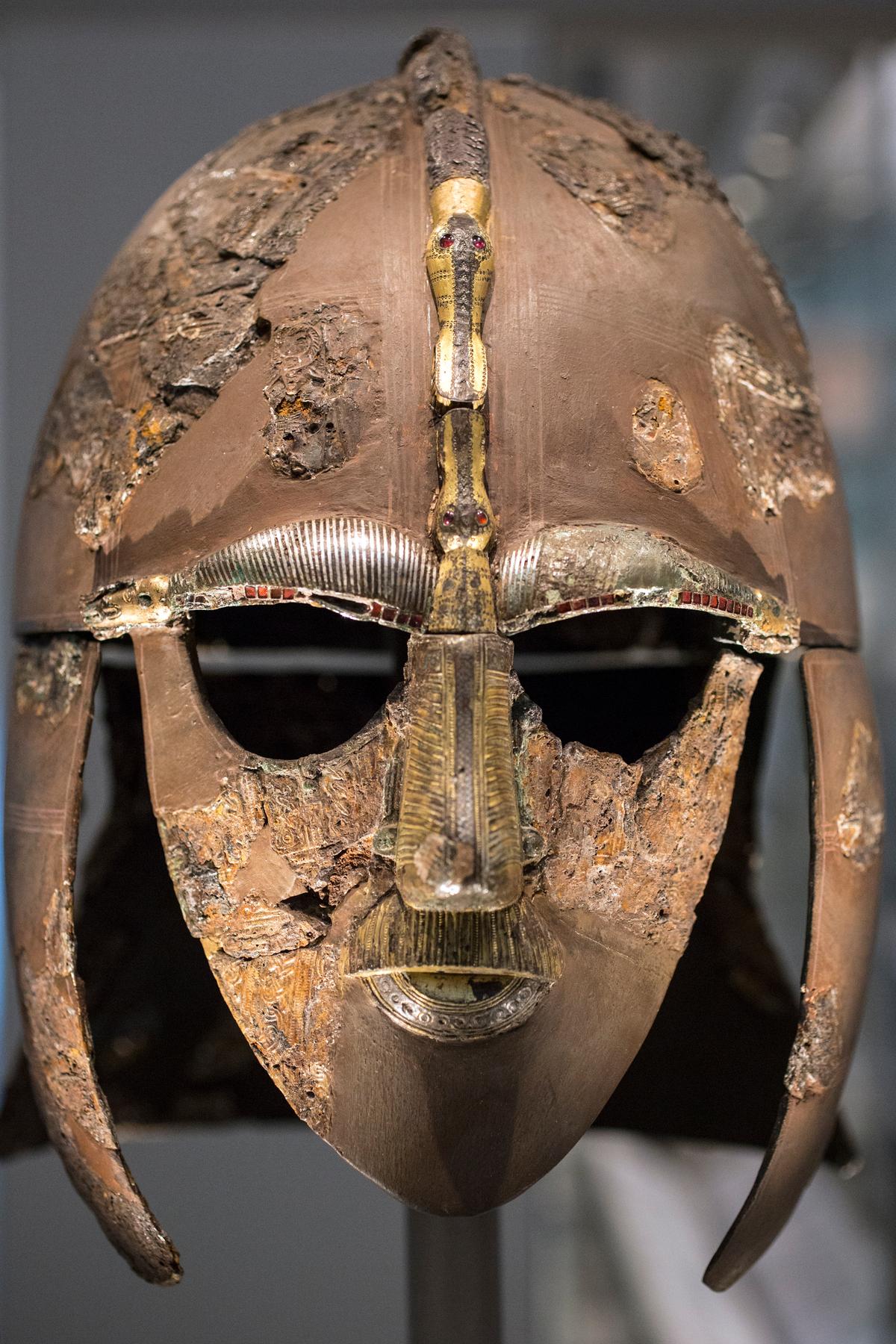
The iron helmet with copper alloy fittings, silver, gold, garnet-lined eyebrows, and tin has become the symbol of Sutton Hoo. Both beautiful and functional, it is a rare survivor of its kind from Anglo-Saxon England, as only three other complete helmets are known today. In the form of a face mask, the object’s complex decoration includes motifs of warriors and fearsome creatures. Together, the eyebrows, nose, and mustache depict the image of a dragon.
When the archeologists found it, the piece was very corroded and broken into more than 100 fragments. A replica was made by the Museum’s conservation team, and it is now displayed alongside the original restored helmet.
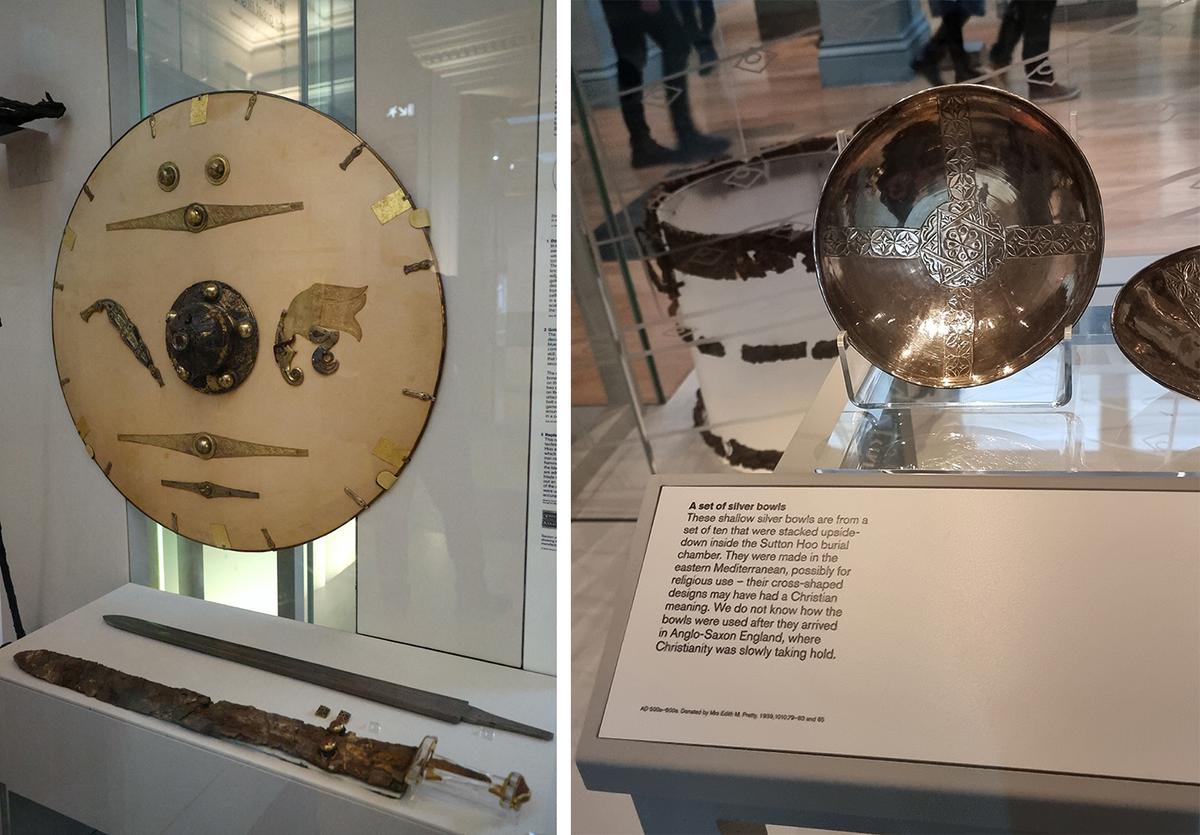
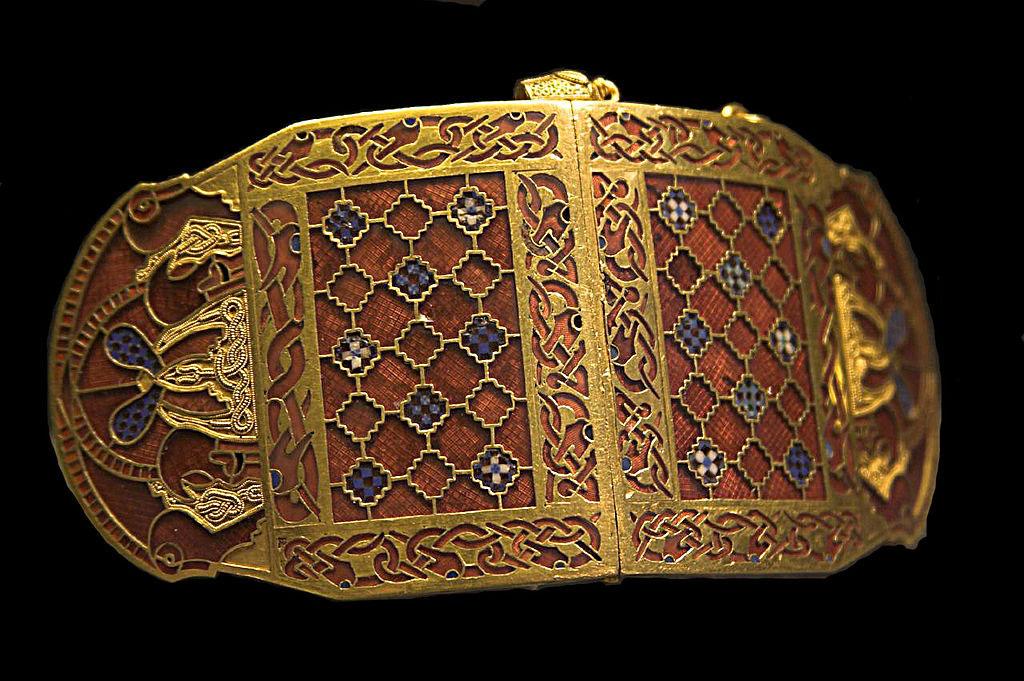
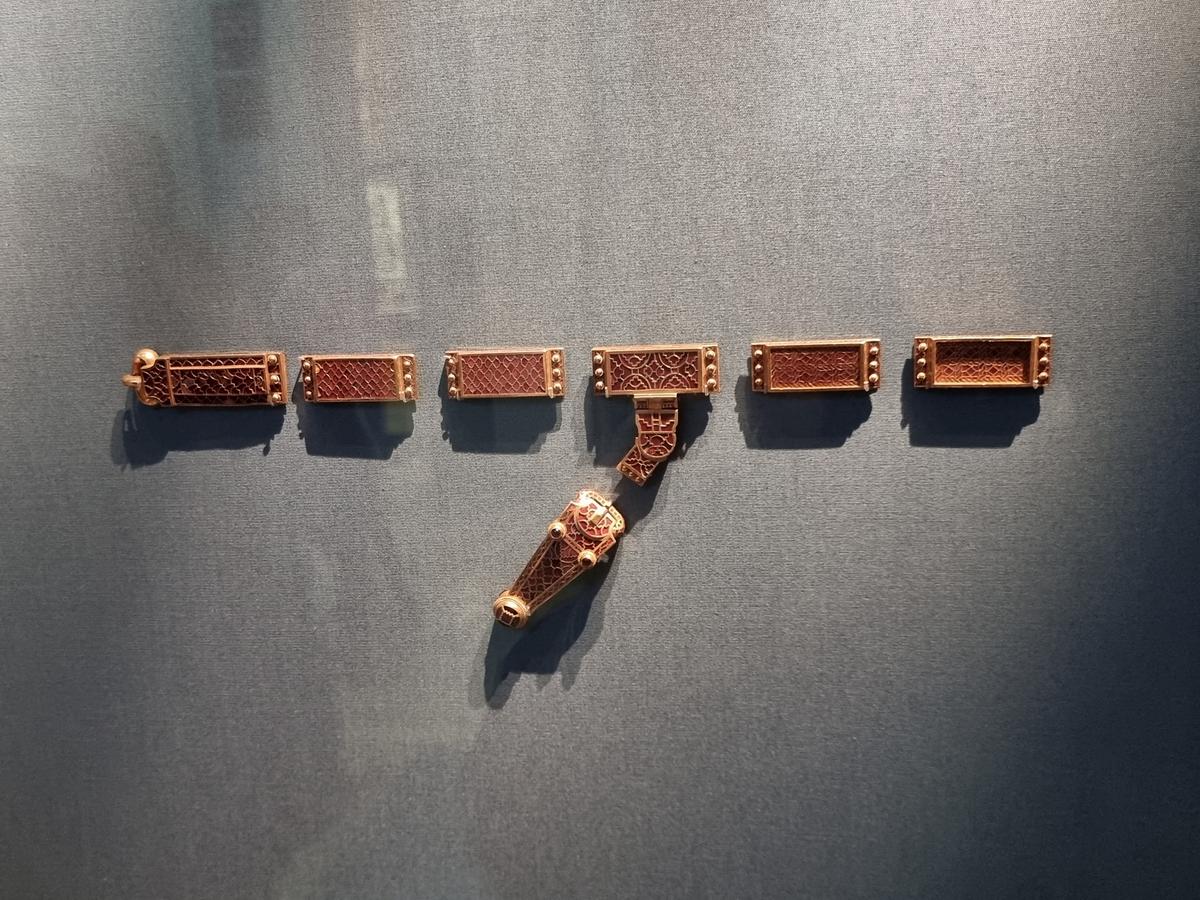
The deceased warrior was also buried with intricately made weapons, feasting vessels, and a lyre, as well as silver bowls, spoons and a platter from the Byzantine Empire, which was already a century old when interred. Interestingly, some of the silver items feature Christian elements, though the burial itself is a pre-Christian ritual. The burial’s purse contained 37 Frankish Merovingian gold coins brought over from continental Europe. (This was before the introduction of English coinage.) Each coin is from a different mint. They were a significant aid in dating the burial to around A.D. 625.
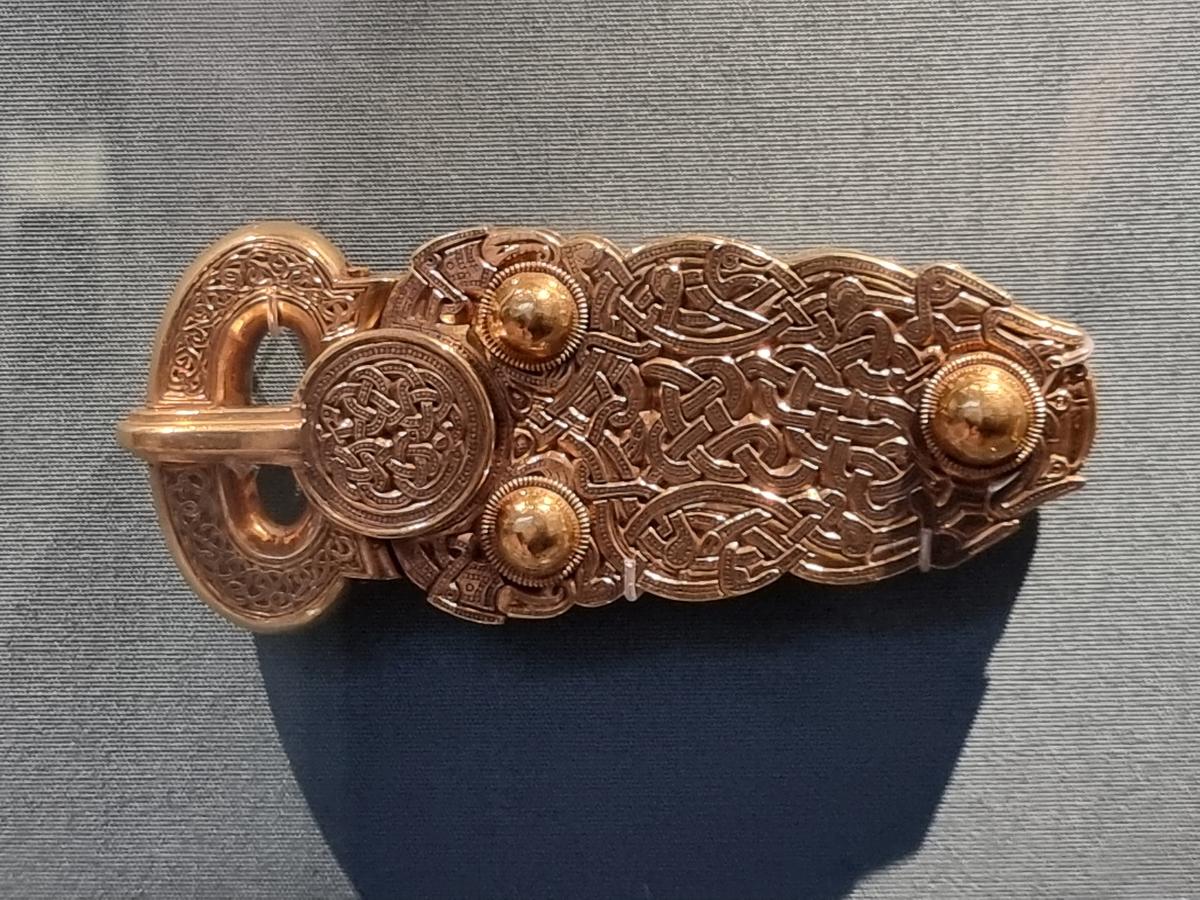
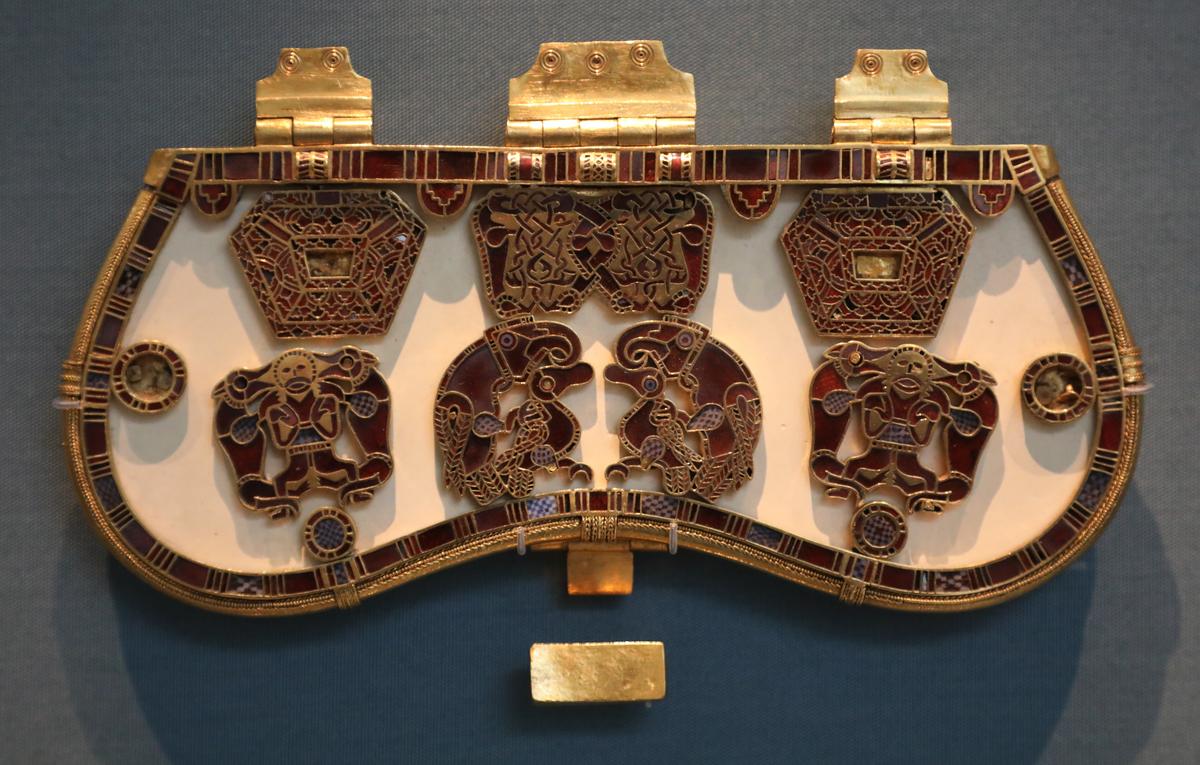
A huge Sutton Hoo shield, the most elaborate of its kind to survive, is also decorated with animals, including a bird-of-prey and a dragon. It may have been a Scandinavian diplomatic gift. The purse-lid, too, has animal motifs and is one of the items decorated with garnets. Recent scientific research has linked the gemstones to different international gem deposits, including Scotland and Sri Lanka.
Scholars have tried to pinpoint the identity of the person who merited such an impressive public funeral. It would have been extremely difficult to bring a ship uphill from the Suffolk River Deben as well as to dig a sizable trench and create a burial chamber. How such a feat was done remains unknown. The wealth inside, in terms of quality and quantity, leads to the conclusion that the deceased was a king. The prevailing candidate is Raedwald, ruler of the kingdom of East Anglia, which included modern-day Norfolk and Suffolk, of the Wuffingas dynasty.
Sutton Hoo is the richest intact burial ever found in northern Europe. This 1,400-year-old gravesite proved that Anglo-Saxons were highly skilled, worldly traders with a sophisticated culture. The Anglo-Saxon period laid the foundations for modern Britain. Its discovery right before WWII was declared is especially poignant as it became a symbol of national identity. This was captured in the beautifully filmed 2021 Netflix movie “The Dig.”