An assemblage of rare Tudor-era portraits has been brought together by the London gallery Philip Mould & Company for the extraordinary exhibition “Elizabeth I: Queen and Court.” It’s on view through July 10, 2026. Included are portraits of important courtiers and statesmen—Robert Dudley, Earl of Leicester; his stepson Robert Devereux, 2nd Earl of Essex; William Cecil, Lord Burghley; and his son Robert Cecil, 1st Earl of Salisbury—as well as the contemporaneous sovereigns Mary Stuart, Queen of Scots; and King Henri III of France.
At the exhibit’s core is Queen Elizabeth I (1533–1603). The presentation of four portraits, ranging from a depiction of her as a youthful princess to a Virgin Queen in the latter part of her reign, demonstrates the evolution of her public image. Elizabeth is still famous for the rich symbolism of her portraits, among the most extensive of any British ruler. She constructed strategically a symbolic persona for political purposes, which coincided with the development of portraiture as a significant art genre in Britain.
The Queen’s Early Portrait
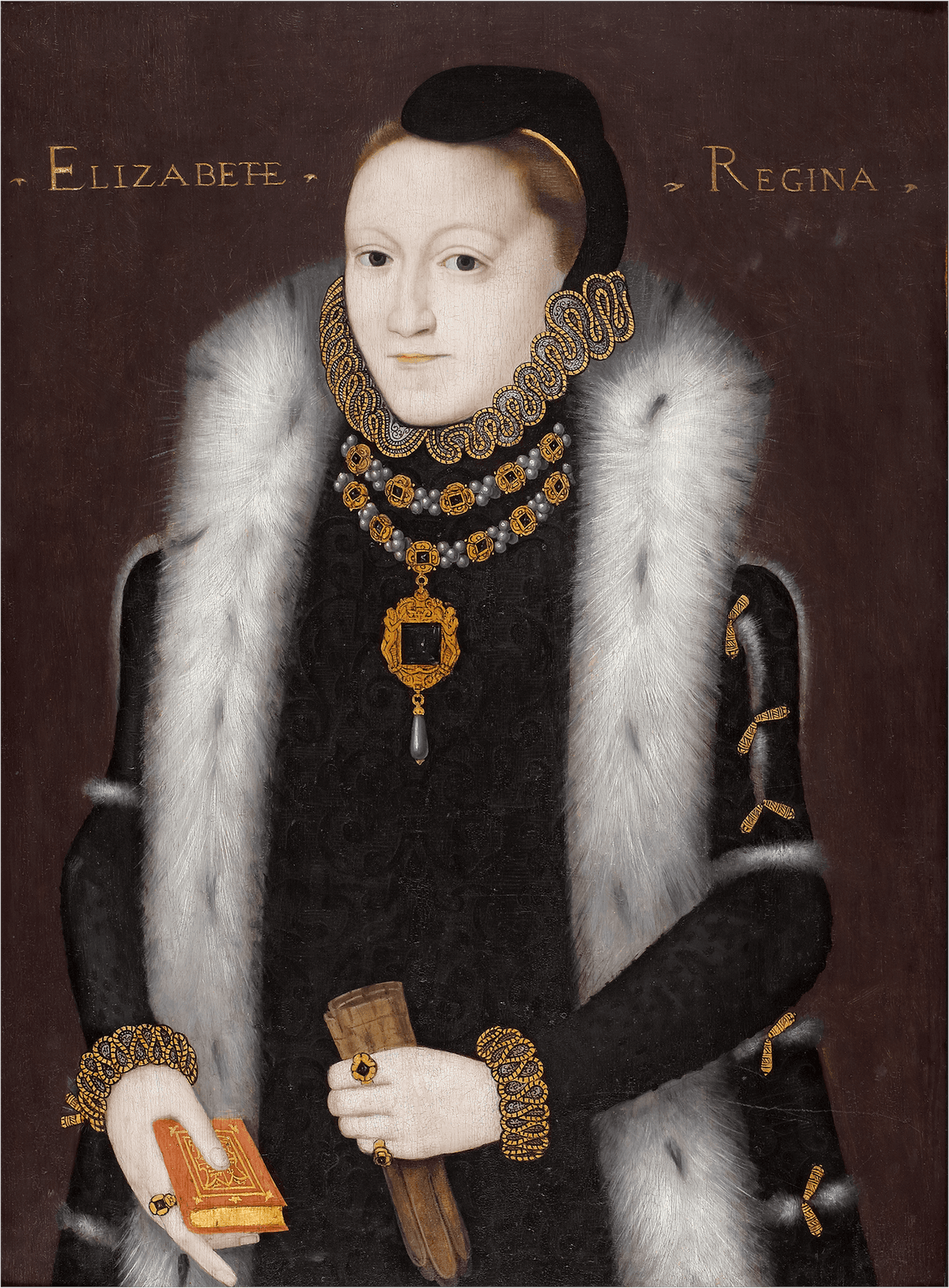
Earliest Known Full Portrait
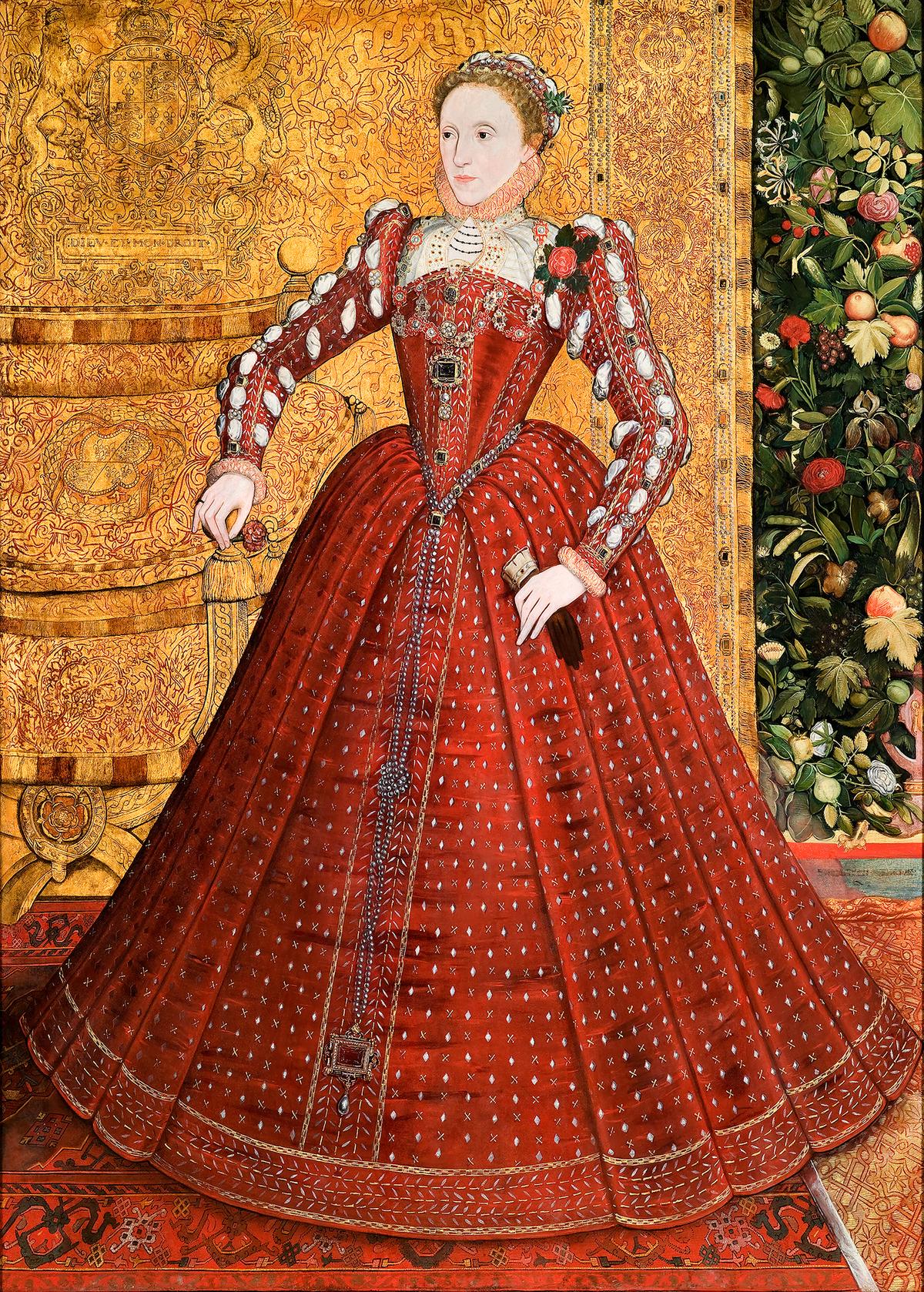
77 1/4 inches by 55 1/4 inches. Private collection. Courtesy of Philip Mould & Company
The large “Hampden” portrait from circa 1563 to 1567 is one of the most sumptuous portrayals of Elizabeth. It is the earliest known full-length portrait of her as queen. Done in oil and featuring real gold, the “Hampden” portrait has been recently reattributed to the court artist George Gower (circa 1540–1596), who went on to become Elizabeth’s Sergeant Painter in 1581. Elizabeth, in her early 30s here, wears a resplendent gown of crimson satin bedecked with jewels and a white chemisette. She is a blooming embodiment of the Tudor rose, a red and white heraldic emblem of her family’s dynasty.
The portrait was made during a critical time in Elizabeth’s reign. After she nearly died of smallpox in 1562, her advisors were eager for her to marry and produce an heir. It is debatable as to how serious Elizabeth was about embarking on matrimony. Famously, she never married, but Elizabeth entertained various matches for almost two decades. She ended her last serious courtship, which was with Henri III’s brother, in 1581.
Opulent Portraiture
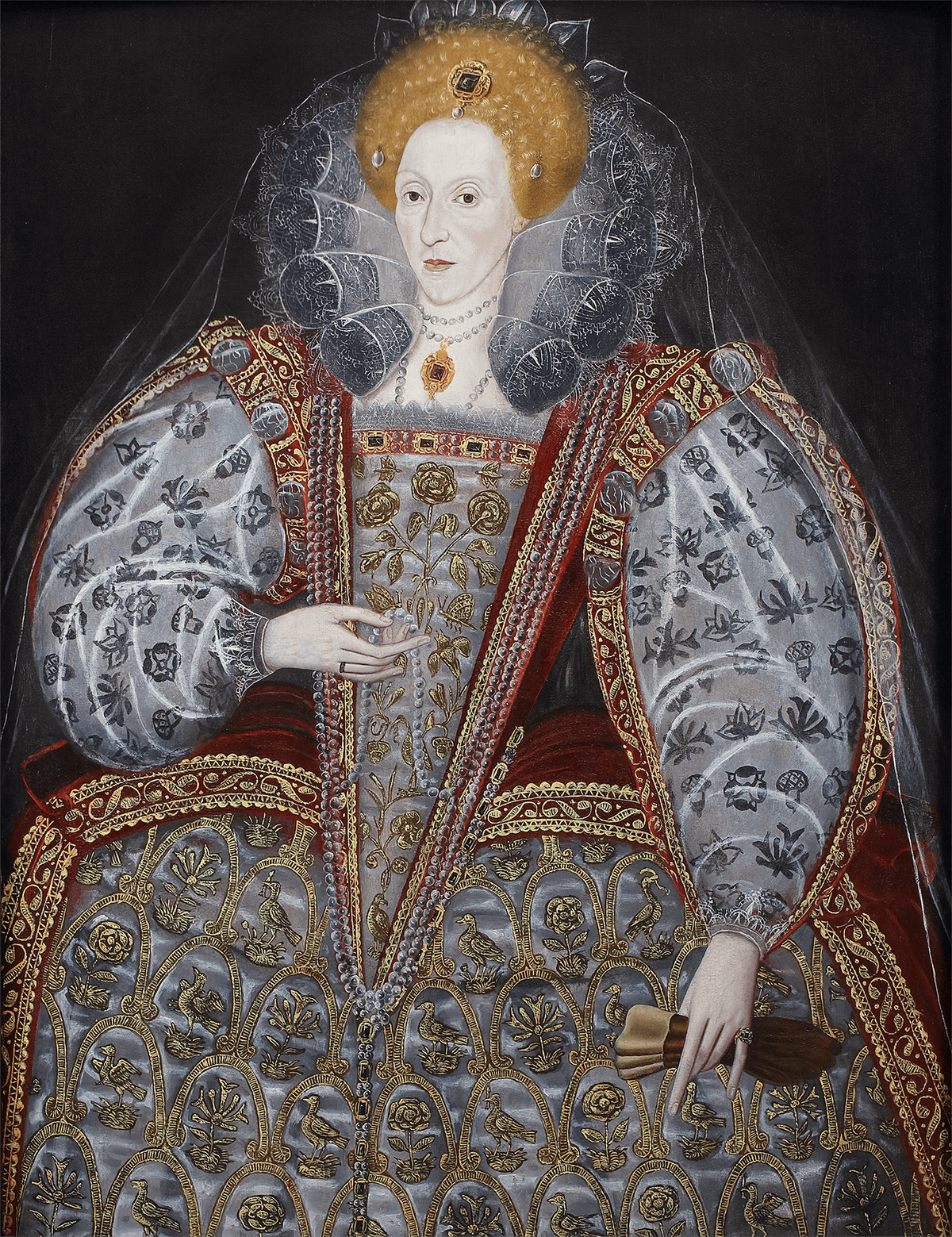
The exhibit’s 1590s portrait of the queen is perhaps the most recognizable type of image for today’s viewer. In this work, Elizabeth is shown as authoritative, opulent, and impressive. As was typical with her sophisticated and imperious later portraits, richly colored and detailed clothing and jewels dominate the composition. The magnificent standing ruff gives Elizabeth an ethereal quality, while her gown’s sleeves and skirt are rife with symbolism. Some embroidered motifs have a clear meaning, as in the case of the Tudor roses, but there are abundant potential interpretations of the honeysuckles, acorns, and birds.
It is fitting that such a show as “Elizabeth I: Queen and Court” should be held at Philip Mould & Company, a leading specialist in the last 500 years of British art. Many of the paintings lent for the exhibition from private collectors have previously passed through the gallery’s hands. Viewers of the exhibit are immersed in one of the most quintessential eras of British history, which was filled with a cast of colorful characters, none more so than the indomitable Elizabeth herself.