Casting Light on the Work of Andrea del Verrocchio

Skilled in sculpture, painting, architecture, and goldsmithing, the 15th-century artist inspired some of the greatest Italian Renaissance masters.
Casting Light on the Work of Andrea del Verrocchio
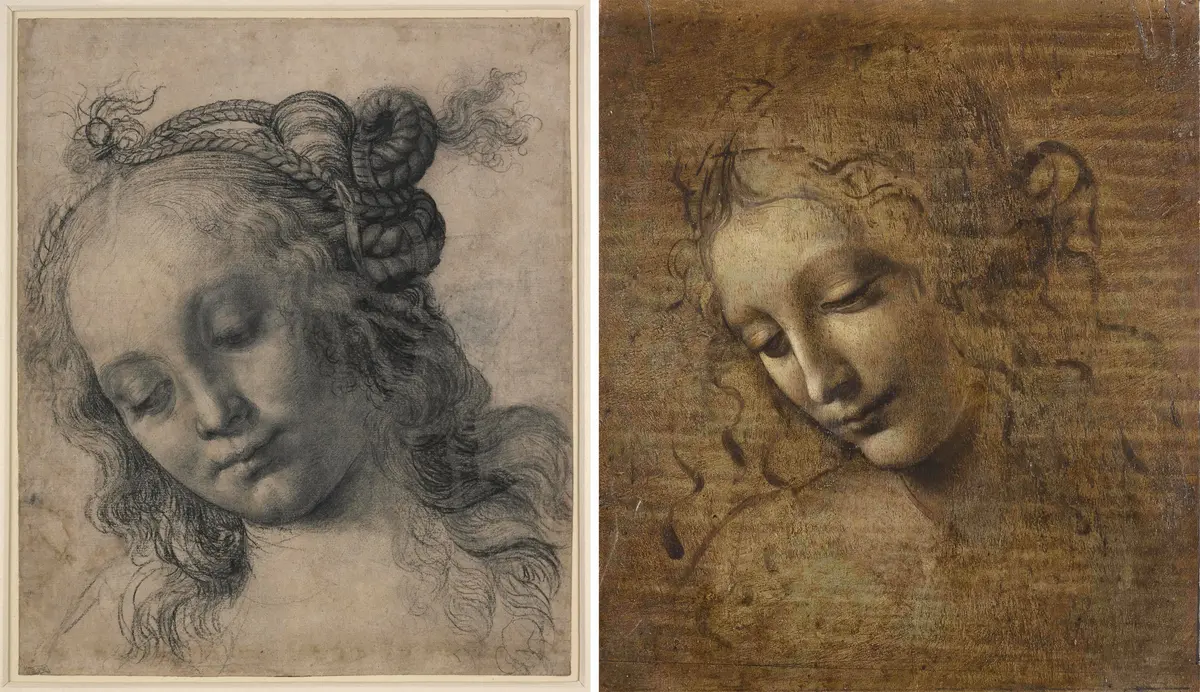
(Left) “Head of a Woman,” circa 1475, by Andrea del Verrocchio. (Right) A detail from "Madonna and Child," circa 1470, by Andrea del Verocchio. The artist's masterful deployment of lighting to depict a tilted female face with flowing tresses and a downcast gaze inspired his young apprentice, Leonardo da Vinci. Public Domain
|Updated:
0:00

Before further study, one might apply the saying “The student has surpassed the teacher” to the protégés of Italian Renaissance artist Andrea del Verrocchio (circa 1435–1488). Verrocchio’s Florentine workshop of young artists included Domenico Ghirlandaio, Pietro Perugino (who would have his own famed pupil, Raphael), Sandro Botticelli, and Leonardo da Vinci. However, Verrocchio, who worked extensively for the Medici family, was a preeminent artist himself. Inventive and talented, he was skilled in sculpture, painting, architecture, engineering, and goldsmithing.
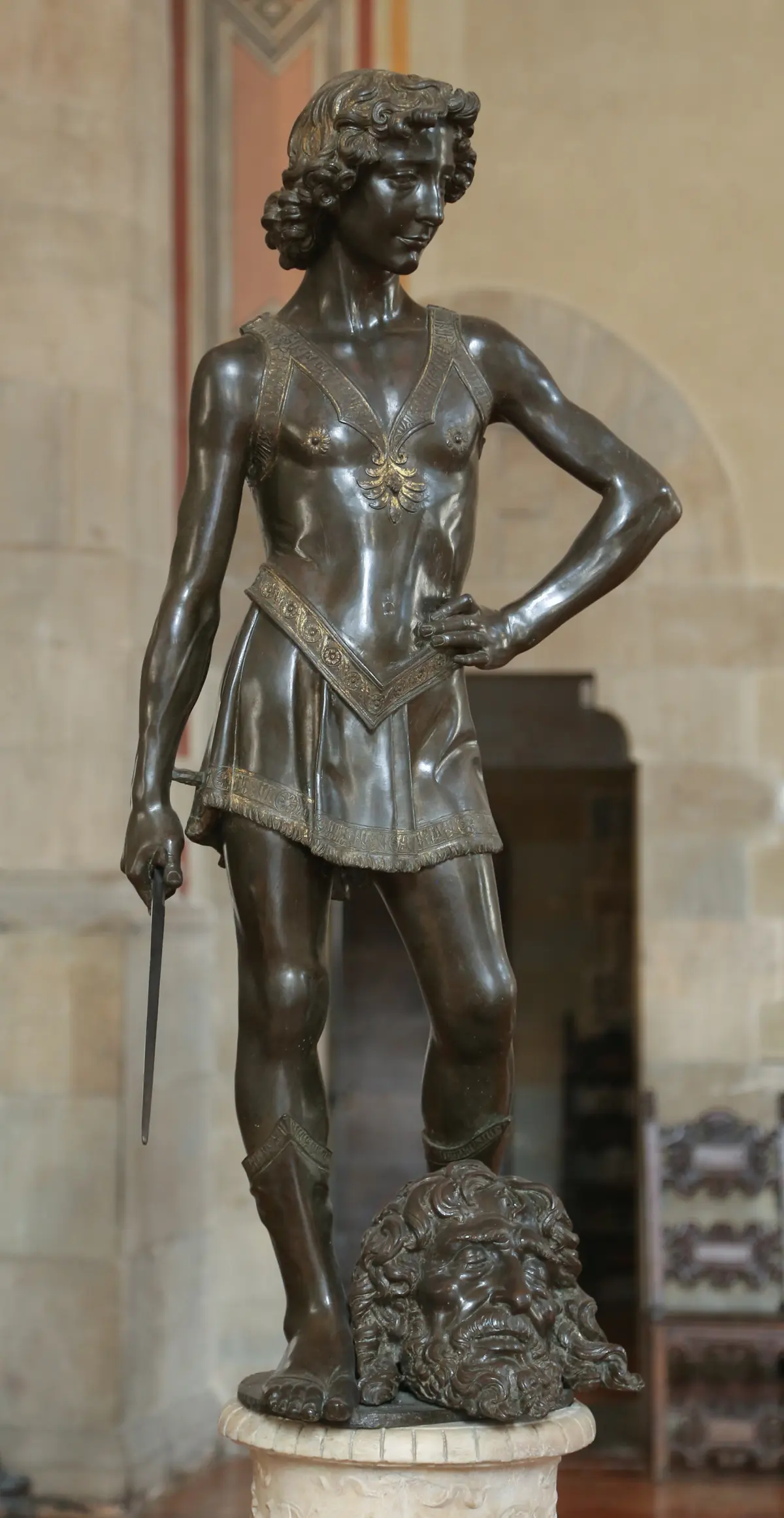
“David,” circa 1473–1475, by Andrea del Verocchio. Bronze; 49 inches. National Museum of Bargello, Florence. (<a title="User:Rufus46" href="https://commons.wikimedia.org/wiki/File:David,_Andrea_del_Verrocchio,_ca._1466-69,_Bargello_Florenz-01-180.jpg">Rufus46</a>/<a title="Category:CC-BY-SA-3.0" href="https://commons.wikimedia.org/wiki/Category:CC-BY-SA-3.0">CC-BY-SA-3.0</a>)
“David,” circa 1473–1475, by Andrea del Verocchio. Bronze; 49 inches. National Museum of Bargello, Florence. Rufus46/CC-BY-SA-3.0

Verrocchio’s famous sculptures, including the celebrated “David,” “Christ and Saint Thomas,” and the monumental equestrian statue of Bartolomeo Colleoni, attest that in his day he was Florence’s leading sculptor. However, scholarly study of his oeuvre as a painter, a practice he began in the 1460s, has been hindered by the lack of documentation regarding authorship, as well as the collaborative nature of paintings partially attributed to him.

In the 15th century, it was typical for an artist who was head of a studio to design a picture and have one or more pupils paint much of the work. “Madonna and Child” at the Gemäldegalerie in Berlin is widely believed to be a rare autograph work by Verrocchio, supported by recent technical examinations.
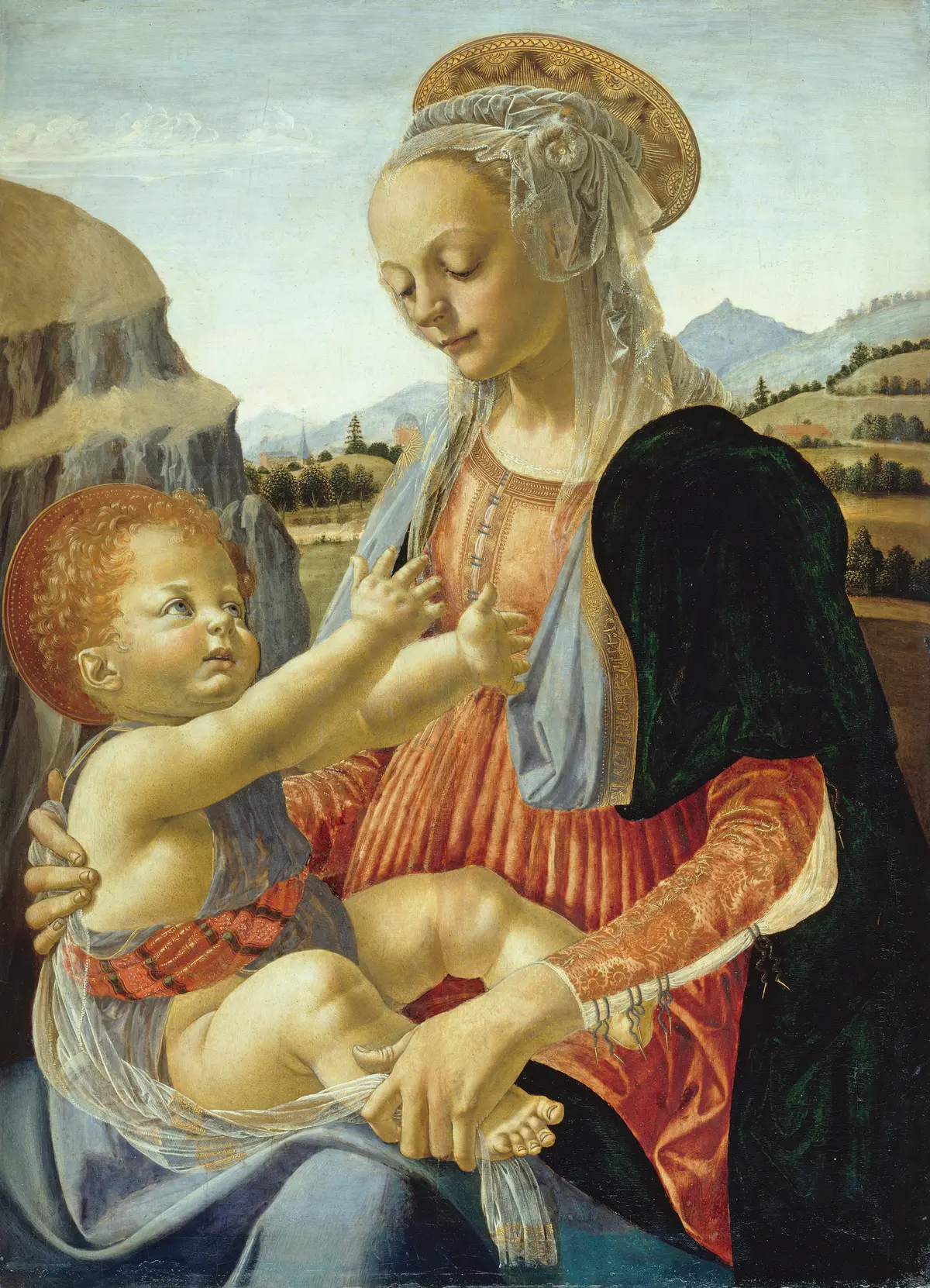
"Madonna and Child," circa 1470, by Andrea del Verrocchio. Oil on poplar panel; 29 7/8 inches by 21 1/2 inches. Gemäldegalerie Berlin. (Public Domain)
"Madonna and Child," circa 1470, by Andrea del Verrocchio. Oil on poplar panel; 29 7/8 inches by 21 1/2 inches. Gemäldegalerie Berlin. Public Domain

Verrocchio’s Famed Collaboration

Though it isn’t solely by his hand, documentation attests that the only painting unanimously attributed to Verrocchio is “The Baptism of Christ.” The panel hung originally in the church of the Vallombrosan monastery of San Salvi in Florence. In this biblical narrative, which comes from the gospels (Matthew 3:13-17, Mark 1:9-11, and Luke 3:21-22), Jesus and St. John stand in the River Jordan. John, holding a slender cross and a scroll inscribed with the announcement of the Savior’s advent, baptizes Jesus by pouring water on his head from a bowl. Above the figures is the Holy Spirit in the form of a dove. Framing the bird are the hands of God.
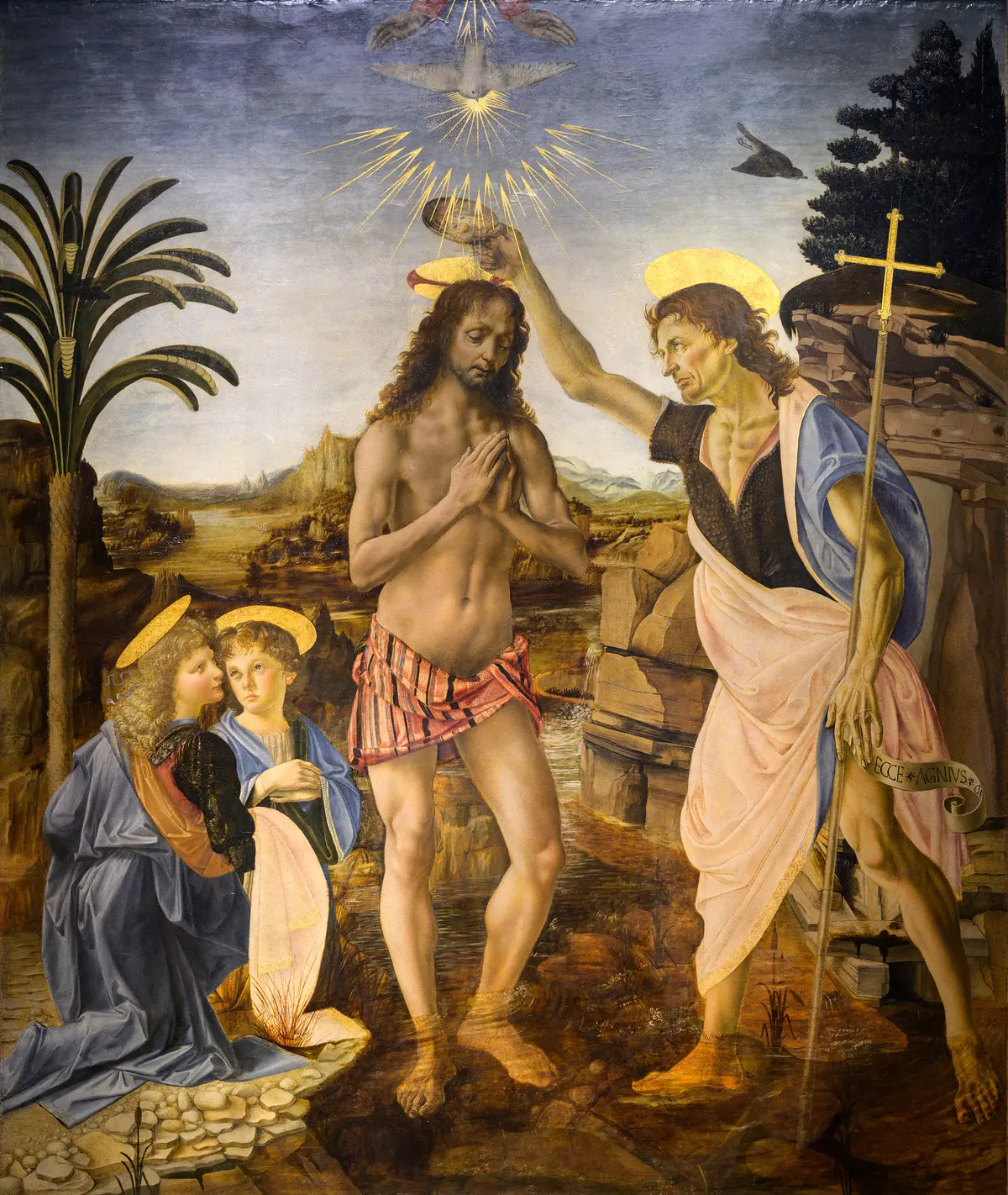
"The Baptism of Christ," 1472–1475, by Verrocchio and Leonardo. Oil and tempera on panel; 70 15/16 inches by 59 7/8 inches. Leonardo's angel is on the far left. Uffizi Galleries, Florence. (<a href="https://commons.wikimedia.org/wiki/File:The_Baptism_of_Christ_(Verrocchio_and_Leonardo).jpg" target="_blank" rel="nofollow noopener">Justin Benttinen</a>/<a title="Category:CC-BY-SA-4.0" href="https://commons.wikimedia.org/wiki/Category:CC-BY-SA-4.0">CC-BY-SA-4.0</a>
"The Baptism of Christ," 1472–1475, by Verrocchio and Leonardo. Oil and tempera on panel; 70 15/16 inches by 59 7/8 inches. Leonardo's angel is on the far left. Uffizi Galleries, Florence. (Justin Benttinen/CC-BY-SA-4.0

This panel was a studio collaboration between Verrocchio, an unknown painter, and the young Leonardo. Today, specialists believe that Leonardo painted the angel shown in profile on the left and worked on the landscape, golden light, and Christ figure. According to the 16th-century art historian Giorgio Vasari, Verrocchio was upset by the great skill Leonardo displayed in his execution of the angel.
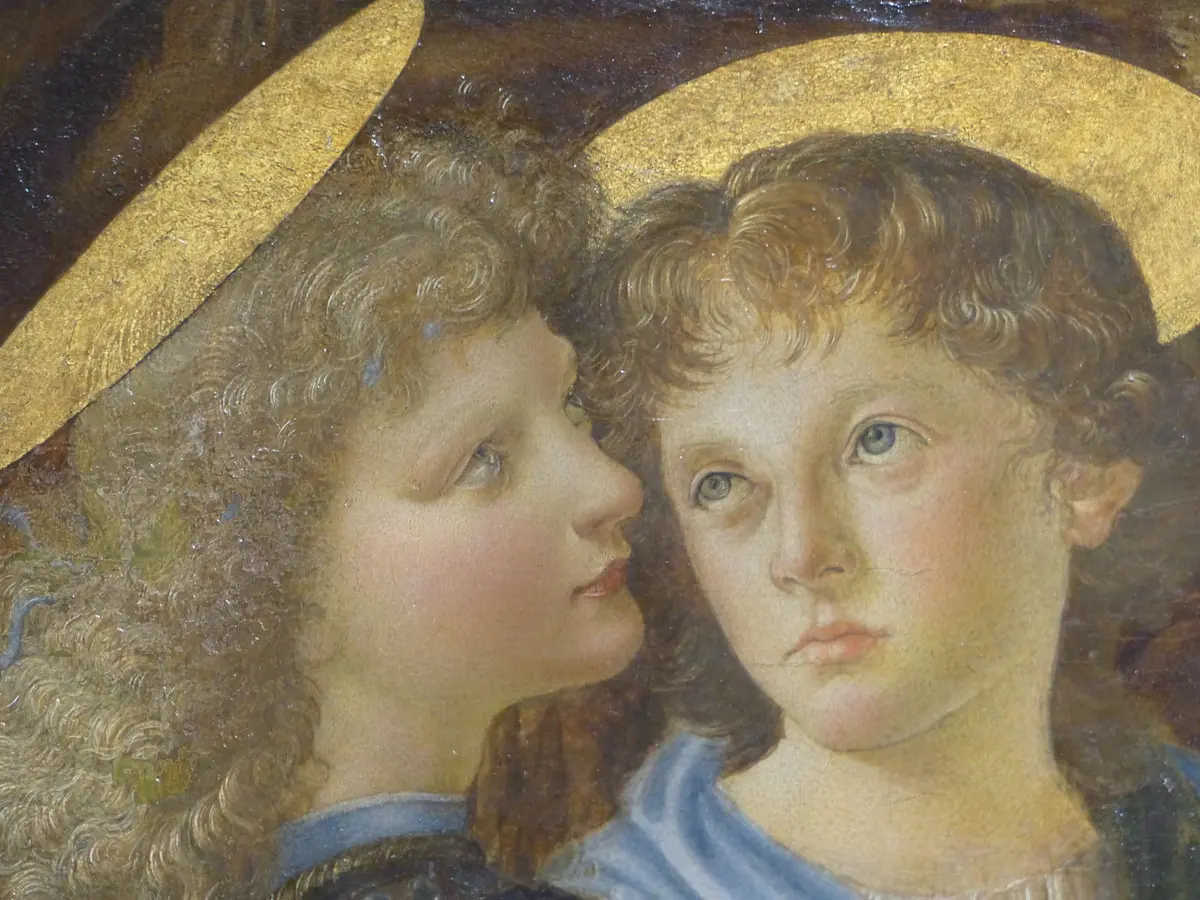
A detail of "The Baptism of Christ," 1472–1475, by Verrocchio and Leonardo. Leonardo's angel is on the left. (<a title="User:Benjamín Núñez González" href="https://commons.wikimedia.org/wiki/File:Bautismo_de_Cristo,_Verrocchio,_Florencia,_Italia,_2019.jpg">Benjamín Núñez González</a>/ <a title="Category:CC-BY-SA-4.0" href="https://commons.wikimedia.org/wiki/Category:CC-BY-SA-4.0">CC-BY-SA-4.0</a>)
A detail of "The Baptism of Christ," 1472–1475, by Verrocchio and Leonardo. Leonardo's angel is on the left. Benjamín Núñez GonzálezCC-BY-SA-4.0

The National Gallery, London writes, “Some of Leonardo’s artistic concerns, such as the twisting pose known as figura serpentinata, and the study of contrasting expressions, originate with Verrocchio.” The British Museum’s virtuoso Verrocchio drawing “Head of a Woman” from circa 1475, made around the time of “The Baptism of Christ,” is an eloquent example of the elder artist’s influence on Leonardo’s work. An apt comparison is Leonardo’s small walnut panel painting “Head of a Woman known as La Scapiliata” at the Galleria Nazionale di Parma. Both introspective images utilize masterful deployment of light to depict a tilted female face with flowing tresses and a downcast gaze.
(Left) “Head of a Woman,” circa 1475, by Andrea del Verrocchio. Charcoal, pen, and brown ink on paper; 12 3/4 inches by 10 3/4 inches. British Museum, London. (Right) "Head of a Woman Known as La Scapiliata,” circa 1492–1501, by Leonardo. White lead with iron and cinnabar pigments, on white lead preparation containing copper, lead yellow and tin pigments on walnut panel; 9 11/16 inches by 8 5/16 inches. Galleria nazionale di Parma, Italy. (Public Domain)
(Left) “Head of a Woman,” circa 1475, by Andrea del Verrocchio. Charcoal, pen, and brown ink on paper; 12 3/4 inches by 10 3/4 inches. British Museum, London. (Right) "Head of a Woman Known as La Scapiliata,” circa 1492–1501, by Leonardo. White lead with iron and cinnabar pigments, on white lead preparation containing copper, lead yellow and tin pigments on walnut panel; 9 11/16 inches by 8 5/16 inches. Galleria nazionale di Parma, Italy. Public Domain

Verrocchio was a gifted and versatile artist. Master of diverse media, his naturalistic and expressive work brought him success in his lifetime. In 2019, the first-ever monographic exhibition of Verrocchio in the United States was displayed in Washington at the National Gallery of Art. Hopefully future exhibits, along with scientific and scholarly research, will expand the public’s knowledge of his art.
What arts and culture topics would you like us to cover? Please email ideas or feedback to [email protected].
Google LogoMark Us Preferred on Google
Michelle Plastrik
Michelle Plastrik
Author
Michelle Plastrik is an art adviser living in New York City. She writes on a range of topics, including art history, the art market, museums, art fairs, and special exhibitions.