




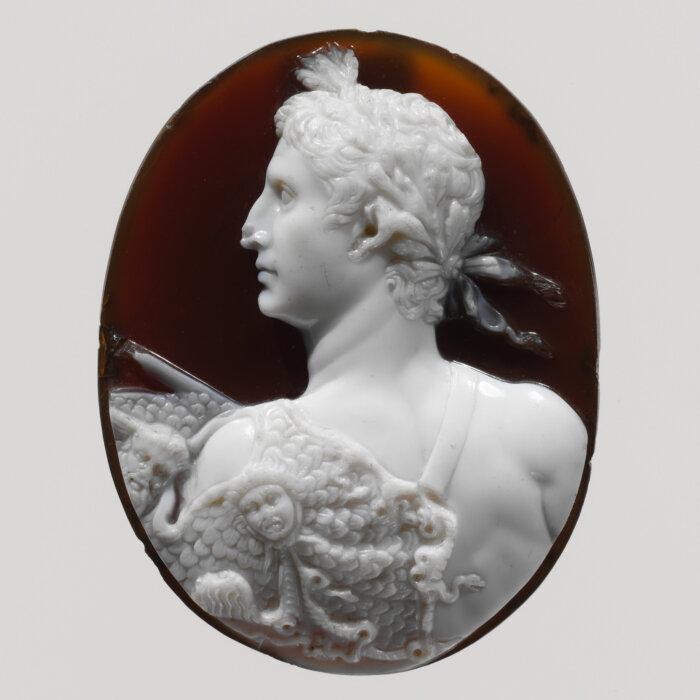
Augustus (63 B.C.–14 A.D.), the founder of the Roman Empire, ruled from 27 B.C. to A.D. 14. His reign was marked by peace and prosperity, a welcome relief after the bloody Civil Wars that had ended the Roman Republic. Born Gaius Octavius, he was the maternal great-nephew of Julius Caesar, who named him his adopted son and heir in his will. After Caesar’s assassination, Augustus vanquished his rivals to take sole political control. Over 250 portraits of Augustus, including many full-length statues, have survived to the present day. His most important likeness is the sculpture “Augustus of Prima Porta.”
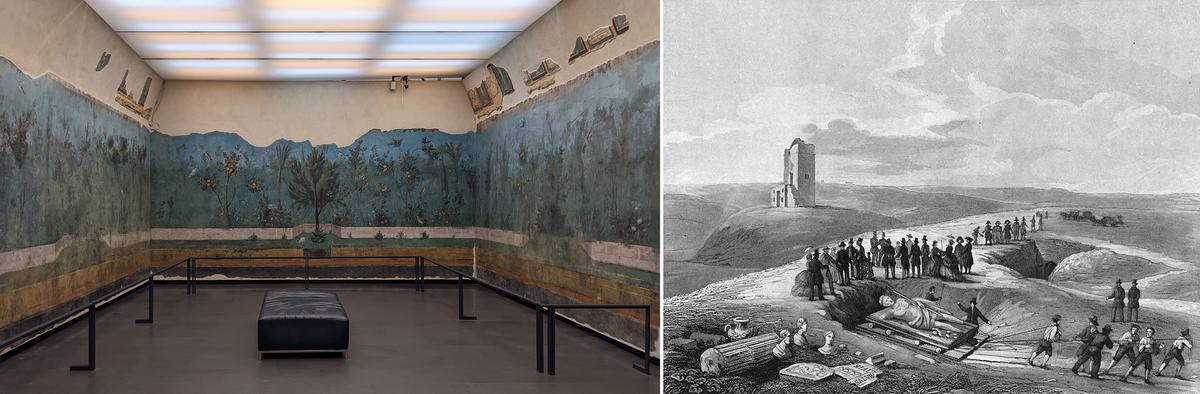
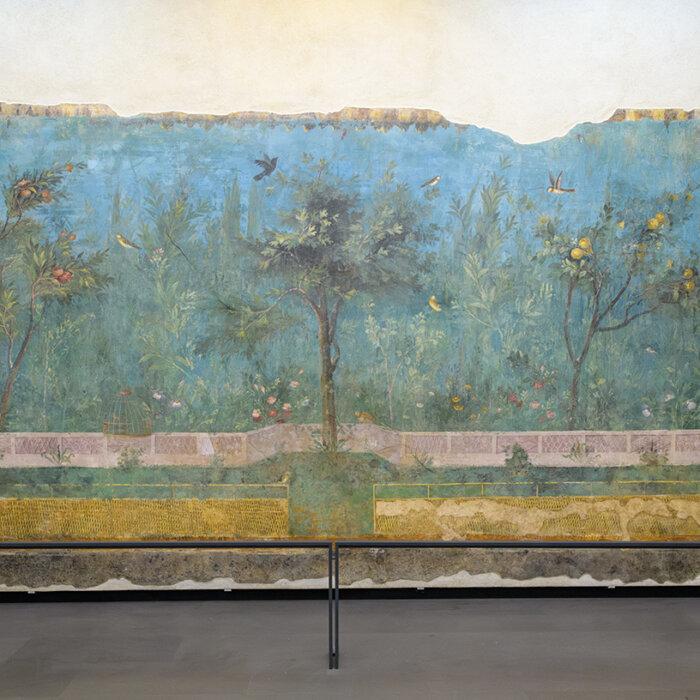
This monumental marble is now part of the Vatican Museums’ collections. Dated to the early 1st century A.D., it was likely a copy of a lost bronze original commissioned to commemorate a 20 B.C. diplomatic victory over the Parthians (ancient Parthia is now northeastern Iran). The well-preserved 7-foot tall sculpture was discovered in the ruins of the Villa of Livia at Prima Porta, a northern suburb of Rome, in 1863. It was likely commissioned shortly after Augustus’s death, either by his widow, Livia, or his stepson and heir, Tiberius. Tiberius, Livia’s son, was designated Augustus’s successor thanks to his mother’s persistent lobbying.
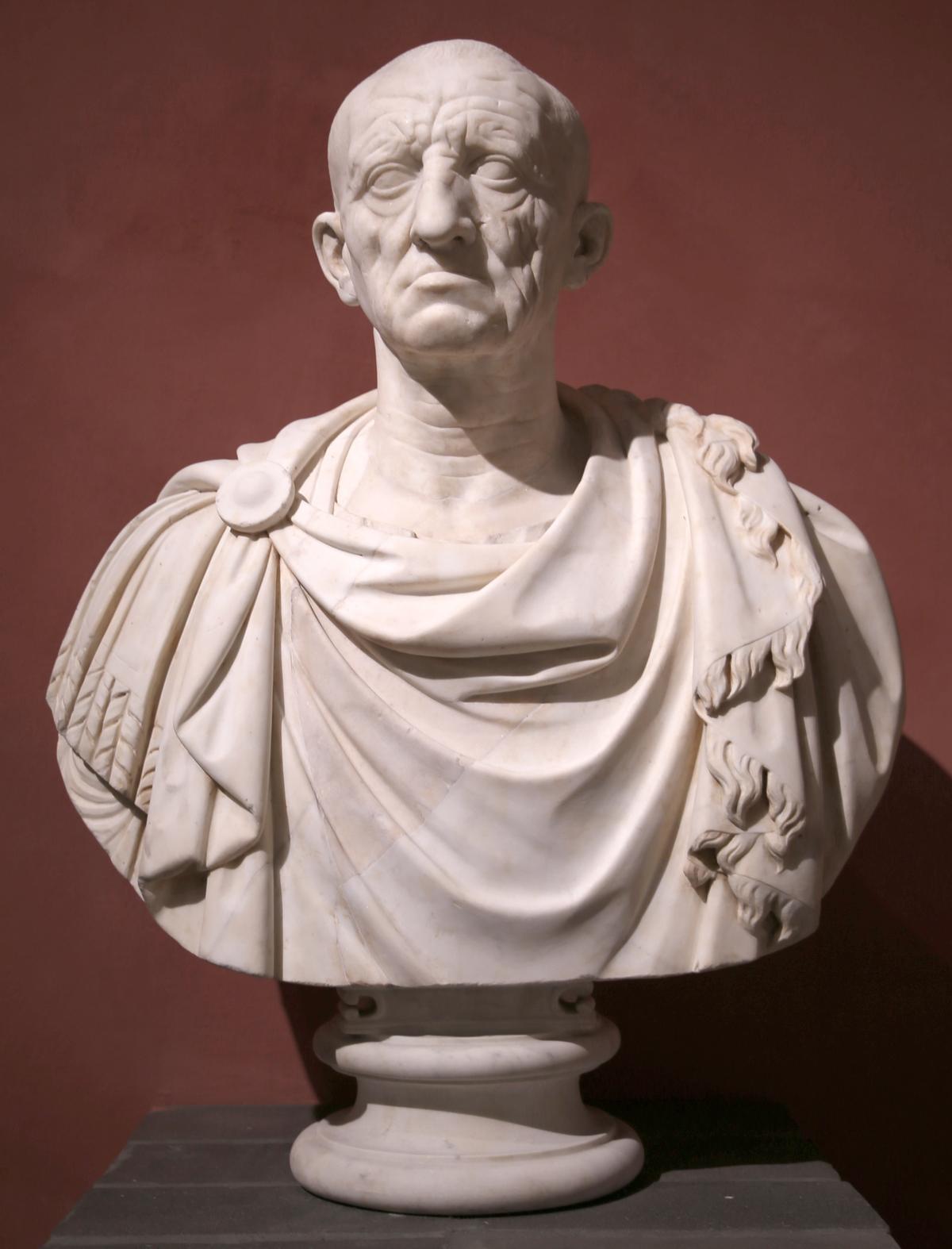
Augustus used his portraiture for political reasons. Instead of continuing the Roman Republic’s tradition of hyperrealistic, “warts and all” likenesses, exemplified by works such as the “Torlonia Patrician,” Augustus turned to Greek art, with its youthful, idealized aesthetic for inspiration.
The Monumental Marble
“Augustus of Prima Porta” is rife with symbolism that recounts the political and personal story of its subject. Augustus, with a firm gaze and tranquil air, is depicted as Imperator (the English word Emperor derives from this Latin term). Wrapped around his hips and draped over one arm, he wears a distinctive, heavy cloak called a “paludamentum,” which was traditionally worn by Roman military commanders. Augustus had this attire restricted to the emperor’s use. He is depicted addressing his army in the “adlocutio” or orator’s pose, standing in contrapposto with right arm lifted and index finger raised.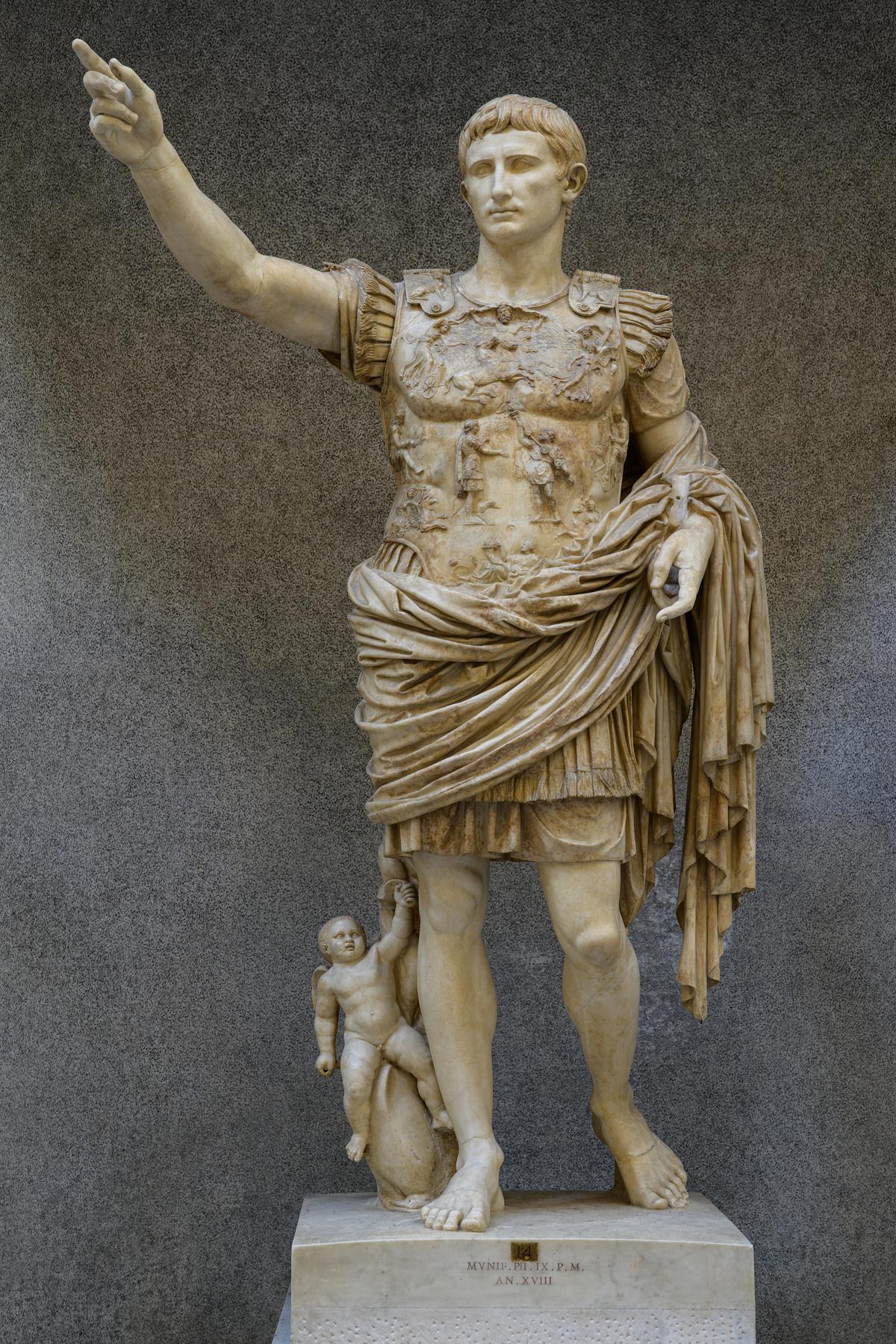
At the bottom of the statue, on the left, is a small figure of Cupid riding a dolphin. In Roman mythology, Cupid is the son of Venus. Venus, who according to legend was born from the sea and thus associated with dolphins, was the patron goddess of the emperor’s family. Augustus’s bare feet imply that he is godlike, too, since the gods were often depicted without shoes. After his death, the Roman Senate deified him. While he was an absolute ruler, Augustus was careful to present himself as a modest, model citizen so that he wouldn’t be viewed as a dictator and meet the same fate as his adoptive father.
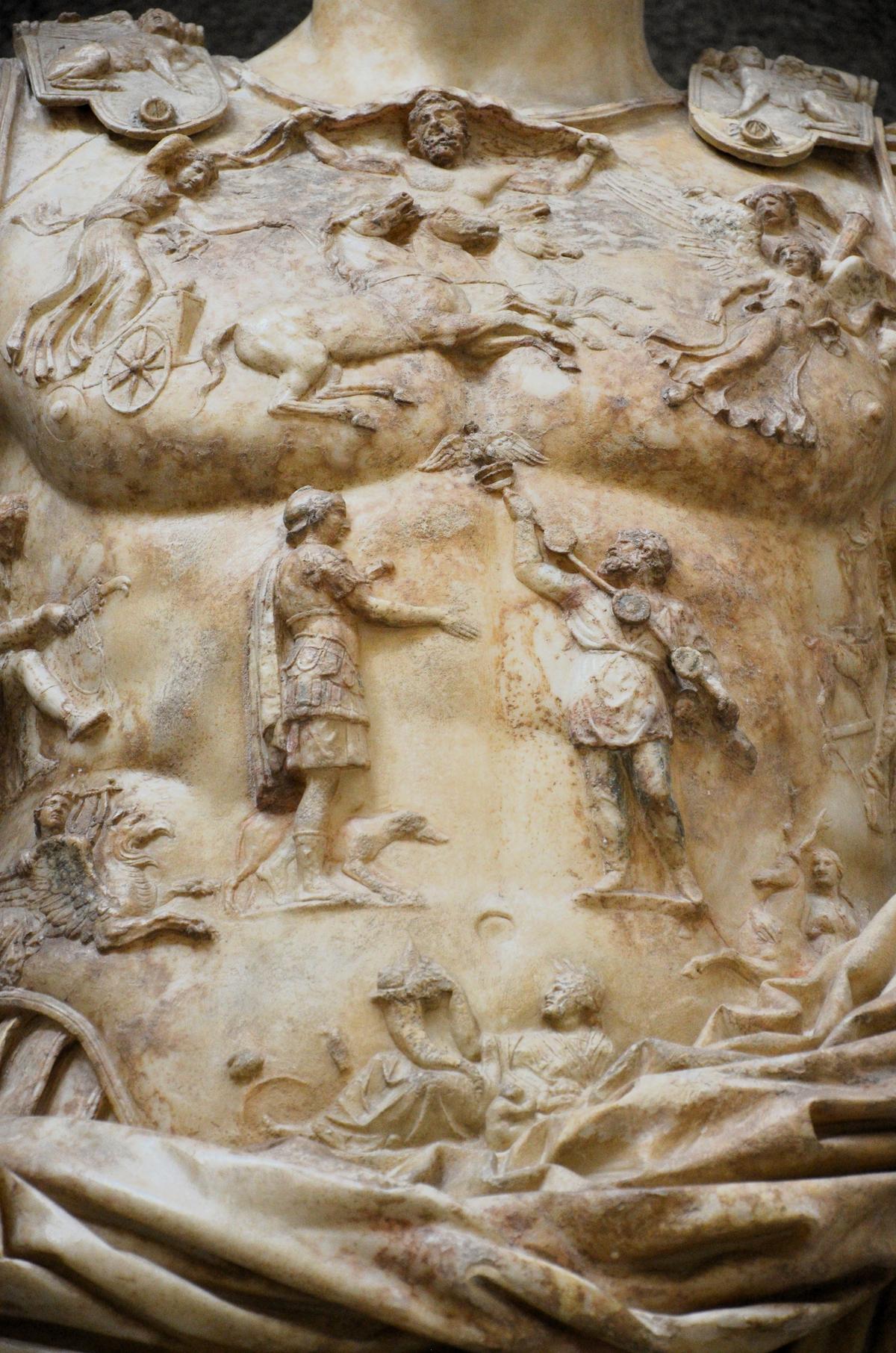
The sculpture’s most elaborate element is the superbly carved cuirass, a breastplate and backplate fastened together. The Vatican Museums explains:
“The whole scene is inserted into a cosmic landscape: at the top one can see the personification of the Heavens in the centre, with the chariots of Apollo and Aurora alongside. At the bottom one can recognise Diana riding on the back of a hind and, in the centre, the goddess Earth.”
Visual Language of Power
“Augustus of Prima Porta” has had a strong effect on the art market and art history. In October 2026, Sotheby’s will begin a series of auctions of “Magnum Opus: A Private Collection of Exceptional Art and Objects Through the Ages.” Consisting of over 900 works across 25 categories, the star lot is a cuirassed marble torso of a Roman emperor from the dawn of the Imperial age, estimated at $8 million to $12 million.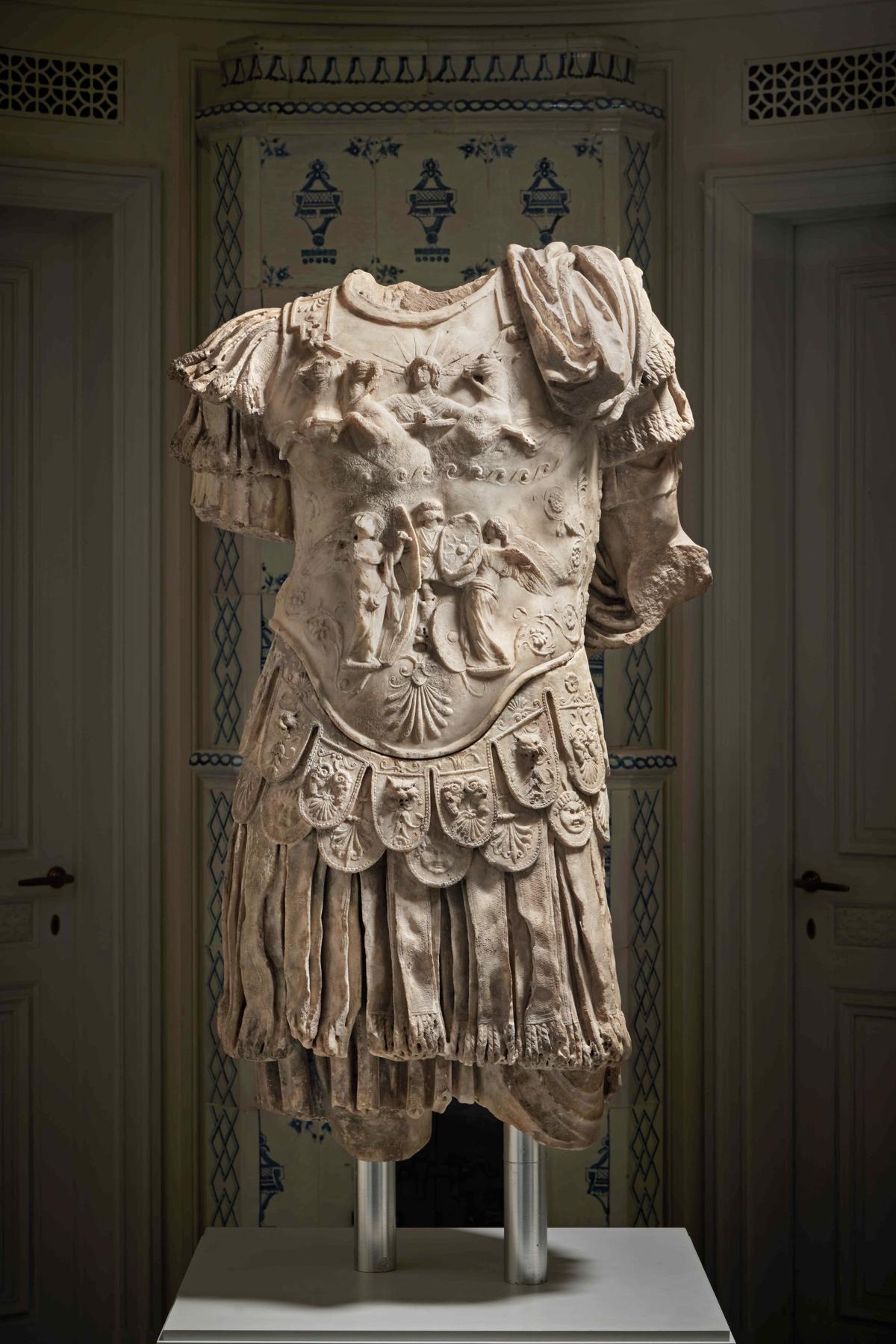
Sotheby’s expounds, “Probably representing Augustus, Tiberius or Claudius, this torso represents a visual embodiment of the beginning of the Roman empire’s language of political power and martial authority. It draws a clear comparison to … the Augustus Prima Porta.”
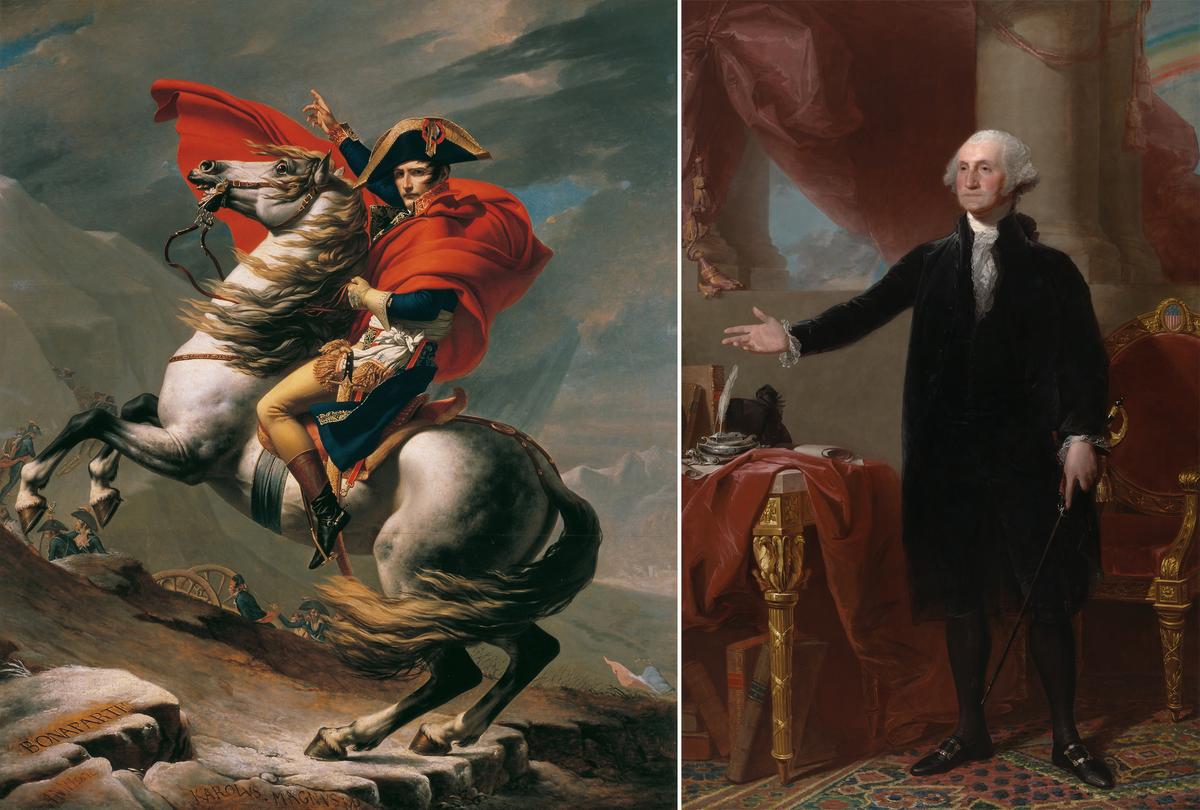
The figure’s pose in “Augustus of Prima Porta” has inspired portraits of subsequent leaders. Emblematic examples include Jacques-Louis David’s idealized series showing “Napoleon Crossing the Alps” and Gilbert Stuart’s “Lansdowne Portrait” of George Washington. This legacy has contributed to the scholarly assessment that “Augustus of Prima Porta” is the greatest ancient Roman portrait of all.
,_da_otircoli,_poi_coll._visconti,_MT533,_01.jpg)