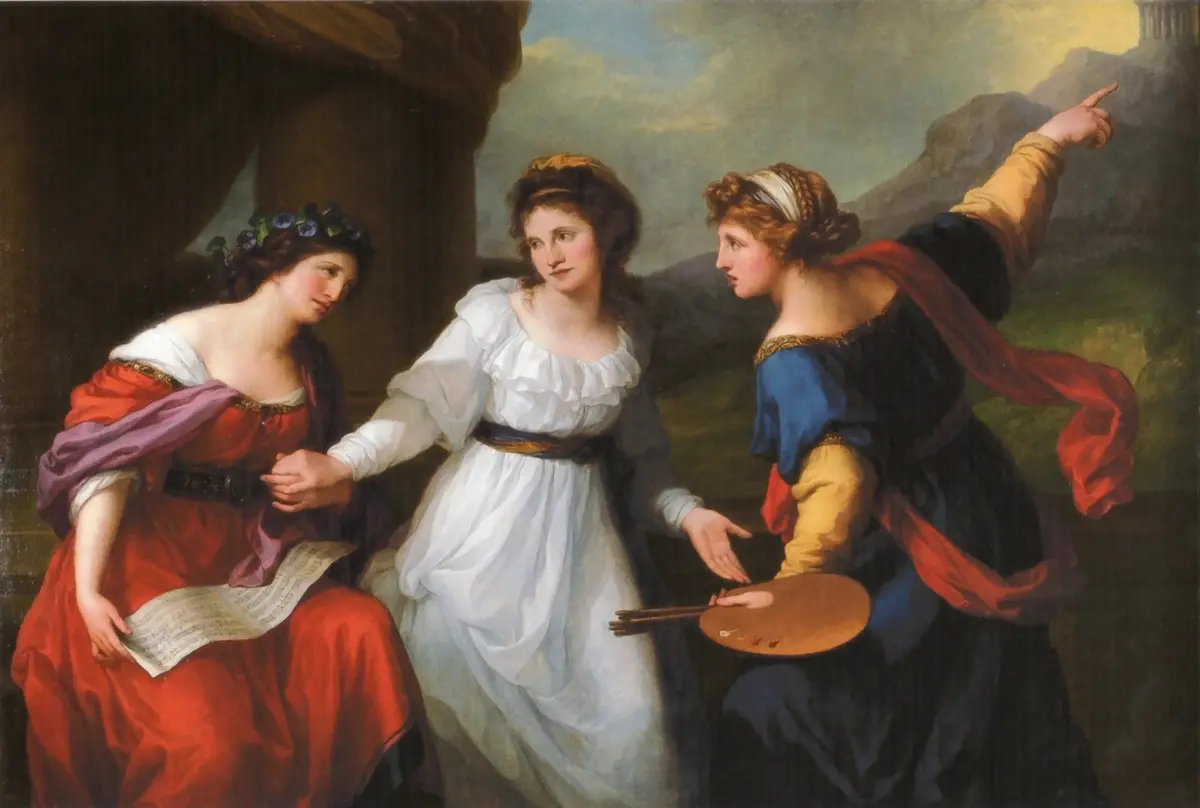
In 18th-century Europe, it was unusual for women to become professional artists. It was even rarer for them to pursue the exalted genre of history painting—depictions of scenes from mythological, literary, religious, and historical sources. Yet the Swiss-born Angelica Kauffmann (1741–1807) did. Not only was she a female painter who specialized in history painting, but she specifically focused on female protagonists.
Celebrated across the continent and one of the most acclaimed artists of her day, Kauffmann was greatly admired for her charm, cultivated mind, and talent by the likes of sculptor Antonio Canova, artist Sir Joshua Reynolds, writer Johann Wolfgang von Goethe, and art historian Johann Joachim Winckelmann (1717–1768). Kauffmann was especially interested in the protagonist Penelope, wife of Odysseus, from Homer’s “Odyssey.” She painted several compositions of the Queen of Ithaca.
London’s Leading Portraitist
Born in Chur, Switzerland to a painter father, Kauffmann was a child prodigy in both art and music. Trained by her father, she decided to pursue fine art. As a young adult, she worked throughout Austria, her birth country, and Italy as her father’s assistant. Her travels, especially in Florence, Rome, Naples, Bologna, Parma, and Venice gave her the opportunity to view masterworks of antiquity and the Renaissance. These historic periods were foundational influences on the 18th-century artistic movement neoclassicism, in which style Kauffmann painted. The young painter’s independent studies were pivotal for her artistic development since women were not allowed to enroll officially in art academies.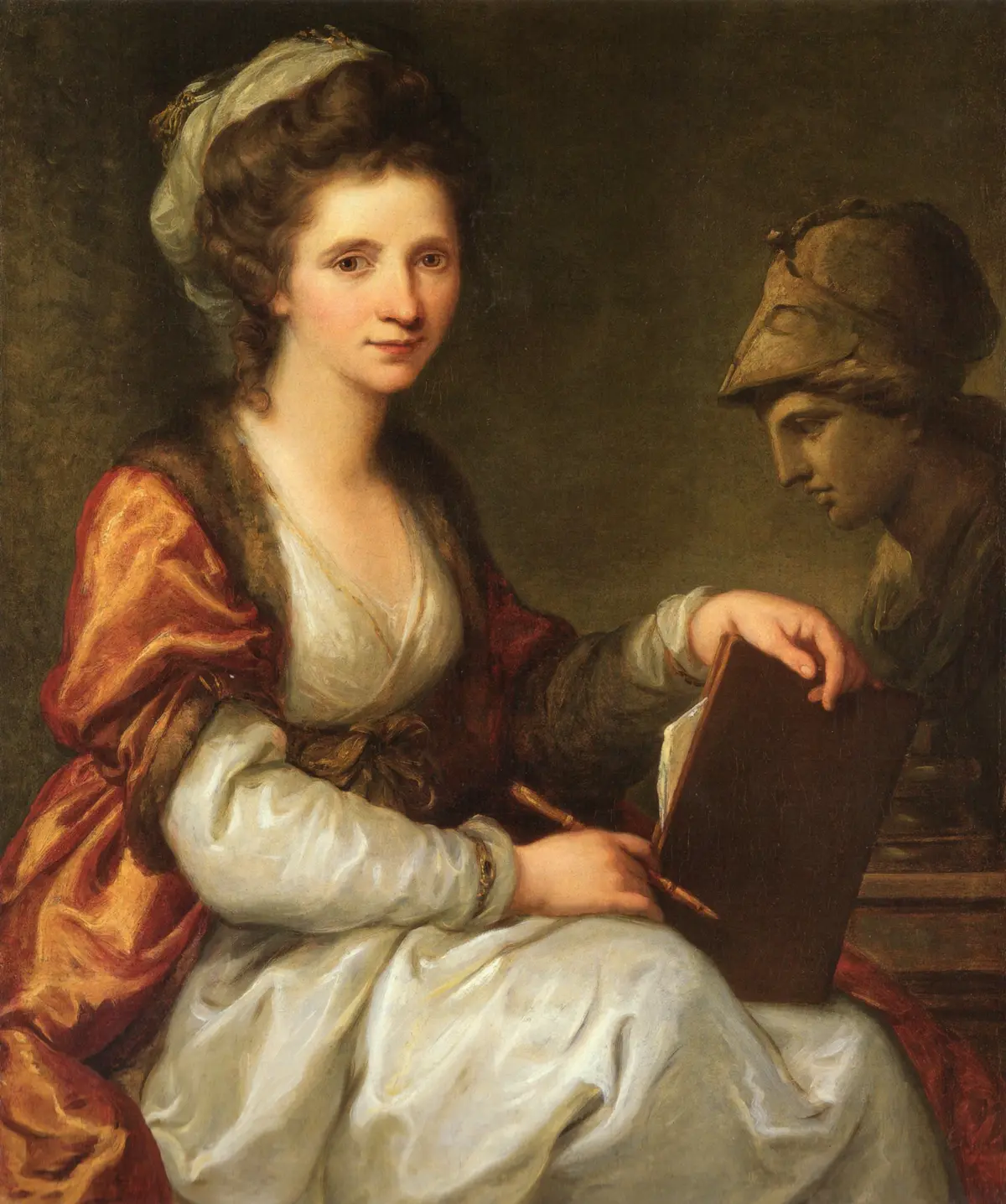
In 1766, Kauffmann arrived in London, which had a thriving art market. She settled in the city and spent 15 years there working as a leading portraitist of high society. Immediately successful, her client list included royals, such as Queen Charlotte, and celebrities, like renowned actor David Garrick. Kauffmann’s practice turned more exclusively to history painting upon the establishment of the Royal Academy in 1768, an institution that promoted the genre.
Of the 36 Founder Members, Kauffmann was one of two women. Indeed, the election of the next woman artist as a full member would not occur again until 1936. Kauffmann exhibited annually at the Royal Academy, with her subject choices demonstrating her erudition.

Portraying Penelope
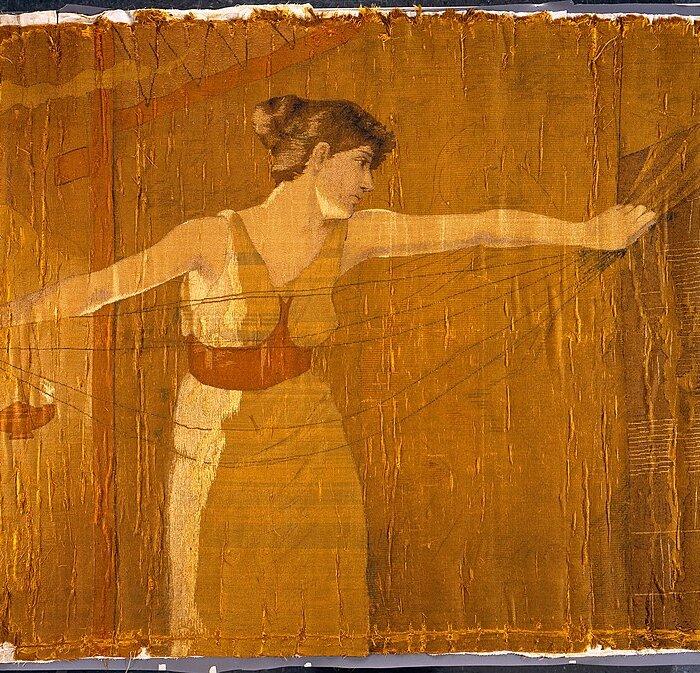
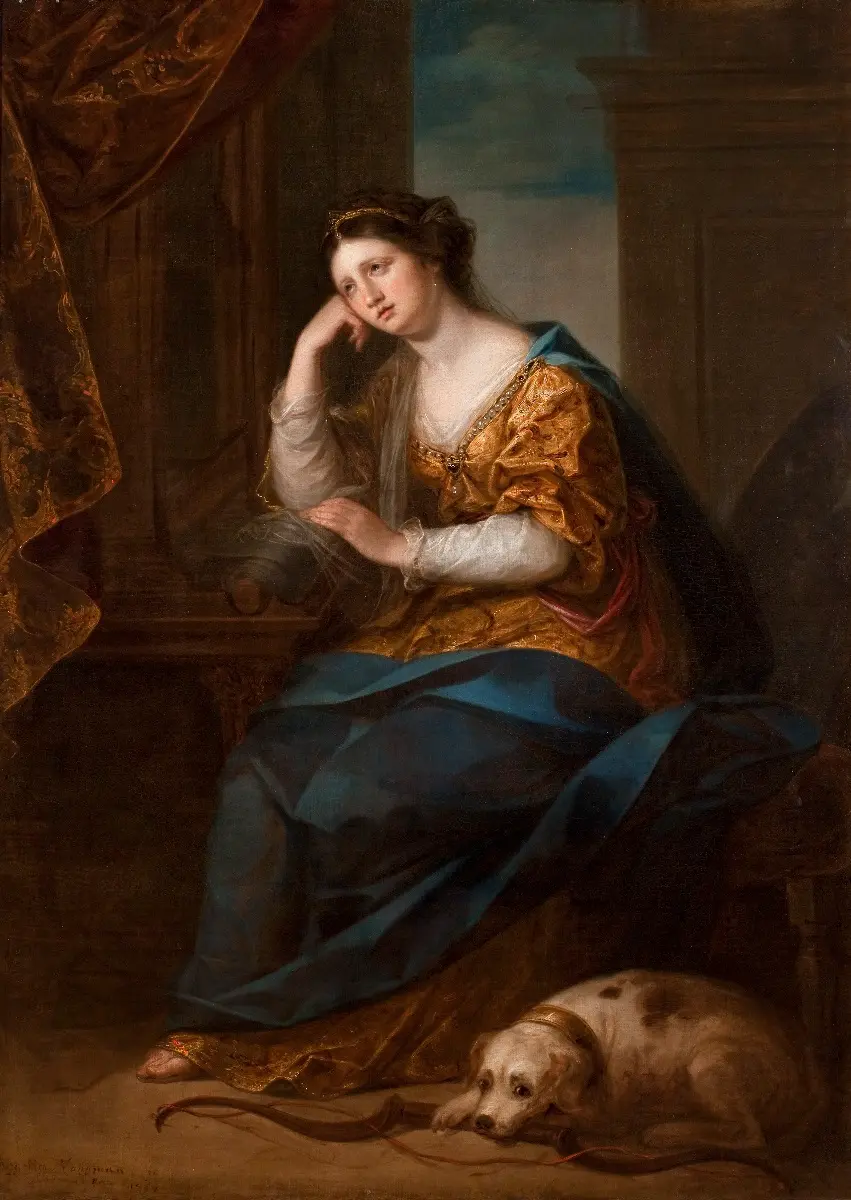
Kauffmann painted the large 1764 canvas “Penelope at Her Loom” while she was still living in Rome. It was likely commissioned by an English aristocrat in Italy on their “Grand Tour.” Dr. Alexandra Loske writes that the work “marked the first time she portrayed Penelope, the wife of Odysseus, the mythical King of Ithaca. It is also her first figure painting of a single woman in an introspective pose.” In this work, Kauffmann depicts Penelope in gold and blue robes leaning on a weaving loom.
In the epic, as Penelope waits for Odysseus (Ulysses in Latin) to return home, she is pursued by more than 100 suitors. To delay remarrying, she tells them that she must first weave a shroud for Odysseus’s father. However, at the end of each day, she secretly unravels her work. The dog at her feet in the painting is a symbol of fidelity. Penelope was upheld as the epitome of a loyal wife.
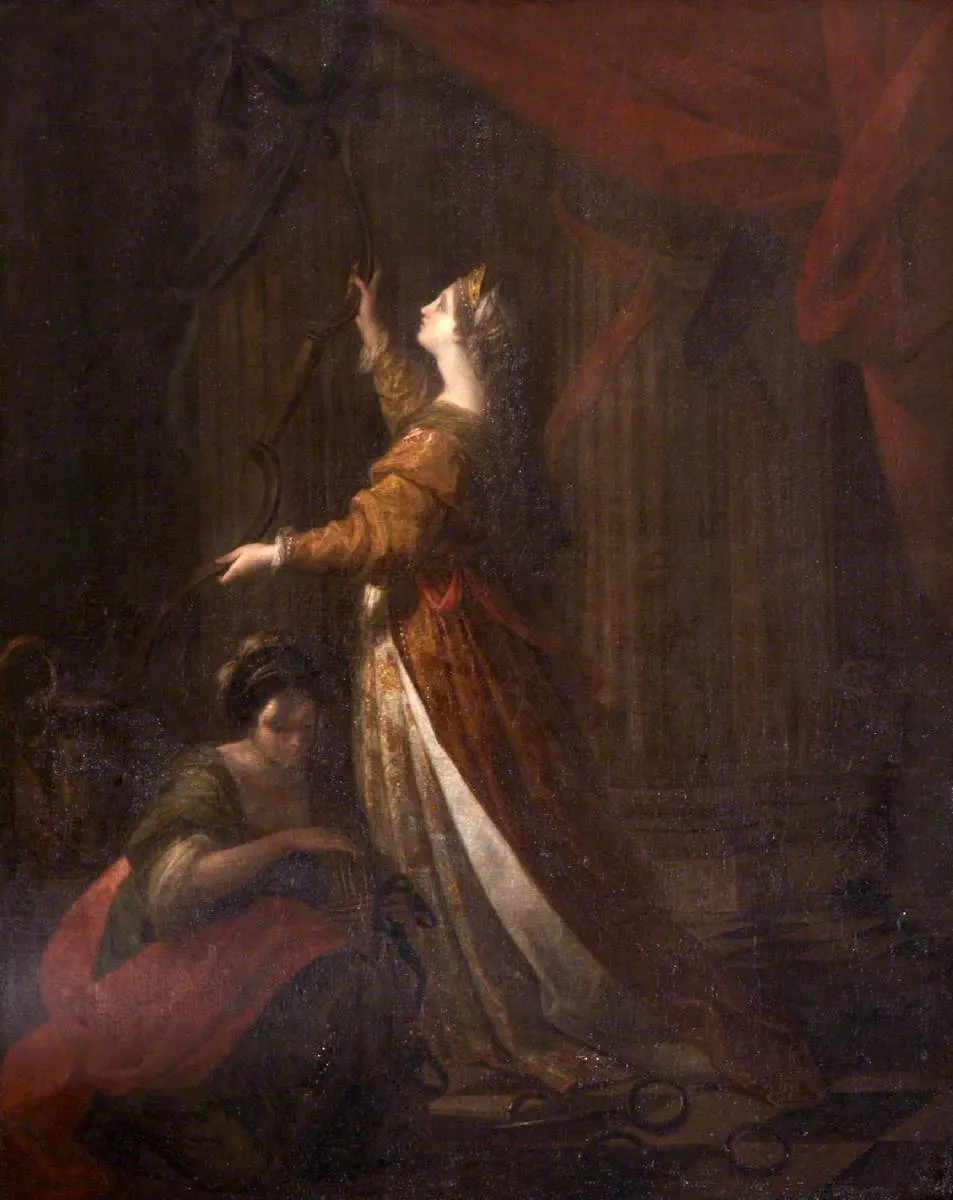
Eventually, Penelope’s cunning scheme was discovered. Her next strategy was to create a contest: She agreed to marry the suitor who could string her husband’s difficult bow and shoot an arrow through 12 axe-rings placed in a row. Kauffmann’s 1768 oil “Penelope Taking Down the Bow of Ulysses” was displayed a year later at the first Royal Academy exhibition. It portrays Penelope preparing for the competition. The painting is now at the National Trust property Saltram in Devon.
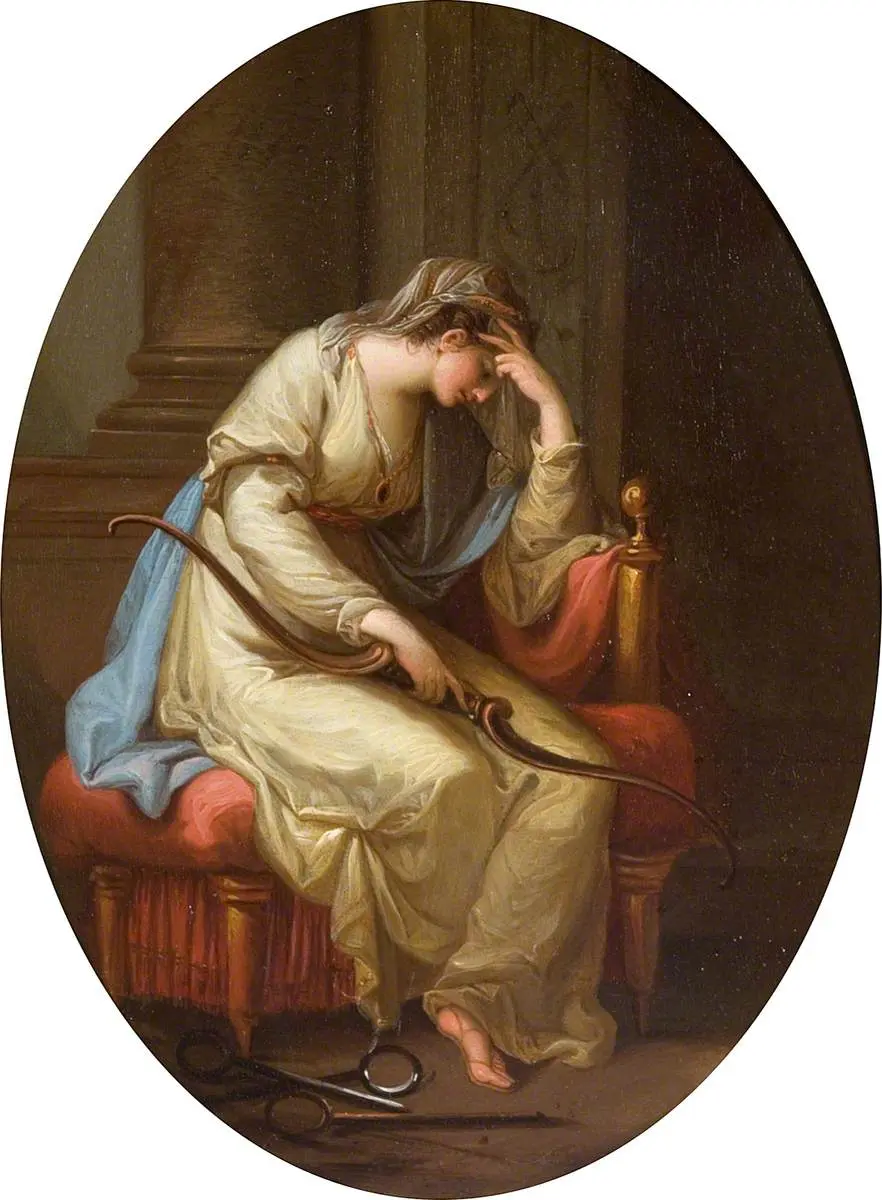
Kauffmann painted the poignant “Penelope Weeping over the Bow of Ulysses” on an oval-shaped piece of copper. Unlike her first Penelope canvas, this is a small-scale picture. In the artist’s lifetime, her works done on copper ovals were much sought-after.
One of Kauffmann’s versions of “Penelope Awakened by Euryclea With the News of Ulysses’ Return” was sold at Christie’s in 2023. This circa-1773 canvas was originally owned by Henry Hoare II and hung in his magnificent neoclassical country estate Stourhead in Wiltshire. Hoare was a prominent collector and highly esteemed Kaufmann’s art. In the 1880s, a descendant sold the painting along with other treasures housed at Stourhead. The estate is now part of the National Trust, which bought back the painting at the Christie’s auction and returned it to the house exactly 140 years after its departure.
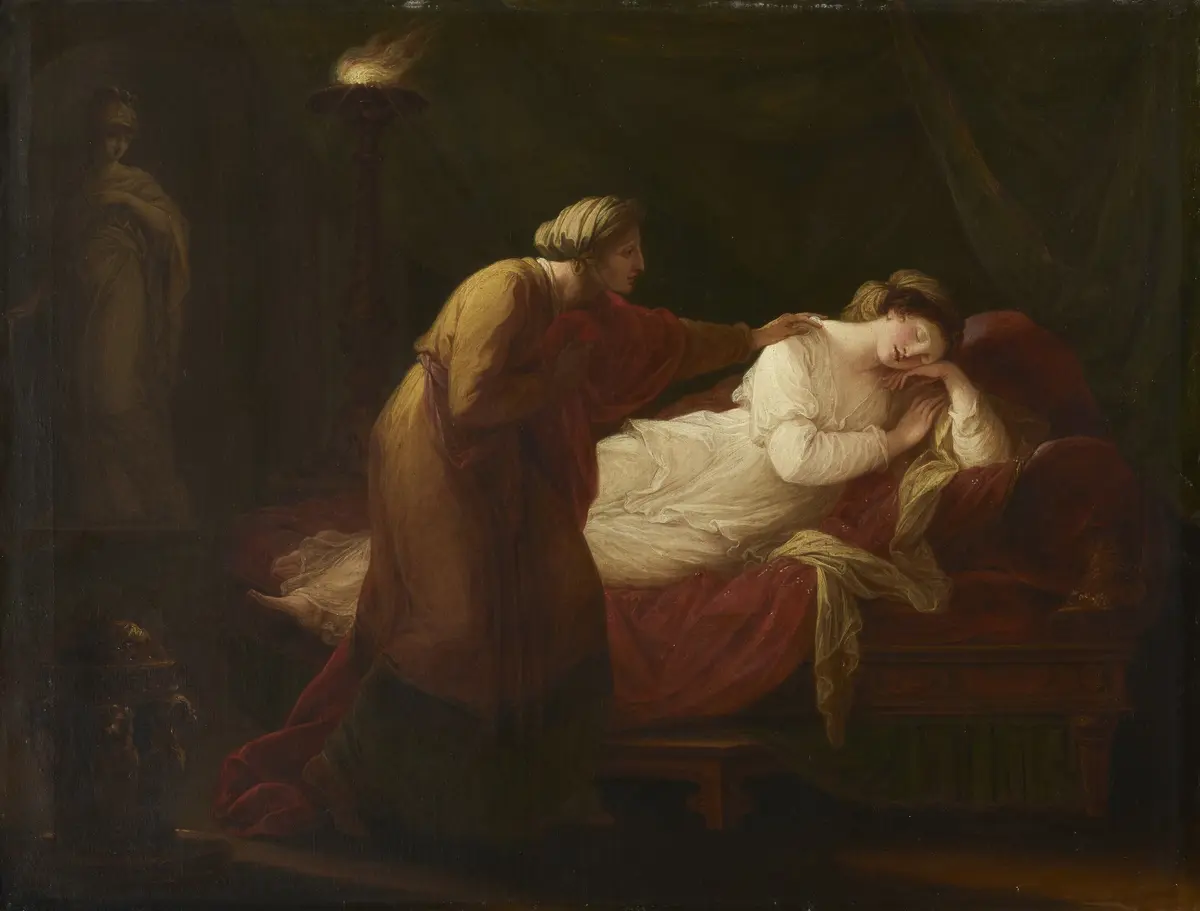
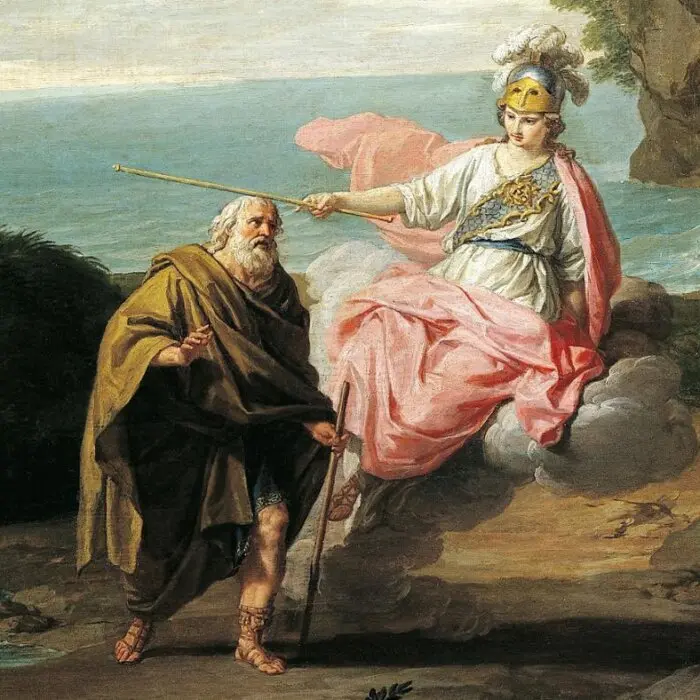
In this scene, Penelope is awoken to the news that her husband has returned home after 20 years away. The setting of this fine painting is her bedroom. It is lit by a flaming torch and overseen by a statue of Minerva (the Roman name for the ancient Greek goddess Athena). Minerva also figures in a Kauffmann self-portrait.
In 1781, Kauffmann married an Italian painter and returned to Italy, living the rest of her life in Rome. Her career’s prosperous trajectory continued with international clientele requesting portraits and history paintings. In addition, she ran a salon that attracted distinguished intellectuals, continued to exhibit at the Royal Academy, and created consummate self-portraits. Her fame was so great that upon her death her funeral was directed by Canova, who based it on the funeral of Renaissance artist Raphael.
By highlighting female protagonists, as exemplified in her Penelope series that showcases the queen’s strength of character, Kauffmann elevated their narratives into uplifting tales of honor.