NR | 1h 30m | Drama | 1952
Marching bands once led armies into battle centuries ago. But as navies and air forces grew, many bands outgrew the need of telling infantry or cavalry units when to advance, retreat, and such.
As traditional warfare was eclipsed by other tactics, bands came to symbolize, more to civilians than soldiers, ideas of discipline, sacrifice, honor, team spirit, and freedom. It’s why they and their trusty bandmasters aren’t all that incongruous at modern-day ball games.
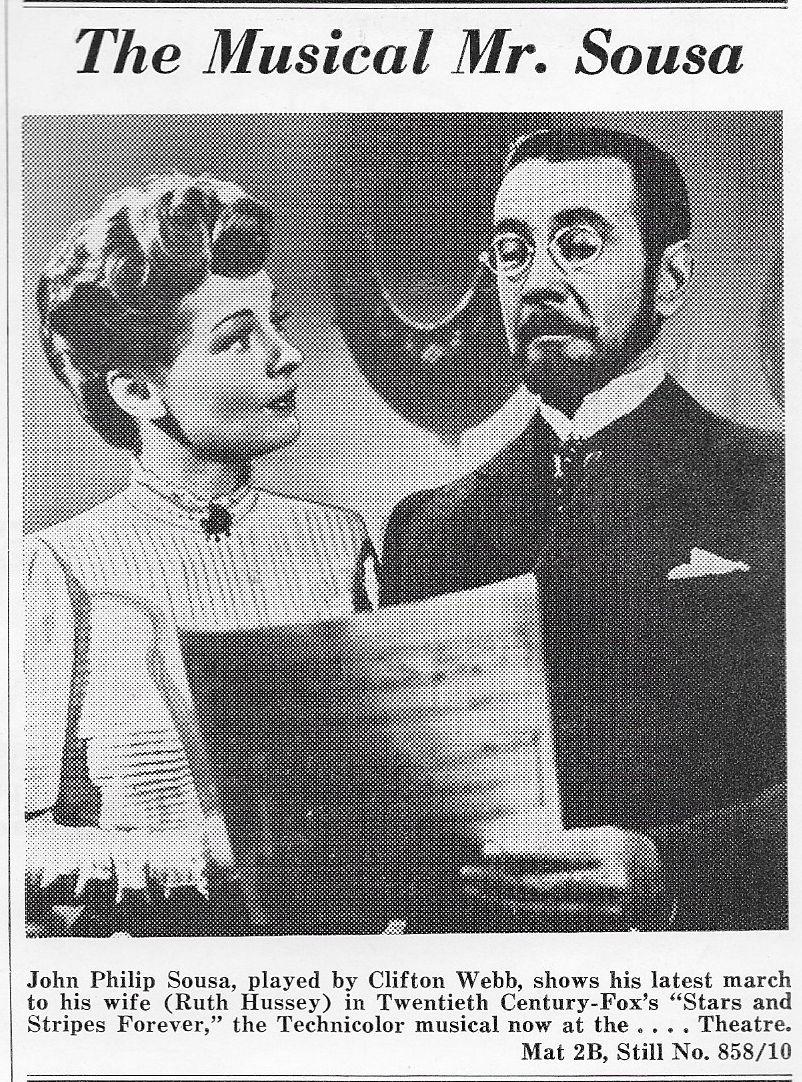
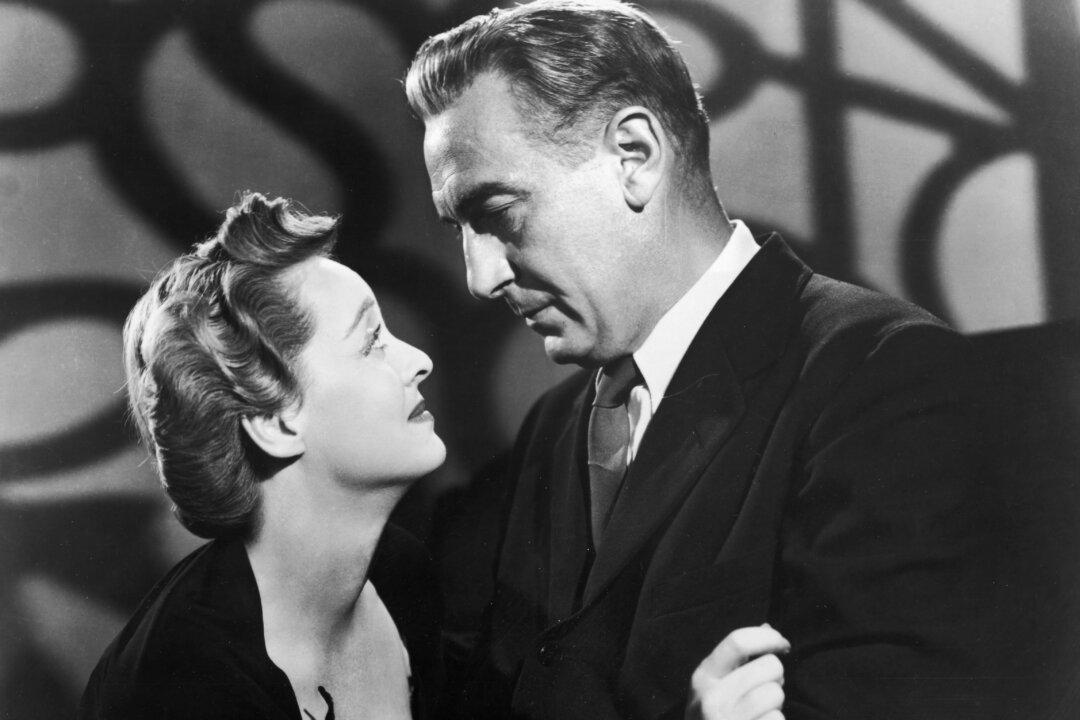
The smiling Jennie (Ruth Hussey) has put up with the idiosyncrasies of celebrated U.S. Marine Corps composer-conductor Sousa (Clifton Webb), as military wives have done for years.
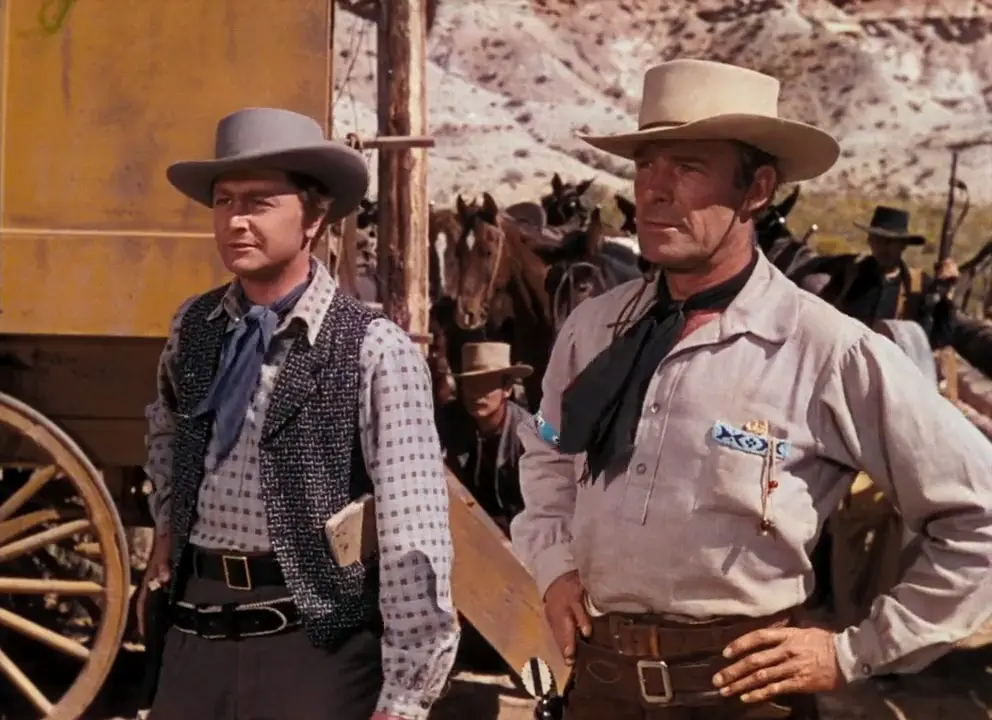
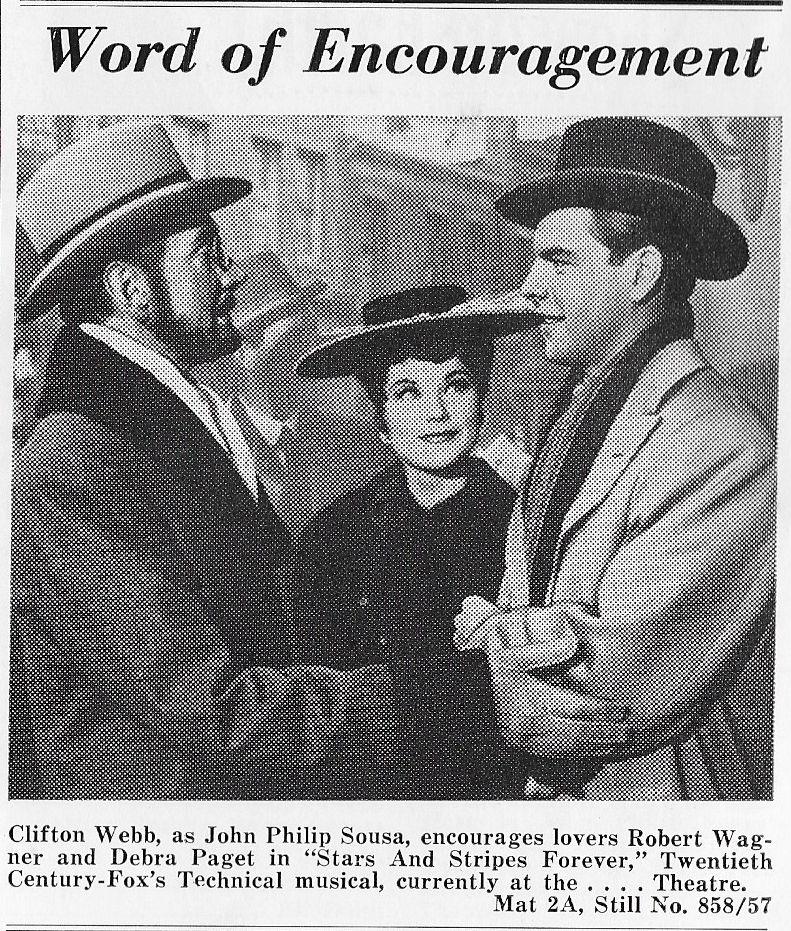
Then Sousa quits the corps. He needs more money, not more military honors, to support Jennie and their three children. Sousa befriends young admirer and fellow marine Willie Little (Robert Wagner) and his sweetheart, the nightclub singer-dancer Lillie Becker (Debra Paget). Little also quits the corps. He’s designed a new tuba-like instrument, christened it the “Sousaphone,” and sets the stage for Sousa’s next phase.
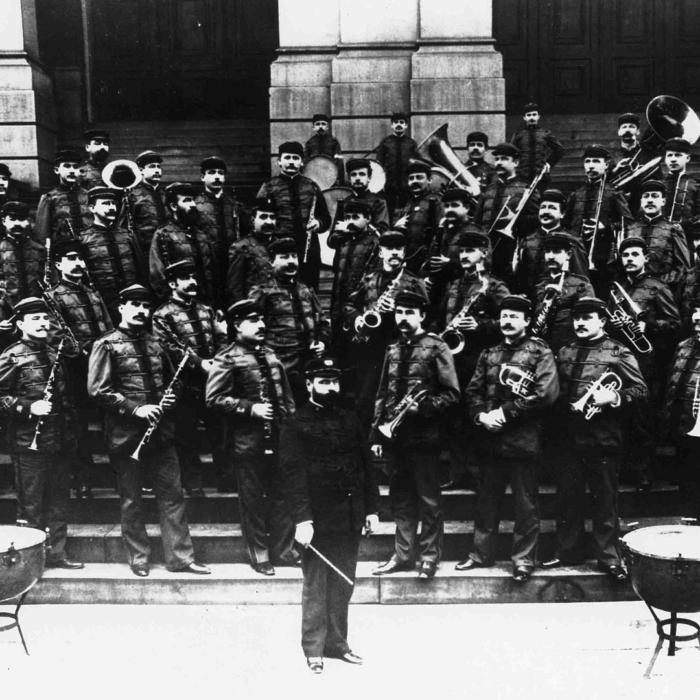
For the first time, Sousa marches out of step with the military and more in step with his vision of leading a civilian band. He sets his own incredibly high standards, demanding “military discipline” of his musicians. Fun-loving Willie, with Lillie in tow, has some trouble coping with that code. Still, the young couple ends up touring with the band.
Sousa composes and conducts waltzes, operas, and the like for mainstream rather than military-only audiences. Soon he and his band are touring the world and are a global hit.
Then, the Spanish-American War rouses him. He enlists. But typhoid fever holds him back. Forced to rest and recover, but brimming with patriotism, Sousa feels his military roots calling. Restless, he composes what would go on to become America’s national march “Stars and Stripes Forever,” dedicated to, who else—soldiers.
Webb, an accomplished singer-dancer, knew a thing or two about musical timing. Here, often reminiscent of an impish Rex Harrison, he wields that sense of timing with a confidence that enables Koster’s close-ups of Sousa’s “bandsmanship.”
Bond With the Band
Sousa wields his swordlike baton as if it’s a metaphor for single-mindedness, for precision, for purpose. He demands that his beloved band scrupulously respects the beat and tempo he sets. He asks them to adhere to an inner code that embraces individuality, but prioritizes patriotic duty above it.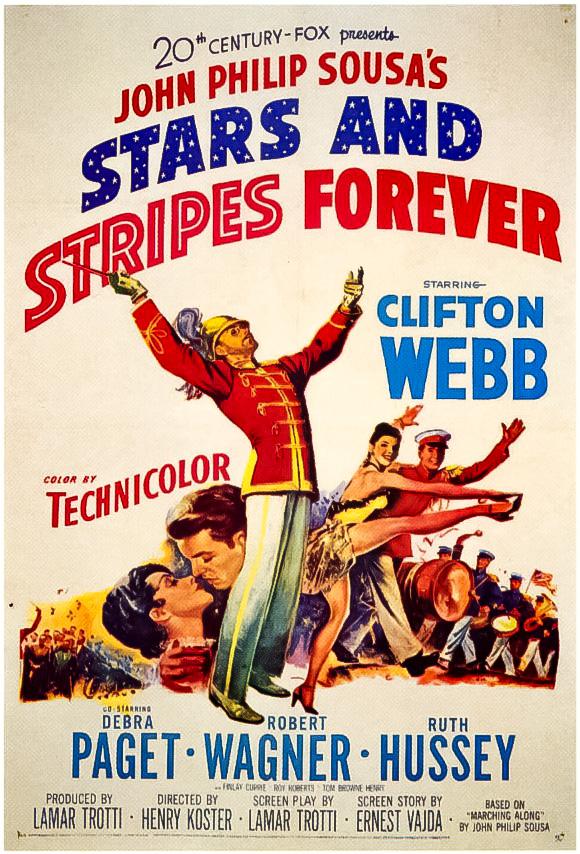
That is Koster, hinting at the secret of Sousa’s staying power. Jennie is his muse, his home-centered symbol of freedom, inspiration, and hope. She is his Lady Liberty, if you will—silent but sharing those values anyway. At one point Sousa hands the baton to a colleague so he can hop offstage to dance the two-step with Jennie.
Perhaps it’s preposterous to propose that the fictional James Bond’s immortal introductory line is down more to artistic inspiration than originality. Ian Fleming published his first Bond novel a year after Koster’s film. Here, the American Sousa introduces himself as the British Bond famously later would: “The name’s Sousa … John Philip Sousa.” Both men served in their respective navies. Sousa retired as a lieutenant commander. Bond was a commander.