Winter is a magical season, but it’s all too easy to simply enjoy that glittering blanket of snowy beauty through a window tucked inside a cozy home. That stops now!
Dress the family in light layers, as the body will warm up during activities, and getting sweaty will actually make one feel colder. Put on some sunscreen, as the winter sun can do damage, particularly as it reflects off the snow. Then pull on warm socks and boots, gloves, and a scarf or neck warmer, and embrace this seasonal wonderland. Bring a water bottle, as it’s easy to get dehydrated, because one doesn’t feel as thirsty in the cold—or at least hydrate before and after activity.
Quick Games
Got some pristine snow? Draw a tic-tac-toe board on it to amuse everyone from toddlers to competitive adults. Want to up the stakes? Set up several boards for an elimination tournament pitting various players against each other until an overall winner is declared.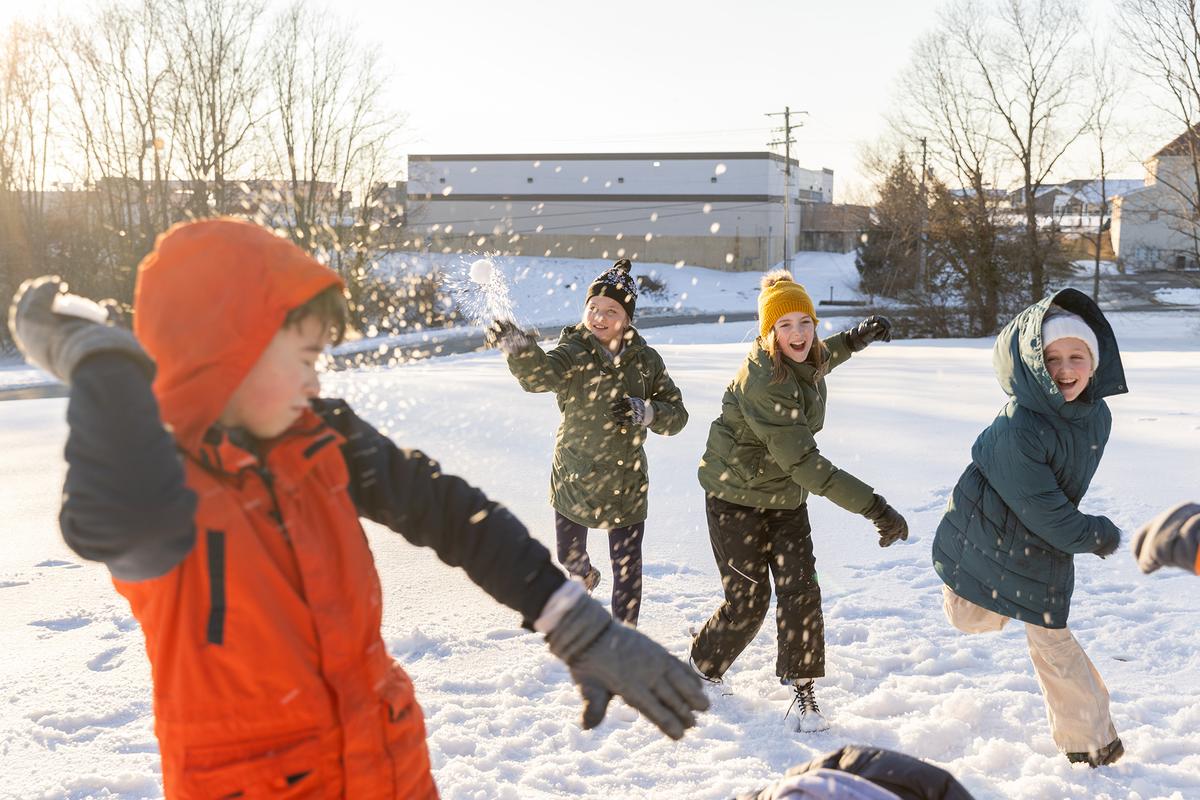
Snow People
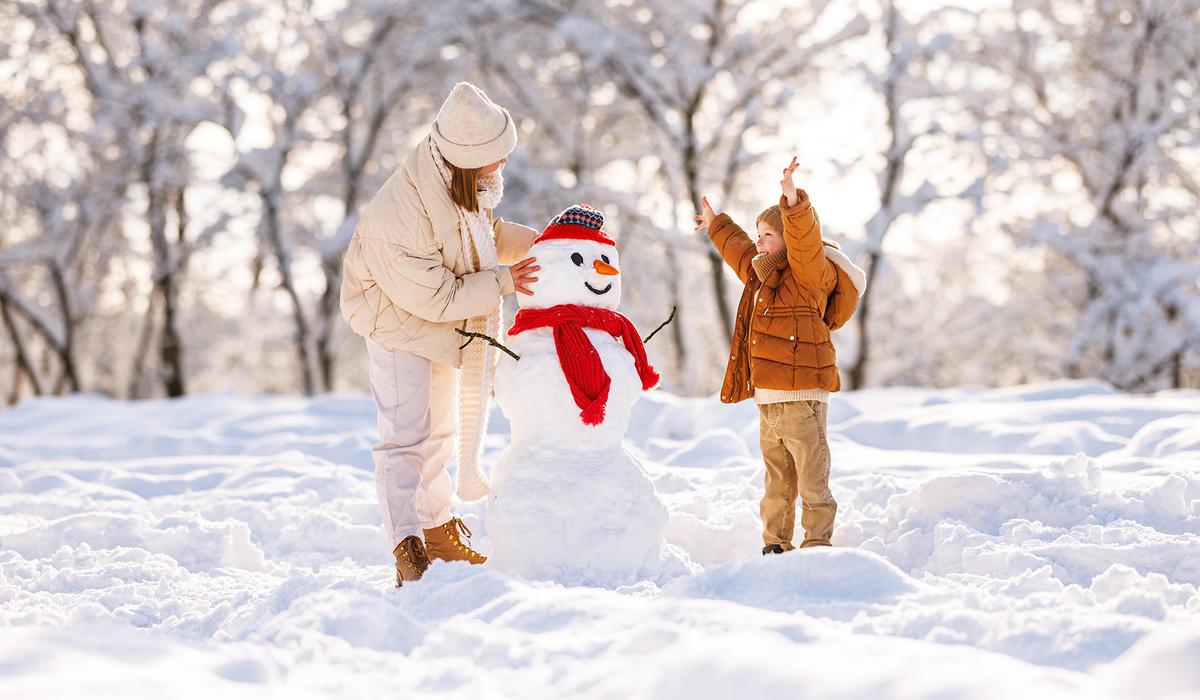
Building a snowman or a snow family is a rite of childhood passage that every child—or an adult’s inner child—should experience at least once. To make the event even more notable, skip the store-bought snowman accessory kit and make them from scratch. The nose can be an actual carrot; one made out of clay, baked, and painted orange (or use orange clay); or made out of a heavy felt, stuffing or fill, and a wire so it holds the shape. Don’t sew? Use fabric glue.The eyes, smiling mouth, and buttons can all be made from coal (charcoal briquettes), leftover buttons of various sizes, pieces of felt, or decorative rocks with pebbles for the mouth. The scarf can be an old scarf lying around or a long piece of leftover fleecy material or felt. The hat can be constructed of felt (patterns online), simply use an old knit hat, or give him a team cap to show loyalty.

Snowpack Structures
Next on the evolutionary scale, after mastering snowman construction, is a snow fort, castle, or igloo. This can be set up for epic snowball fights or used as a playhouse for kids. It can be as simple or complex as desired. It all starts by selecting a level site and walking the perimeter to mark the walls. Be sure to step inside to make sure there’s enough room.Ice Ornaments
Decorating the indoor Christmas tree is a time-honored tradition; consider the outdoor trees as well. Start with a mold. Muffin tins are very popular, but a lot of other kitchen items will work as well: Pyrex bowls, baker’s pie and loaf pans, tin pie pans, plastic plates with a lip, ice cube trays, and even Bundt cake pans. Fill the mold with water and natural items (pine cones, pine needles, leaves, or berries), cut a pattern in felt and lay it in the water, or swirl around some food dye to make an eye-catching suncatcher. Be sure to add a loop of string or twine so the ornament can be hung. Set them out in below-freezing temperatures to form. If they don’t want to come out of the mold, run some warm water (carefully!) over the bottom of the pan to release them.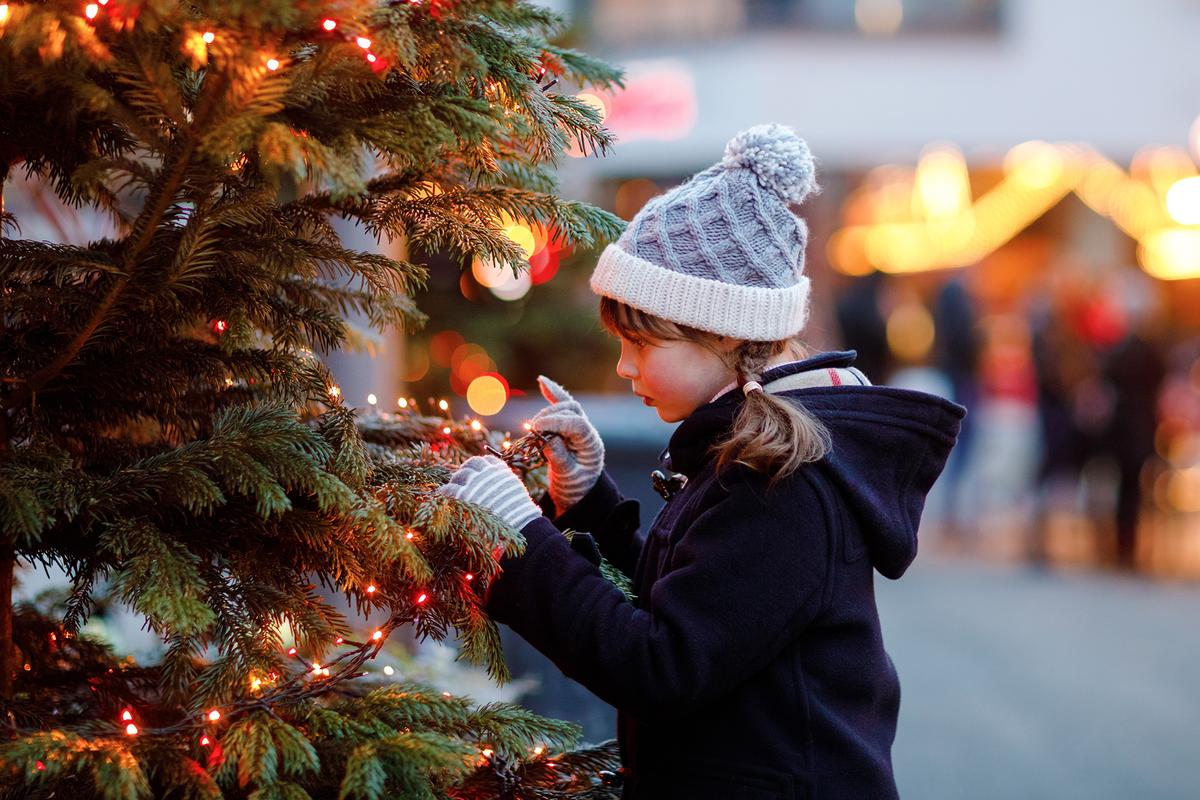
Skaters’ Paradise
Budding figure skaters, hockey players, and kids in general won’t want to come back inside if they have their own backyard rink. The first step is to find (or clear) a flat, level surface with no sharp objects that can pierce the ice rink liner (available online; get some repair tape, too, just to be safe). Next, frame the area with 10- or 12-foot two-by-six ground-contact rated lumber (two-by-eight and two-by-10 will provide more side support but are more expensive), and attach the corners with sturdy exterior-rated angle brackets. Lay out the tarp, draping it over the frame, and fill it with water. It should freeze fully in two to three days if the temperatures are right.For those whose weather doesn’t get cold enough, there are skateable synthetic ice tiles that can be assembled to form an indoor/outdoor rink as large as space allows.