For much of the late 19th century, Sir Lawrence Alma-Tadema stood among the most admired painters in Europe. Collectors competed for his canvases, critics praised his technical brilliance, and wealthy patrons paid extraordinary sums for visions of an idealized classical past. His paintings of ancient Greece and Rome, filled with gleaming marble terraces, brilliant Mediterranean light, and carefully observed details of everyday life, defined Victorian classicism for a generation.
Within decades of his death, however, Alma-Tadema’s reputation had collapsed, as changing artistic taste left little room for his style of painting. For much of the 20th century, he remained a marginal figure in art history, remembered more as a curiosity than as one of the era’s leading painters.
The Making of a Classicist
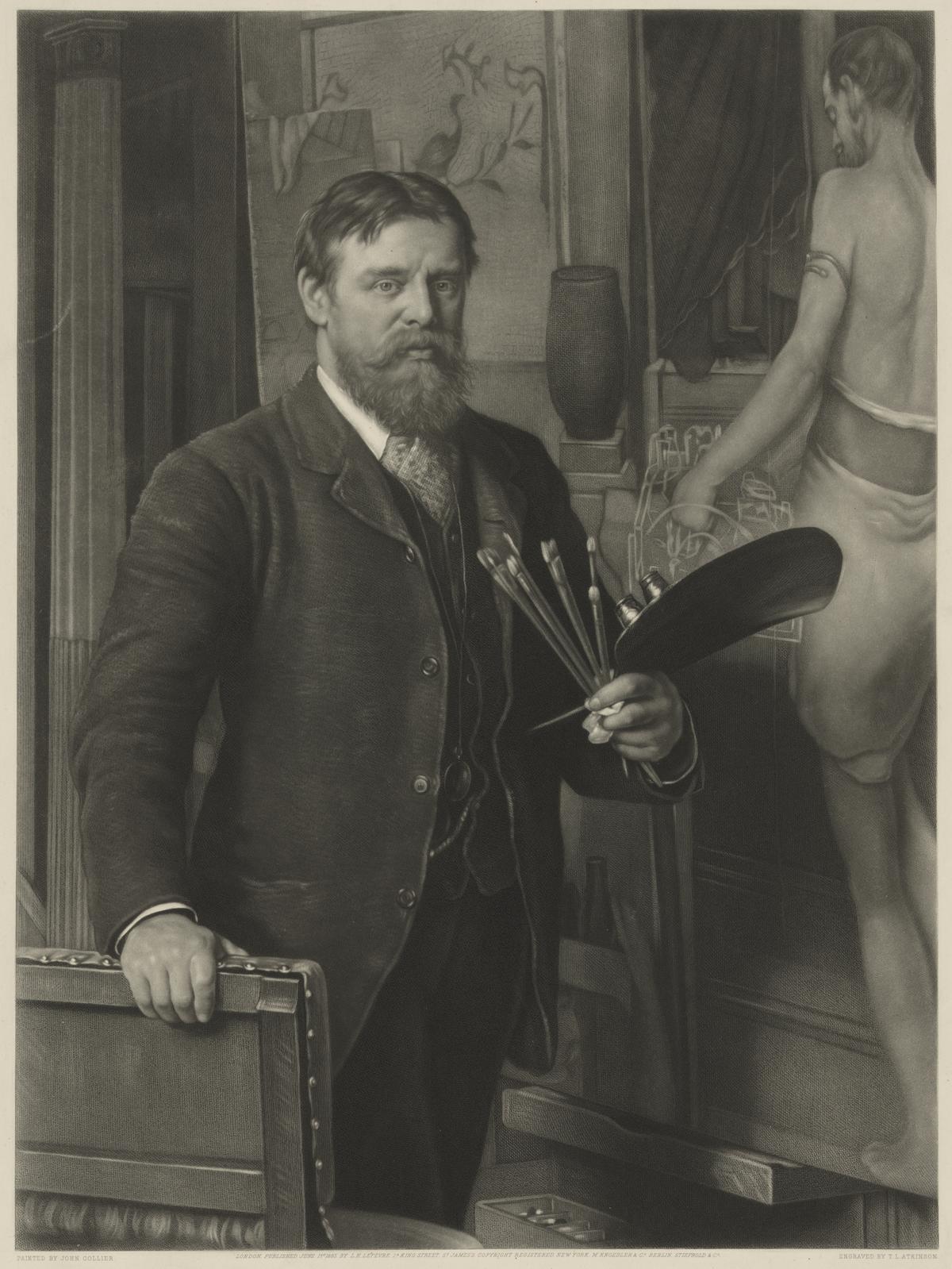
Born Lourens Alma Tadema in 1836 in the rural Netherlands, he showed artistic talent from an early age. At 16, he enrolled at the Royal Academy of Fine Arts in Antwerp, where he apprenticed under two Belgian painters. In 1855, just before turning 20, he left the academy to work as an assistant to the painter and professor Lodewijk Jan de Taeye.
De Taeye’s courses on history, especially those covering Merovingian subjects, left a lasting impression on Alma Tadema. The Merovingians were the ruling family of the Franks, whose homeland centered on the Lower Rhine and eventually expanded into what is now France, Belgium, the Netherlands, Luxembourg, and western Germany. To 19th-century artists, Merovingian history held a romantic appeal, rich with exotic culture, political intrigue, and legend.
In 1863, when he was 27, Alma-Tadema married Marie-Pauline Gressin. During their honeymoon in Italy, they visited Pompeii, where Alma-Tadema photographed the city’s excavated interiors, sketched domestic architecture, and carefully recorded measurements of marble surfaces and painted decorative details. In Italy, he also assembled a collection of textiles, documenting how different fabrics are draped and folded. This research shaped his later depictions of Roman and Egyptian scenes, steering his focus away from military triumphs and mythological spectacles to the everyday life of the ancient world.
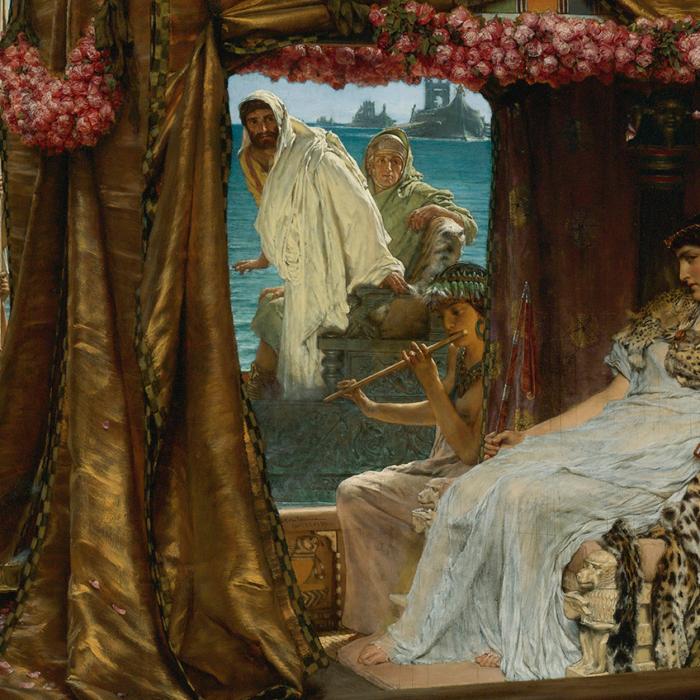
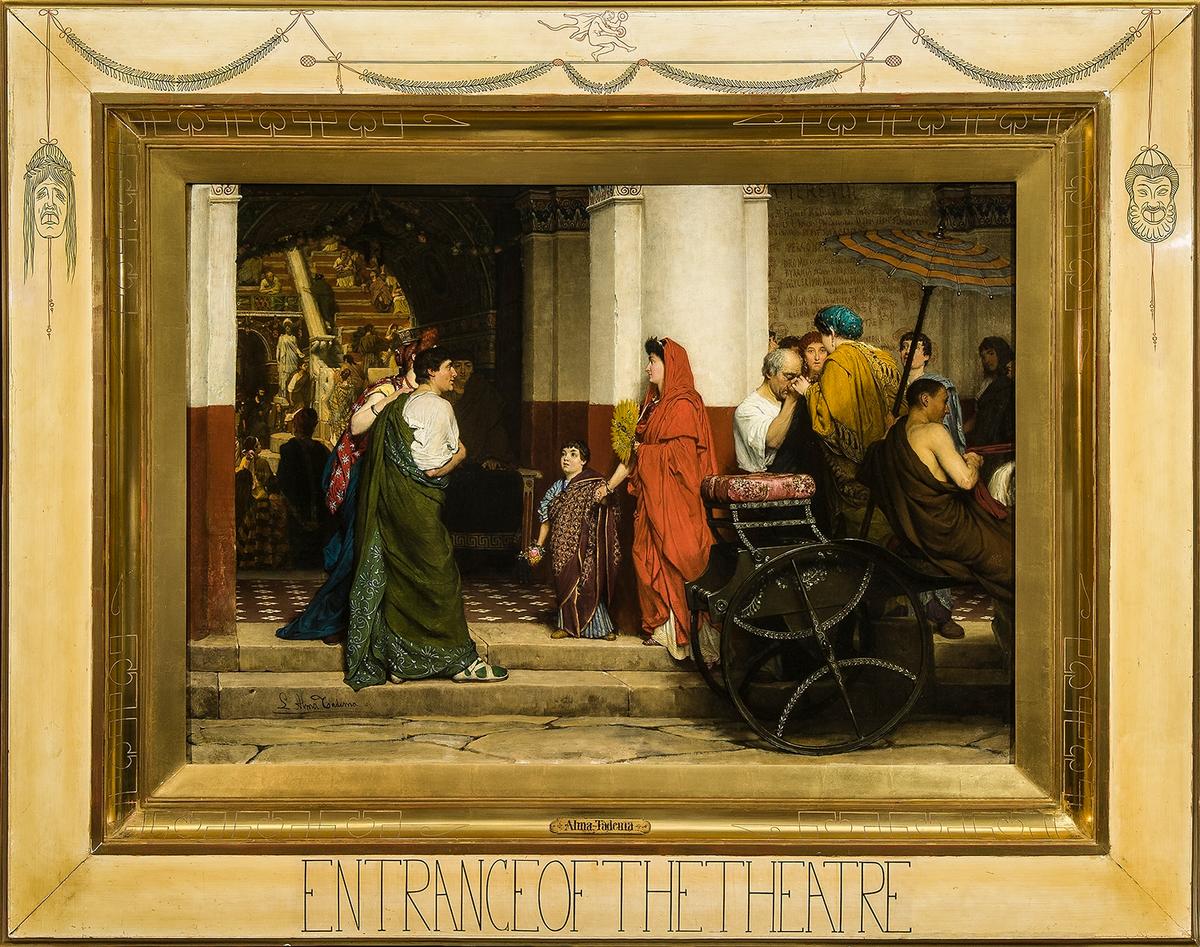
The couple had three children, and Marie-Pauline appears as a model in several of his paintings, most notably “Entrance to a Roman Theater.” Their marriage was cut short, however, when she died suddenly of smallpox in 1869.
A year later, the Franco-Prussian War broke out, and Alma-Tadema relocated his children to London. There, he quickly formed friendships with several leading Pre-Raphaelite artists, including Edward Burne-Jones and Ford Madox Brown. He fell in love with Madox Brown’s student, Laura Theresa Epps, and the couple married in July 1871.
Archaeology, Marble, and Light
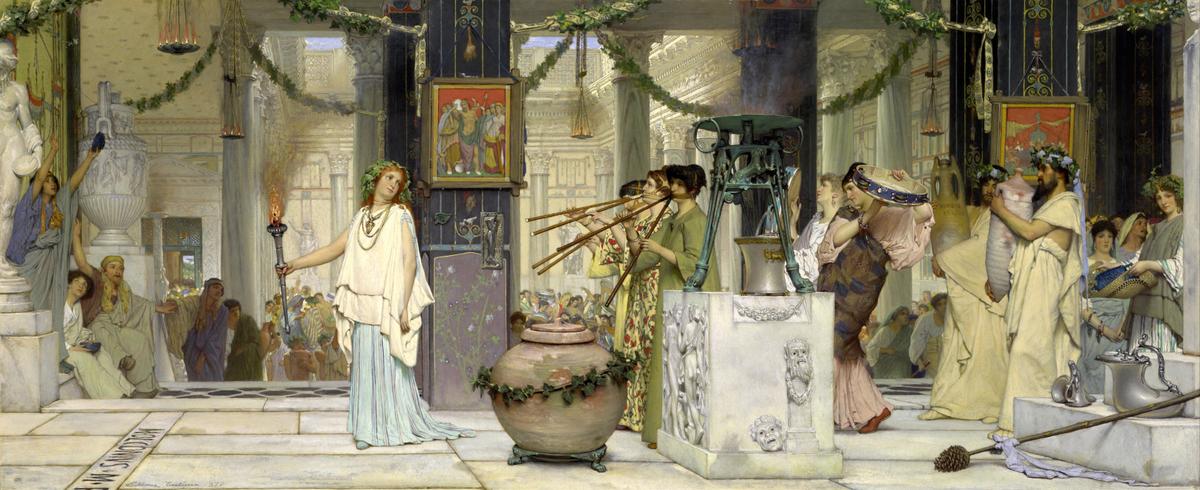
Throughout his career, Alma-Tadema maintained an extensive visual archive that informed nearly every canvas. Everything from marble patterns and furniture to textiles and floral arrangements was studied carefully before it appeared in his paintings.
That attention to material surfaces became one of Alma-Tadema’s defining strengths. His stone walls and terraces possess weight, translucency, and the soft variations produced by reflected light. White marble rarely appears simply white. Instead, it carries faint blues, warm creams, delicate pinks, and shifting shadows that give the illusion of polished stone warmed by Mediterranean sunlight.
Whether depicting fountains, harbors, or the open sea, Alma-Tadema painted water with transparent reflections that played naturally against the surrounding architecture. He brought the same patient attention to silk garments, bronze vessels, flower petals, and polished skin, so that every texture occupies its own visual register while remaining unified within the composition.
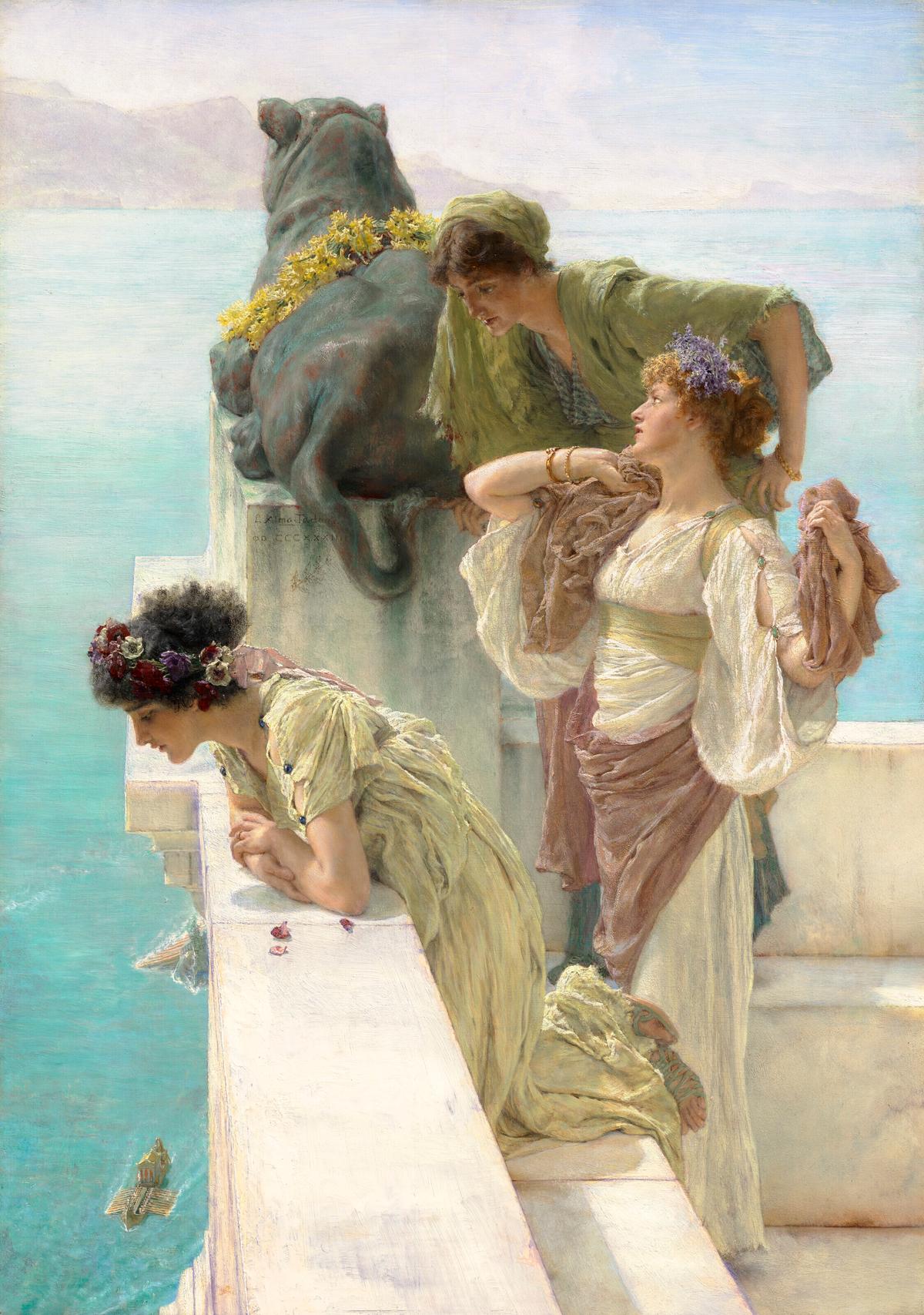
Although many of his works depict moments of leisure, they are rarely static. Figures arrange flowers, listen to musicians, or pause in contemplation overlooking the sea. Narrative frequently remains secondary to atmosphere. Alma-Tadema invited viewers to imagine daily existence in the classical world rather than witness a single decisive historical event.
This combination of scholarship and sensory appeal made his paintings enormously appealing beyond the gallery. Early Hollywood filmmakers drew directly from his work when conjuring cinematic visions of Greece and Rome: Cecil B. DeMille’s “The Ten Commandments” (1956) used Alma-Tadema’s gleaming Mediterranean marble, vibrant blue skies, and Greco-Roman architecture as direct blueprints for its elaborate sets. Alma-Tadema’s paintings also circulated widely through engravings and illustrated publications, reaching audiences far beyond elite collectors.

A Widening Artistic Practice
Throughout the 1880s and 1890s, Alma-Tadema received numerous honors, including the Medal of Honor at the 1889 Paris Exposition Universelle, honorary membership in the Oxford University Dramatic Society in 1890, and the Great Gold Medal at the 1897 International Fine Arts Exposition in Brussels. In 1899, he was knighted in England, becoming only the eighth artist from continental Europe to receive the distinction. He also helped organize the British section of the 1900 Exposition Universelle in Paris, where two of his paintings earned the Grand Prix Diploma, and his work was prominently exhibited at the 1904 St. Louis World’s Fair.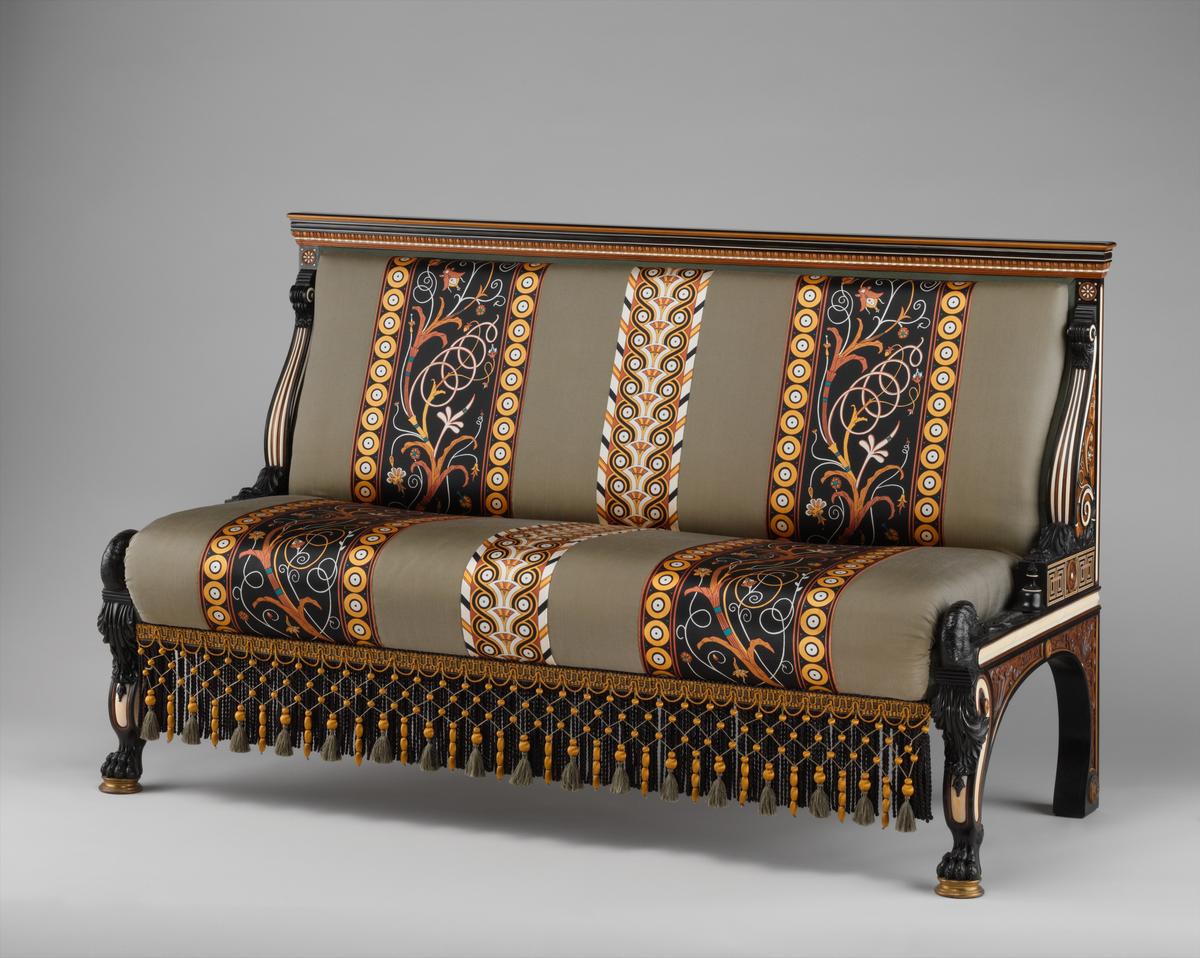
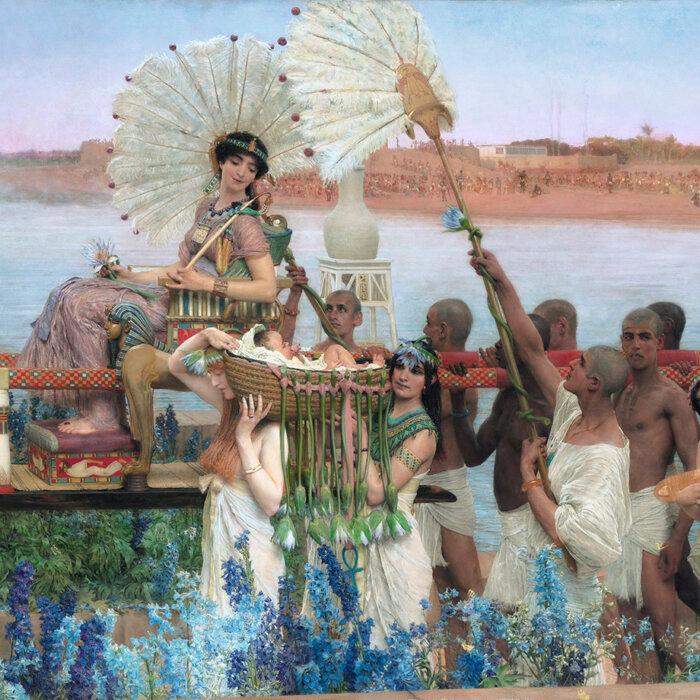
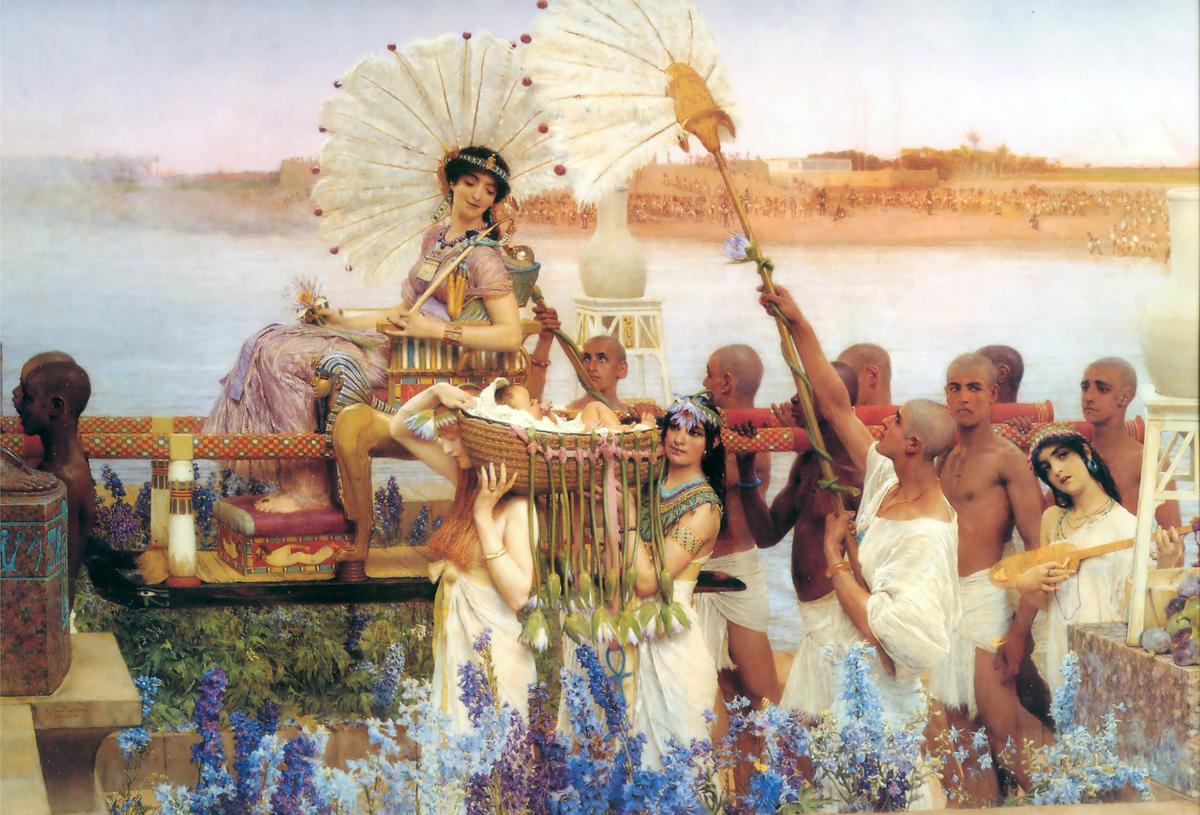
During this time, Alma-Tadema expanded beyond painting into theater design, creating costumes and sets, and interior design, producing frames, textiles, and furniture, including the silkscreened settee now held at the Met Museum. These interests often shaped his paintings, which frequently featured furnishings and costumes designed by him. Throughout these years, he continued to produce works that reflected the refined classical aesthetic for which he was best known, such as “The Finding of Moses.”
From Neglect to Renewed Acclaim
As modernism gained prominence in the early 20th century, critics rejected the academic traditions of Victorian art. The qualities that had defined Alma-Tadema’s success, including his polished technique, archaeological precision, and idealized classical subjects, came to be seen as overly conservative. By the mid-20th century, his paintings were rarely exhibited, and his work had largely disappeared from mainstream art historical narratives.Interest in Alma-Tadema revived in the late 20th century as scholars reassessed Victorian academic painting on its own merits. Exhibitions, conservation projects, and new research highlighted both the artistry of his paintings and their engagement with contemporary archaeological discoveries. Rather than dismissing his work as nostalgic fantasy, historians increasingly recognized it as a sophisticated interpretation of the ancient Mediterranean, grounded in careful research and informed by the expanding archaeological knowledge of his era.
Today, Alma-Tadema is regarded as one of the leading academic painters of the 19th century. His career shows how artistic reputations shift with changing critical values, even as exceptional craftsmanship and historical scholarship continue to hold lasting significance.