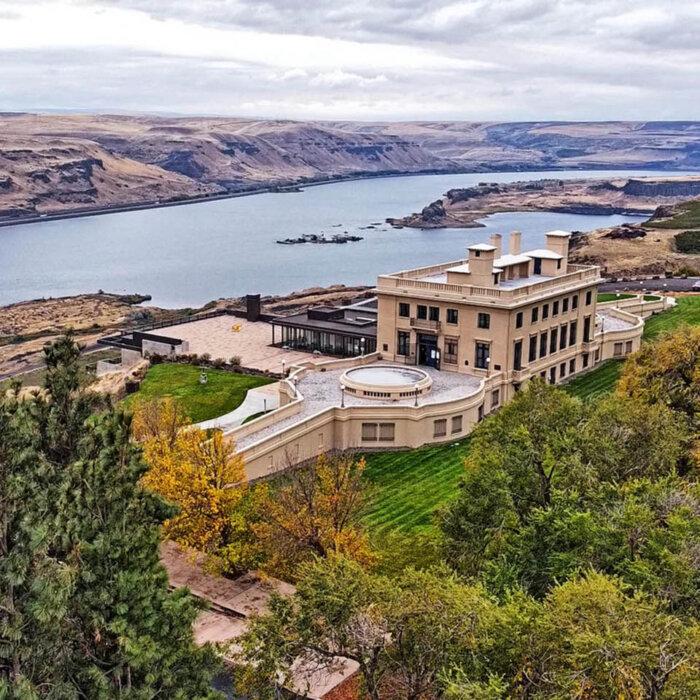
While modernism transformed American art in the 20th century, a handful of painters remained committed to the techniques and ideals of academic realism. A selection of their works is now on view at Maryhill Museum of Art, where “American Classical Realism” runs through Nov. 15, 2026.
The exhibition features roughly 40 paintings, drawn primarily from the museum’s own collection with select loans. It traces four generations of artists who sustained this tradition long after abstraction came to dominate American art.
The Keeper of Secrets
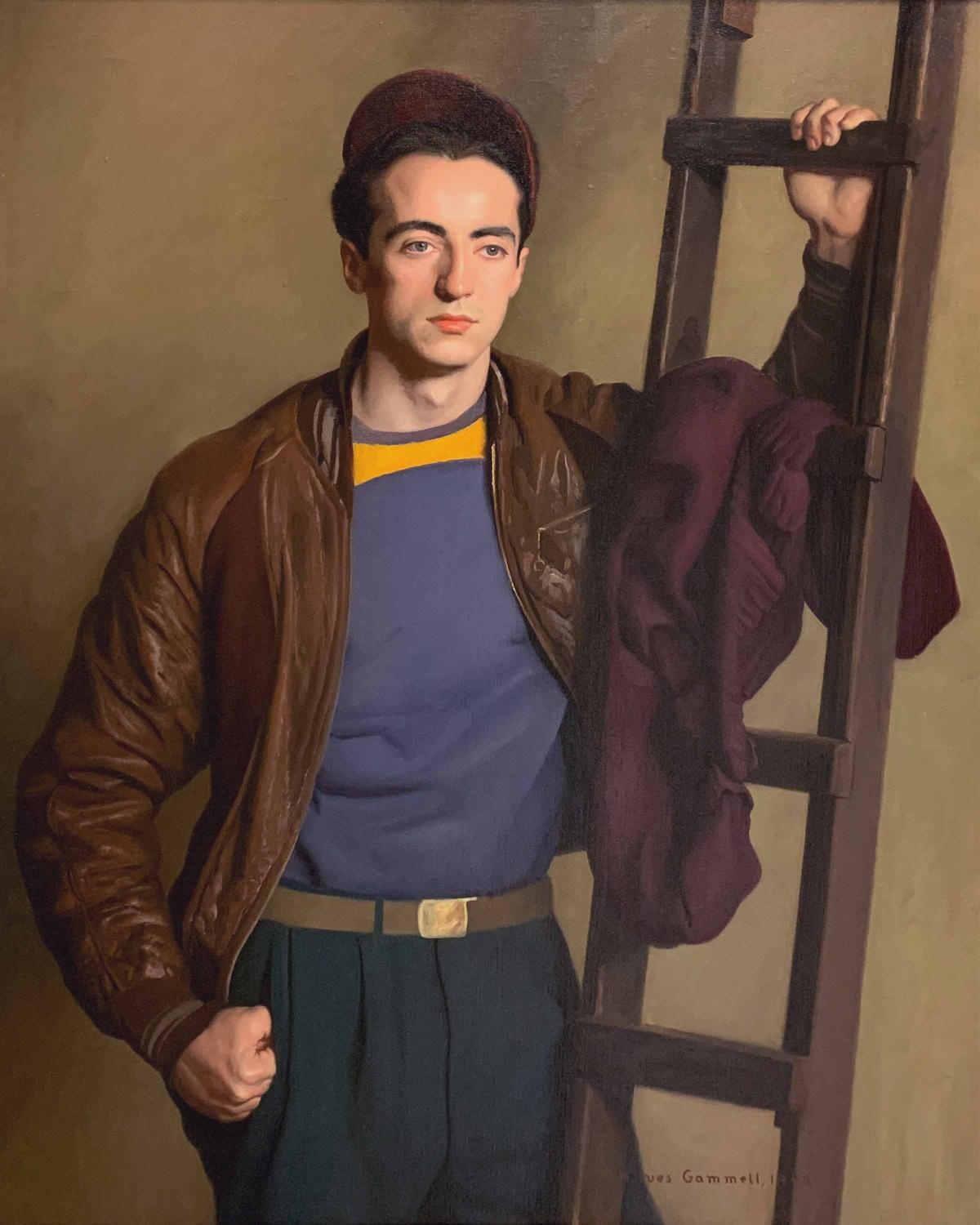
The hero of this story, if the movement can be said to have one, is R.H. Ives Gammell (1893–1981), whose steadfast commitment to Classical Realism shaped nearly everything that followed. Gammell belonged to the Boston School, in which artists focused on disciplined figure drawing and garnered a deep respect for the Western academic tradition. Though he mastered the Boston style, his true passion lay in complex allegorical, historical, and literary scenes exploring the struggles of the human condition.
After training at the School of the Museum of Fine Arts in Boston, he studied at the Académie Julian and Atelier Baschet in Paris, becoming part of the last generation of American painters to receive formal training in the French academic atelier tradition. World War I cut his studies short, and he returned to Boston, where he briefly served in the National Guard.
Gammell grew convinced that his artistic vision was fundamentally at odds with the modern world. As abstract expressionism and pop art came to define the art scene, Gammell became something like a keeper of secrets, a teacher passing on a nearly extinct technical language to anyone willing to learn it. He taught his methods to a small group of students in a traditional atelier.
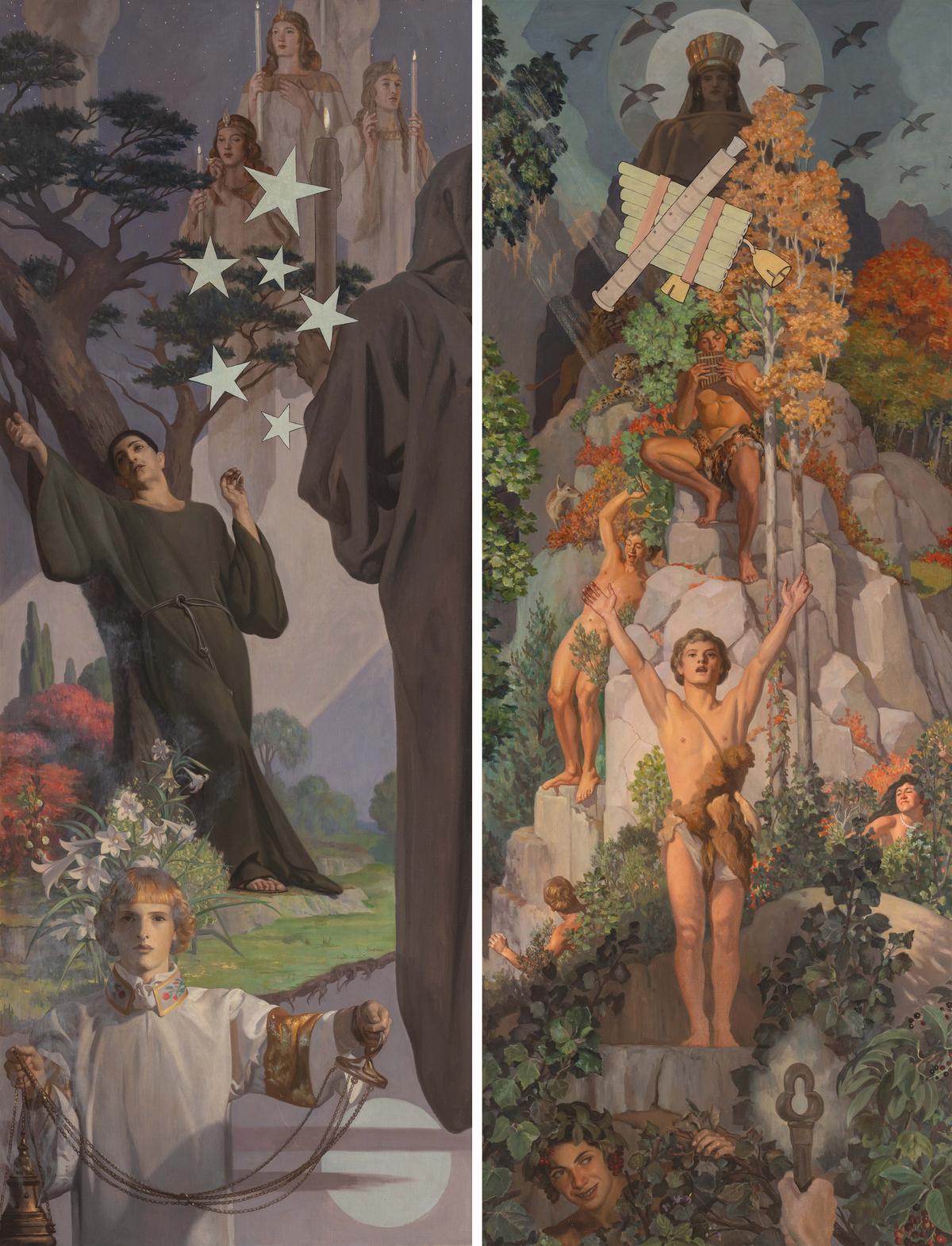
Among his most significant projects was a series inspired by Francis Thompson’s poem “The Hound of Heaven,” which he had known since preparatory school. His journals reveal a long-standing desire to create a major allegorical cycle that would unify ideas that had occupied him for decades. With it, he turned away from portraiture toward monumental narrative painting. While “The Hound of Heaven” had traditionally been read as a story of religious conversion, Gammell interpreted it more broadly, drawing on his own experiences to explore the relationships among myth, symbolism, and the emotional patterns that shape human life. The result, a 23-panel cycle completed in 1956 after three decades of work, remains one of the most ambitious sustained cycles of narrative painting created by an American artist in the 20th century.
Building a Movement
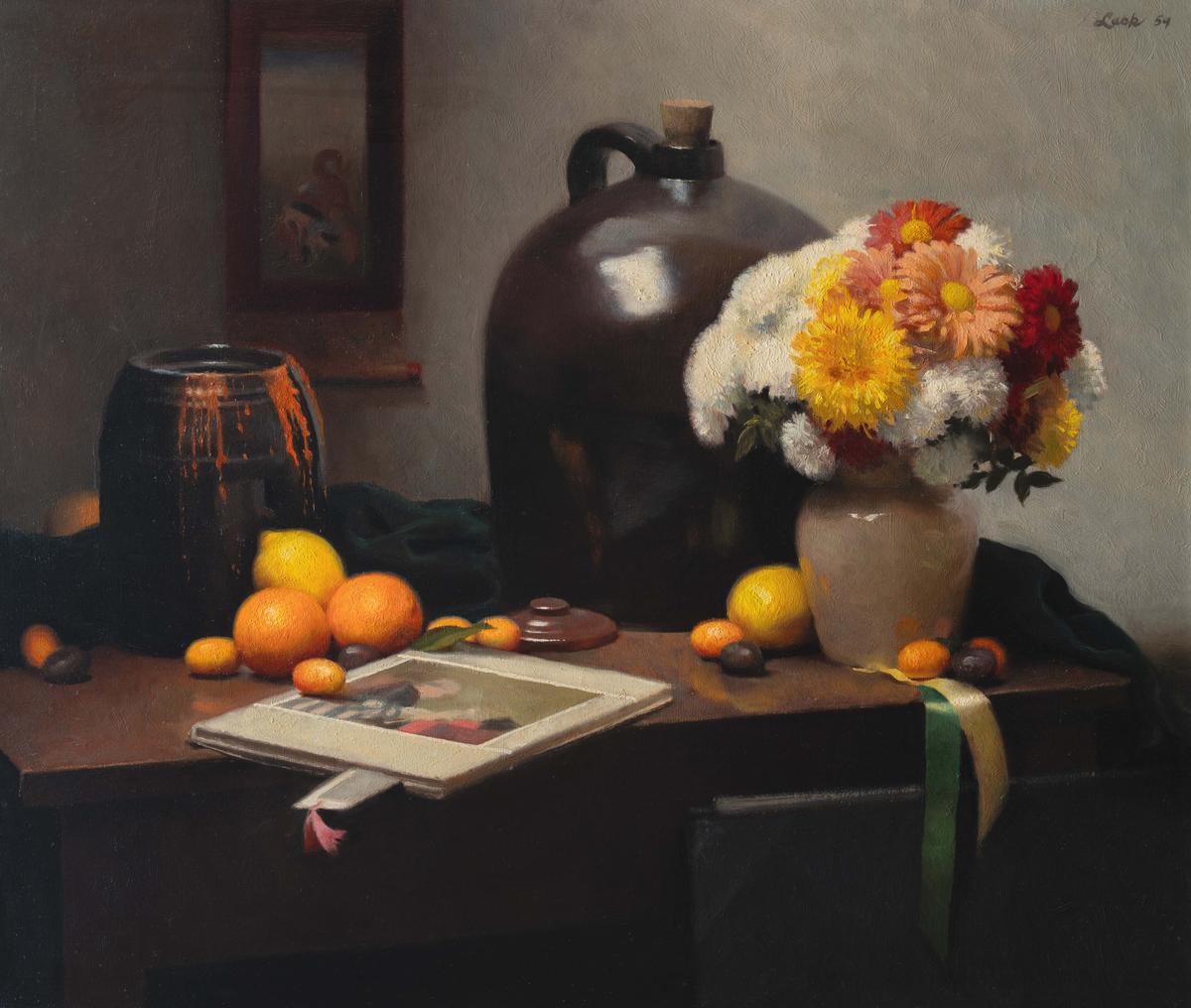
Much of American Classical Realism traces back to Gammell’s steadfastness, but it was Richard F. Lack (1928–2009) who transformed it into a public movement. Lack studied with Gammell from 1950 to 1956, inheriting the Boston School’s principles. Its painters, he believed, distinguished themselves by faithfully matching hues as they appeared under changing light and within surrounding relationships, a practice they called “color truth.” Drawing on this lineage, Lack coined the term “Classical Realism” to describe a tradition of representational painting that he believed had been passed from master to student in an unbroken line reaching back to the Renaissance and formalized through the École des Beaux-Arts, the Paris ateliers, and other European academies.
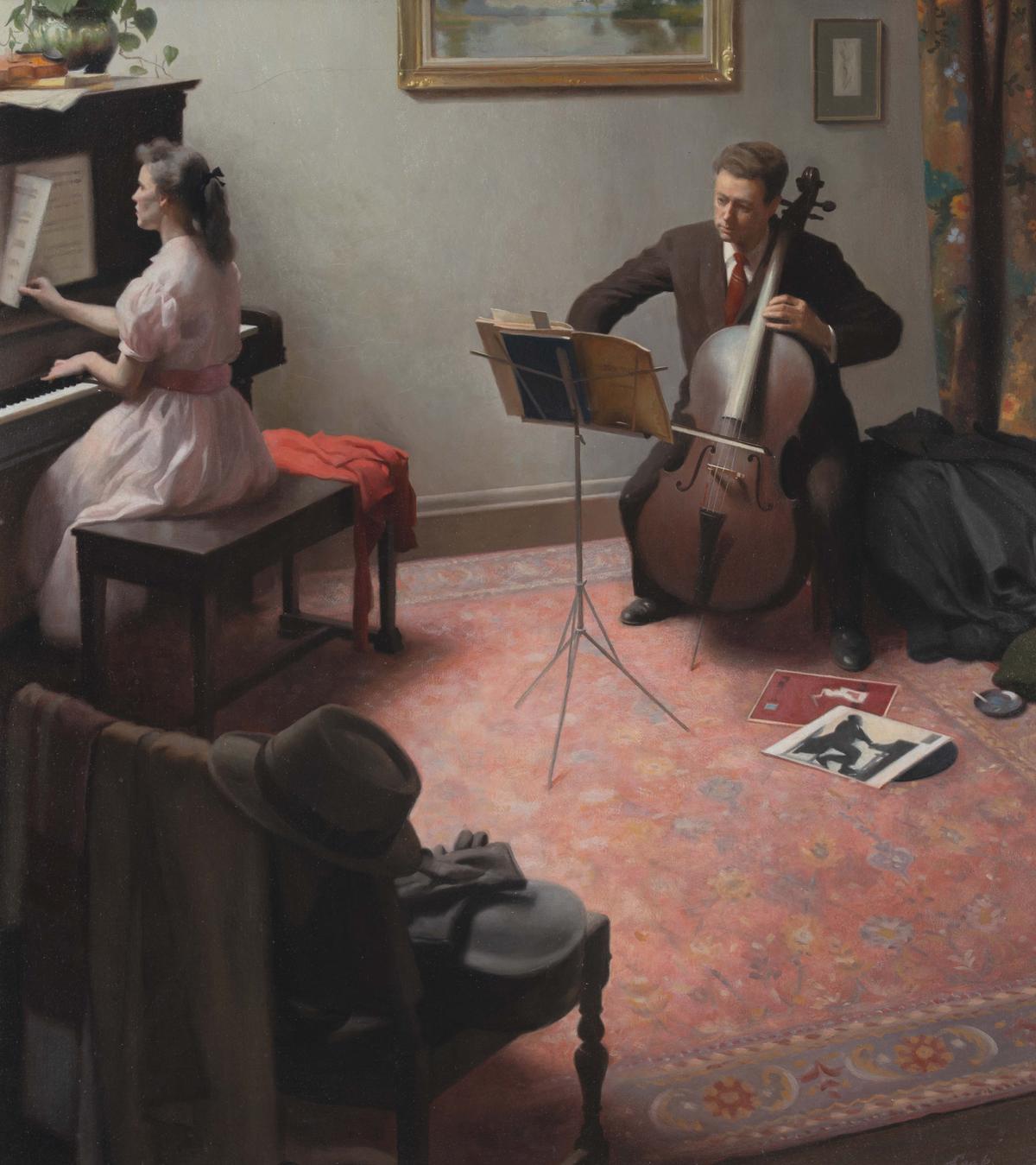
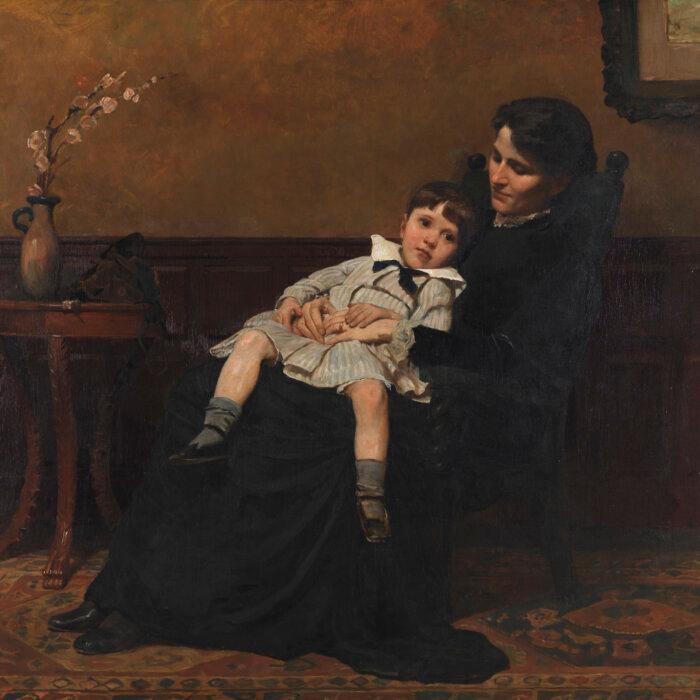
Lack’s mastery of Classical Realism is evident in “The Concert” (1961), on view at Maryhill, which portrays his wife, Katherine, and family friend Warren Woodworth. The painting showcases both his technical precision and his gift for intimate portraiture.
Like Gammell before him in Boston, Lack established an atelier in Minneapolis, where he trained a new generation of realist painters.
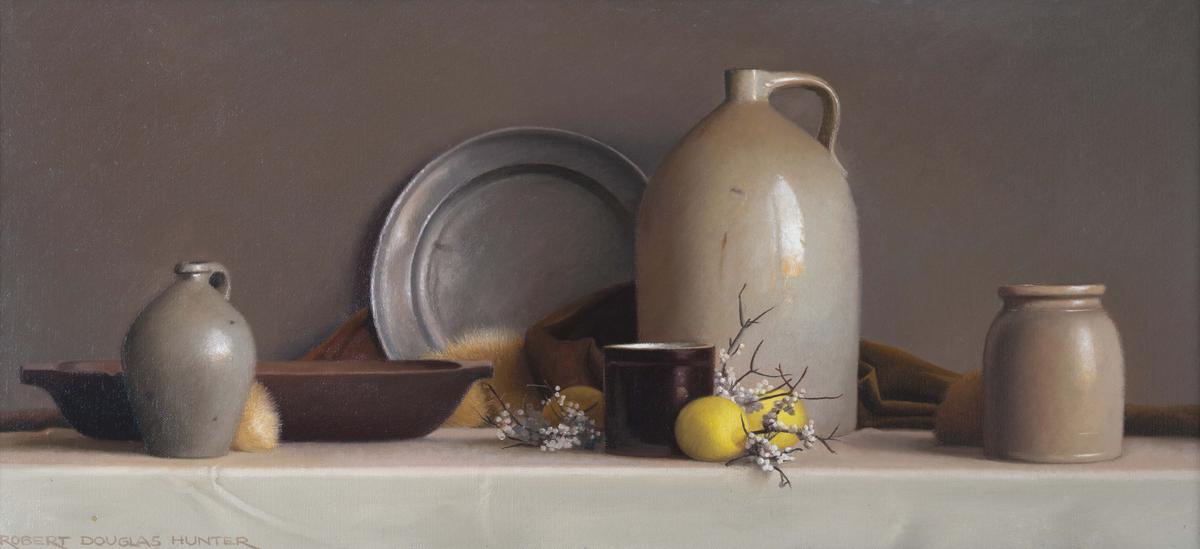
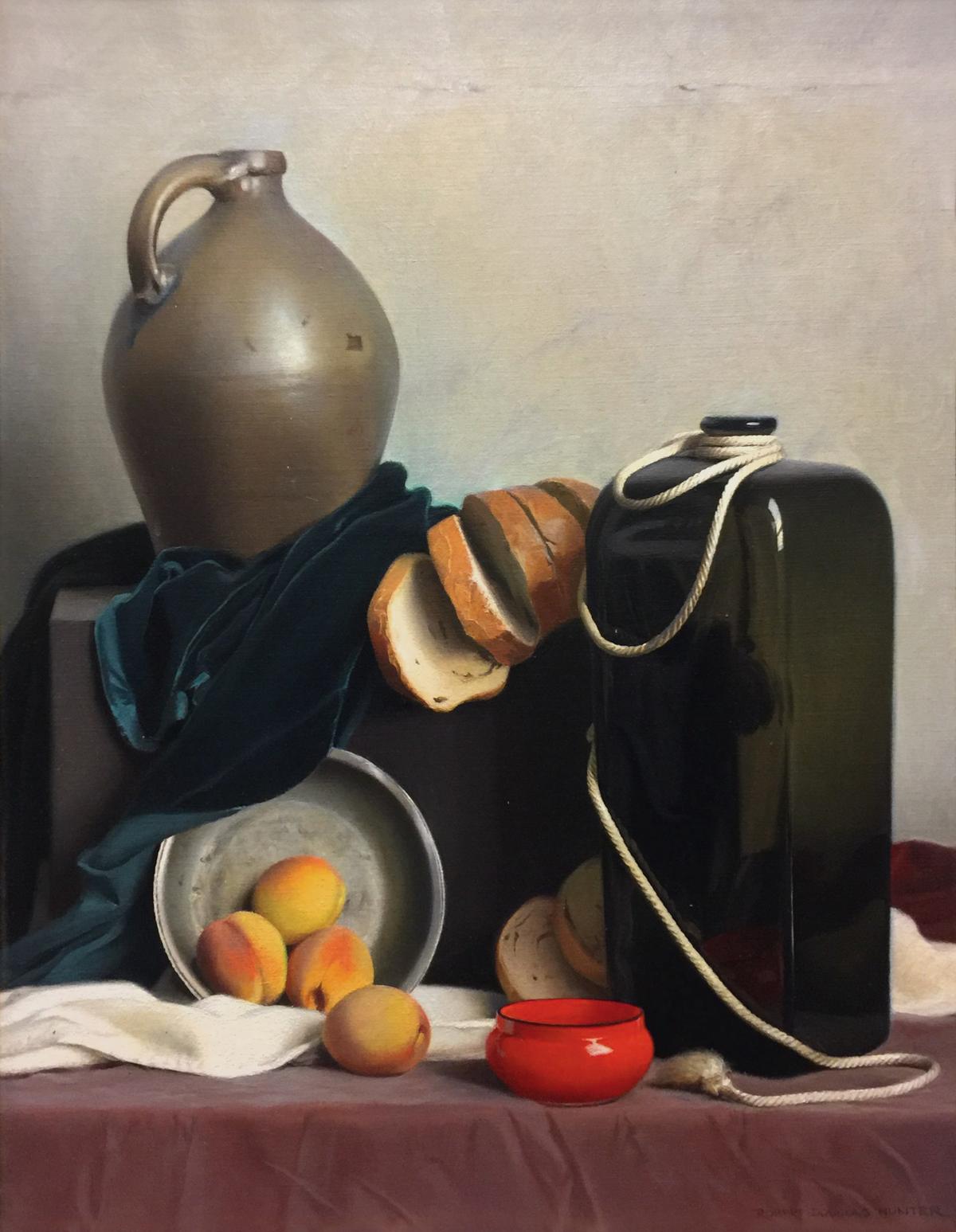
Robert Douglas Hunter (1928–2014) also studied with Gammell. A 1949 graduate of the Vesper George School of Art in Boston, Hunter built his reputation on carefully observed tabletop compositions featuring vessels and everyday objects. His “Chinese Bowl” (circa 1958), painted while studying with Gammell, ranks among his finest early works and takes its title from the red lacquer bowl in the foreground. It became a cornerstone of Maryhill’s collection after the museum acquired it following a 1958 exhibition of Gammell’s students. Hunter later spent more than three decades teaching at his alma mater before joining the faculty of the Worcester Art Museum.
The Lineage Today
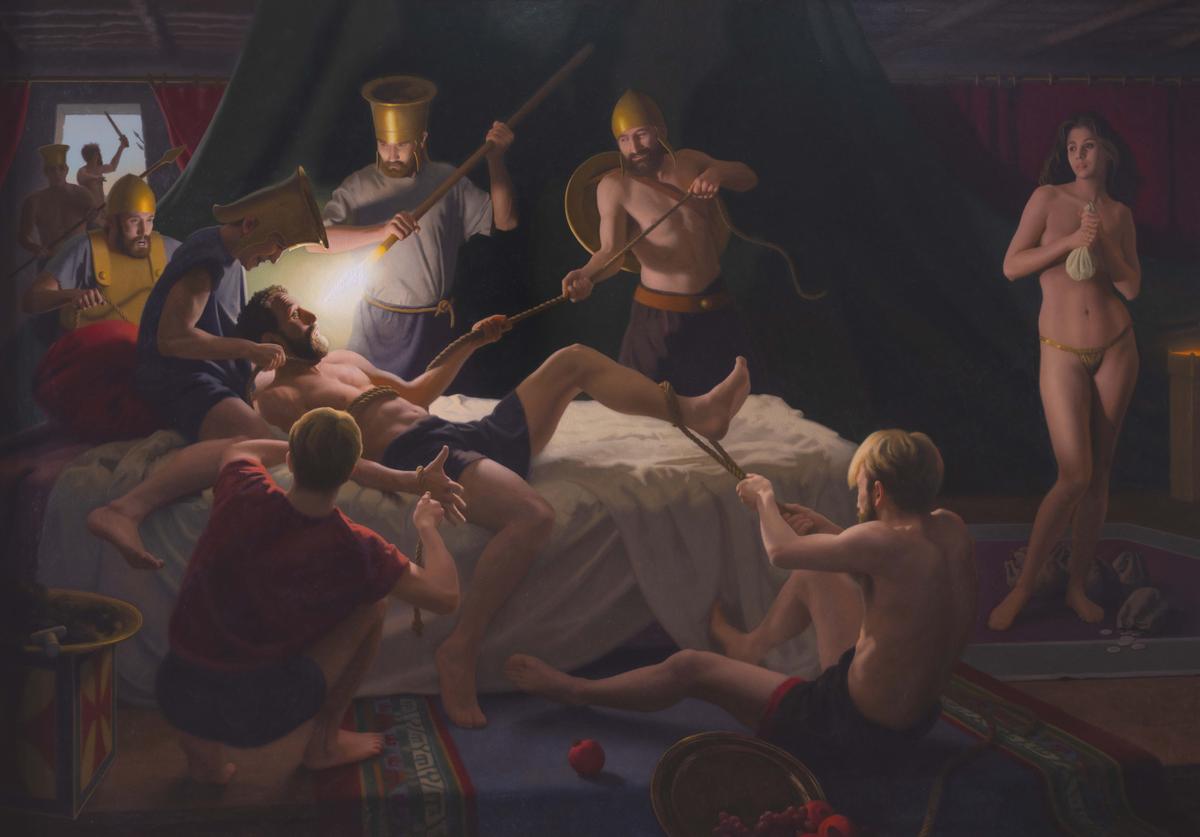
Stephen Gjertson (born 1949) represents where this lineage stands today. A member of the first generation trained at Atelier Lack, he studied under Lack from 1971 to 1975 before returning to teach there through 1988. His career extends the tradition into portraiture, biblical narrative, and criticism alike. His “The Folly of Samson,” an important biblical history painting that showcases his mature narrative style, hangs at Maryhill and is one of the few works by Gjertson on view in a public institution.Gjertson has also been a prolific writer. His study of his teacher, “Richard F. Lack: An American Master,” has helped provide the movement with its own critical record. As a founding member and past president of the American Society of Classical Realism Guild of Artists, Gjertson remains one of the closest living links to Gammell’s conviction that this tradition was worth preserving.
Together, these four generations illustrate Gammell’s belief that disciplined representational painting was a living inheritance worth the years required to master, not a relic to abandon once abstraction became fashionable. Lack turned that conviction into an institution while Hunter channeled that dedication into a lifetime of observed compositions. Today, Gjertson is keeping Gammell’s legacy alive. It is a line unbroken since a young man returned home from Paris in the early 20th century, convinced something essential was in danger of being lost, and spent the rest of his life making sure it wasn’t.