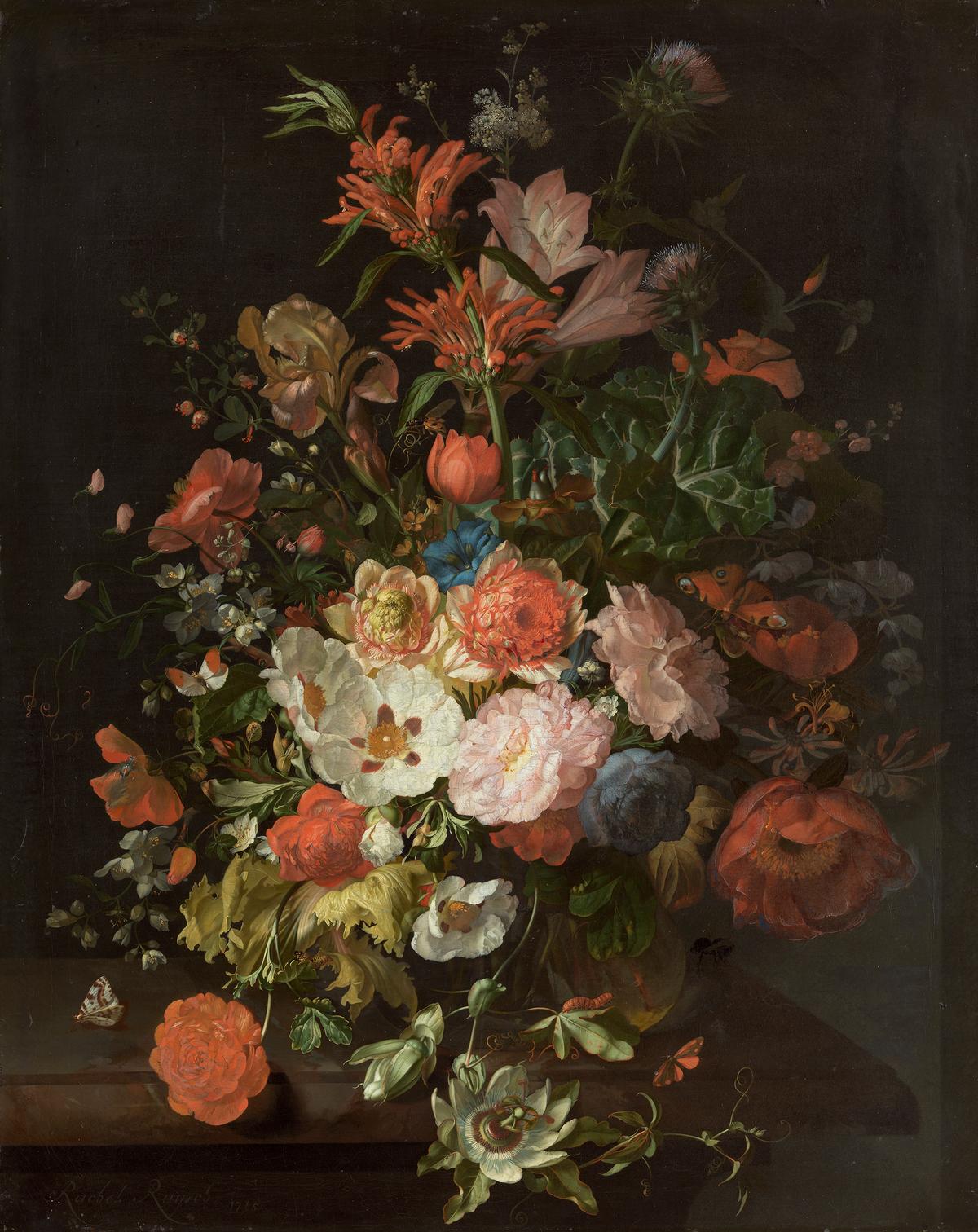
Rachel Ruysch (1664–1750) was a remarkable painter during the Dutch Golden Age, celebrated for floral still lifes, a genre with a rich tradition in Dutch art. In Ruysch’s lifetime, it was typical for her paintings to fetch higher prices than Rembrandt’s did in his, a generation earlier. While Ruysch’s fame was widespread in her day, her renown wilted in subsequent centuries, overshadowed by her contemporaries. That has changed in recent years, with her paintings sought after by museums and private collectors and celebrated in a traveling exhibition. Now, scholars cite Ruysch as perhaps the greatest female flower painter in all of art history.
As a new appreciation of her work blossoms, three institutions—the Alte Pinakothek, Munich; the Toledo Museum of Art; and the Museum of Fine Arts, Boston (MFA)—have collaborated on a seminal monographic exhibition. This show assembles an unprecedented group of Ruysch canvases in both quantity, with 35, and quality.
Ruysch’s Flora and Fauna
Ruysch was born into an artistic family in The Hague, Netherlands. Her maternal grandfather, Pieter Post, was a prominent architect. Her father, Frederik Ruysch, was a distinguished scholar. An expert in indigenous plants, he was appointed professor of botany at Amsterdam’s Botanic Gardens in 1685. The gardens were rich with native and non-native plants, especially those brought from far-flung Dutch colonies. Additionally, Frederik was an anatomist, draughtsman, and painter. The design of the MFA’s exhibition space is inspired by his natural history cabinet of specimens.
This collection is believed to have been a pivotal, fertile source for his daughters’ artistic practices, for Rachel’s sister, Anna, was also a skilled flower painter. Her oeuvre is much smaller than Rachel’s, and art historians have only recently begun to study her art, having identified, as of now, a mere dozen paintings. In the MFA’s exhibition, some of her works are displayed alongside Rachel’s, in addition to examples by other female artists of the period, including Maria Sibylla Merian, who was a pioneering artist, naturalist, and entomologist.
Growing up in an intellectual family, Ruysch had an early talent for art that was discovered and encouraged. At the age of 15, she was apprenticed to Amsterdam’s greatest still life painter, Willem van Aelst. Ruysch spent three years under his tutelage, and her teacher’s influence is visible in her early works. Further inspiration came from the flower paintings of Jan Davidsz de Heem and Otto Marseus van Schrieck. The latter specialized in forest-floor still lifes that featured flowers, animals, and insects.
This was a subject that Ruysch explored in early canvases such as “Forest Floor With a Classical Façade Beyond,” which revealed her already unique gifts for composition, color, and precise detail. Her depiction of the lizard is so realistic that it can be identified as an indigenous species to Holland. Scholars believe that in addition to making firsthand studies of flora, she had opportunities to closely observe fauna. This accounts for the range of naturalism in her paintings.
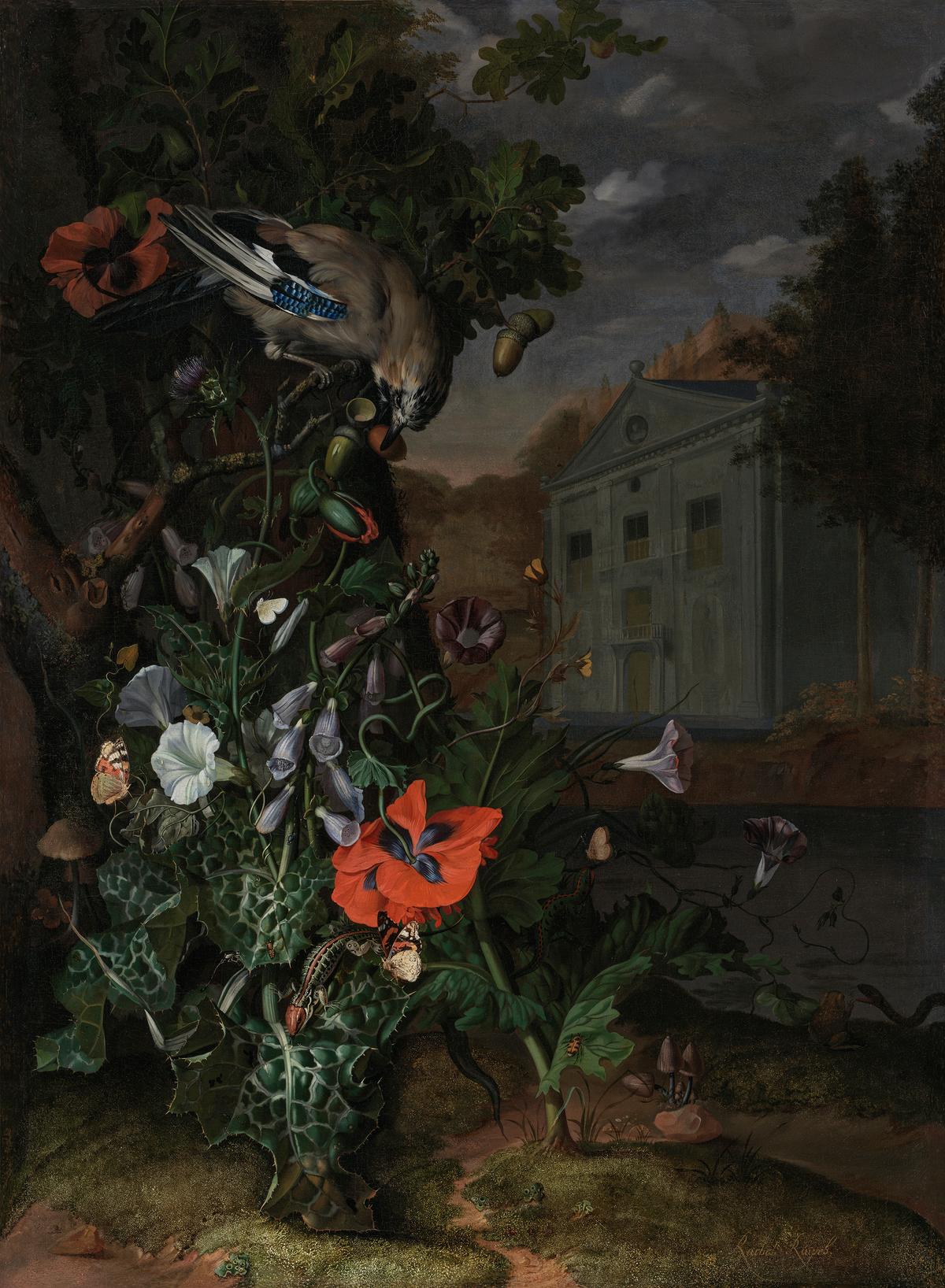
Included in the exhibition, the painting dates to about 1687. It is on loan from a private collection after it was recently auctioned at Christie’s. The darkened backgrounds of Ruysch’s woodland paintings emphasize the vivid color of the plants. This artwork may be the first time she included an architectural element in a still life. The style of the building recalls the work of her grandfather.
“While the painting recalls the work of earlier still life painters, the particular arrangement of the plants in this picture anticipates Ruysch’s later works. … The flowers and plants are arranged essentially as a bouquet, ready to be placed in a vase. From around 1690 onwards, Ruysch’s work was typified by these types of arrangements, making this an important transitional work in her oeuvre.”
A Rare Collaboration
In the MFA show is a rare work on loan from New York City’s Metropolitan Museum of Art that dates to the year before her marriage. It is a collaboration between Ruysch and the portraitist Michiel van Musscher. The Met acquired the painting in 2023, making it the first Ruysch work to enter its permanent collection.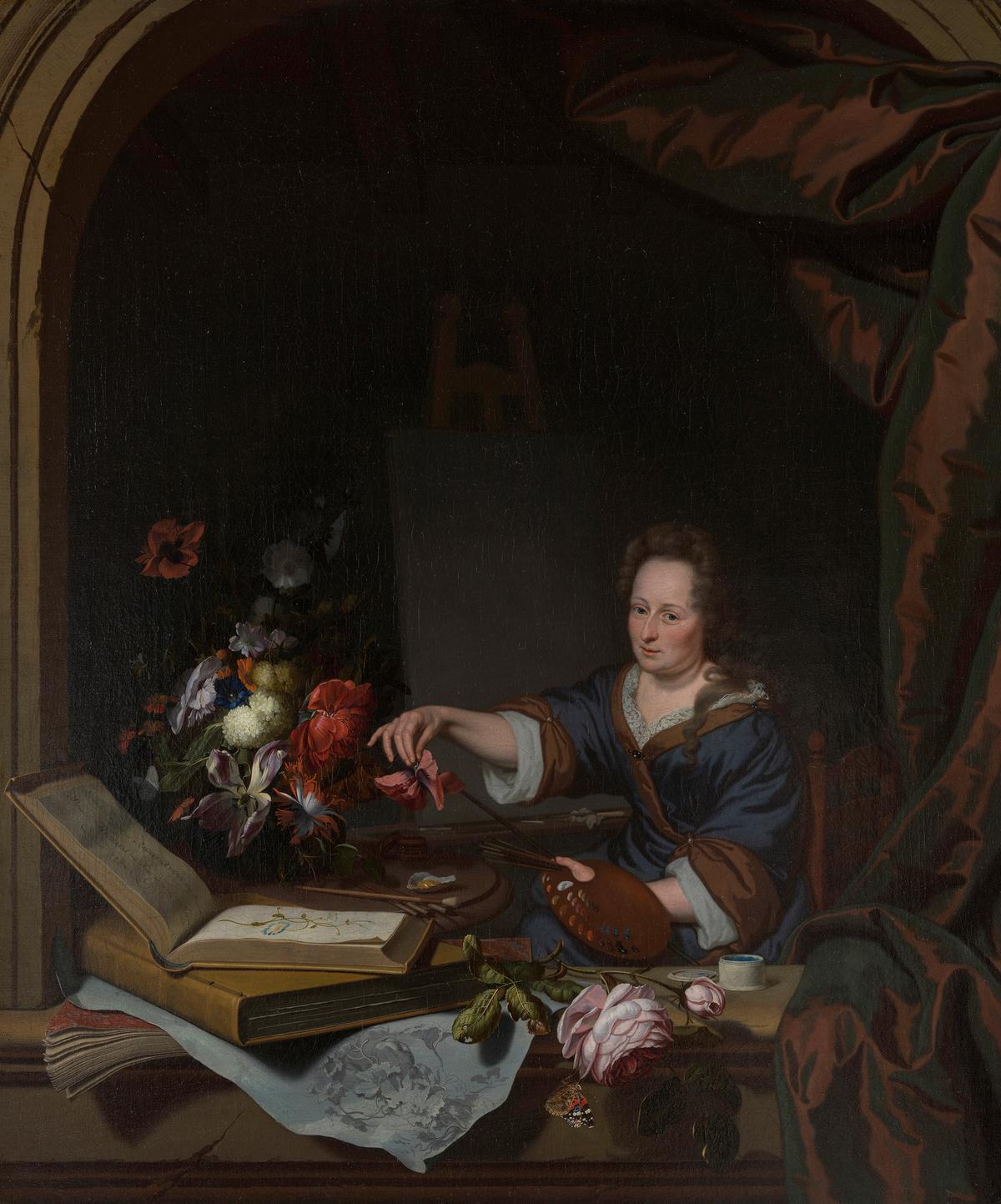
Ruysch’s Creative Era
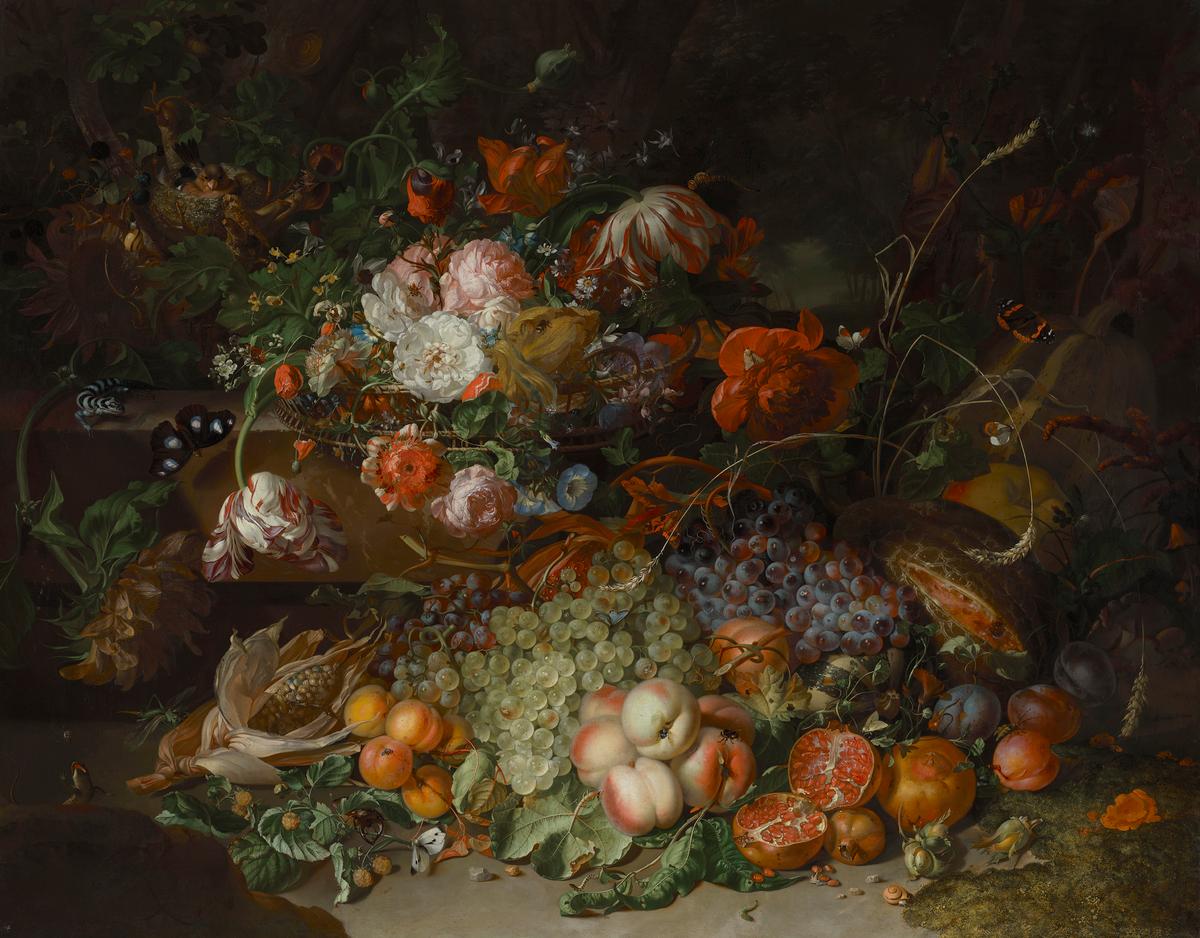
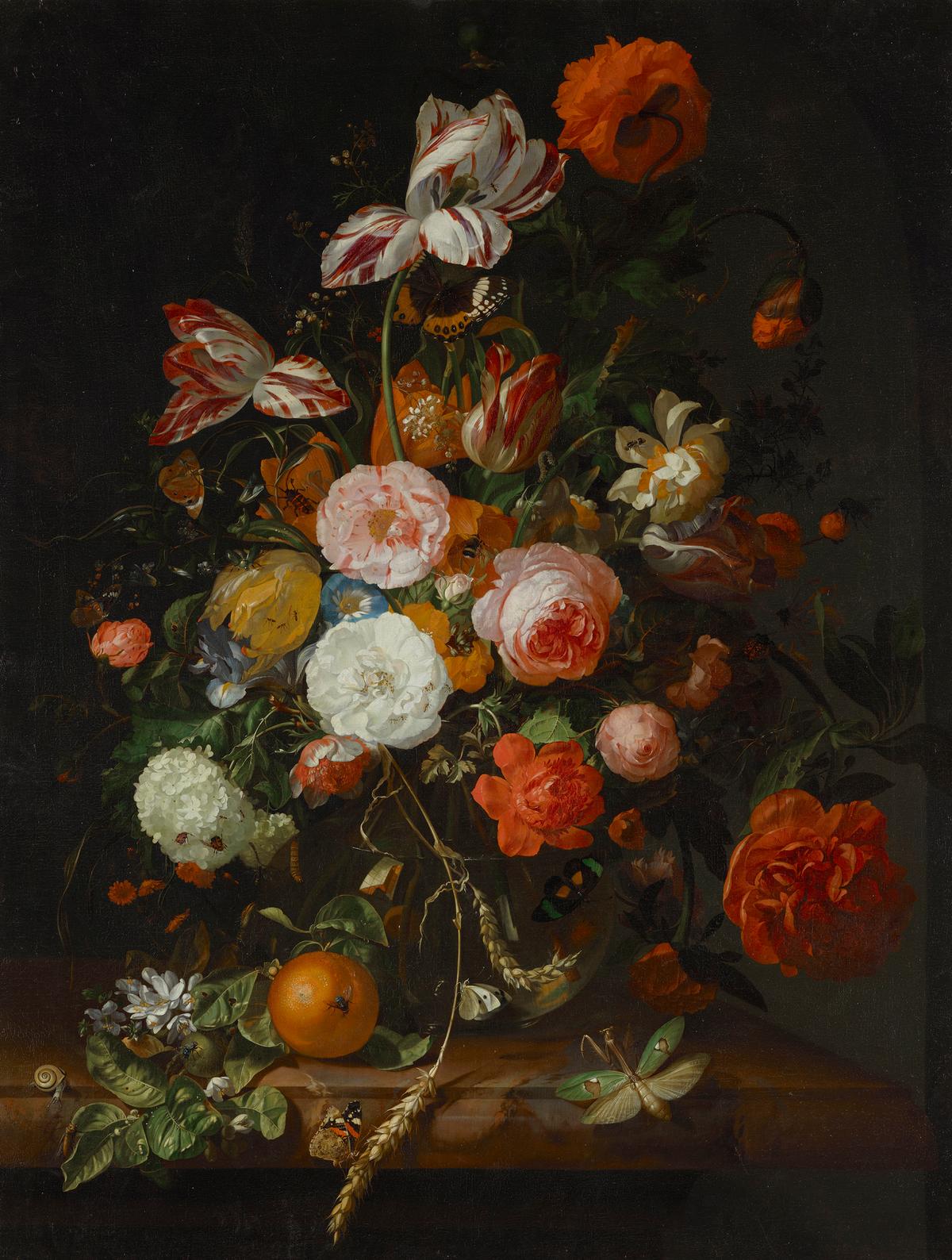
Ruysch produced only three or four pictures each year due to the meticulous nature of her process. These works commanded high prices and ended up in collections throughout Europe. Considered examples of her most creative era, these works are spectacular. Large, lavish paintings with refined brushwork display dazzling and varied arrangements imbued with lively movement. She combined naturalism with theatrical artifice in a brilliant and innovative manner.
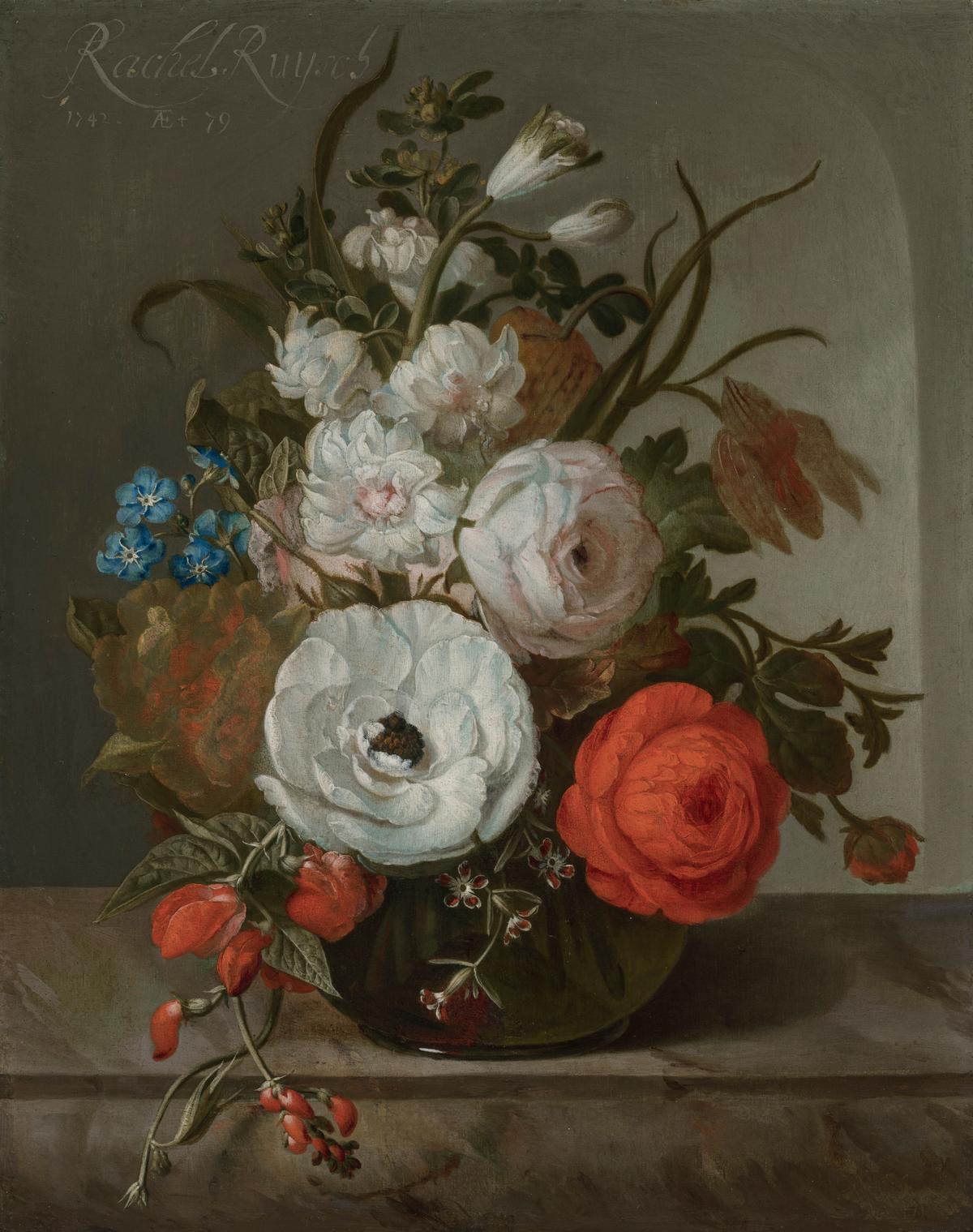
As Ruysch matured, her style evolved. Her work was markedly different after 1735. The compositions shrank to a smaller scale and their backgrounds lightened. They were less dense, had a softer palette, and were more delicate. Her shift away from grandiose Baroque compositions coincided with the rising influence of French Rococo and the popularity of the style pursued by the Dutch floral painter Jan van Huysum. During the latter part of her career, she added her age after her signature, taking pride in her advancing years and her retention of artistic talent. Ruysch painted until the age of 83.
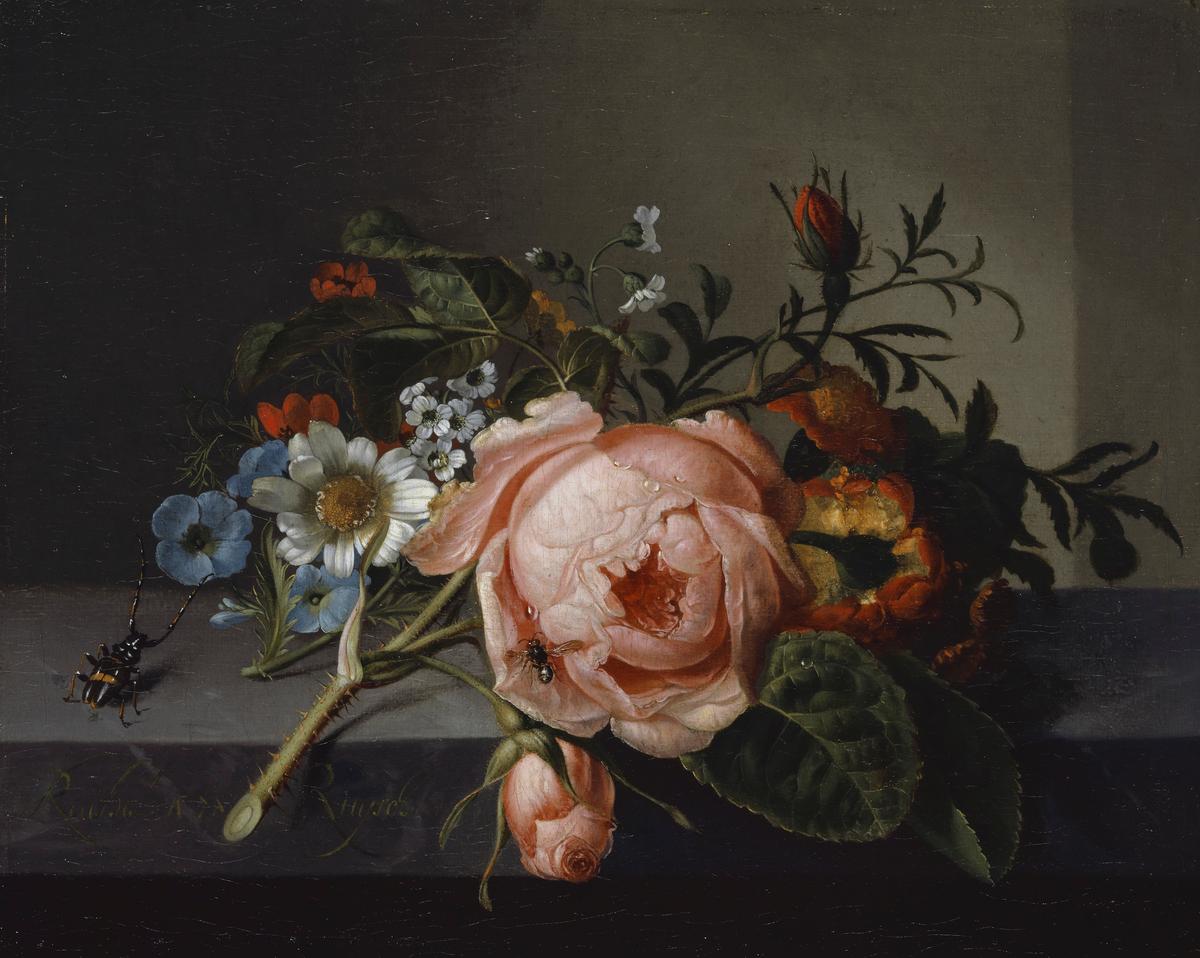
Her art is stunning for its aesthetic beauty and the breadth of subjects. She was among the first to paint newly discovered species for Europeans, such as cacti and passionflowers. Some of her fantastical arrangements gather flowers from all over the world and different blooming seasons. Ruysch experienced repeated luck in her professional and personal life; for instance, she won the lottery twice, with the second win being a huge sum from the States of Holland lottery. Today’s public is lucky to rediscover her exceptional art.