NR | 1h 26m | Drama | 1948
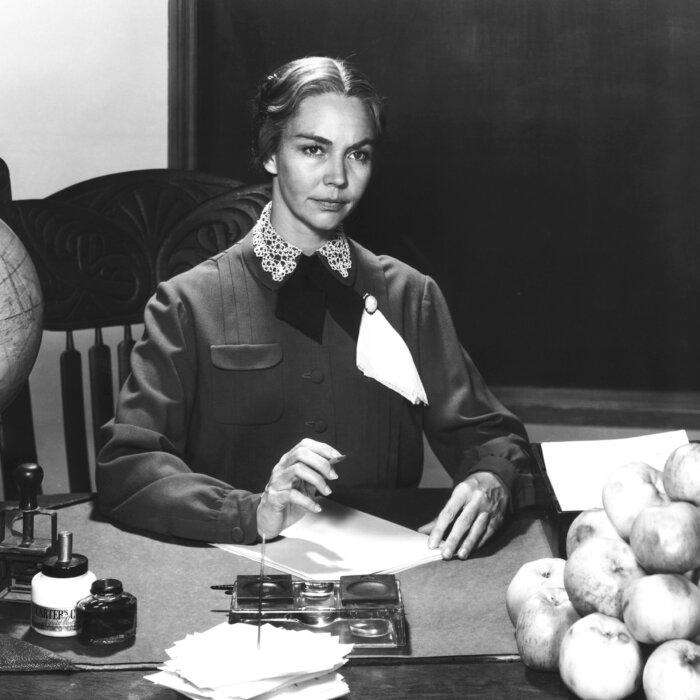
Struggling landscape artist Eben Adams (Joseph Cotten) finds no public enthusiasm for his work. Support does come from the companionship of his friend Gus O’Toole (David Wayne) and the patronage of art dealers Miss Spinney (Ethel Barrymore) and her partner Matthews (Cecil Kellaway).
Adams’s art appears dull, distant. Spinney suspects he hasn’t yet found his muse. She hopes he will, for when he does, his work will ring truer.
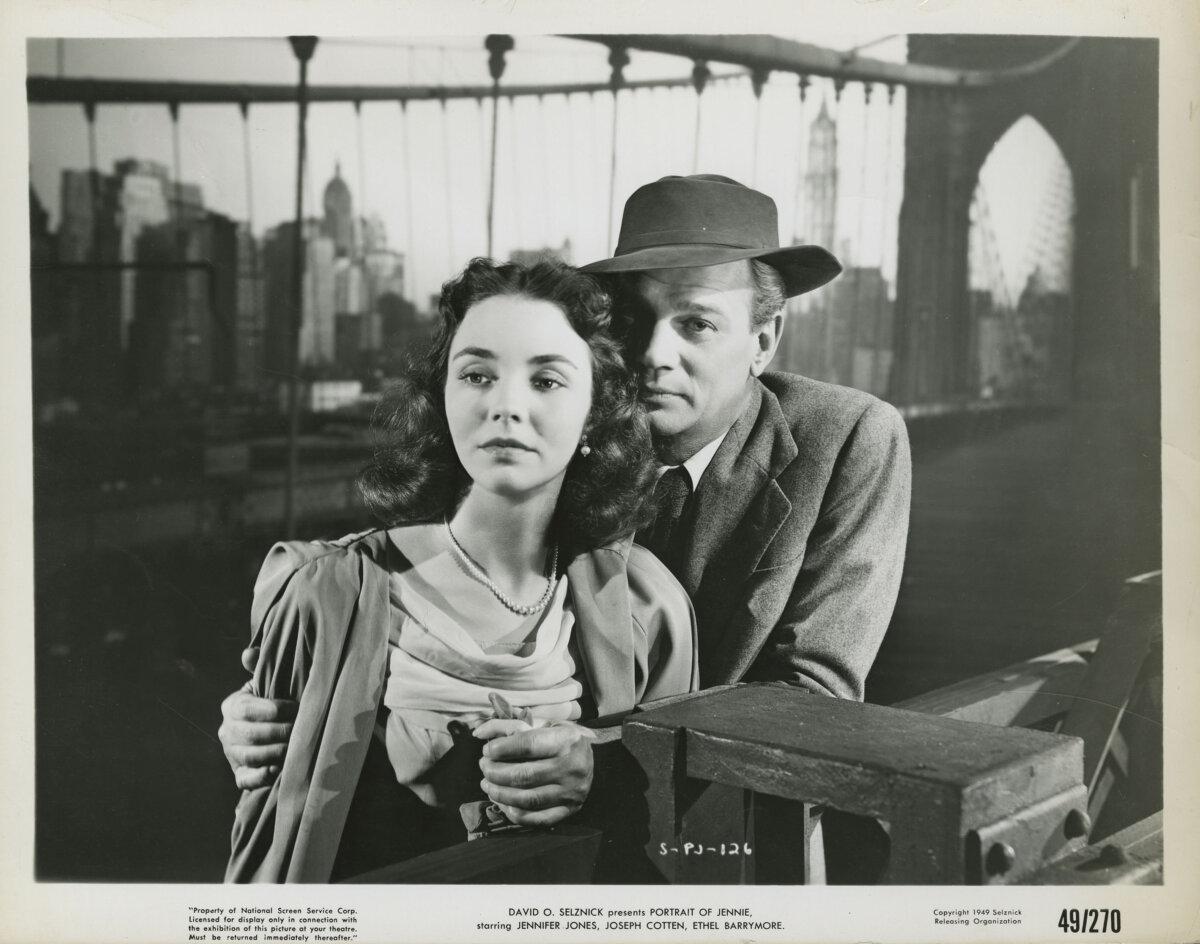
Then, Adams befriends a girl, Jennie Appleton (Jennifer Jones). But she keeps disappearing, only to reappear older each time—a woman, with a barely coherent memory of her past. That she died years ago doesn’t make her any less real to him; with each encounter he’s drawn more to her, and she to him.
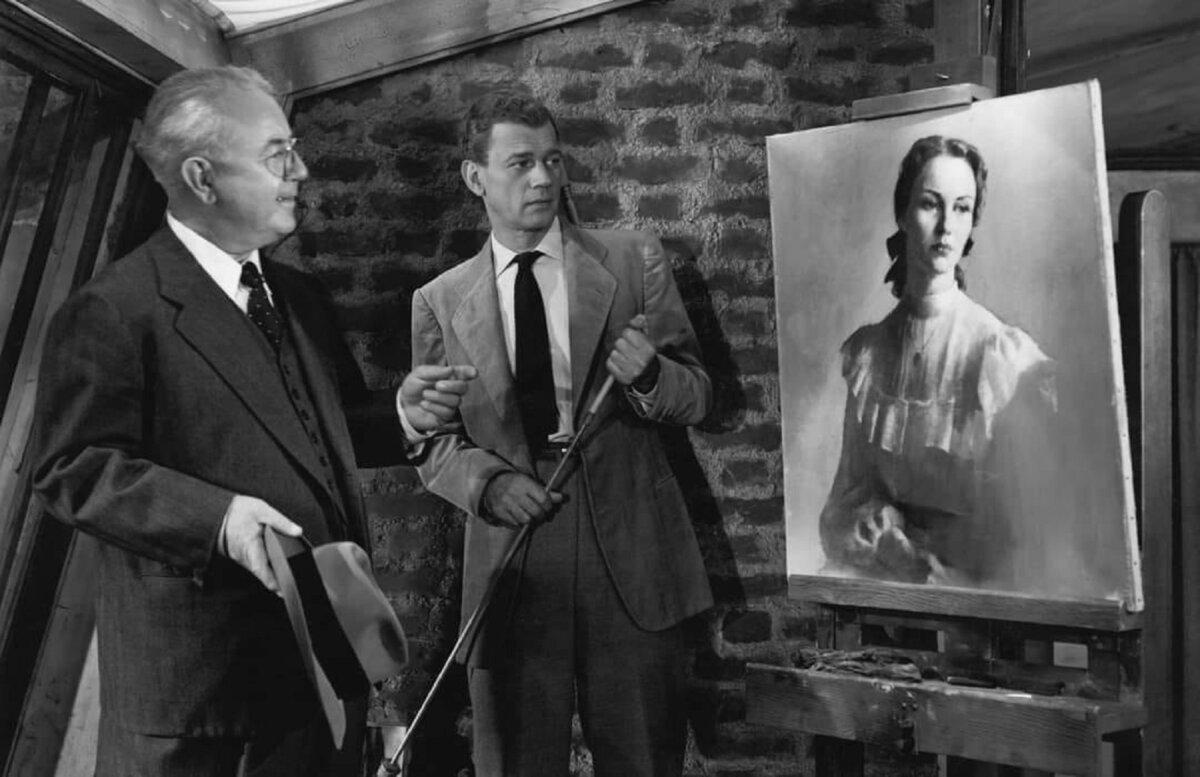
Across many such encounters, Adams paints a portrait of Jennie; his first of a human subject rather than one of things. As Spinney, Matthews, and others assert, this portrait turns out to be vibrant, more intimate, more lifelike than his previous works, winning him money and fame.
But to him, fulfilment lies in being united with Jennie. He feels compelled to rendezvous with her at the fated lighthouse where she once succumbed to a tidal wave.
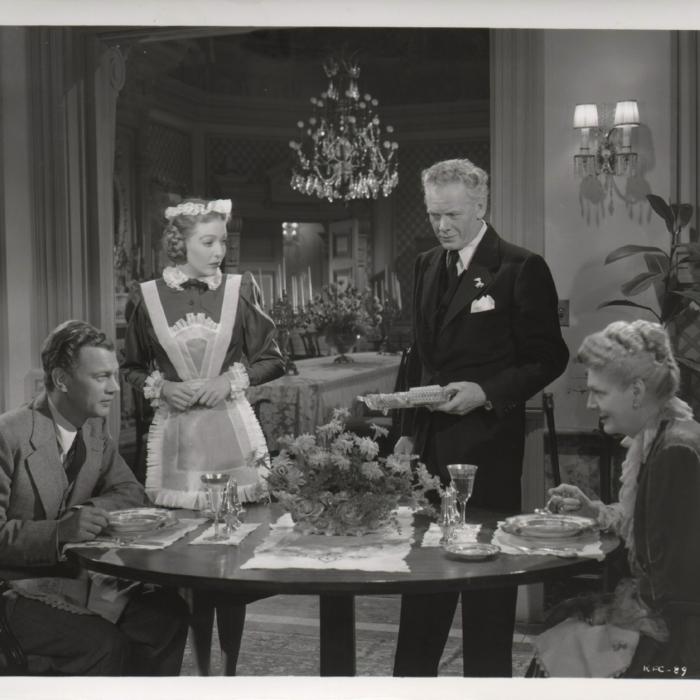
In form, style, and execution producer David O Selznick and director William Dieterle retain a supernatural fantasy feel throughout the film. Some scenes look straight out of a painting. A flash of color later in the narrative adds to the drama of an otherwise black-and-white film. Claude Debussy’s music lends the soundtrack its share of haunting melancholy. Later, Nat King Cole would go on to capture this bittersweet mood in his rendition of the ballad “Portrait of Jennie.”
Jones as phantasmic muse to the character of Adams on screen, mirrored the real muse she’d become to Selznick offscreen; Selznick married Jones soon after the film’s release.
Jones, at 5 feet, 7 inches, was no midget. Cannily, Dieterle uses a sequence of high- and low-angle shots with the 6-foot-2-inch-tall Cotten, to play down, then play up Jennie’s stature, to mimic that of a girl growing to be a woman.
Cotten’s deep, resonant voice poignantly embodies Adams, at once certain and confused.
The narrator says, “Nothing ever dies, but only changes,” so the lighthouse here is symbolic. It warns incoming seafarers that they can’t access a rocky or shallow shore unless they shed their large ships for smaller boats. Likewise, humans must shed their bodies worn in life, as they approach death.
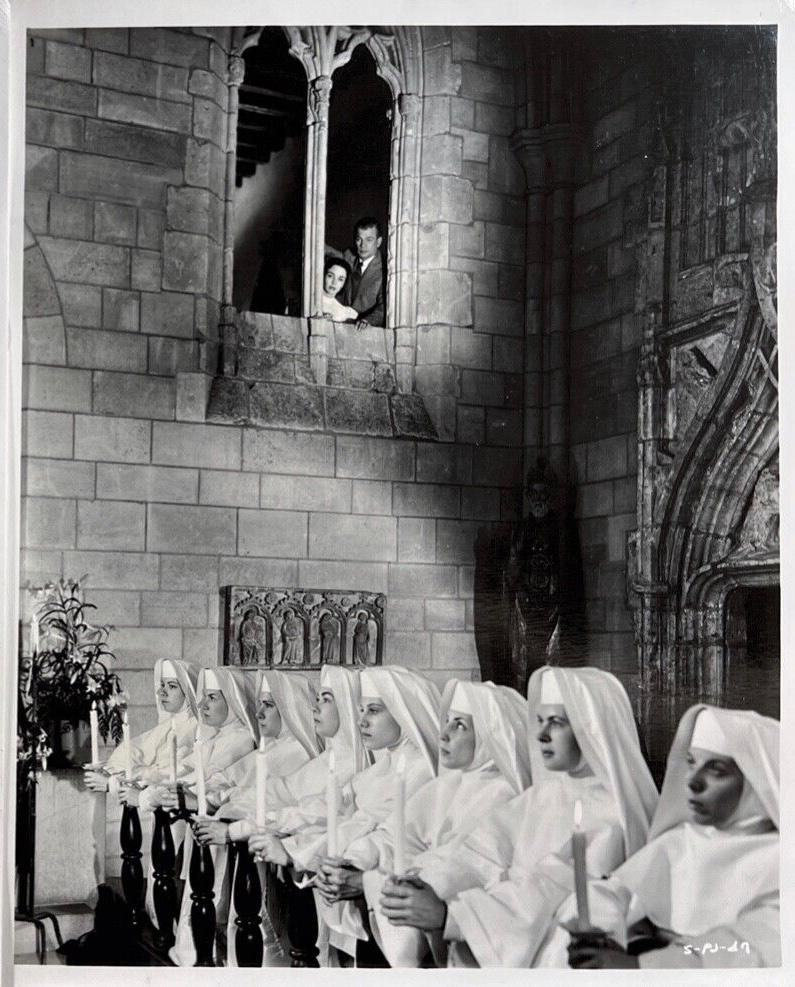
Adams’s glimpse, with Jennie, of convent nuns taking the veil is significant. The candle each nun lights, then extinguishes, represents exchanging a worldly life for a spiritual one, an invitation not to death but to a nobler way life.
Disinterested Painters, Dispassionate Portraits
Jennie invites Adams to “listen” to the stars coming out, as if his eyes are redundant. She’s hinting that seeing requires more than sight. Even with the eyes of a painter, he needs a different kind of sense to see the truth: The art of life lies not in merely living, but in loving.Spinney cites Robert Browning’s poem, “Andrea del Sarto,” who boasted that his art possessed greater proportion, anatomy, and color than celebrated artists like Michelangelo or Raphael; but del Sarto bemoaned how his work lacked the essentials of love and soul. Just as del Sarto, Spinney declares that she “had everything … and nothing.”
To Spinney, it’s indifference that weighs down art with lifelessness, and it’s love that uplifts it with life. Jennie seconds this, prodding Adams, “Maybe you shouldn’t paint places. Why don’t you paint people instead?”
It is the dim but somehow distinct Spinney who is Adams’s real muse, teaching him to find rather than lose himself. Crucially, he sees Spinney before he sees Jennie, and it’s Spinney who claims, “Nobody knows more about love than an old maid.” She cajoles an initially dispassionate Adams, “You have to learn to care deeply for something.”
Spinney lies somewhere between the long-dead Jennie that few remember seeing but only Adams sees and Jennie’s lifelike portrait that everyone sees.
Watch to find out if Adams more meaningfully acknowledges this. Dieterle offers a hint. Before he leaves Spinney’s office, just before he meets Jennie, Adams tells Spinney, “You have beautiful eyes.” Is Jennie’s scarf supposedly the only sign she’s real? See who ends up holding it.