Winter is coming, both the season and the “Egg.”
The Czar’s Jeweled Tradition
In 1885, Alexander II of Russia began the imperial tradition of czars commissioning jeweled Easter eggs from Fabergé to present to the empress. The jeweler was given carte blanche in choosing and executing the theme of each year’s egg, and the piece could typically be opened to reveal a surprise inside. After Alexander III’s death in 1894, his son, the ill-fated Czar Nicholas II, continued and expanded the custom.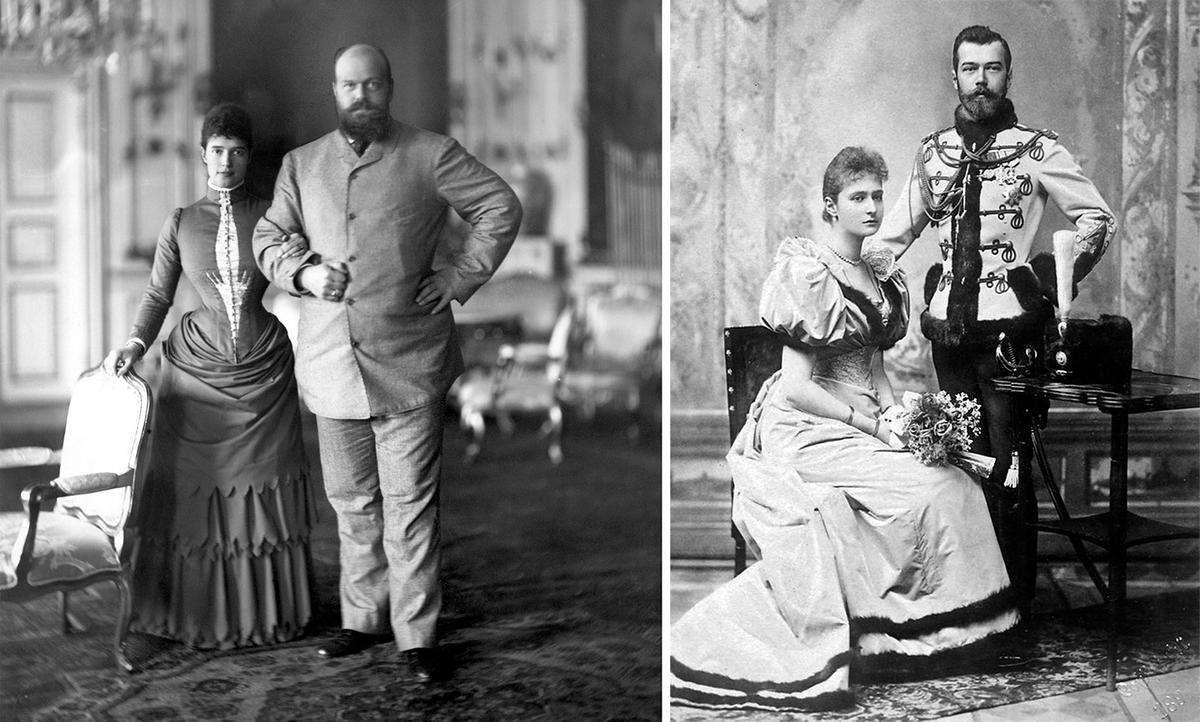
For each Easter, Nicholas had Fabergé make an egg for his widowed mother, Maria Feodorovna, and another to give to his wife, Empress Alexandra Feodorovna. Most eggs were extremely challenging and laborious to make. They took almost a year to complete and passed through the hands of many people, including designers, gem cutters and setters, enamellers, engravers, and polishers.
The mastermind behind the global success of Fabergé was Peter Carl Fabergé (1846–1920). Trained as a goldsmith, he took over his father’s small jewelry atelier when he was 26. He grew the enterprise into an international brand synonymous with opulence and brilliant craftsmanship. Consisting of 500 employees, it was the world’s largest business of its kind. The Fabergé firm made ethereal jewelry, charming hardstone animal sculptures, clocks, cigarette cases, boxes, frames, and eggs, considered their ultimate achievement. These fantastical eggs, many featuring rococo and neoclassical motifs, were commissioned by the imperial family and other prominent patrons.
Pihl’s Winter-Themed Egg
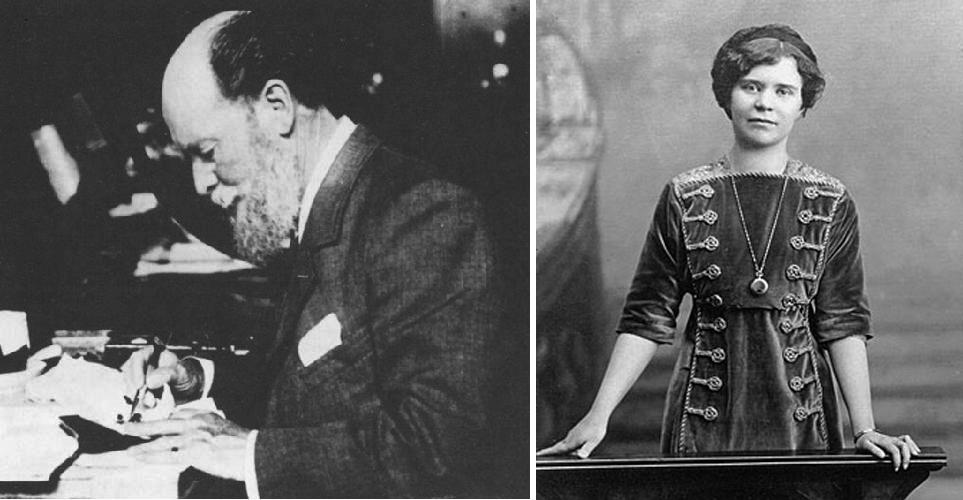
The designer of “The Winter Egg” was a rarity in the Fabergé workshop—a woman. Alma Pihl (1888–1976) came from an illustrious jewelry-making lineage. She was the granddaughter of Fabergé workmaster August Holmstrom, the daughter of master goldsmith Knut Oscar Pihl, and the niece of Albert Holmstrom, who was Fabergé’s chief jeweler. From a young age, she displayed a talent for drawing and was largely self-taught. In 1908, when she was only 20, Pihl joined her uncle’s Fabergé workshop as a draftsman.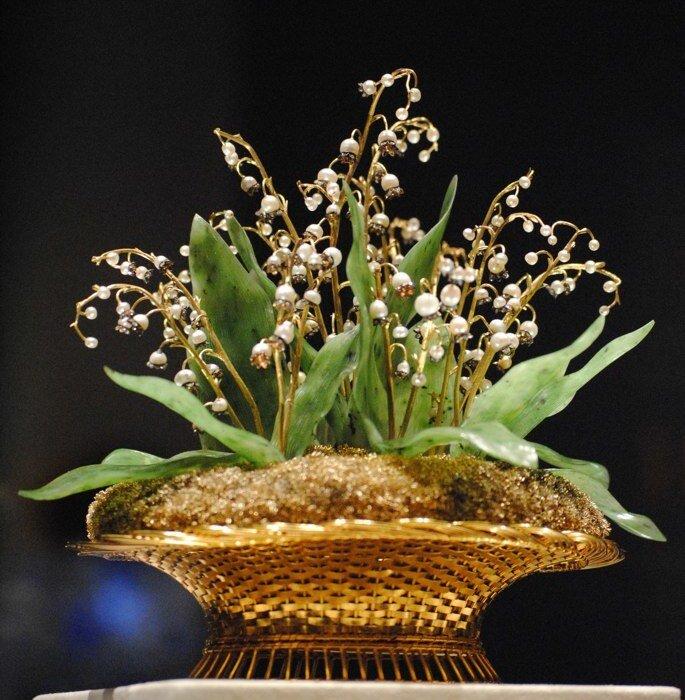
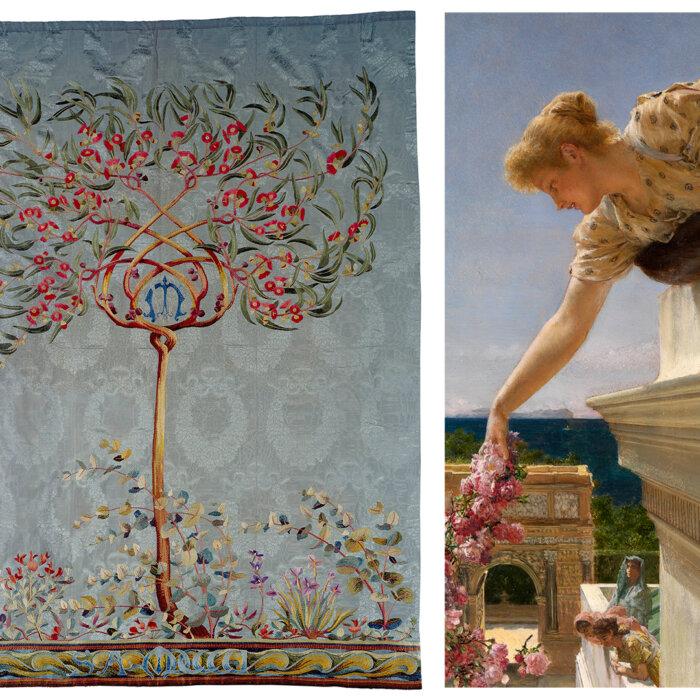
Pihl’s career breakthrough came in January 1911. The firm gave her an important commission from their prestigious client Emanuel Nobel, who had ordered 40 small pieces of jewelry. Pihl, searching for inspiration, turned to look out the window of the St. Petersburg workshop and noticed sunlight glittering across the windowpane’s fractal frost patterns, which resembled frozen flowers. This gave her the idea to use rock crystal, platinum, and rose-cut diamonds to create imaginative winter-themed jewels.
Enchanted by the results, Nobel ordered many additional pieces and bought the rights to the design concept. These frost jewels are some of the most beloved and forward-looking works Fabergé ever created. They push the technical limits of working with rock crystal, mined from the Ural Mountains, to make thoroughly original designs.
Pihl made further pivotal contributions to Fabergé during her brief career at the firm, which the Russian Revolution ended; subsequently, she immigrated to Finland. While at the firm, she designed two Imperial Easter Eggs.
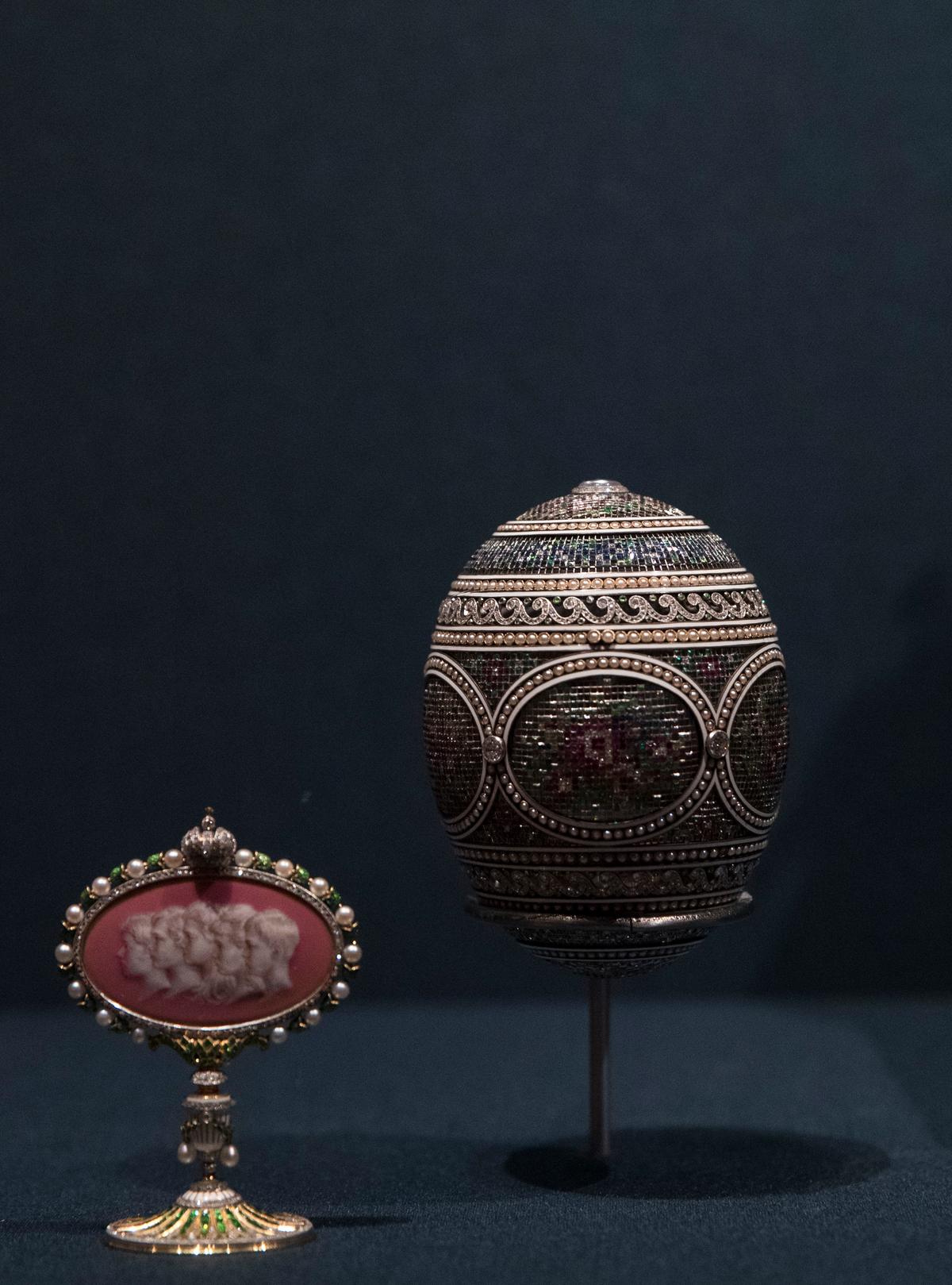
“The Mosaic Egg” from 1914 is now part of the Royal Collection Trust. Considered one of the most complex Imperial Eggs in terms of technicality and sophistication, Pihl’s petit-point needlework design was inspired by watching her mother-in-law embroider. The egg’s recipient, Alexandra Feodorovna, was known for enjoying the pastime. The egg’s motifs are made from perfectly cut, polished, and calibrated precious and semiprecious stones fitted into a platinum mesh. Its surprise is a painted portrait medallion of Nicholas II and Alexandra’s five children on a bejeweled stand.
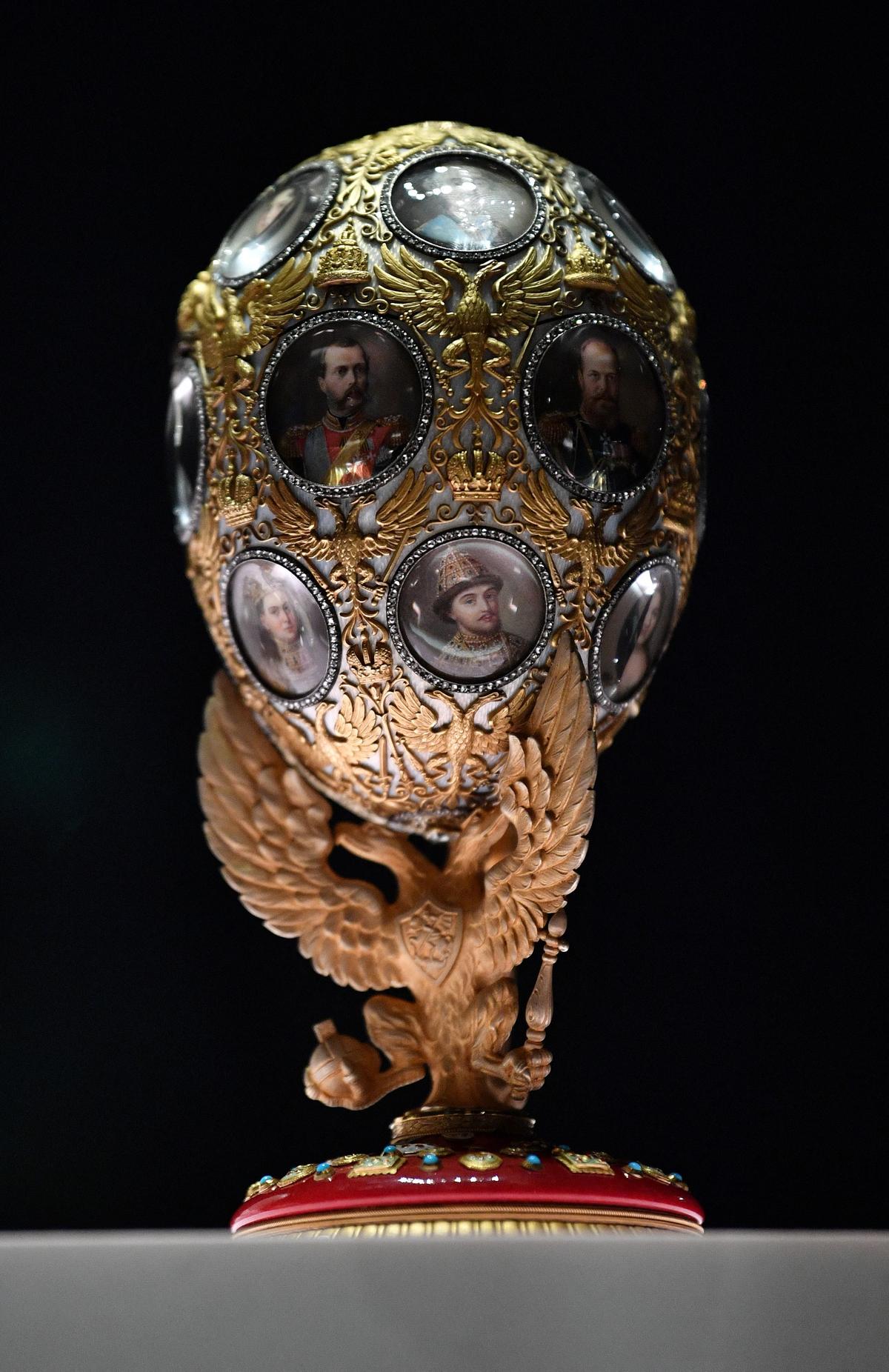
The year 1913 was pivotal for the Romanov Dynasty as it marked their tercentenary. Fabergé produced two exceptional Imperial Easter Eggs. The majestic “Romanov Tercentenary Egg” with a rotating globe surprise was presented to Alexandra Feodorovna. It remains in Russia, part of the Kremlin Armoury Museum. Nicholas II gave Pihl’s “Winter Egg” to his mother.
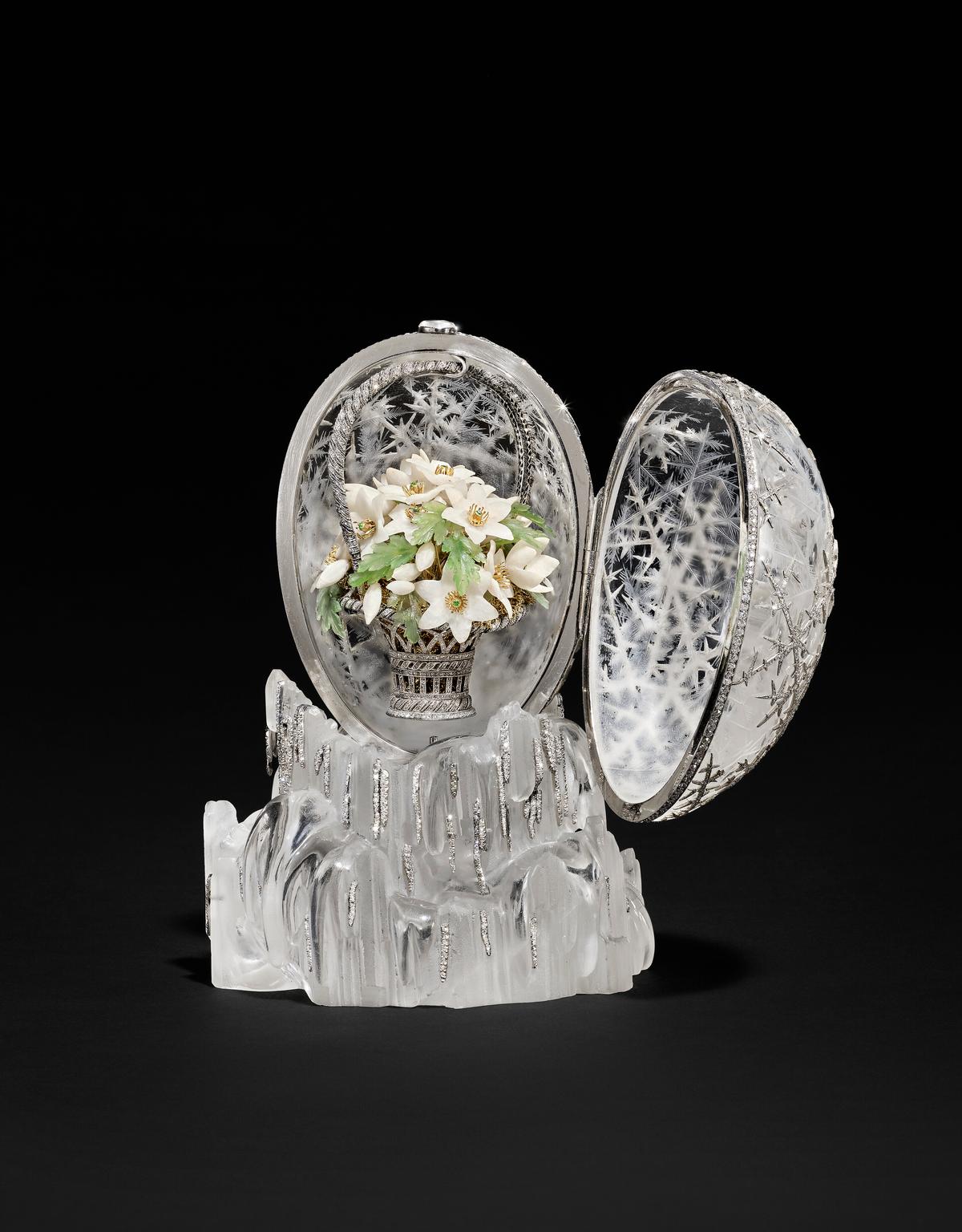
Nobel waived his rights temporarily to the frost motif, allowing Pihl to design an Imperial Egg with a winter theme. “The Winter Egg” symbolizes the transition from harsh winter to spring, the vibrant season of renewal. It is a fitting Easter gift with its representation of the idea of resurrection. Its style was a marked departure from previous Fabergé eggs, which drew on art history for inspiration. Pihl’s vision is original and modern. The invoice reveals its price was 24,600 roubles (around $80,000 in 2025), the highest price for an Imperial Egg before the Revolution.
When the Revolution occurred, “The Winter Egg” was confiscated from the imperial family. It was brought from St. Petersburg to Moscow’s Kremlin Armoury, along with many other Romanov treasures. In the late 1920s, the Soviet Union, in desperate need of money, sold it to Wartski of London, specialists in antique jewelry. From there, it went on to reside in various private collections. Between 1975 and 1994, its whereabouts were unknown, and the egg was believed lost.
It resurfaced in 1994, selling at a Geneva Christie’s auction for 7,263,500 Swiss francs (around $2.87 million in 2025), a then world record for a Fabergé artwork. In 2002, it was again sold at Christie’s, in New York, for a record of $9.58 million (around $17.25 million in 2025).
All eyes will be on the London auction block to see if “The Winter Egg” cracks the old record and hits new dizzying heights worthy of an imperial masterpiece by a genius artist at a virtuosic company.