Scholars trace the origins of the internationally popular game of chess to around sixth-century India. From there, the board game traveled to the Middle East and then to Europe, evolving along the way. In medieval Europe, chess was a popular pastime for society’s elite, but it also reflected deeper meanings: Playing the game indicated a high degree of courtliness and chivalry. It was also a way to develop and display warlike strategic skills.
In medieval Europe, the physical form of chess pieces developed into figures used today. For example, the Indian elephant piece became a bishop. The vizier, or adviser, piece to the king transformed into a queen. In fact, her sorrowful facial expression derives from contemporaneous depictions of the Virgin Mary grieving her son.
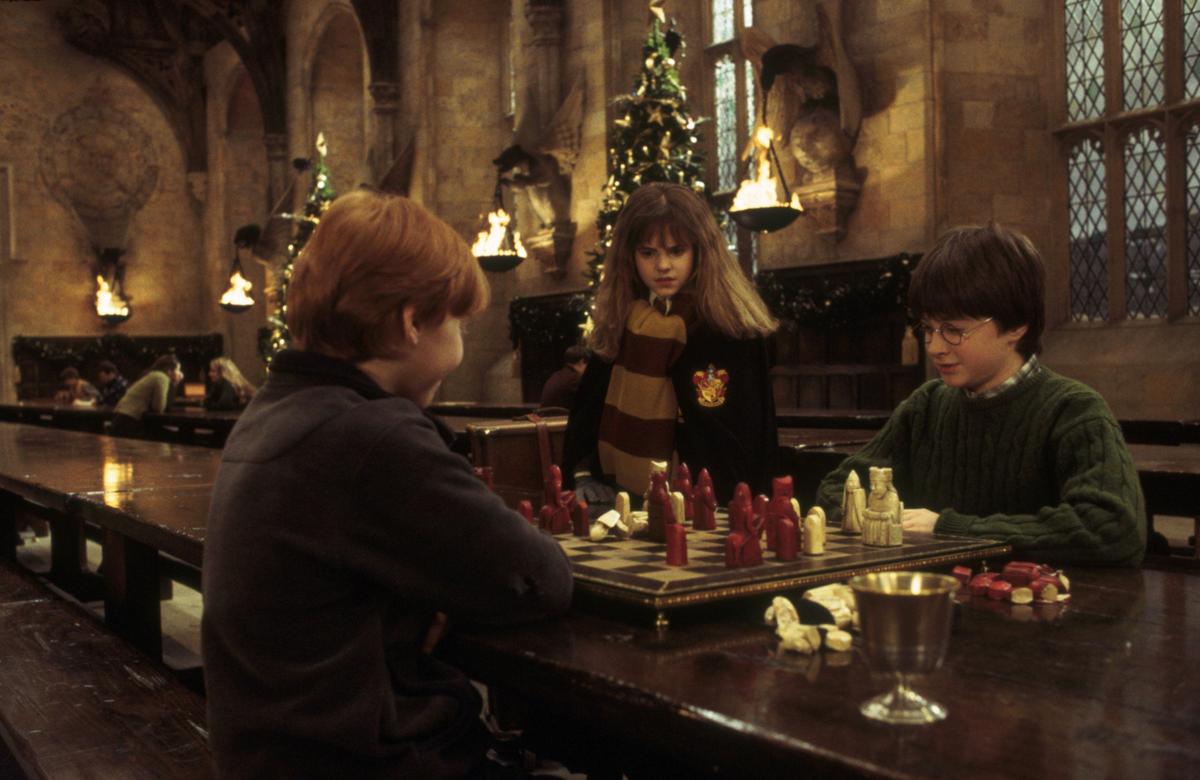
Among the earliest surviving examples of chess sets with both bishops and queens are the Lewis Chessmen, the most famous chess pieces in the world. They are renowned for their craftsmanship, featuring intricate carvings and expressive faces. In addition, the pieces reflect historic trade routes and boast even a mysterious origin. Having entered pop culture, reproduction sets are bestsellers. Replicas even made a cameo in the first Harry Potter film.
The Isle of Lewis Hoard
The Chessmen take their name from the Isle of Lewis, part of Scotland’s Outer Hebrides. They were discovered as part of a hoard on the island at some time before April 11, 1831. On that date, they were exhibited at the Society of Antiquaries of Scotland in Edinburgh, but the exact circumstances of their discovery remain murky with conflicting accounts. Potentially, they were found in the sands of Uig Strand, an inlet in the northwest of the island, but the person or persons who located them remains disputed.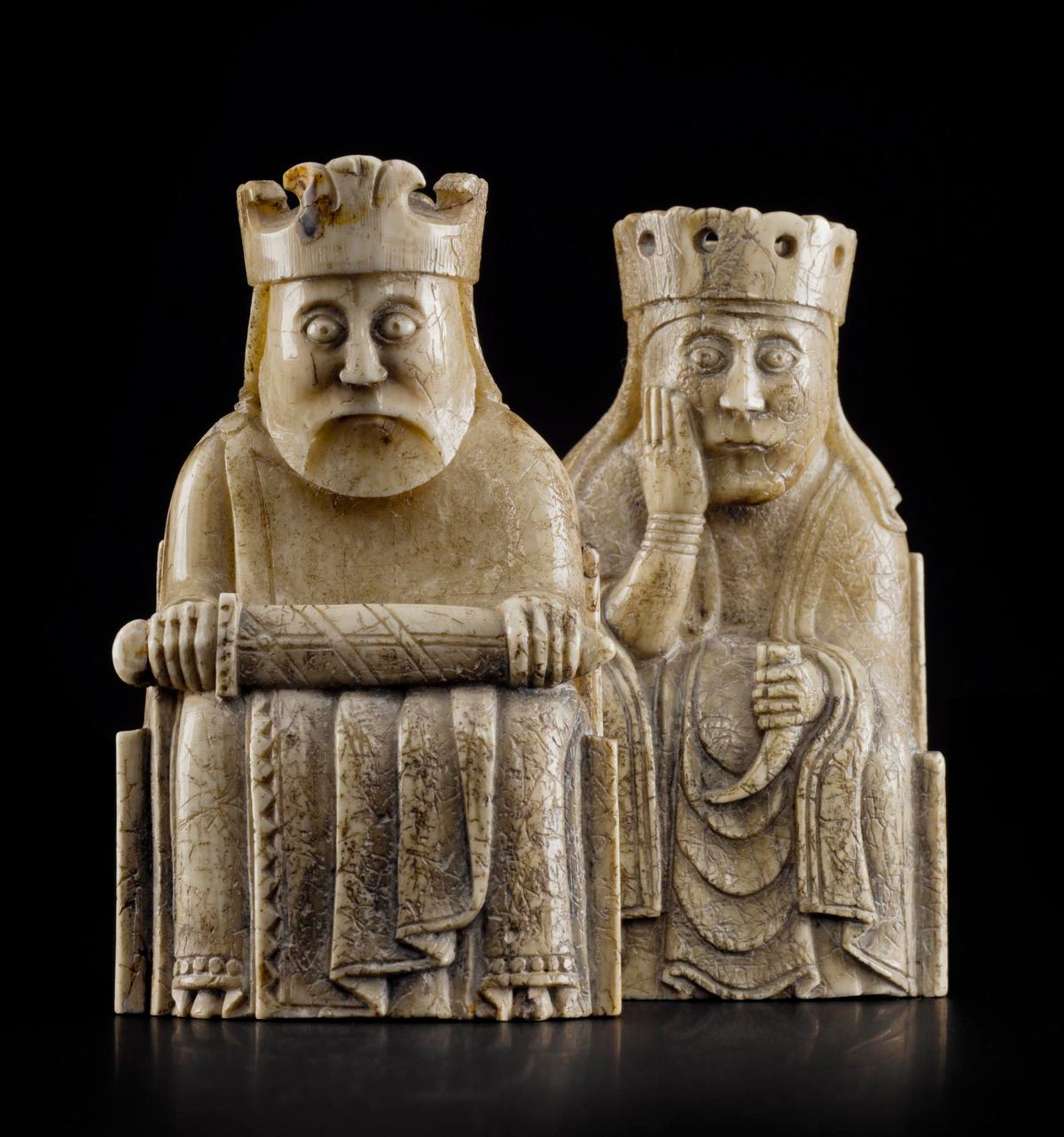
In total, the hoard contains 93 items, most made of walrus tusk ivory with a few from sperm whale teeth: 59 chessmen (eight kings, eight queens, 12 warders equivalent to rooks, 15 knights, 16 bishops); 19 pawns; 14 flat, circular game pieces; and one belt buckle. These pieces make four complete chess sets minus one knight, four warders, and 44 pawns. The pieces’ variation in size and design indicates that they might have been carved by different artisans in the same workshop.
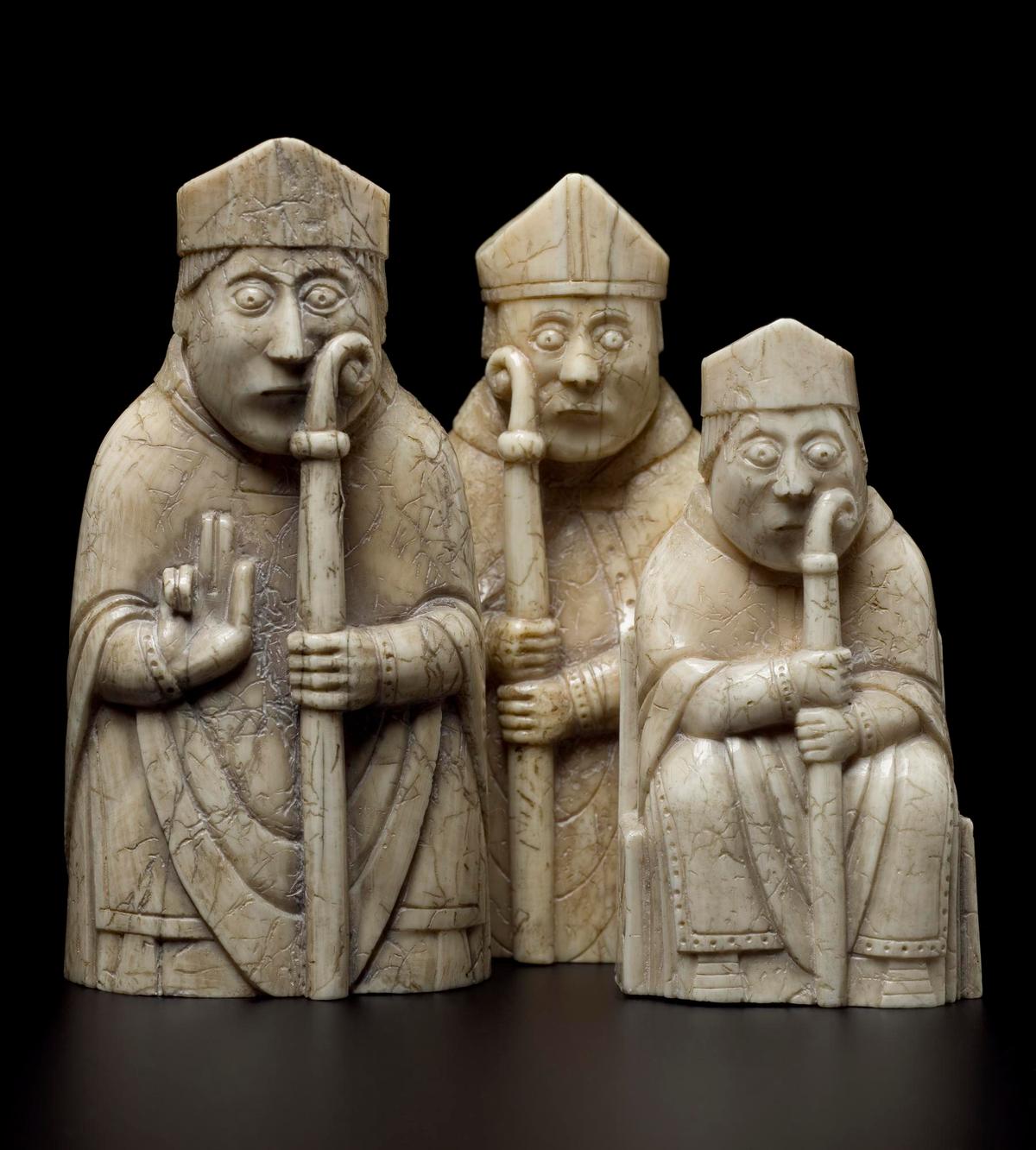
Each miniature sculpture conveys a captivating charm and the humanity of an individualized persona. For example, the knights in armor hold uniquely designed shields and ride characterful ponies that resemble today’s Icelandic horses. The kings are seated on thrones with swords across their laps. While some are clean-shaven, others have beards and long hair. The bishops hold croziers, but some also carry books or make a hand gesture of blessing.
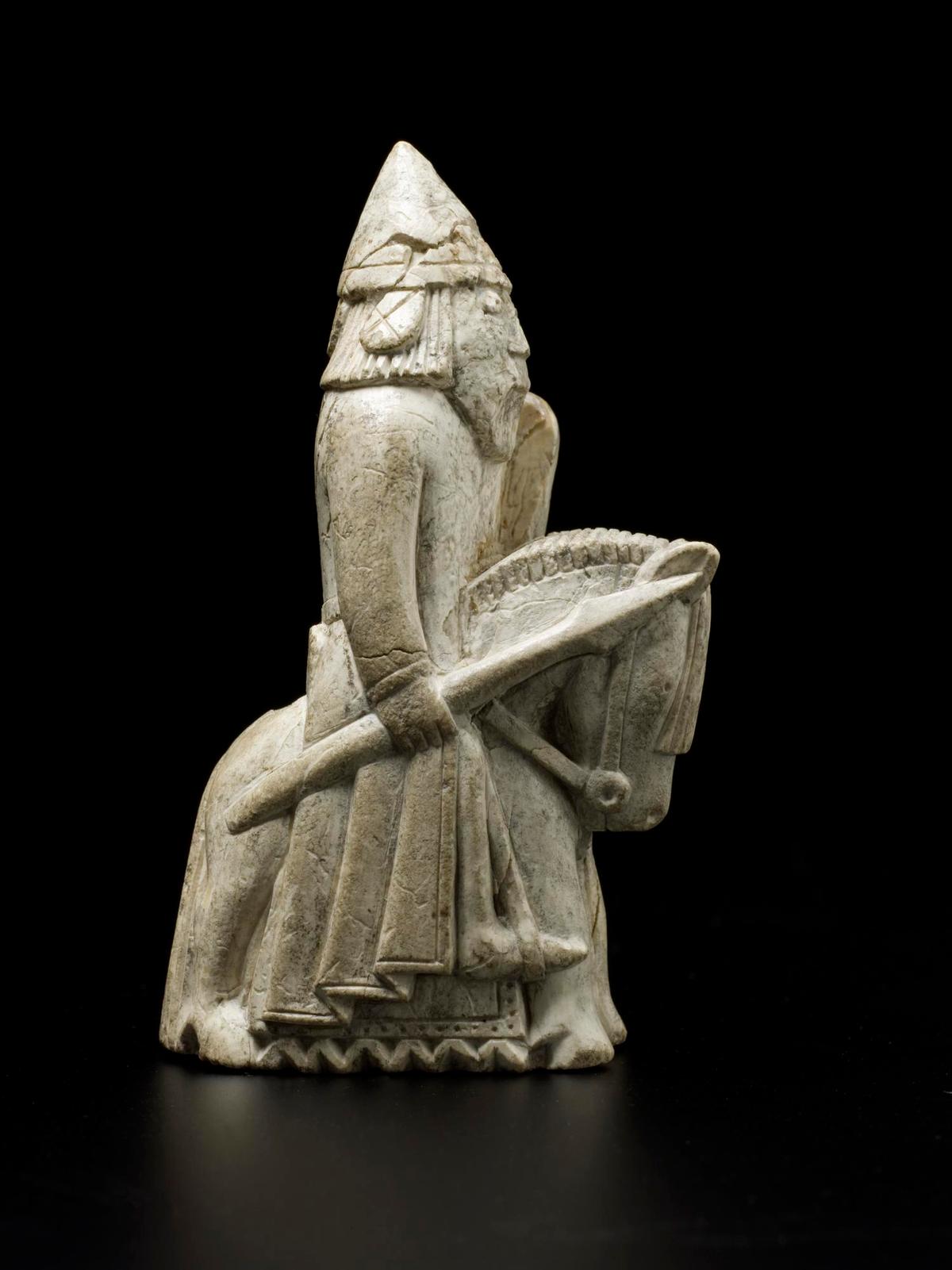
The hoard was dispersed in 1831 by the Edinburgh art dealer T.A. Forrest. The British Museum bought pieces that year and the following year for a grand total of 82 items. The other known 11 pieces passed through various private collections before being acquired by the National Museum of Scotland in 1888.
Scandinavian Origins
Although the Lewis Chessmen were found on a Scottish island, they are believed to have been carved elsewhere with perhaps a different intended destination. The generally held theory is that they were made in Norway, specifically the western city of Trondheim, around 1150 to 1200 or the early 13th century. The city was an artistic center for carving gaming pieces in walrus ivory; the material likely came from trade with Greenland. The chess pieces’ thrones are similar to carvings found in medieval Norwegian churches.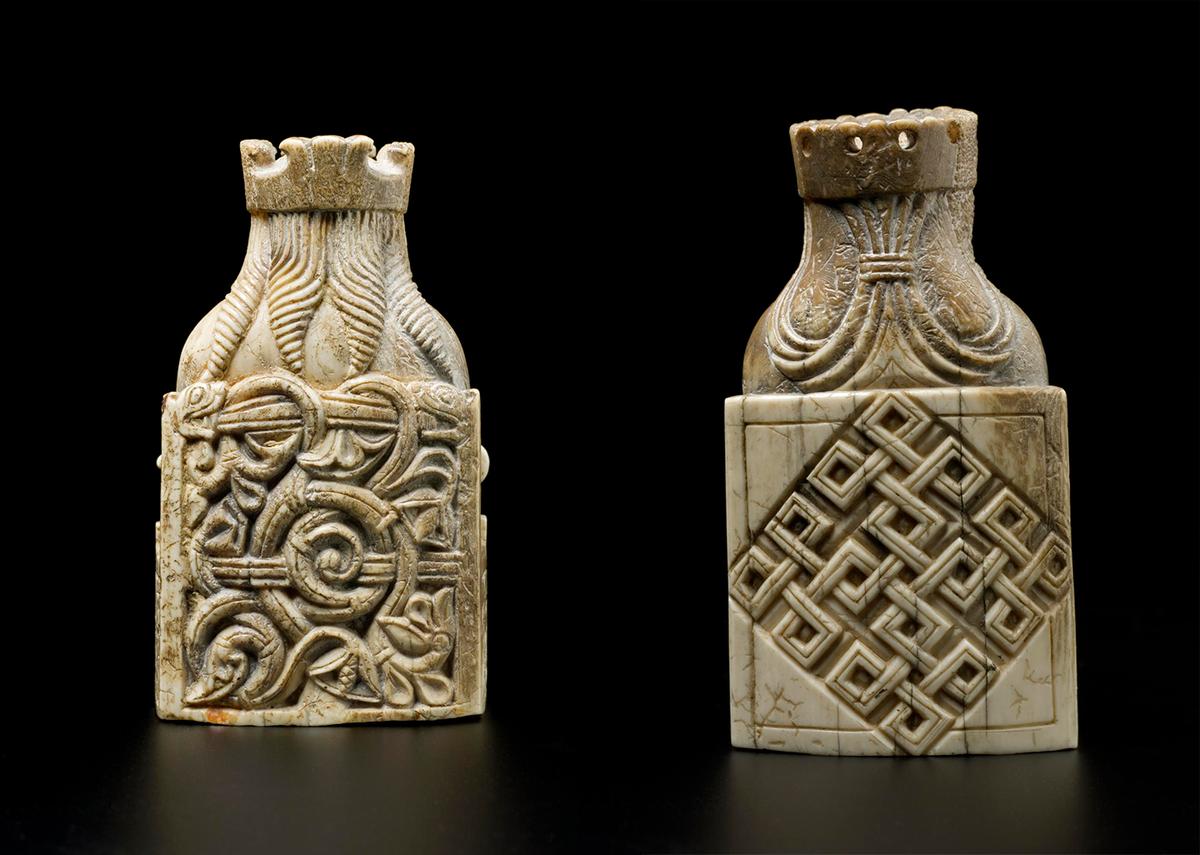
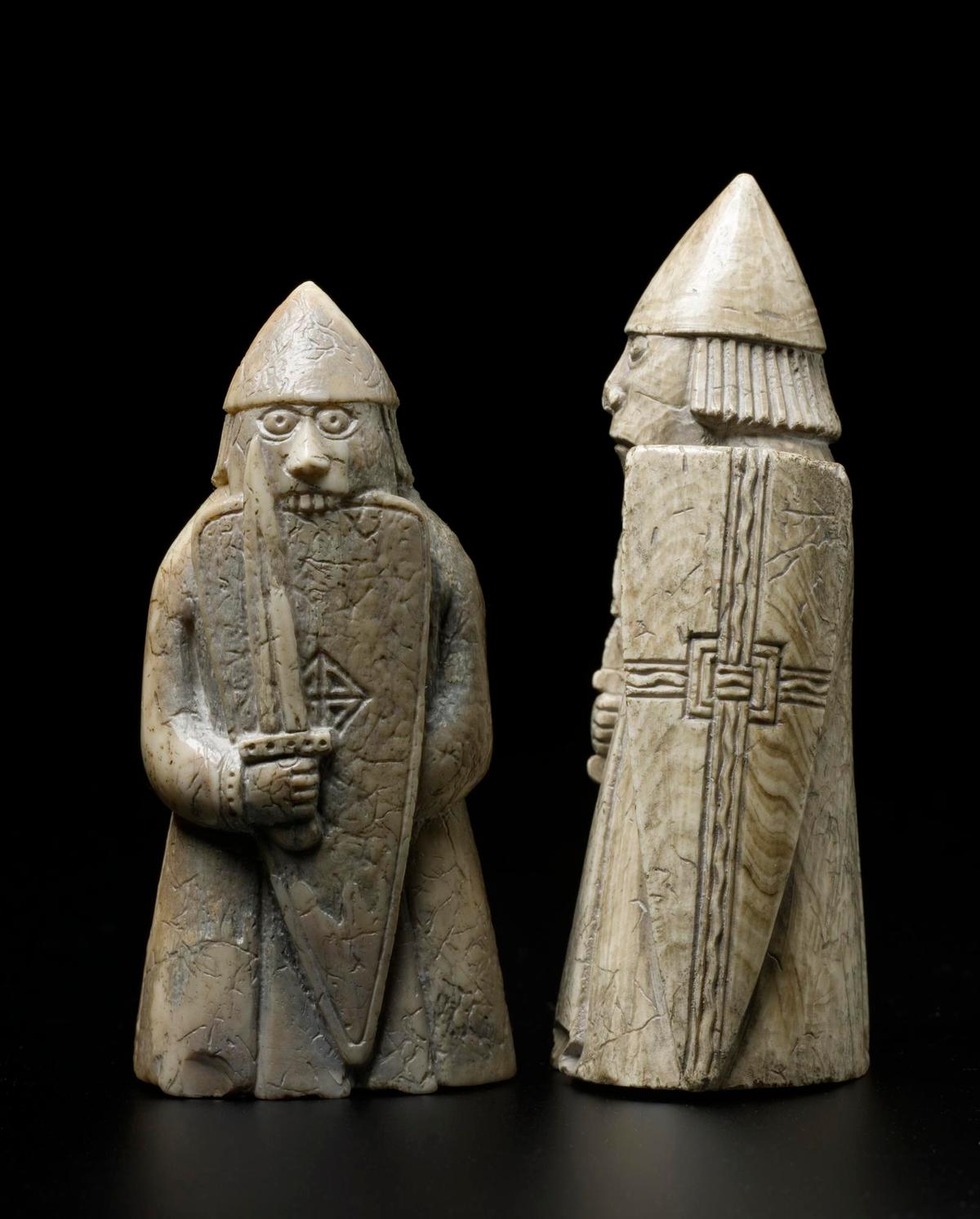
The Scandinavian connection of these Chessmen is visible in some of the warders, who are depicted as berserkers, warriors from Norse mythology. These foot soldiers bite the tops of their shields because they are in a battle-ready, frenzied state. They are among the most striking of the chess pieces.
At the time the Chessmen were made, Norway had political and ecclesiastical control over the Isle of Lewis. (It was not ceded to Scotland until 1266.) Trade routes between Norway and Ireland went past the Outer Hebrides, which leads some experts to suppose that the hoard was a merchant’s goods that were lost or buried on the island. Another theory suggests that they were meant for the isle’s local leaders, although most of the Chessmen show no signs of use.
Unearthed Missing Warder
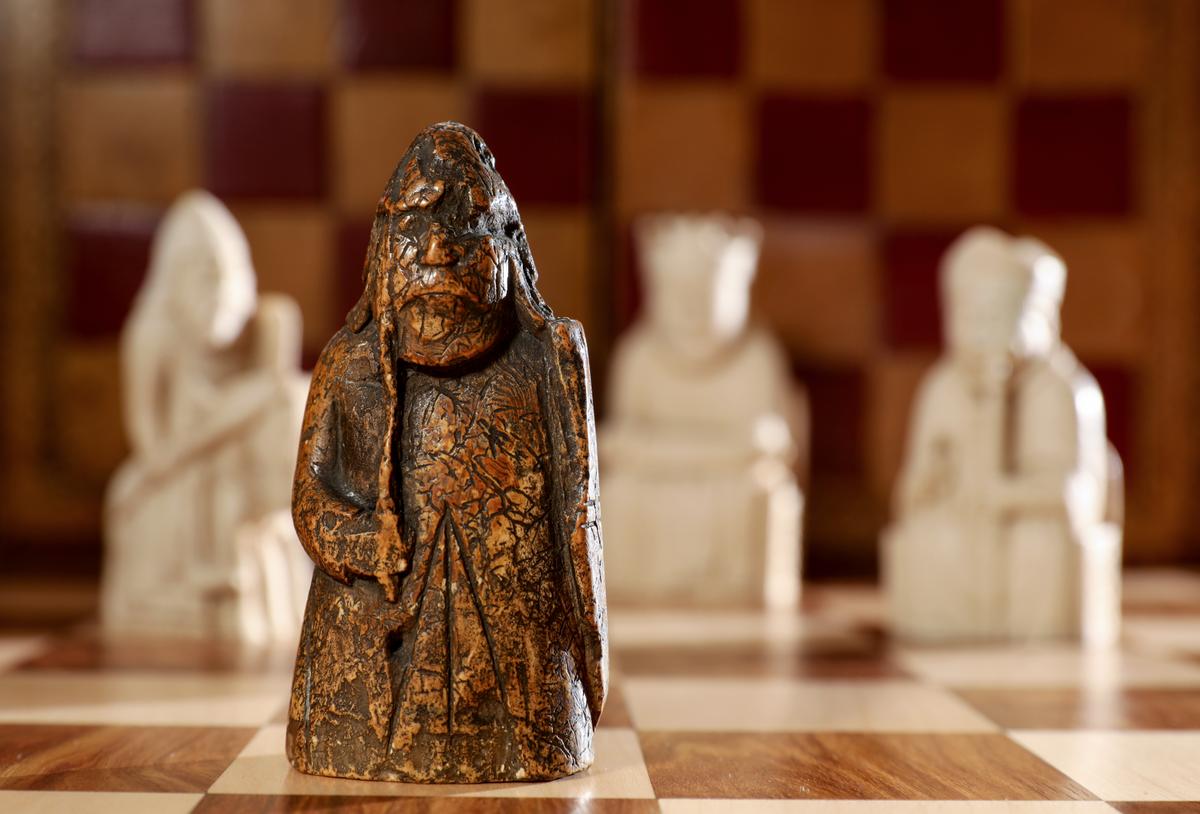
In 2019, there was an exciting development in the historical record of the Lewis hoard. Sotheby’s London auctioned a warder piece attributed to the Lewis Chessmen workshop for $927,423. It had descended in the family of an Edinburgh antiques dealer. He had bought the piece for 5 pounds ($173 today) in 1964. Having long kept the chess piece in a drawer, the owners were unaware of its significance until bringing it to the auction house for a valuation.
This 3.5-inch warder was the first chess piece to emerge with a potential connection to the hoard since its 1831 public display. As four warders are believed missing from the group, this contributes to the theory that Sotheby’s lot was part of one of the original sets. The Lewis Chessmen and the warder share stylistic similarities.
Sotheby’s catalog explains that “observations demonstrate clear parallels between the newly discovered Warder and those in the hoard, accepting the point that all the pieces have differences from each other.” Comparative analysis is more difficult because this warder is more damaged than other pieces in the collection.
The warder’s dark tone appears at first incongruous to the other pieces, but at the time of its auction it had not been cleaned, unlike the ones in the National Museum of Scotland and British Museum collections. All of the Lewis Chessmen display a fine, random network of channels. The general scientific consensus is that this appearance in ivory results from burial in a coastal location. The warder has this feature as well, strengthening its connection to the Lewis hoard.
That the approximately 800-year-old Lewis Chessmen, made of fragile material, survived and were unearthed after centuries of burial in a remote part of Scotland is extraordinary. The enduring mystery of their origin and discovery makes them all the more fascinating. Tantalizingly vivid, the pieces allow viewers to conjure exciting tales of medieval Europe. The potential discovery of a long-lost piece makes one wonder what else lies in a sandbank or a drawer.