I recently discussed my reservations about a new AI-narrated audiobook version of Homer’s “Odyssey.” As I pointed out in that article, one of the reasons to avoid AI versions of audiobooks is that there are plenty of genuine, dyed-in-the-wool, 100 percent authentic human beings who have recorded readings of Homer’s epic poem. In other words, we don’t need AI versions.
A Human Alternative to AI Narration
One such recording comes to us from The Society of Classical Poets, a literary journal focused onreviving quality poetry. The Society of Classical Poets published an illustrated version of the “Odyssey” translated by Michael Solot, with pictures by Aedan Kennedy. Now, they’re releasing a serialized audiobook version of the text. A new book (or chapter) of the poem appears on the website each Sunday, and remains free for three weeks. The first recordings went up on June 28. Book 1 will be removed when Book 4 is added on July 19.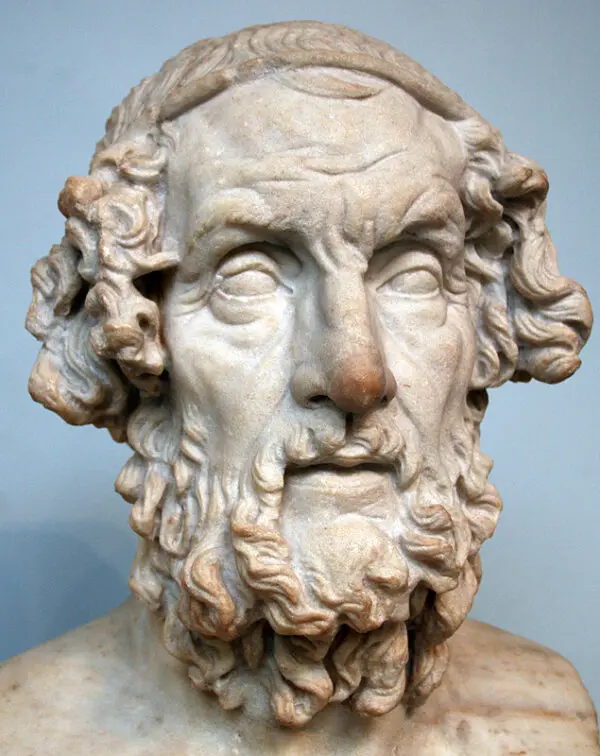
Homer looked beyond the surface of human life to reveal the most basic, and thus most universal, aspects of human nature, Solot reminds us in the introduction to a new audiobook version of the "Odysssey." Public Domain
The audiobook is fully dramatized, with all major characters voiced by different actors (along with many of the side characters), and includes a generous helping of sound effects.
The audiobook begins with a note from the translator that makes an apt and evocative comparison between Homer’s rhythmic verses and the endless lapping of ocean waves on the shore. Solot, the translator, then goes on to explain how he wishes to share with others the beautiful sound of the waves he heard on the “Homeric shore” or the original Greek, just as Odysseus, at the end of the poem, must venture inland until he comes to a people who know nothing of the sea, and there, plant a symbol of the ocean (an oar).
Analyzing the Introduction
Solot’s introduction, beautifully read by the translator himself, also has much to recommend it. Solot rightly defends Homer’s authorship against modern scholars, who just can’t resist interfering with venerable traditions and thus try to argue that the “Iliad” and the “Odyssey” were not by the same man. As Solot observes, even though the plot and tone of the two epics differ considerably, there’s still an artistic harmony between them; they both sound like Homer to the reader or listener who has become familiar with the unmistakable genius of the great storyteller.Again, Solot hits the mark when he recognizes the peerless place of Homer’s poetry in our heritage: He describes it as essential to the foundation of European civilization. Homer inaugurated the “Great Conversation” about the most important questions of human existence, which have cascaded down the centuries through the dialogues of all our greatest philosophers and poets. Like these literary titans who would follow him, Homer saw through the surface level of human life to the most basic—and therefore most universal—realities of human nature, Solot reminds us.
He also rightly locates the interpretive key of the poem in Odysseus’s refusal to remain with the goddess Calypso on her island. With the dazzling beauty of the demigod before him and the prospect of immortal life dangling within reach, Odysseus nevertheless refuses to stay, his heart longing for his wife and his home, his tear-stained face turned toward the sea. The “Odyssey” is about that longing for home, so potent that it can override even the most tantalizing distractions.
From this point, however, Solot’s introduction wavers, as he stakes out several positions on the text that I would dispute. While I think he is correct that Odysseus’s desire to leave Calypso is about more than just Penelope, I am not convinced that, as Solot argues, Odysseus doesn’t genuinely love his wife. Assuredly, that love is bound up with his general longing for his home, family, household, and so on, but it is no less genuine for all that.
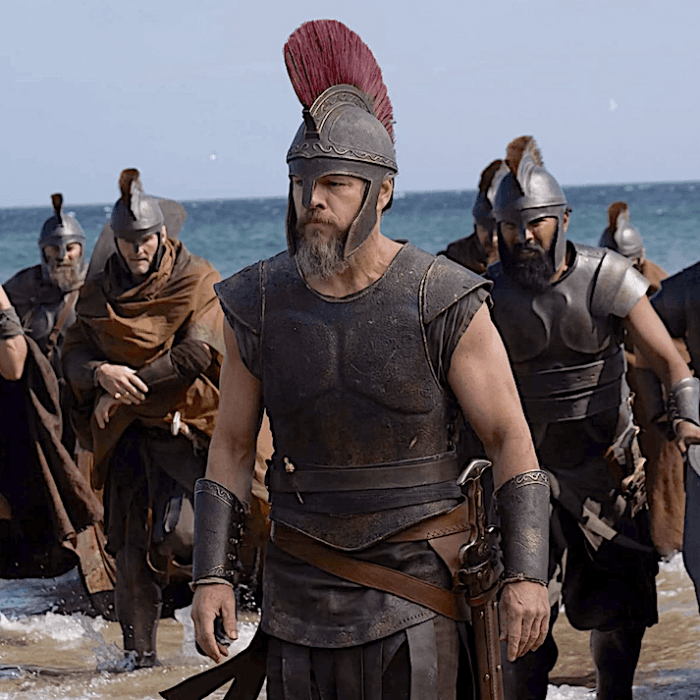
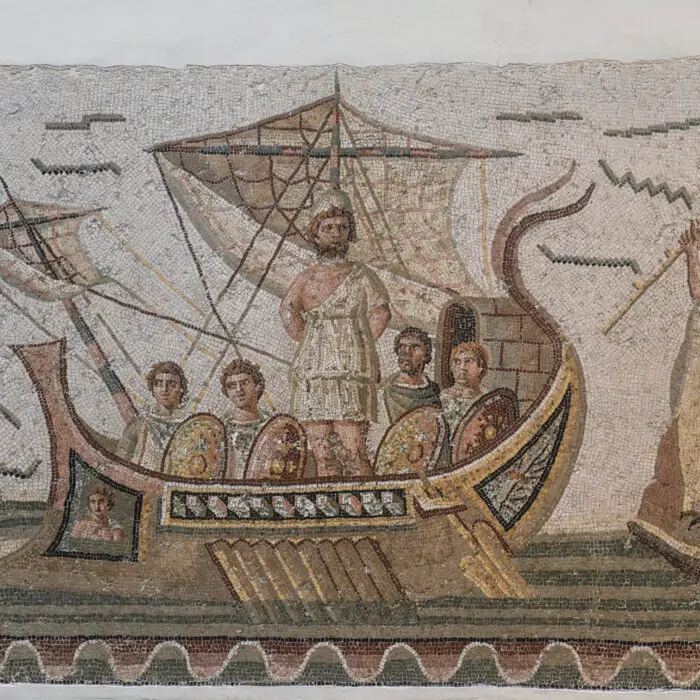
Solot argues that neither Odysseus nor Homer ever states that Odysseus loves Penelope. But certainly, indirect characterization can convey a character’s feelings as well as or better than, direct characterization. Odysseus’s dedication to returning to Penelope suggests the presence of genuine love, as does his anger at the idea she proposes to him (as a test) at the poem’s end, that their marriage bed should be moved. Odysseus is appalled by this idea because he understands that the bed symbolizes their marriage and their love, which cannot be moved or broken. This shows how much he values it.
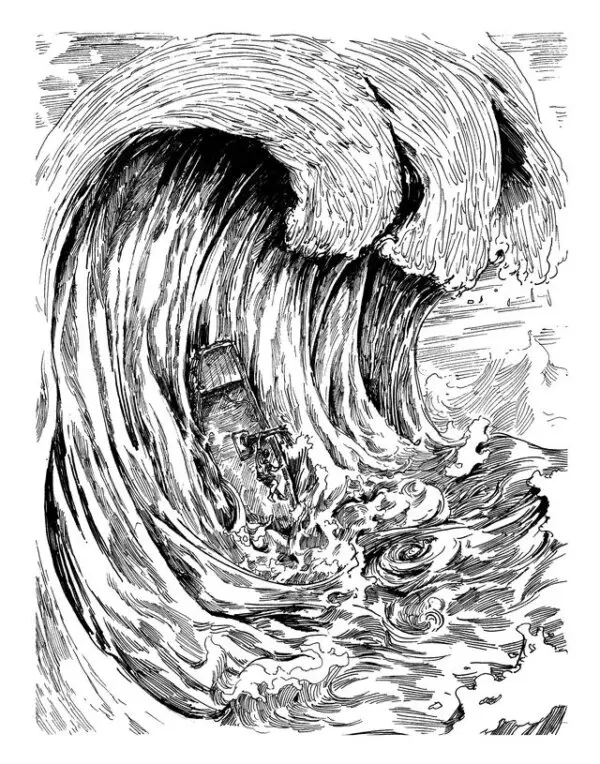
Aedan Kennedy's illustration of the Odysseus ship facing disaster, for Michael Solot's "Odyssey." Courtesy of Aedan Kennedy
In Solot’s reading, Odysseus chooses to leave Calypso and refuses immortality “in order to live and die … as someone who willingly, even eagerly, takes up the challenge to risk everything for the chance to master his own mortality as a man.” There is some truth to this interpretation. Odysseus understands that it is precisely the wages of mortality that give a substance and meaning to human life, absent from the rather vacuous existence of the gods.
But the suggestion, which follows shortly thereafter, that Odysseus chooses mortality for the sake of glory misses the mark. This is a correct interpretation of Achilles’s decision when faced with the same choice in the “Iliad.” Yet, it is insufficient to explain Odysseus’s response to the dilemma, which, I would submit, Homer presents as a direct contrast to Achilles’s.
Where Achilles chose mortality for the sake of glory, Odysseus chooses mortality for the sake of love and loyalty to family and home. While the “Iliad” offers us a glimpse of the magnificent glory of the world of war and achievement, the “Odyssey” counterbalances that vision by reminding us of the wholesomeness of the world of peace and domesticity. In the characters of Hector in the “Iliad” and Odysseus in the “Odyssey,” Homer more than suggests that martial glory ultimately exists for the sake of the domestic order, not the other way around.
The introduction also gives undue space and attention to the poem’s humor, particularly its sexual jokes. Of course, Solot is correct that the “Odyssey” is funny at times and meant to be funny, and we shouldn’t over-solemnize it. Yet, at the same time, to me, the humor is incidental and doesn’t deserve substantial critical analysis. While the “Odyssey” does contain humor and is comedic insofar as it ends happily, it is still, in my reading, a very sober poem, dealing with serious issues, and with more than a trace of deep melancholy under the surface, like reefs and corals just beneath the sparkling waves.
Audio Quality and Final Verdict
As to the audio recording’s quality, I have mixed feelings. Solot has a rich voice, and listening to his introduction in his own voice was a pleasure. His translation has a lively energy that brings the story vividly to life, and, similarly, the primary narrator, Andrew Benson Brown, reads with gusto. The current voice acting is of mixed quality, however, and, at times, borders on the melodramatic. Some voices sound inflected with too much self-consciousness. Some passages, however, will be re-recorded before appearing on Audible.I was not fond of the opening musical track, which sounded too digital to my ear, but some of the other sound effects do help bring the story to life.
It’s an ambitious project, and, despite my criticisms, I take my hat off to Mr. Solot, Mr. Brown, The Society of Classical Poets, and the entire cast for tackling it. They’re embarking on a journey as epic as Odysseus’s himself, and I feel hopeful that their energetic new presentation of the poem will help bring its magic to a new generation of listeners.
What arts and culture topics would you like us to cover? Please email ideas or feedback to [email protected].